Axios Future of Mobility

February 18, 2026

Hi, Wednesday! Today, we're diving into the latest breakthroughs by Ford and Waymo to drive down the costs of their EV and AV systems.
1,763 words, a 6½-minute read ...
1 big thing: Chasing a future that never arrives

Look around: Robotaxis, electric vehicles, autonomous trucks and delivery drones are finally here (though maybe not in your city just yet). Even electric air taxis are about to take off in New York and Los Angeles.
- Yes, but: The cost of these new mobility technologies is still holding them back.
Why it matters: EVs, AVs and other forms of mobility have to become more affordable in order to achieve the scale that will turn them into profitable businesses.
Driving the news: In recent days, both Ford and Waymo have shared details of how they're tackling cost hurdles through innovation. (Keep reading to learn more. 👇)
- In Ford's case, it involved a fresh attempt to design affordable EVs, taking lessons from the world's best.
- At Waymo, it was about protecting its lead in AVs by making its self-driving technology cheaper and more capable.
The big picture: Every technological breakthrough inspires further innovation.
- In Japan, the concept is called kaizen: a philosophy of continuous improvement to eliminate waste and enhance efficiency.
- Mobility companies, having appeared to solve many of their biggest technical challenges, still have a ton of work ahead.
What they're saying: Even the best engineers know there are things they could do better, says Sam Abuelsamid, who heads transportation and mobility research at Telemetry Insights.
- "Mistakes in some ways are more important than successes," he tells Axios. "What were the things you didn't do right? Those are the opportunities for improvement."
- Learning from others' success, as Ford has done by studying Chinese competitors, is also important, he says.
The bottom line: Creating the future of mobility never stops.
2. Inside Ford's bid to make affordable EVs
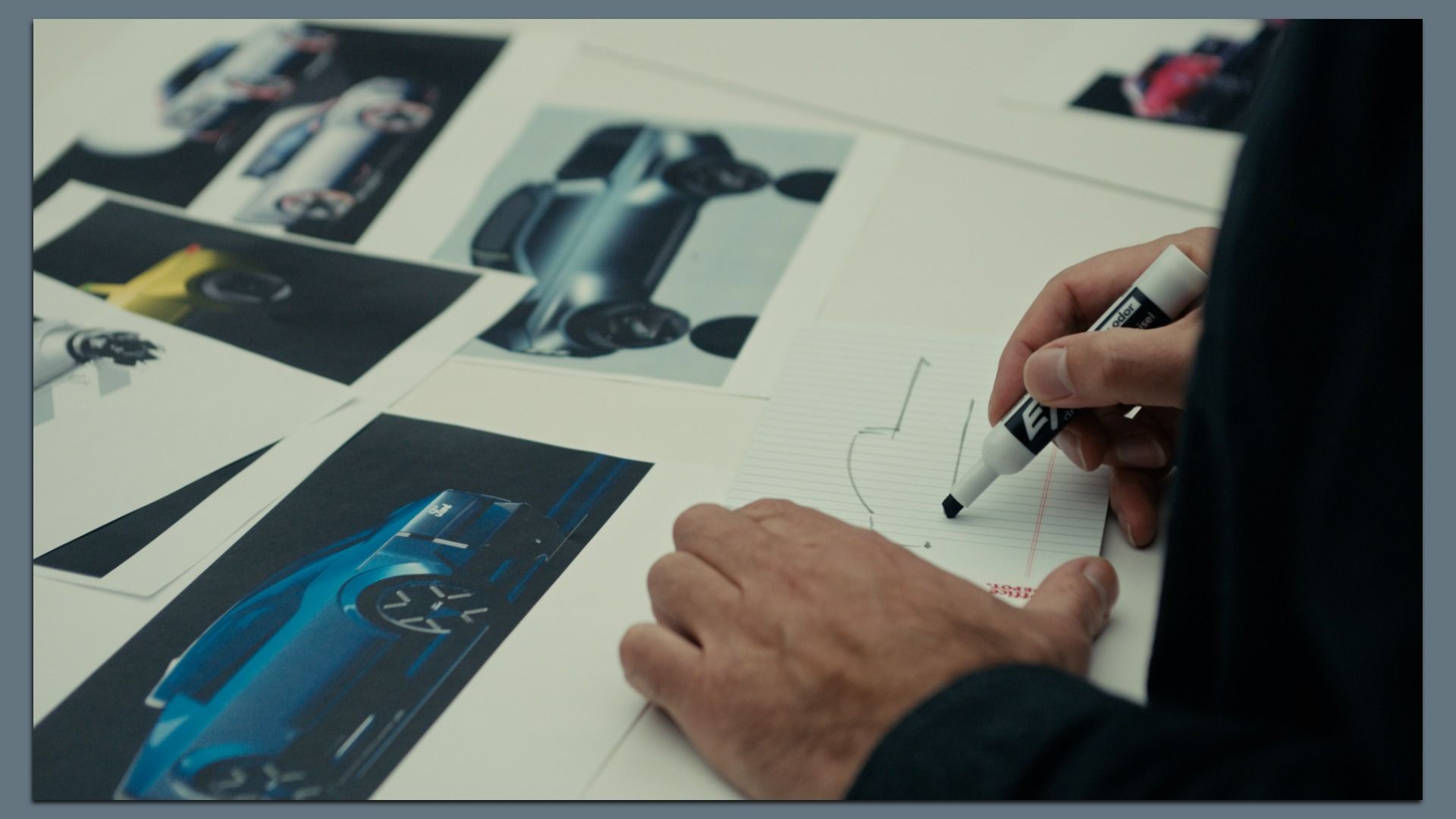
Ford is chasing physics to make EVs more affordable, even borrowing aerodynamic tricks from F1 racing in the quest to squeeze out better performance.
Driving the news: A $30,000 mid-sized pickup truck, due in 2027, is the initial test of the carmaker's latest strategy.
- It's the first in a family of vehicles to be built on a new low-cost EV platform Ford secretly began working on in 2022 — three years before announcing it was writing off $19.5 billion worth of investments on electric vehicles no one wanted to buy.
- Other models on the new platform, potentially including compact SUVs, sedans and commercial vans, will follow over the next decade.
The big picture: Ford's bet is that people will prefer a well-equipped battery-powered car over a gas model if the price is right.
- Ford CEO Jim Farley calls it "one of the most audacious and important projects in Ford's history."
- The universal EV platform is the auto giant's answer to the rapid rise of Chinese rivals, whose low-cost, high-tech vehicles are taking over virtually every market outside of the U.S. — a threat Farley sees as "existential."
Friction point: EVs are a hard sell for most Americans because they require too many sacrifices: They cost more than gas models, have a limited driving range and take too long to refuel.
- Most of that comes down to the battery, which accounts for 40% of an EV's total cost and 25% of its weight.
- Want more driving range? Easy: Add a bigger battery.
- But that makes the car pricier and less efficient — like a big, thirsty V8 engine that gets lousy gas mileage.
The challenge, then, is to come up with the EV equivalent of a gas engine turbocharger to squeeze more miles out of a smaller battery.
Ford's answer was to start over. A skunkworks team in California led by former Tesla engineer Alan Clarke rethought every aspect of the vehicle's design — and is now detailing the effort in a series of blog posts and videos.
Between the lines: It started with a culture shift.
- Instead of the usual turf wars over engineering decisions on individual components, the team obsessed over the vehicle as a total system.
- Every choice was weighed using a numerical "bounty" tied directly to its impact on battery size and efficiency.
- Raise the roof by one millimeter? That adds $1.30 in battery cost and cuts half a mile of range. Worth it? The stakes were made clear to everyone.
The team's goal was to radically simplify the vehicle's design by reducing the number of parts, believing "the best part is no part."
How it works: The coming truck's body is comprised of just two lightweight aluminum castings — compared to 146 welded parts in the body of a comparable Ford Maverick pickup.
- A simplified "zonal" electrical architecture cuts 4,000 feet of wiring, trims 22 pounds and enables smarter energy management and faster charging.
- The Michigan-made battery uses cheaper lithium iron phosphate (LFP) chemistry licensed from China's CATL. The cells are packed so efficiently that the battery forms part of the truck's skeleton.
Ordinarily, LFP means less range. Ford's bet: Make up the difference everywhere else.
Racing for every mile
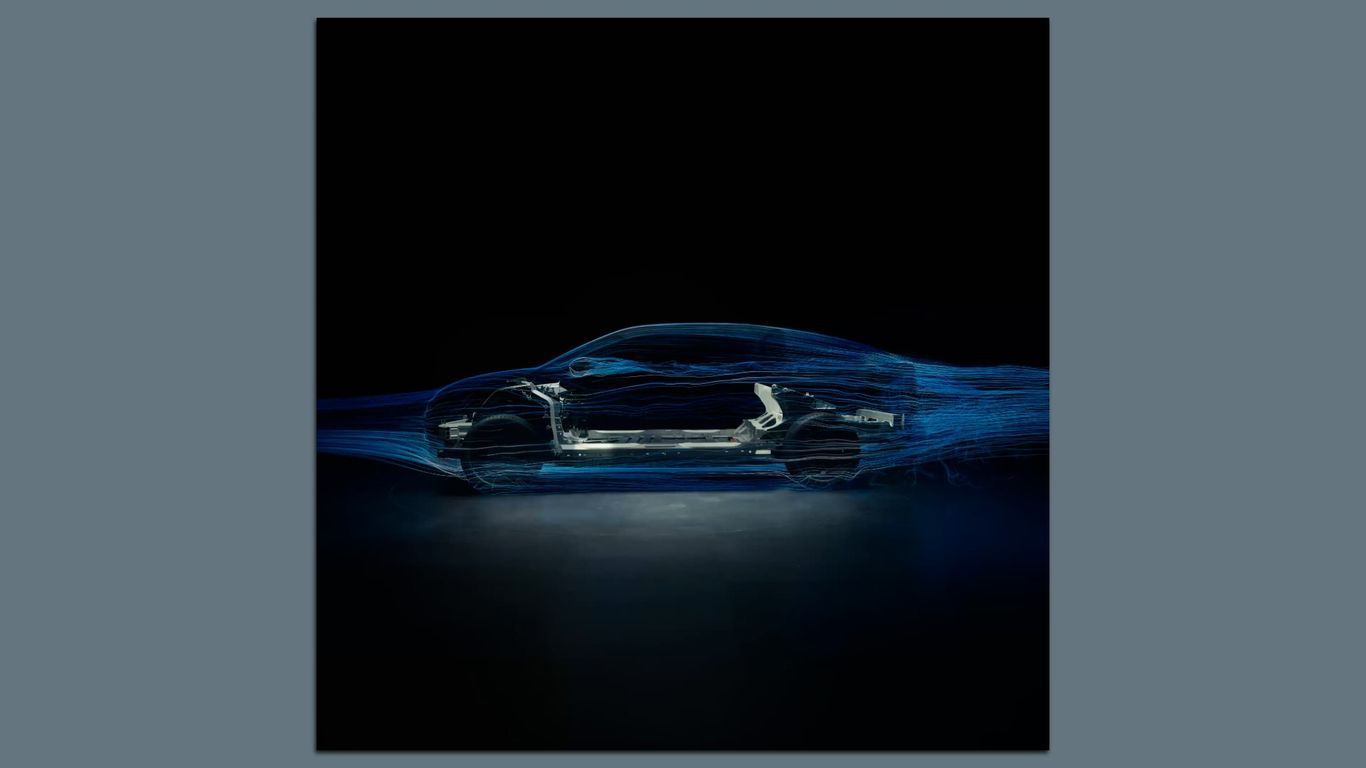
The intrigue: Ford adopted the competitive mindset of F1 racing to hunt for every aerodynamic edge.
- Before designing the truck itself, engineers tested thousands of 3D-printed and machined parts in a wind tunnel, isolating which tweaks delivered the biggest gains in range and battery cost.
- They sculpted the roofline to shed high-speed air in an efficient teardrop shape that skips over the truck bed entirely.
By the numbers: Just changing the design of the mirrors added 1.5 miles of driving range.
- Engineers also smoothed the underbody like a race car's — making bolts flush with the floor and channeling airflow around the front tires and suspension — adding another 4.5 miles of range.
- Ford estimates the new truck is 15% more aerodynamic than any other pickup on the market, good for 50 miles of extra driving range.
Reality check: Many of these techniques are being adopted by other carmakers, too.
- Tesla, for example, introduced giant castings in place of welded bodies in 2020, but the industry continues to leap ahead with improvements.
- Rivian cut 1.6 miles of wiring and streamlined the computers in its EVs in 2024. Now, in a joint venture with Volkswagen, it's further developing the electrical architecture for their next wave of EVs.
The bottom line: Racing is a game of inches, where every small decision matters. The same can be said in the race to develop affordable EVs.
3. Waymo's new driver: cheaper and better
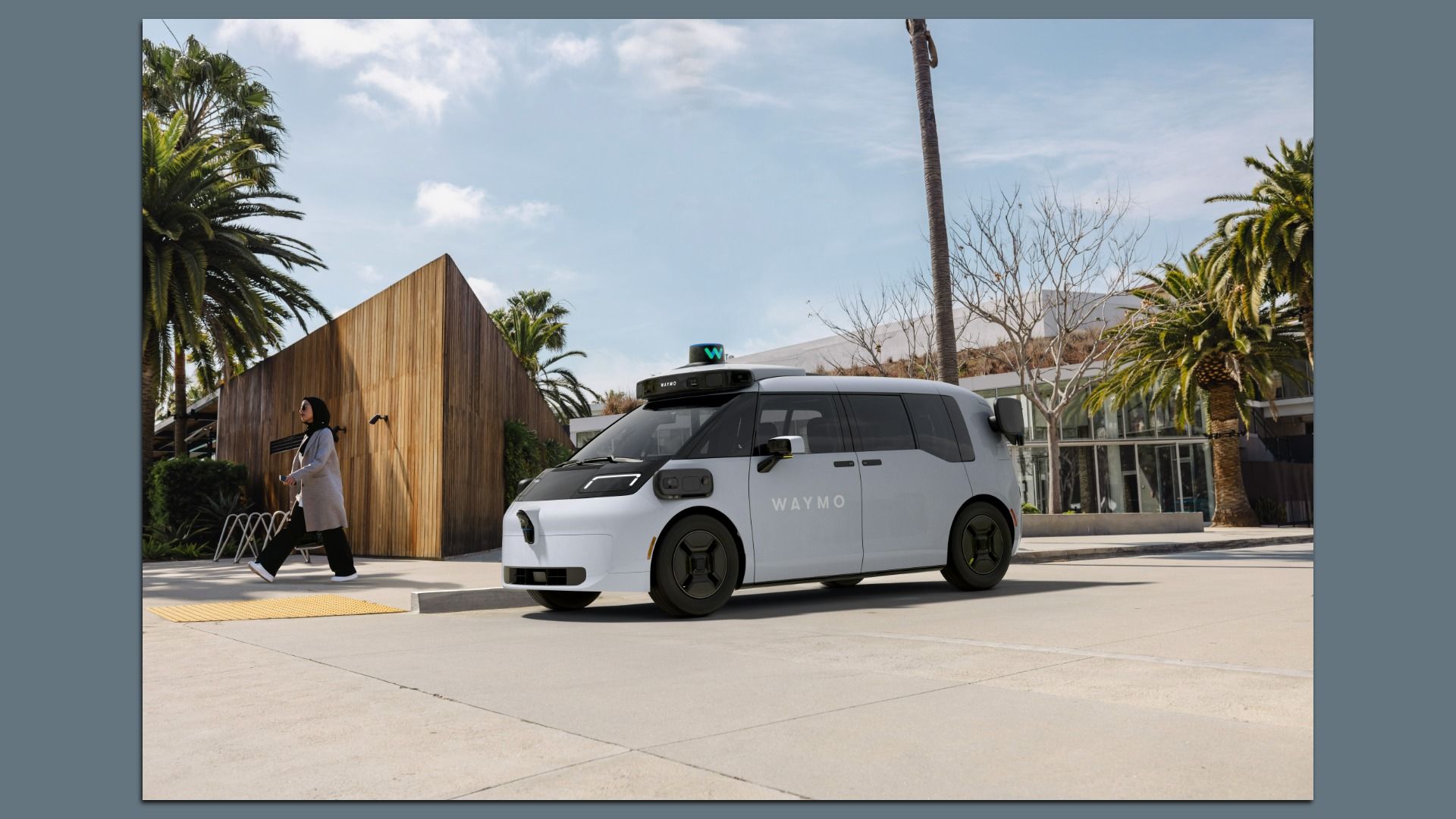
Waymo's latest self-driving technology costs less and is more capable.
Why it matters: Armed with $16 billion in fresh capital and reports of a potential deal for 50,000 robotaxis from Hyundai, Waymo appears poised to pull ahead of competitors.
The big picture: The Alphabet-owned company already has more than 2,500 robotaxis providing 400,000 driverless rides per week across six U.S. cities.
- It's on track to deploy in 20 more cities globally this year, and is way ahead of Tesla, which has big ambitions but so far runs only a tiny driverless fleet in Austin, Texas.
The latest: Waymo is now rolling out its sixth-generation technology, which it claims can see better — with half as many sensors — than the system it replaced, even in bad weather.
- It's designed to run on multiple vehicle platforms, beginning with the Zeekr Ojai, a Chinese-built electric van, followed by the Hyundai Ioniq 5.
Zoom in: New 17-megapixel cameras provide unprecedented clarity, the company says.
- In all, the Waymo Driver has 13 cameras (down from 29 in the previous generation), six radars, and four lidar sensors (down from five).
The intrigue: Tesla CEO Elon Musk quipped that Waymo stands for "way mo' money" because of its pricey array of sensors compared to Tesla's camera-only system.
- Waymo isn't saying exactly how much it reduced costs with its sixth-generation Driver, but is sticking with its multimodal sensing suite for redundancy in bad weather.
- Electrek reported Waymo's latest tech is expected to cost less than $20,000 per unit (on top of the vehicle cost), a 50 percent improvement over the previous system.
The bottom line: Way more Waymos are coming.
4. Uber to spend big on EV charging for robotaxis
Uber plans to invest $100 million on EV charging infrastructure to support its growing robotaxi business.
- At the same time, it's making it easier for Uber drivers to find EV charging by providing a financial backstop to network providers.
Why it matters: Uber says the efforts are intended to accelerate the company's vision for an autonomous and electric future.
The big picture: An onslaught of driverless Waymo and Tesla robotaxis is threatening Uber's core ride-hailing business.
- Its answer is to support a hybrid platform strategy — human drivers and robotaxi partners on the same network — and both fleets will require charging.
Uber's charging strategy, announced today, is rolling out in two ways:
First, it's spending $100 million to develop fast-charging hubs at AV depots, starting in San Francisco, Los Angeles and Dallas, where it cleans and services robotaxis for its AV partners.
- It also plans to open DC fast-charging "pit stops" for robotaxis in convenient locations across its largest cities.
Second, Uber is guaranteeing minimum charging volumes for networks like EVgo in exchange for discounted rates for drivers.
- Those guarantees help reduce the risk of building new stations — which can cost about $100,000 each — and are intended to unlock more than $100 million in new charging infrastructure, or roughly 1,000 chargers globally.
- Uber already has a similar deal with Revel in New York, where its drivers receive a 25% discount. Its EVgo agreement provides guaranteed usage levels at stations in San Francisco, Los Angeles and Boston.
The bottom line: Uber is spending big to steer the market toward electric and autonomous vehicles.
5. Drive-thru
🚨 Tesla avoided a license suspension in California by no longer using the term "Autopilot" in marketing to describe the self-driving capabilities of its vehicles in the state. (Reuters)
- Why it matters: Tesla has long been under fire for misleading consumers about what its cars can do, which is why it updated the name of its even more advanced system to "Full Self-Driving Supervised" (our emphasis).
- The bottom line: Drivers still must pay attention.
🚁 A bipartisan bill introduced in both houses of Congress would streamline the certification process for electric vertical takeoff and landing (eVTOL) air taxis and other new types of aircraft to ensure the U.S. doesn't fall behind in advanced air mobility. (Flying Magazine)
🚴 Denver is getting access to one of the most diverse micromobility fleets in the country as California-based Veo tries to meet the city's mission to move more people out of cars and into bike lanes. (Axios Denver)
Thanks to editors Pete Gannon and Bill Kole. If you like this newsletter, please share it! The sign up link is here.
Sign up for Axios Future of Mobility