Axios Future of Mobility

July 22, 2026

👋 Hi again! I've been digging into the business side of robotaxis, including what it takes in terms of infrastructure and operations, and it turns out that car rental companies are ideal fleet management partners.
- Below, Hertz CEO Gil West explains why he sees opportunities ahead.
- Plus, private infrastructure investors are enticed by the demand for AV depots.
🏖️ I'm off next week, but my Axios colleague Nathan Bomey will take the wheel of this newsletter. See you in August!
1,597 words, a 6-minute read.
1 big thing: Hertz's next act
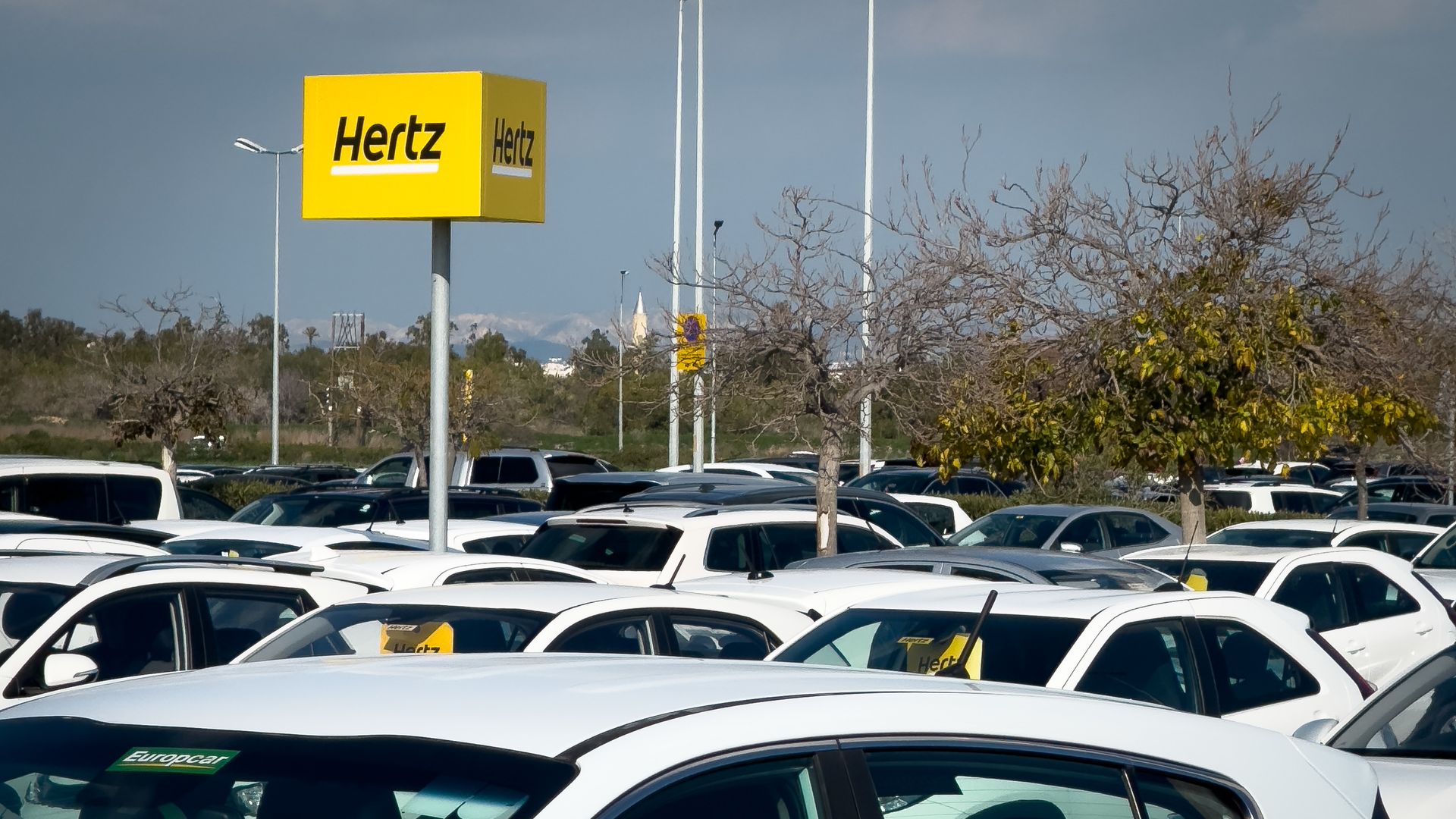
Hertz, one of America's best-known car rental companies, is trying to position itself as the backbone of the robotaxi business.
Why it matters: As robotaxis scale, fleet operators — companies that can efficiently own, charge, clean and maintain self-driving vehicles — could become the industry's kingmakers.
Catch up quick: Hertz recently created a new business unit, Oro Mobility, to manage and service a range of fleets including ride-sharing and autonomous vehicles.
- Its first big AV deal is to manage Uber's planned Lucid-Nuro robotaxi fleet launching later this year in San Francisco, with additional markets to follow.
- Hertz, which has long rented cars to ride-share drivers, is also deploying 1,000 of its own employees to drive Hertz cars for Uber.
The big picture: It's all part of a strategy shift led by new CEO Gil West, who is pairing a back-to-basics turnaround of the car rental business with a long-term bet that Hertz's fleet-management expertise can power the next generation of mobility services.
- "We're not a tech company, nor should we be, but we've got 100 years of experience owning and managing large fleets," West tells Axios.
State of play: Hertz is still trying to rebound from a disastrous bet on electric vehicles made just months after it emerged from bankruptcy in 2021.
- The EV blunder cost Hertz close to $2 billion after poor customer experiences, surging repair costs and plunging resale values forced a massive sell-off of 30,000 EVs, most of them Teslas.
- Yet the painful chapter also helped prepare Hertz for its next challenge — charging and maintaining electric robotaxis for AV partners.
Hertz's advantage is that it already owns much of the physical infrastructure robotaxi operators need.
- It has more than 11,000 locations — including at 2,900 airports — in 160 countries, and already has 2,700 EV chargers installed.
- Its rental fleet of more than half a million cars is worth over $12 billion.
- "It would take somebody decades and billions of dollars to replicate what we have," West says.
The intrigue: West, who previously was chief operating officer at General Motors' Cruise robotaxi unit, acknowledges that managing a fleet of robotaxis is different from running a rental car business.
- Having Hertz employees drive for Uber is an important stepping stone for developing the playbook, he says.
- The program lets Hertz refine every aspect of fleet operations — dispatching, telematics, safety monitoring, cleaning cycles and charging schedules — before replacing drivers with software.
- "We are really honing the muscle tone for autonomous ... it's an easy natural transition to go from this human-driven fleet to autonomous."
Yes, but: Hertz certainly isn't alone in recognizing the potential growth opportunity in robotaxi operations.
- Lyft's Flexdrive fleet management unit is building an 80,000-square-foot Waymo hub in Nashville, while Avis Budget Group runs Waymo's Dallas depot.
- Other key players include Avomo, which runs Waymo operations in Austin, Atlanta and Madrid, and Nigerian fintech Moove, which runs Phoenix and Miami for Waymo.
The bottom line: The robotaxi revolution's next layer isn't about technology; it's about scaling operations.
2. Robotaxi land grab attracts investors

Long before companies like Waymo, Tesla or Uber announce robotaxi deployments, they're competing behind the scenes to lock up the best sites for AV maintenance depots and charging hubs.
Why it matters: Deploying a fleet in a new city is the easy part. Building out the necessary infrastructure to support it can take three years or more, and requires plenty of capital.
The big picture: Hundreds of billions of dollars have already been invested in self-driving technology, and now the AV infrastructure layer is starting to attract its own set of investors.
- Private equity firms — including EQT and BlackRock's Global Infrastructure Partners — are betting that robotaxi depots will become a new category of infrastructure investment, much like data centers, warehouses and cell towers.
- "I think everyone realizes this is now a new asset class," says Frank Reig, whose charging company, Revel, recently merged with Voltera in a deal backed by EQT and GIP.
Zoom in: Reig leads the combined company, operating as Voltera, which has more than 1,000 EV fast-charging stalls open or under development across 11 major U.S. cities.
- "The electrification of urban mobility is one of the most capital-intensive infrastructure buildouts of this decade, and the operators who move first in the right markets, and with the right assets, will define the category," Erwin Thompson, partner at EQT, said at the time of the merger.
Between the lines: Finding suitable real estate in any densely populated city is difficult, but robotaxi depots need to be carefully located to maximize efficiency and avoid empty trips.
- The challenge is compounded by zoning and permitting delays, not to mention required utility upgrades to wire sites with up to 12 megawatts of power for fast-charging large fleets.
- "You're literally looking at (only) a handful of sites in every market," Reig tells Axios in his first interview since the merger.
- Companies that don't secure depot sites early could find themselves locked out of future markets, or saddled with inefficient operations that damage profits.
What we're watching: Robotaxis will still grab the headlines, but tech companies need the real estate and charging expertise of companies like Voltera and rival Terawatt to build their AV depots.
Go deeper: What's next in robotaxis: an infrastructure roadblock
3. Used EV prices climb as demand grows


Used electric vehicles are flying off dealer lots as pinched car buyers hunt for budget-friendly options.
Why it matters: The soaring demand has led to a rare phenomenon — used EVs rising in value, rather than depreciating, according to Recurrent, a research firm specializing in the used EV market.
The big picture: While the number of used EVs sold in June was lower than May, unit sales are still up 20% compared to June 2025, per Cox Automotive.
- A surge in off-lease EV returns and trade-ins means used-car buyers have a deeper market to choose from.
- Meanwhile, gas prices remain high as the U.S.-Iran war drags on, giving consumers more reason to consider an EV.
By the numbers: Used EV prices are up more than 5% since January, with the biggest gains at the affordable end of the market (below $20,000), per Recurrent.
- A used 2023 Chevrolet Bolt EV, for example, cost less than $18,000 back in January. Now it's over $21,000 — almost 20% more.
- A 2021 Volkswagen ID.4, which could be purchased for less than $19,000 in January, now costs over $21,000 — up 13%.
- A 2022 Tesla Model 3 that cost around $23,750 at the start of 2026 now costs nearly $27,000.
What we're watching: Availability of two- and three-year-old EVs will grow over the next few years.
- As many as 500,000 lease returns are projected in 2026 and up to twice as many in 2027, per Recurrent.
The bottom line: Used EVs are likely to play an important role in addressing vehicle affordability and broadening overall EV adoption in the U.S.
Cox Automotive is owned by Cox Enterprises, Axios' parent company.
4. Drive-thru
🚗 Mobileye will supply Stellantis vehicles with its cloud-enhanced, hands-free driver assistance technology beginning in 2027. (Press release)
🚁 Archer Aviation today unveiled Halo, the cargo variant of a new hybrid rotocraft jointly developed with Anduril for both military and commercial applications.
- Axios Future of Defense author Colin Demarest has all the details from the Farnborough International Airshow.
✈️ Advanced air mobility startup Electra plans to build an $850 million factory in Springfield, Ohio, employing nearly 2,000 workers, where it plans to build its innovative hybrid-electric EL9 Ultra Short aircraft.
- The nine-passenger plane is designed to take off and land in as little as 150 feet, enabling point-to-point air travel. (Reuters)
🚛 Aurora Innovation has launched its second-generation driverless truck — with no one behind the wheel — in Texas.
- Based on an International truck platform, it features new hardware designed to last a million miles at half the cost, and new advanced software.
- The truck will be manufactured by Michigan-based Roush. (Press release)
5. 🚘 What I'm driving
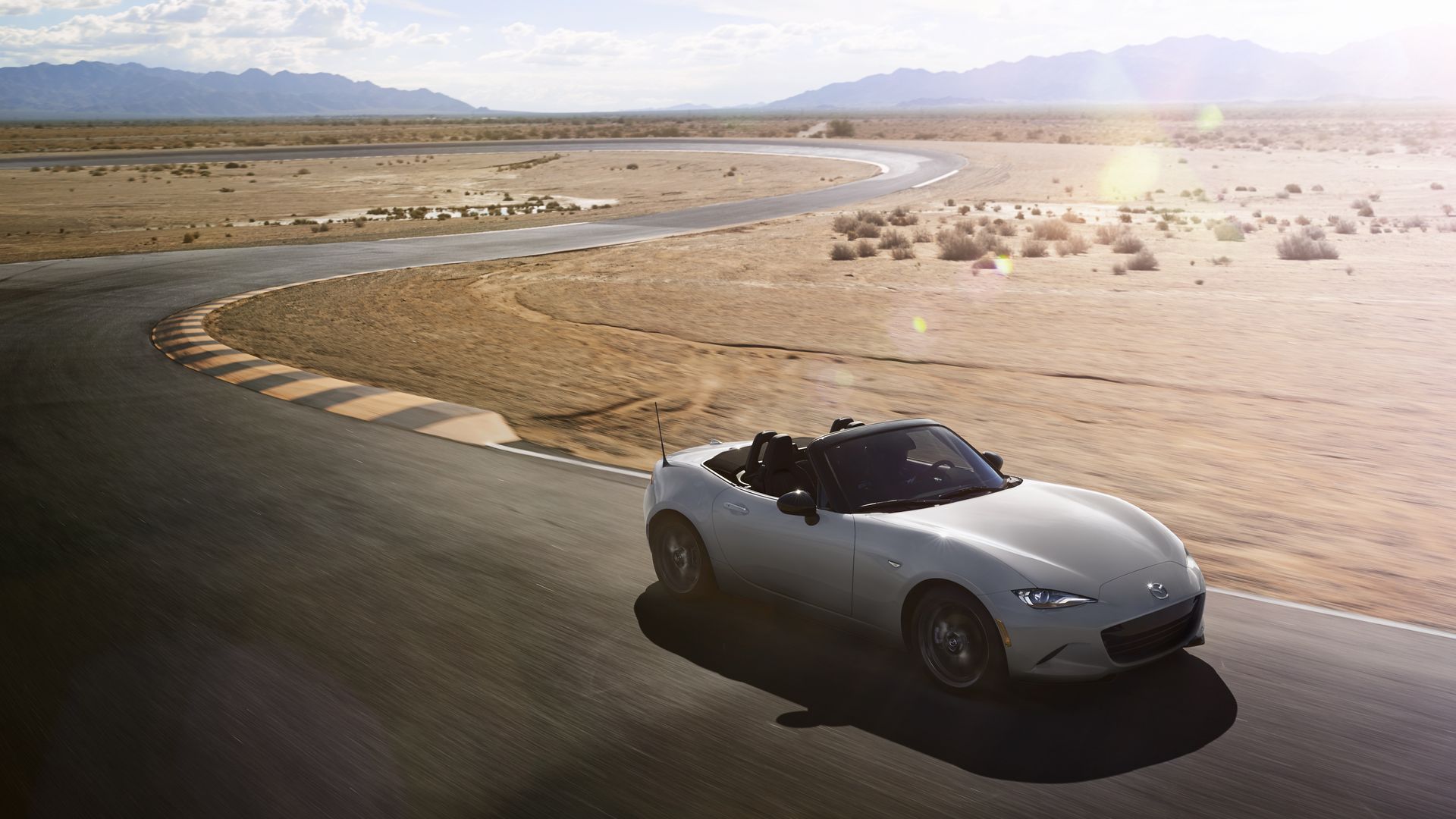
2026 Mazda MX-5 Miata
- MSRP: $30,430 starting price; as tested: $40,910 for Club trim with upgraded Brembo brakes and other options, plus delivery charge.
- Under the hood: Skyactiv-G 2.0-liter four-cylinder engine; 181 hp; standard 6-speed manual transmission; 6-speed automatic available on Grand Touring model.
- Manufacturing site: Hiroshima, Japan.
What's new: A few interior refinements, but this affordable roadster doesn't really need improving.
What I loved: The Miata has long been one of my favorite cars to drive, especially with the top down on a sunny day.
- It's rare to find a car with a stick shift anymore, but Mazda's sublime 6-speed gearbox combined with its perfectly balanced chassis is pure joy.
What I didn't love: The smoky air from Canadian wildfires put a damper on my fun. I even had to keep the soft top up for a couple of days because the air quality was so poor.
- 💭 One more thought bubble: It's getting harder to fold myself into this tiny sports car, but I don't care: It's worth it!
I test-drive vehicles in my role as a juror for the North American Car and Truck of the Year awards. Opinions are my own.
Thanks to editors Pete Gannon and Bill Kole. If you're a fan of this newsletter, please ask your friends to sign up, too.
Sign up for Axios Future of Mobility