Axios Future of Mobility
May 28, 2025

How about that? After a long weekend, it's already 🐪 day!
🍺 On tap today: AI is leaping from the digital realm into the physical world, but training robots, including self-driving cars, is a lot harder than training chatbots. We explain below.
- Plus, roads are getting smarter. Buckle up and let's go ...
1,310 words, a 5-minute read
1 big thing: Why robots need fences
AI-driven creatures — whether they're autonomous vehicles, delivery bots or humanoid robots — aren't ready to be unleashed freely into the wild.
- That's why robotaxis today only operate in certain neighborhoods and humanoids are being tested inside factory cages where they can't hurt anyone.
Why it matters: Unlike chatbots, which learn to talk by scraping information from the internet, AI robots are expected to move fluidly through unstructured environments, communicate with people, manipulate things and make reasoned decisions.
- That's a far bigger challenge that requires tons more training data and real-world experience.
The big picture: Tesla CEO Elon Musk is among the most bullish about how generative AI will reshape autonomy and robotics.
- He envisions 1 million driverless Teslas by the end of 2026 and 1 million Optimus humanoids working by the end of the decade.
- Tesla is working on a generalized solution for self-driving cars: Instead of coding step-by-step instructions for every street in every city based on high-definition maps, it's using AI to teach cars how to drive virtually anywhere.
- The approach, dubbed AV 2.0, is seen by many as a more efficient — and less expensive — way to develop self-driving vehicles.
Yes, but: It all depends on whether there's sufficient training data available.
- While Musk once scoffed at competitors like Waymo for operating in geofenced areas, he now acknowledges that Tesla's own robotaxi service, coming soon, will need limits.
- "When we deploy the cars in Austin, we are actually going to play not to the entire Austin region, but only the parts of Austin that we consider to be the safest. So we will geofence it," he told CNBC last week.
- "So it's not going to take intersections, unless we are highly confident it's going to do well with that intersection or it'll just take a route around that intersection," he said.
- Eventually, says Musk, Tesla's tech will be smart enough to begin scaling to other cities more rapidly. "These things happen slowly but then all at once," he told CNBC.
The same is true for humanoids.
- Manufacturers are already experimenting with robots that look like humans to sort widgets, lift boxes, or carry parts.
- But until it's safe for them to interact with human workers, those experiments must occur inside cages, explains Melonee Wise, chief product officer at Agility Robotics, maker of a humanoid robot called Digit.
The bottom line: Whether it's a million robotaxis, or a million human bots, they need time — and fences — to learn.
Go deeper: Robot industry split over that humanoid look
2. Those last 100 steps are the hardest
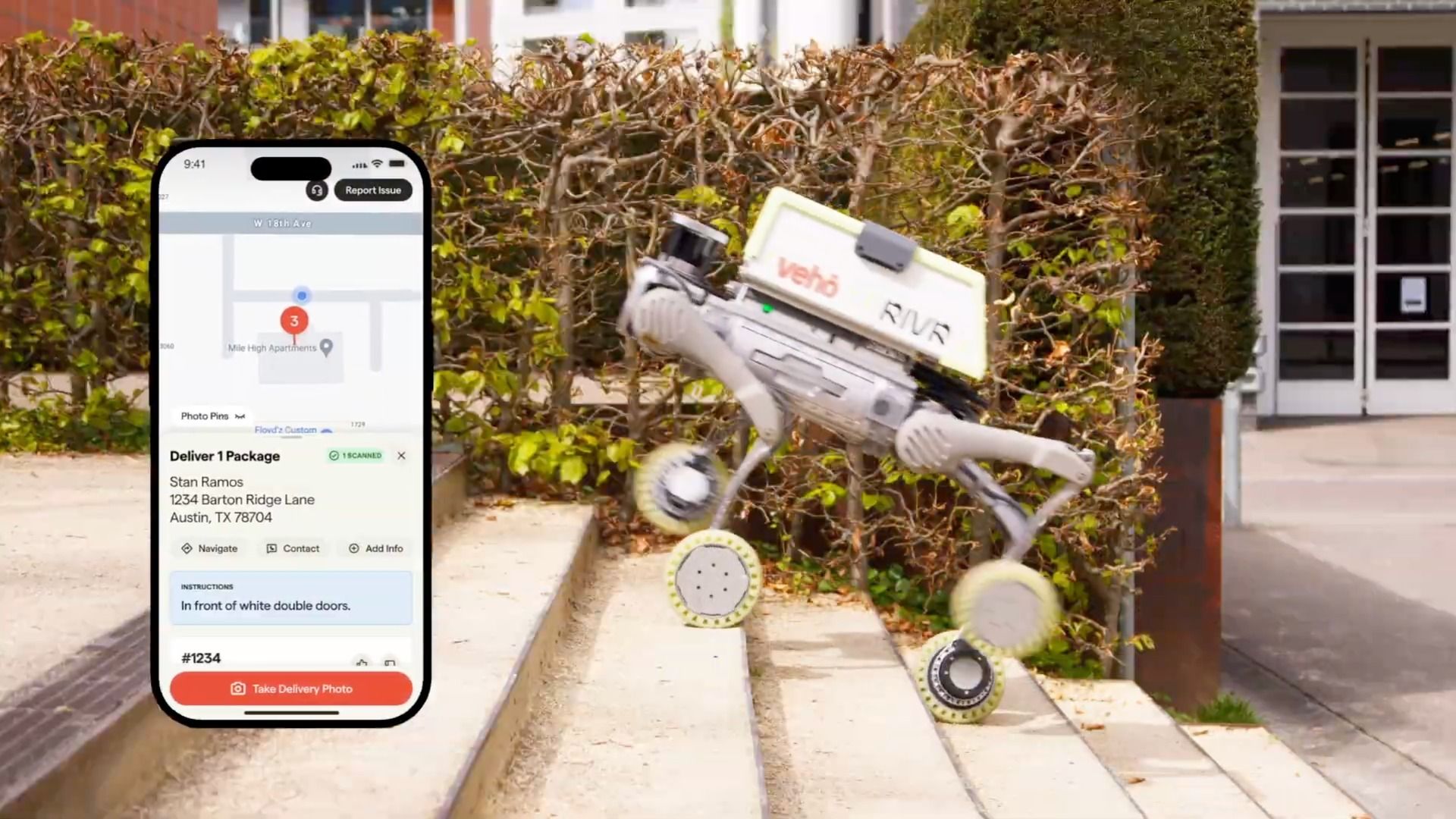
Swiss robotics company Rivr is partnering with Veho, a gig-based delivery company, to test its wheel-legged robot in Austin, Texas.
Why it matters: By starting with last-mile package delivery, Rivr says it's "laying the groundwork for a powerful data flywheel" that will accelerate robotic intelligence for other use cases.
Between the lines: General robots face a tougher challenge than self-driving cars, Marko Bjelonic, Rivr's co-founder and CEO, tells Axios.
- Human-driven vehicles at least have cameras that collect data that can be used to train virtual drivers, he said.
- "In the robotics world, it's a chicken and egg problem. We don't have data readily available and we don't have robots out doing meaningful work in the real world to collect data," he told Axios.
Zoom in: In Austin, Rivr's robot will begin gathering critical data by learning how to navigate stairs, porches, and uneven terrain, not just sidewalks.
- Working alongside a human driver, the robot will handle real Veho e-commerce deliveries from retailers such as Macy's and Lululemon.
- While the driver completes one drop-off, the robot will deliver another, navigating from the delivery vehicle all the way to the customer's doorstep, placing parcels according to the customer's instructions, and using the Veho app to send a photo of each successful delivery.
- The robots won't replace human delivery drivers. Rather, they are intended to enable humans to deliver more parcels, faster, with less physical strain.
Where it stands: The pilot involves just one robot for now, but as more data is collected and the robot gets smarter, Rivr and Veho expect to have a fleet of 100 doing deliveries by next year.
- "I can't just go in today and deploy a million robots and hope it works," says Bjelonic. "There's a natural scaling effect."
The bottom line: Bringing a package to someone's doorstep seems simple for a human. But navigating gravel driveways, climbing steps or opening gates is a monumental challenge for a robot.
- But starting small is how they learn.
3. The road to smarter highways
A couple of developments this week in intelligent transportation provide a glimpse of America's future highways.
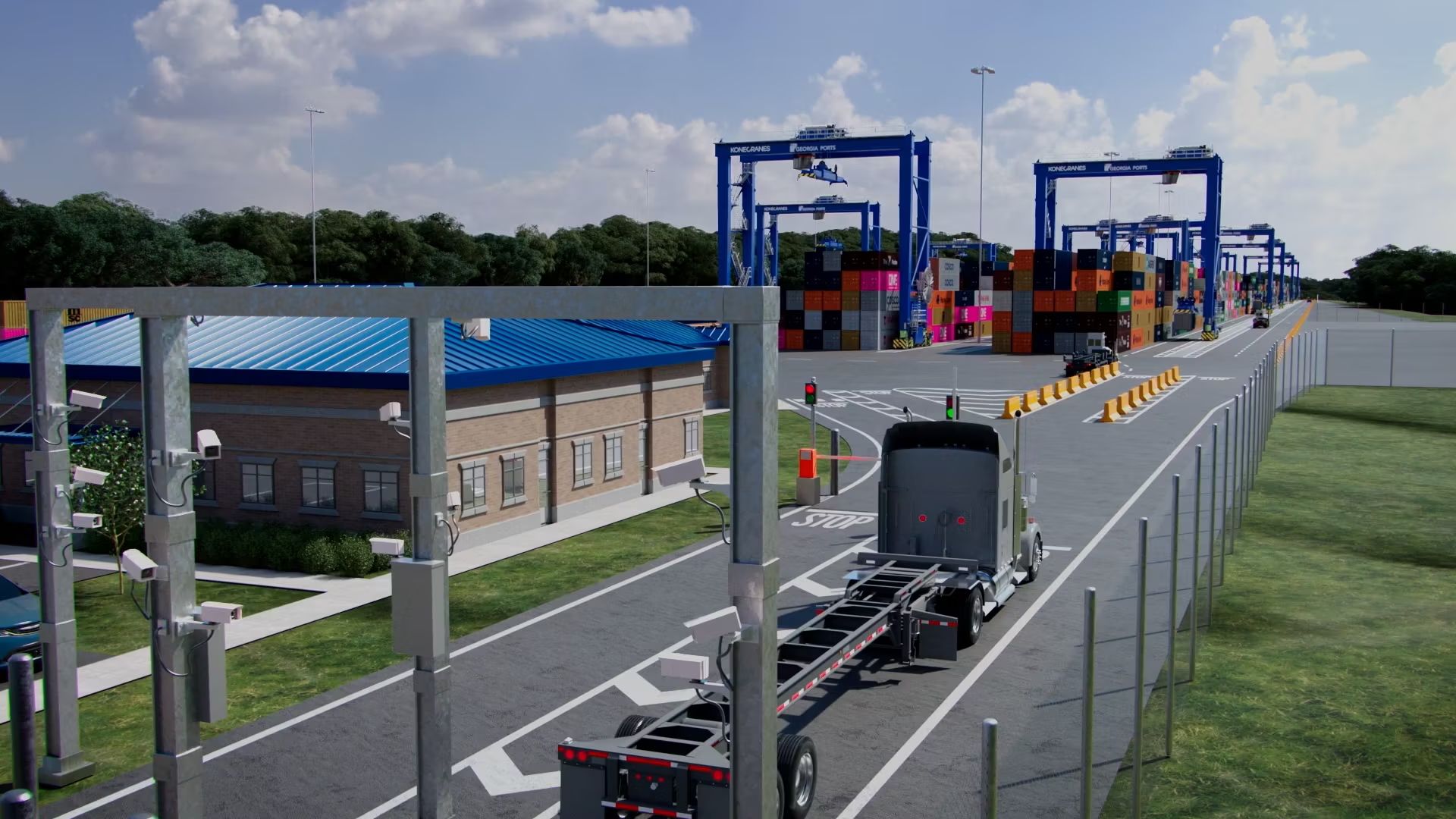
- Cavnue is bringing its smart road technology to one of America's busiest freight corridors at the Port of Savannah.
- Haas Alert, whose digital notifications let drivers know about road hazards like emergency vehicles or construction, has a new deal with AI-powered dashcam company Nexar to enhance its services.
Why it matters: Both technologies are designed to enable collaboration between vehicles and roads for safer, more efficient transportation.
Zoom in: Cavnue plans to transform State Route 307 — the critical artery feeding the nation's third-largest container port — into a smart freight corridor that could one day enable automated trucking.
- Cavnue's platform combines roadside hardware — sensors, computing and advanced communications equipment — with intelligent software to provide agencies with real-time data and insights about traffic, weather, debris and other road conditions.
- The company is building a similar freight corridor in Texas and is preparing to extend its original smart highway on Interstate 94 in Michigan.
Haas Alert, meanwhile, is fusing its Safety Cloud real-time hazard and incident alerts with Nexar's wide-scale data collection to provide visual verification of road conditions in real time and deliver that data directly to participating vehicles.
- Haas' Safety Cloud alerts are available today in Jeep, Dodge, RAM, Chrysler, and Volkswagen vehicles, as well as through navigation apps like Waze.
The big picture: By increasing driver awareness of road conditions, both of these vehicle-to-infrastructure technologies can lead to fewer accidents and less congestion.
- Longer term, their road awareness tech can feed into assisted-driving and autonomous vehicle systems.
4. Drive-thru
/2025/05/28/1748401544909.gif?w=3840)
Catching you up on worthy news you might have missed ...
⚡️ Electric cars struggled to gain market acceptance and were undermined by politics once before. A timely read as Republican leaders look to undo most of the Biden administration's policies favoring EVs. (The New York Times)
🇨🇳 Competition among Chinese EV manufacturers is beginning to look like a bloodbath after BYD slashed prices, triggering a new price war. (Reuters)
🚙 Stellantis named North American boss Antonio Filosa as its new chief executive, succeeding Carlos Tavares. (CNBC)
5. What I'm driving
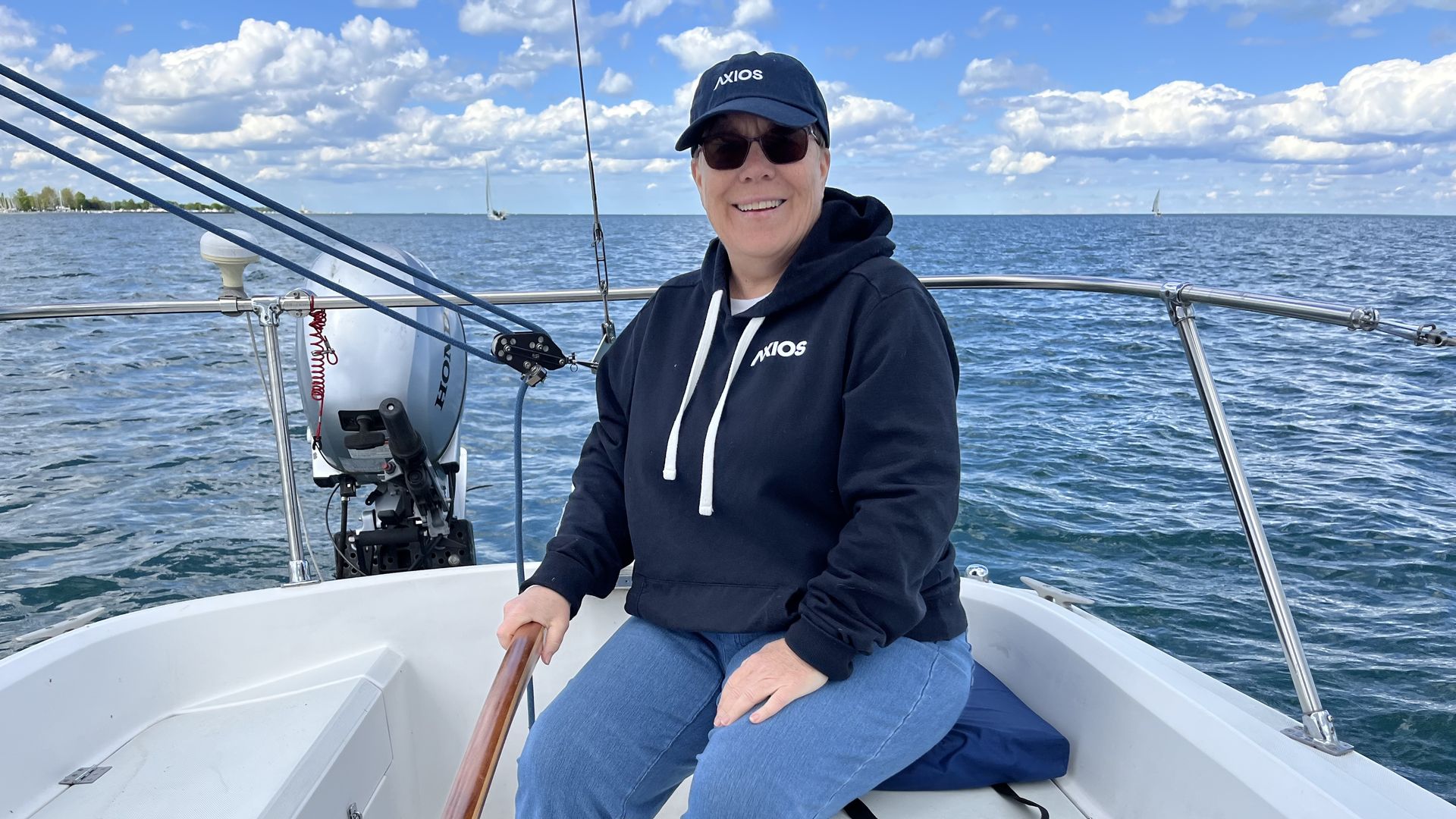
While some of you spent Memorial Day weekend watching cars race over 200 mph at the Indy 500 or the Monaco Grand Prix, I was cruising Michigan's Lake Saint Clair at a leisurely 5 knots and loving every minute of it.
- Our 1984 sailboat — a 22-foot O'Day, or "Slow Day," as we like to joke — is my idea of a Sunday drive.
- Outta the Blew is a modest vessel, but she's simple to rig and easy to sail.
- And if the wind dies — nature's version of "range anxiety" — we've got a Honda outboard engine to get us back to the dock.
The bottom line: Sometimes, it's way more fun to drive with a tiller in your hand than a steering wheel.
Thanks for reading! Please encourage your friends and colleagues to sign up.
Thanks to Ben Berkowitz and Bill Kole for editing.
Sign up for Axios Future of Mobility