Axios Future of Mobility
May 21, 2025

🫖 It's International Tea Day, but to me, every day is tea day! Coffee? Blech!
Lots of autonomous vehicle news today, so steep yourself a nice cup and let's get moving ...
1,560 words, a 6-minute read
1 big thing: Scrutinizing Tesla's robotaxis
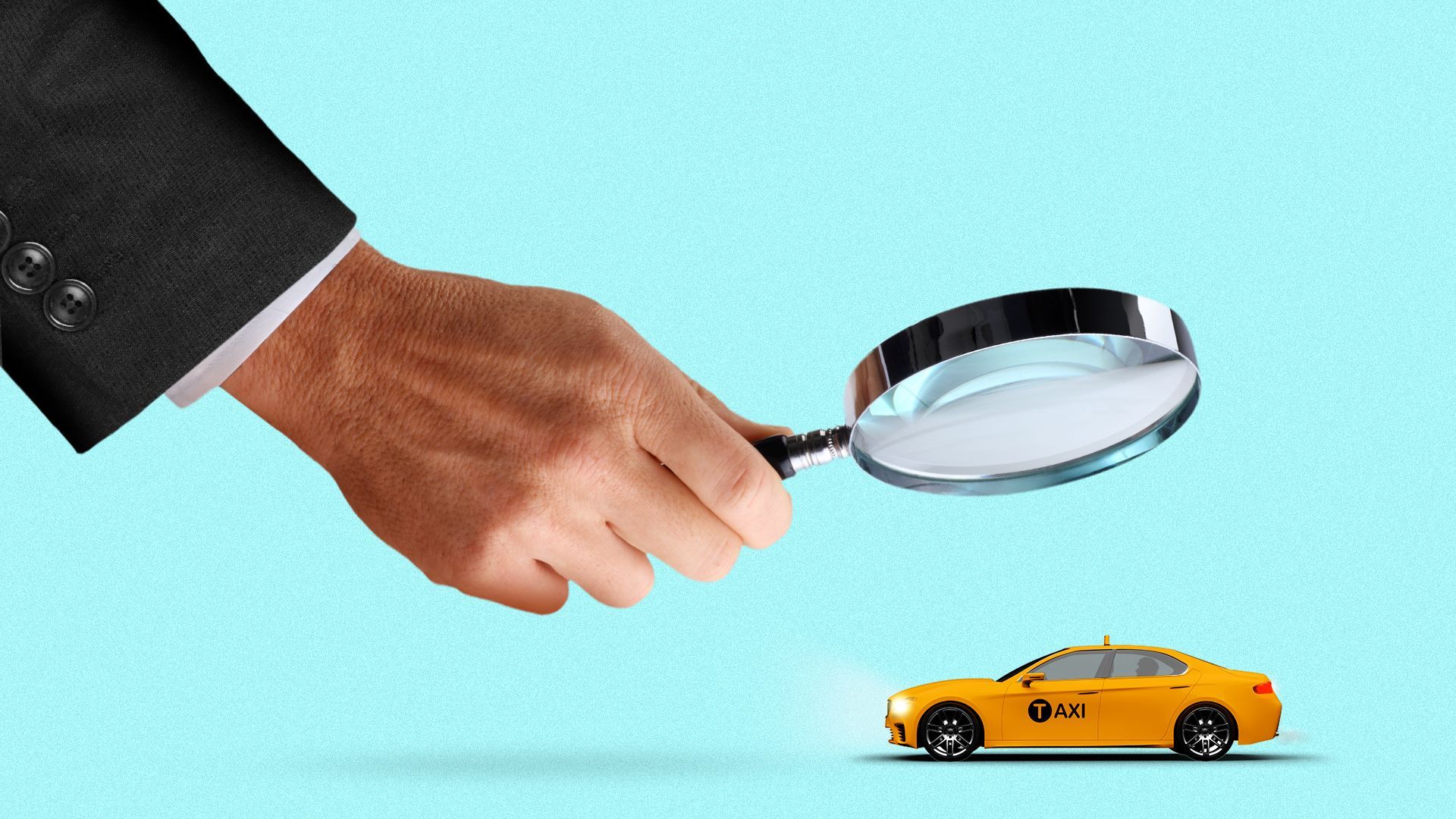
Public trust in self-driving vehicles is critical, but without federal standards, companies in the sector get to decide what to share about the safety of their technology, with varying levels of transparency.
- As Tesla gears up to launch robotaxis next month in Austin, Texas, there are still plenty of outstanding questions.
Why it matters: Even if you're personally not ready to ride in the back seat of a robotaxi, everyone will be sharing the road with them soon enough.
- People want assurances that cars with no one behind the wheel will behave predictably and safely.
The big picture: AV companies use various tactics to build public trust.
- Months before launching the first driverless semi-trucks in Texas last month, Aurora Innovation shared details of its safety case framework.
- Gatik enlisted a third-party auditor to validate safety claims about its automated trucks and named an independent safety advisory council.
- Waymo regularly releases independent, peer-reviewed research analyzing the safety of its robotaxis.
Tesla's website shares safety performance data about its assisted-driving system, but as with most companies, the data is selective, safety experts say.
- "There are different degrees of transparency, but as a professor, I would never give anyone higher than a C," said Missy Cummings, director of George Mason University's Autonomy and Robotics Center and a former official at the National Highway Traffic Safety Administration.
Driving the news: Tesla CEO Elon Musk told CNBC Tuesday the company is on track to launch a modest fleet of 10 or 12 robotaxis in Austin next month.
- "We will have to see how well it does. But I think it's prudent for us to start with a small number, confirm that things are going well, and then scale it up proportionate to how well we see it's doing," Musk said.
- By the end of 2026, Musk said he expects one million self-driving Teslas, whose owners could choose to add them to the robotaxi network to earn money when not in use.
Yes, but: Some AV experts question whether Tesla's system — which relies on AI and a handful of inexpensive cameras, rather than a suite of redundant sensors — will be able to handle unexpected situations.
- NHTSA is already investigating collisions involving Tesla's current assisted-driving technology (called FSD Supervised, short for "full self-driving"), to determine if the system can get blinded by sun glare, fog or airborne dust.
- That tech is the foundation for its future driverless system, Tesla says.
Zoom in: In a letter earlier this month, Tanya Topka, the director of NHTSA's Office of Defects Investigation, demanded Tesla share more details about its plans, so the agency can understand how its fully driverless robotaxis will compare to the driver-assistance products available on Tesla vehicles today.
- NHTSA wants to know, for example, how the vehicles will be monitored in real time, whether they can be remotely "tele-operated" by Tesla staff in case they get stuck and how robotaxis will respond to emergency vehicles.
Where it stands: Tesla says it is still working through a "big list of issues" to reduce the number of times backup safety drivers have to take control of the wheel during pre-launch testing.
- "We are aware of the interventions that are happening ... and that's why we are hardcore burning it down," Ashok Elluswamy, Tesla's director of Autopilot software, told investors on an April 22 earnings call.
- Musk told CNBC Tuesday that remote monitors will be "extremely paranoid" in their oversight, but stopped short of confirming whether they will be capable of taking control of vehicles remotely.
- Waymo has a remote response team to guide its robotaxis through decision-making when necessary, but they do not operate the vehicle from afar.
What to watch: Transportation Secretary Sean Duffy told CNBC the AV industry needs to be more transparent. "We don't want to punish them. We want to give them better rules."
- The Autonomous Vehicle Industry Association — of which Tesla is not a member — wants federal guidelines for autonomous vehicles, and is also calling for a national safety data repository on crashes involving self-driving cars.
The bottom line: Musk's made big promises, but we'll see the reality soon enough.
2. Tesla's tumbling brand reputation
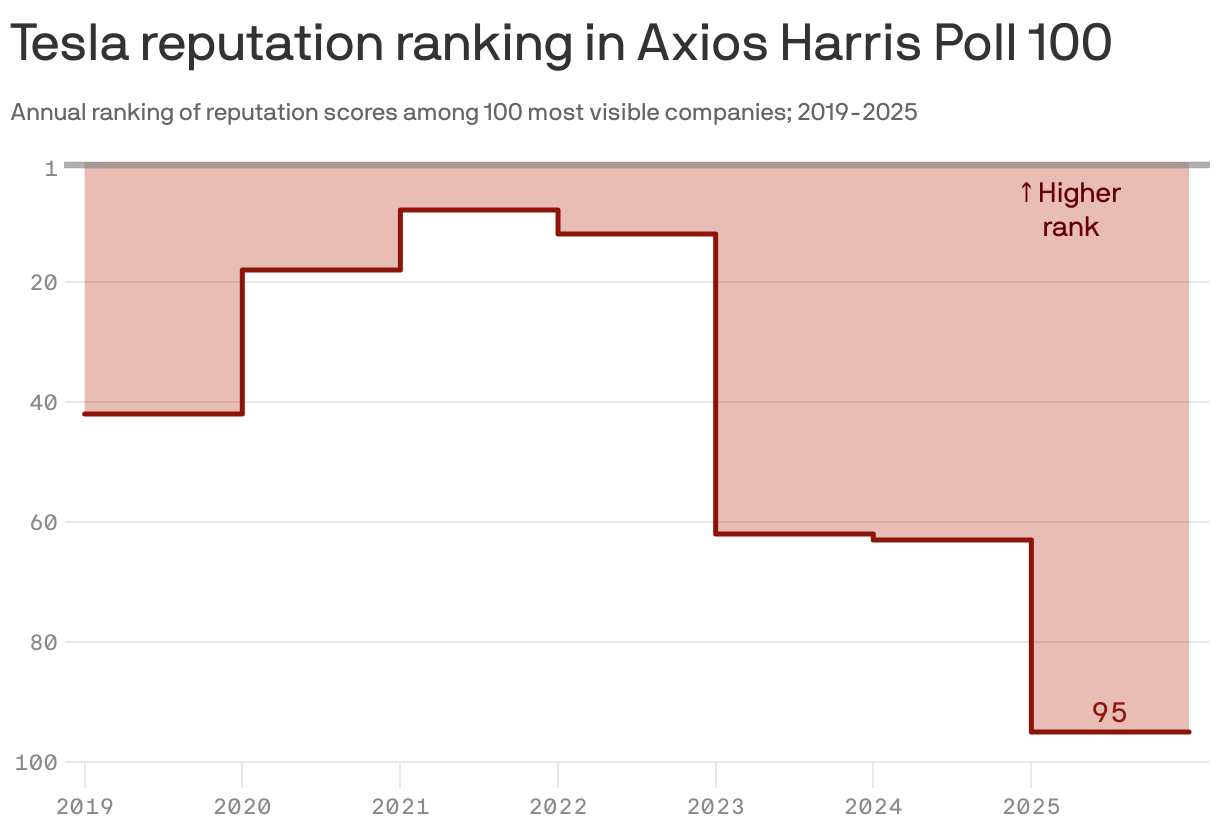
Tesla Motors and SpaceX saw their brand reputations crater in the past year, according to new Axios Harris Poll 100 survey results.
Why it matters: Elon Musk's polarizing political activism appears to have come at the expense of his largest companies, as Republicans expressed more favorable opinions than did Democrats, Axios' Dan Primack writes.
By the numbers: Tesla was in 8th place in the 2021 reputation ranking of America's 100 most visible companies, but last year tumbled to 63rd and now is near the very bottom at 95th.
- It placed dead last in "character," while placing near the bottom in areas like "ethics" and "citizenship."
- Six other automakers place higher, with the highest being Toyota at #4 and the lowest being Ford at #60.
- SpaceX saw a similar decline in its reputation between 2024 and 2025.
Tesla did not respond to an email request for comment on either story.
3. Aurora's driverless speed bump
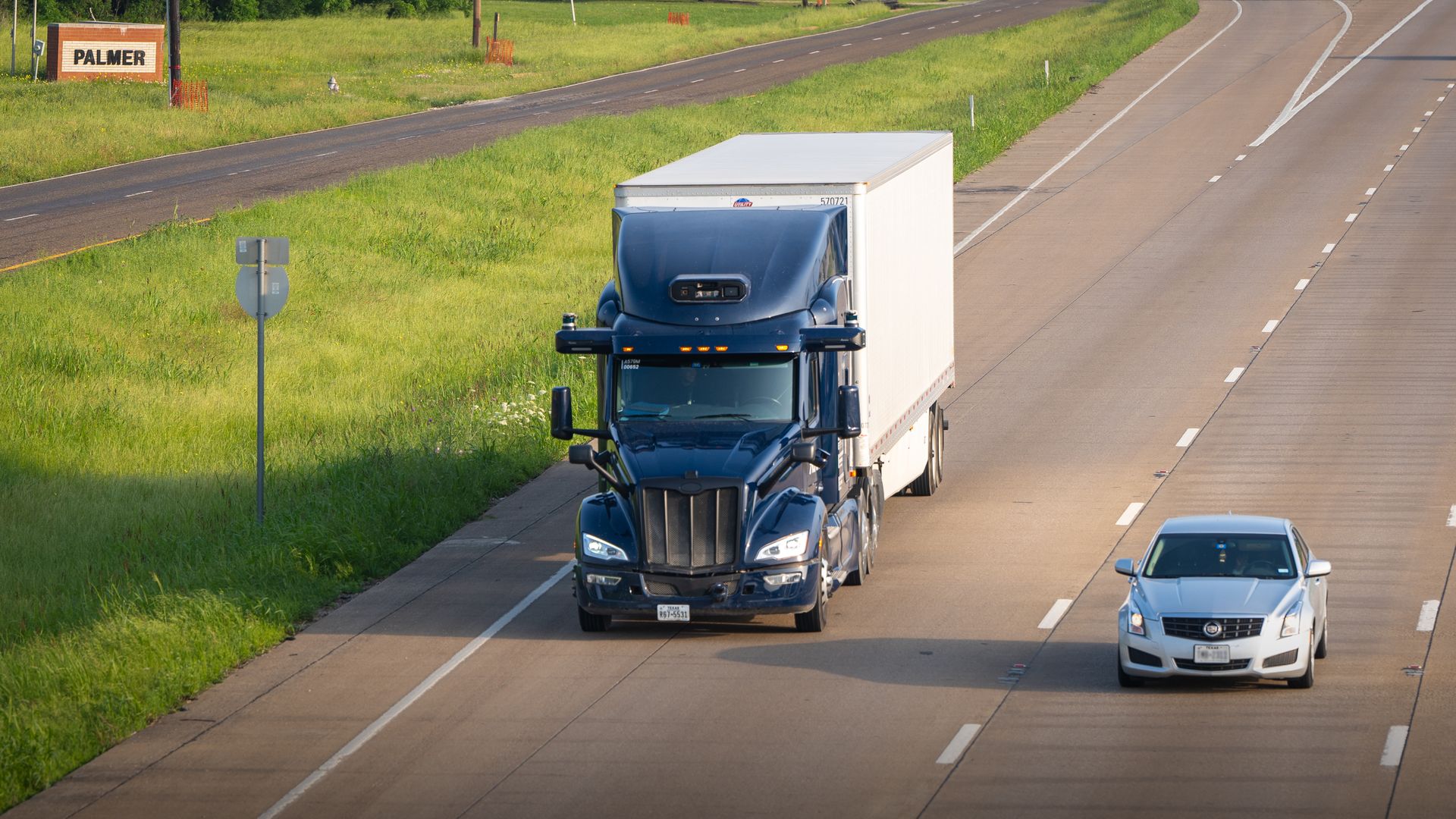
Less than three weeks after Aurora Innovation made a splash with the commercial launch of the first driverless semi-trucks in Texas, the company is putting a human observer in the driver's seat.
Why it matters: The decision is another speed bump for an industry leader after a widely watched milestone, coming just days after co-founder Sterling Anderson left to take a big job at General Motors.
The big picture: Aurora's autonomous technology will still do the driving, and the change won't affect the company's development plans, CEO Chris Urmson wrote in a blog post.
- Urmson said the decision to move an "observer" from the rear of the cab into the driver's seat was made at the request of Paccar, the manufacturer of Aurora-owned Peterbilt trucks.
- "We are confident this is not required to operate the truck safely based on the exhaustive testing (covering nearly 10,000 requirements and 2.7 million tests) and analysis that populates our safety case.
- "Paccar is a long-time partner and, after much consideration, we respected their request."
The intrigue: A report by Bleecker Street Research, dated May 14, suggested Aurora and Paccar weren't on the same page about the timing of the "driver-out" commercial launch. (Bleecker Street is a short seller, with an active bet that the price of Aurora shares will fall.)
- Paccar declined to comment.
4. Drive-thru
Catching you up on worthy news you might have missed ...
❌ American investors were blocked from buying shares in Contemporary Amperex Technology Ltd., or CATL, as the huge Chinese battery maker had its trading debut in Hong Kong. (The New York Times)
- Tesla uses CATL's batteries in some of its cars, and Ford is licensing CATL technology to produce lower-cost batteries in Michigan.
💰 Indigo Technologies is preparing to raise a $300 million Series C to build electric delivery vans and taxis equipped with a motor and suspension in every wheel, Axios' Alan Neuhauser scooped (Axios Pro Deals)
🔋 The U.S. Commerce Department set the stage for anti-dumping duties on Chinese EV battery materials, which would help U.S. graphite producers but could also further drive up the cost of electric vehicles. (Bloomberg, via Yahoo Finance)
🚖 Amazon's autonomous vehicle unit Zoox will soon start testing its self-driving vehicles in Atlanta ahead of launching a robotaxi service there. (TechCrunch)
5. What's driving me: May Mobility robotaxi
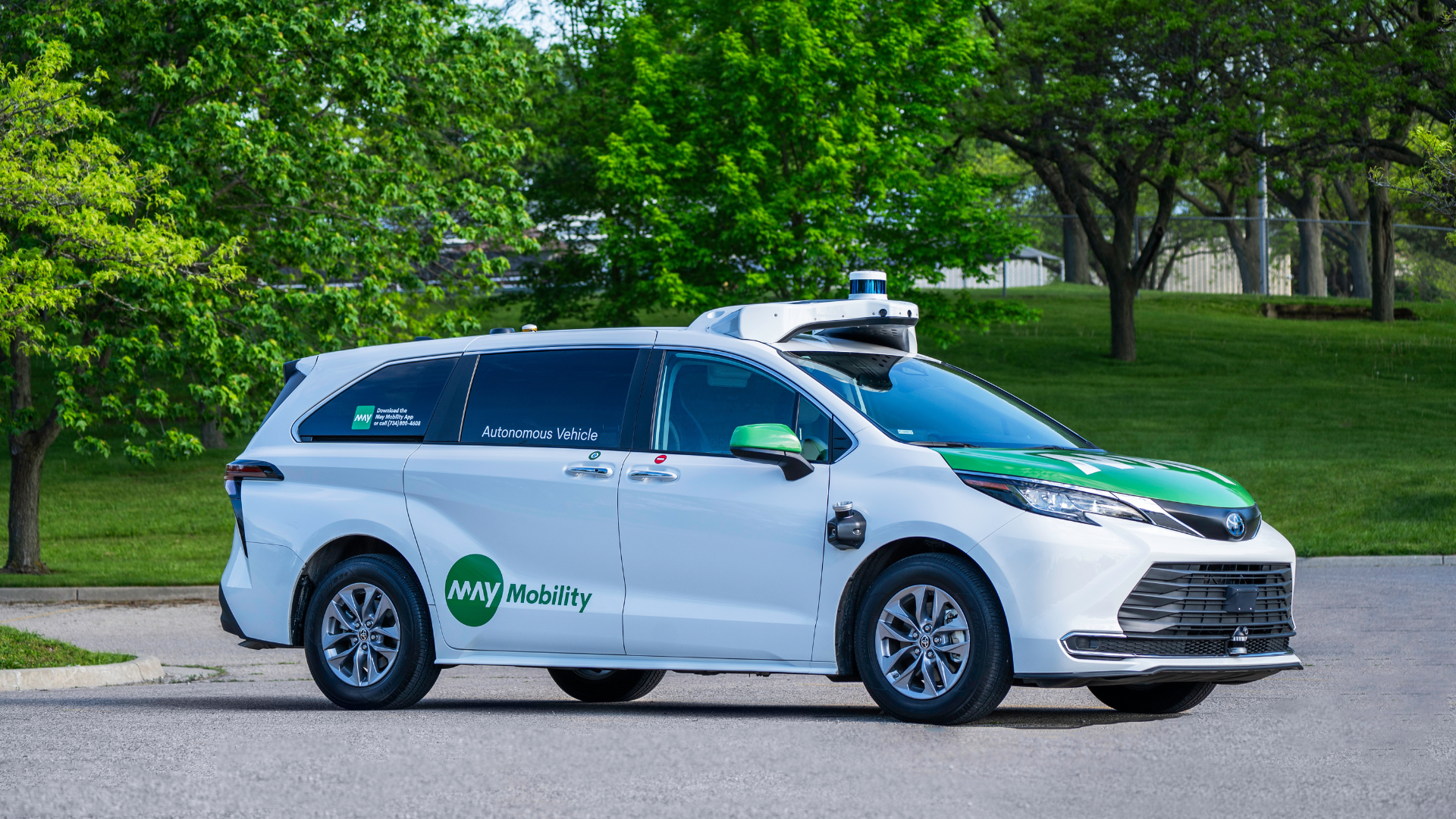
Self-driving tech startup May Mobility often gets overshadowed by well-funded peers like Alphabet's Waymo or Tesla. But it's quietly gaining traction as a future robotaxi partner for Uber and Lyft to complement its public transit niche.
I rode along with CEO and co-founder Edwin Olson the other day in Ann Arbor, Michigan, to see how its technology has progressed.
- It's the first time I was a passenger in a May Mobility van without a backup safety driver in the front seat.
- We cruised around the southern end of Ann Arbor, encountering fairly light traffic through business areas and residential neighborhoods.
Key moments: Starting a trip with May Mobility is different from my experience in a Waymo.
- You have to scan a QR code on the center screen to confirm you're in the right vehicle. But don't worry: if you got in the wrong van at the airport, for example; scanning the QR code will update its destination.
Remote help is critical for AVs.
- Our van stopped behind a large landscaping trailer that was partially blocking the road. Unsure whether it was safe to pass, the van automatically raised its hand to remote operators behind the scenes, who then silently gave it permission to pass.
Pedestrians are mystified by robotaxis.
- A woman standing by a parked car kept waving for our AV to proceed, but the robotaxi wouldn't pass.
- With a puzzled look, she eventually realized no one was behind the wheel and took a step back behind her vehicle. Only then did the robotaxi drive on.
The bottom line: The drive was not as complicated as my L.A. excursion in a Waymo, but I was pleasantly surprised by May Mobility's confident driving ability.
Thanks for reading! Please encourage your friends and colleagues to sign up.
Thanks to Ben Berkowitz and Bill Kole for editing.
Sign up for Axios Future of Mobility