Axios Future of Mobility

September 30, 2026

👋 Hi and happy Wednesday!
🚙 Large trucks and SUVS are sustaining U.S. automakers these days, but with pressure mounting on all sides, there aren't a lot of places left where they can find growth. More on that below 👇.
- ⛽️ And what a time to roll back fuel economy regulations that ironically were created during the last Middle East oil shock.
📌If you're in Washington, D.C., tomorrow, join me at 7:30 a.m. for conversations with Nuro co-founder and co-CEO Dave Ferguson, safety advocate Cathy Chase and NVTA CEO Monica Backmon. Or watch the livestream here.
1,537 words, a 6-minute read.
1 big thing: U.S. carmakers have nowhere to grow
Detroit's automakers have spent years retreating toward their most defensible turf: highly profitable pickups and SUVs. Now they're getting boxed in, with few places left to grow.
The big picture: Japanese and Korean rivals are taking ever larger slices of U.S. market share, while Chinese competitors are squeezing Detroit's growth prospects overseas. Now, high gas prices have exposed the risk of U.S. carmakers' truck-heavy lineups.
Driving the news: Asian brands are expected to top 50% of U.S. sales for a second straight quarter in Q3, Cox Automotive predicts, while the Detroit 3 fall to just over 36% — their lowest share on record.
- Toyota is closing in on No. 1 GM, while Hyundai Motor Group is expected to pass Ford for third place.
The shifting landscape is largely the result of choices Detroit has made over decades.
- "The domestics made interesting decisions about what they're going to stand for," Erin Keating, Cox Automotive's executive analyst, told reporters at a briefing last week.
- "If you don't have vehicles to catch consumers where they are, other manufacturers will step in."
State of play: For years, Detroit's automakers responded to competitive pressure by concentrating on the vehicles and markets where they had the biggest advantages.
- They largely abandoned sedans and small cars in the U.S., ceded ground in many overseas markets and doubled down on large vehicles that command premium prices and generate outsized profits.
- And it worked, for the most part. But now, amid seismic market shifts, their room to maneuver is shrinking.
Zoom in: Soaring fuel prices have accelerated a shift to hybrid vehicles, where Detroit's cupboard is surprisingly bare.
- Hybrids now account for more than one in five new vehicles sold in the U.S., up from just 13% a year ago.
- Meanwhile, Ford sells hybrid versions of the Maverick and F-150 pickups, but GM has virtually none for mainstream buyers.
- Stellantis is just now rolling out its first hybrid in the new Jeep Cherokee.
That favors companies like Toyota, Honda, Hyundai and Kia, which spent years building broad hybrid lineups while Detroit focused mostly on EVs — only to pull back as EV demand softened.
- "With consumers continuing to migrate toward hybrid vehicles and passenger cars, segments where Asian manufacturers maintain significant advantages, the shift in market share is expected to continue," Cox senior economist Charlie Chesbrough said.
Overseas markets, which once represented incremental growth, are now places where Detroit has to fight simply to remain relevant.
- Chinese automakers dominate their home market and are now expanding rapidly in Europe and emerging markets with inexpensive high-tech EVs and hybrids.
By the numbers: China now commands 25% of the worldwide market, up from 14% in 2020, while U.S. carmakers' global share has stayed flat at 12%, according to the Center for Automotive Research.
- In Western Europe, Chinese brand car sales have tripled since 2020, while in Mexico, they soared from less than 1% to 14.5% last year.
After years of retrenchment in Europe, Ford is now partnering with China's Geely to manufacture low-cost vehicles in Spain.
- Stellantis is deepening its partnership with China's Leapmotor to better compete in Europe.
- In China, GM stabilized its sinking business by leaning on products developed locally with Chinese partners SAIC and Guangxi Automobile Group.
Reality check: Detroit's pickup-and-SUV fortress is still enormously profitable.
- Sales of pickups and SUVs remain strong, and consumers are proving to be incredibly resilient. And even the gas-price shock could be a temporary pain.
- "Buying behavior does not change quickly, and most Americans have ridden the gas-price rollercoaster before," Keating noted.
What we're watching: Carmakers are looking to software subscriptions, energy and defense as potential future sources of revenue, but those are small compared to their core vehicle business.
The bottom line: The problem for Detroit is that the paths to growth are getting harder to find.
- "There's just not a lot of juice left to squeeze," says Mobility Global's Peter Nagle, associate director of demand forecasting for the Americas.
2. Cheaper car, costlier commute
The Trump administration picked an awkward moment to relax America's fuel-economy rules: just as gasoline prices are reminding drivers why fuel economy matters.
Catch up quick: The federal government this week finalized fuel-economy standards that would result in an estimated fleetwide average of 34.9 mpg in 2031, down from 50.4 mpg under the Biden-era rules.
- Cars will be cheaper, the administration argues, because they won't need costly fuel-saving technology.
- Automakers welcomed the change, saying the previous rules effectively forced them to sell more EVs than consumers wanted.
Yes, but: What consumers save at the dealership could be offset by what they spend at the pump.
- The Department of Transportation's analysis estimated the weaker standards would increase gasoline consumption by 4.6% through 2050 compared to the Biden rules.
- So while DOT said the regulation will reduce manufacturers' average cost per vehicle to comply by $1,289, it would increase fuel costs by more than $1,600 over the life of the vehicles.
- That tradeoff is especially conspicuous now, with gasoline prices sharply higher as the Iran war drags on.
Zoom in: Axios Future of Energy co-author Ben Geman bookmarked Table 8-3 here and Table 722 here if you want to see granular estimates of various costs and benefits.
- (And the NYT reports that some economists have challenged the savings projections.)
Flashback: There's a historical irony here. Congress created federal fuel-economy standards in 1975 after the Arab oil embargo sent gasoline prices soaring and exposed America's vulnerability to foreign oil shocks.
The bottom line: Half a century later, another Middle East oil shock is providing a real-time reminder of why fuel economy has value — just as Washington is dialing back the rules designed to promote it.
3. The history of U.S. fuel economy


U.S. cars and light trucks have become far more efficient since the imposition of mileage rules in the 1970s, though the path hasn't been straight, writes Axios Future of Energy co-author Ben Geman.
How it works: This chart shows estimated mileage in "real-world" conditions, which is typically around 20-25% below the formal standards.
- These real-world estimates take into account factors such as halting and fast driving, use of air conditioning, and cold weather.
- This also includes EVs based on a conversion to "miles per gallon of gasoline equivalent," which boosts fleetwide efficiency.
Subscribe to Axios Future of Energy.
4. DoorDash built its own drone
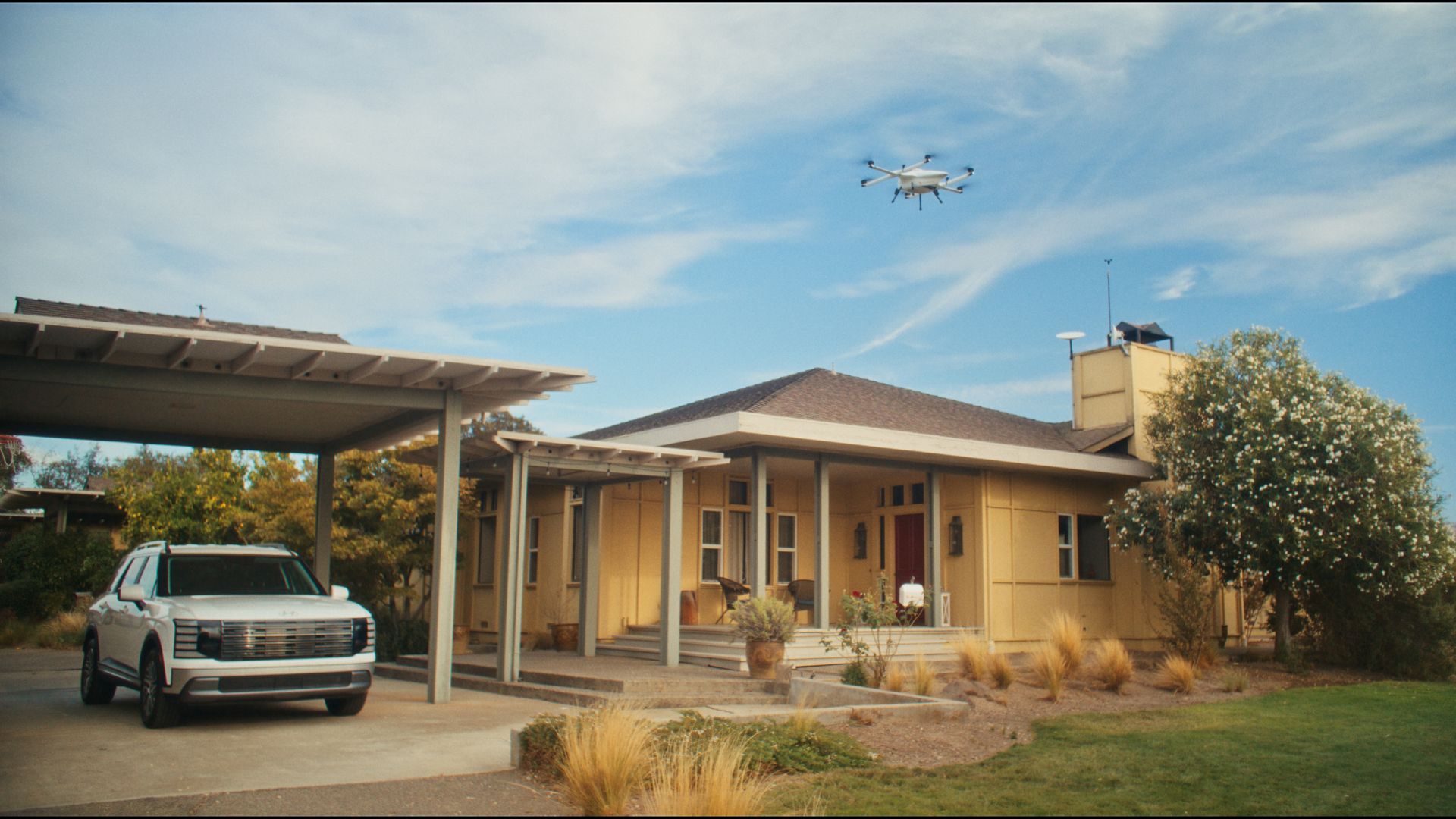
DoorDash is adding another vehicle to its increasingly automated delivery fleet: a drone designed and built in-house.
Why it matters: The company is building a sprawling multimodal delivery network — humans, robots and drones — and using its software to decide which is best for each order.
Driving the news: DoorDash yesterday unveiled the aircraft developed for DoorDash Air, its in-house drone delivery service, which will begin pilot deliveries in Northern California with restaurants including Chipotle, Popeyes and Momo N Curry.
- The six-propeller drone was designed around DoorDash's own order data, including how much typical restaurant orders weigh and how far they travel.
- DoorDash says about 80% of its U.S. restaurant orders are small and light enough for the aircraft to carry, although factors including distance and weather will further limit which orders qualify.
- In initial tests, flights from restaurants to customers averaged less than five minutes, the company says.
👂 Sound check: DoorDash says the aircraft produces about as much cruising noise as a passing car.
Between the lines: "We didn't start with a drone and ask what would fit. We started with what people order and how local businesses actually operate, then built the entire system from there," said Harrison Shih, head of DoorDash Air.
- Shih tells Axios he thinks speed of drone delivery will encourage people to use DoorDash more often.
- If you're missing a side of ranch dressing, or french fries, for example, the drone can bring it almost instantly, he said.
Zoom out: DoorDash already offers drone delivery through partners including Alphabet's Wing and Flytrex, and those efforts will continue alongside DoorDash Air.
The bottom line: DoorDash's bet isn't on any single robot or drone. It's that the delivery network of the future will use all of them — and DoorDash will decide which one is assigned to bring your dinner.
5. Drive-thru

🚗 Hyundai Motor will invest about $500 million in Alabama to build Tucson and Santa Fe hybrids plus engines and extended-range EV powertrains. It's part of a $21 billion U.S. commitment through 2028. (Automotive News)
💵 Tesla has secured $30 billion in fresh credit lines ahead of heavy planned investments on the Cybercab robotaxi, Optimus robot, and Tesla Semi. (TechCrunch)
- Tesla launched mass production of the long-delayed Semi in Nevada last week. (Axios)
Thanks to editors Pete Gannon and Bill Kole. If you're a fan of this newsletter, please ask your friends to sign up, too.
Sign up for Axios Future of Mobility