Axios Future of Mobility

December 03, 2025

👋 Happy Wednesday!
- Today we've got robot drivers, air taxis and delivery drones — a virtual smorgasbord of mobility news.
All in 1,505 words, a 5½-minute read.
1 big thing: Waymo's potential roadblocks
Waymo boasts that deploying robotaxis to new cities has become "routine." But in at least a half dozen of the markets it's targeting for expansion, it may have underestimated the policy roadblocks and political headwinds it faces.
Why it matters: Misreading local politics could foil Waymo's ambitious growth plans, erasing the giant lead the Alphabet-owned company has over competitors.
Driving the news: Waymo is in the midst of a head-spinning robotaxi expansion.
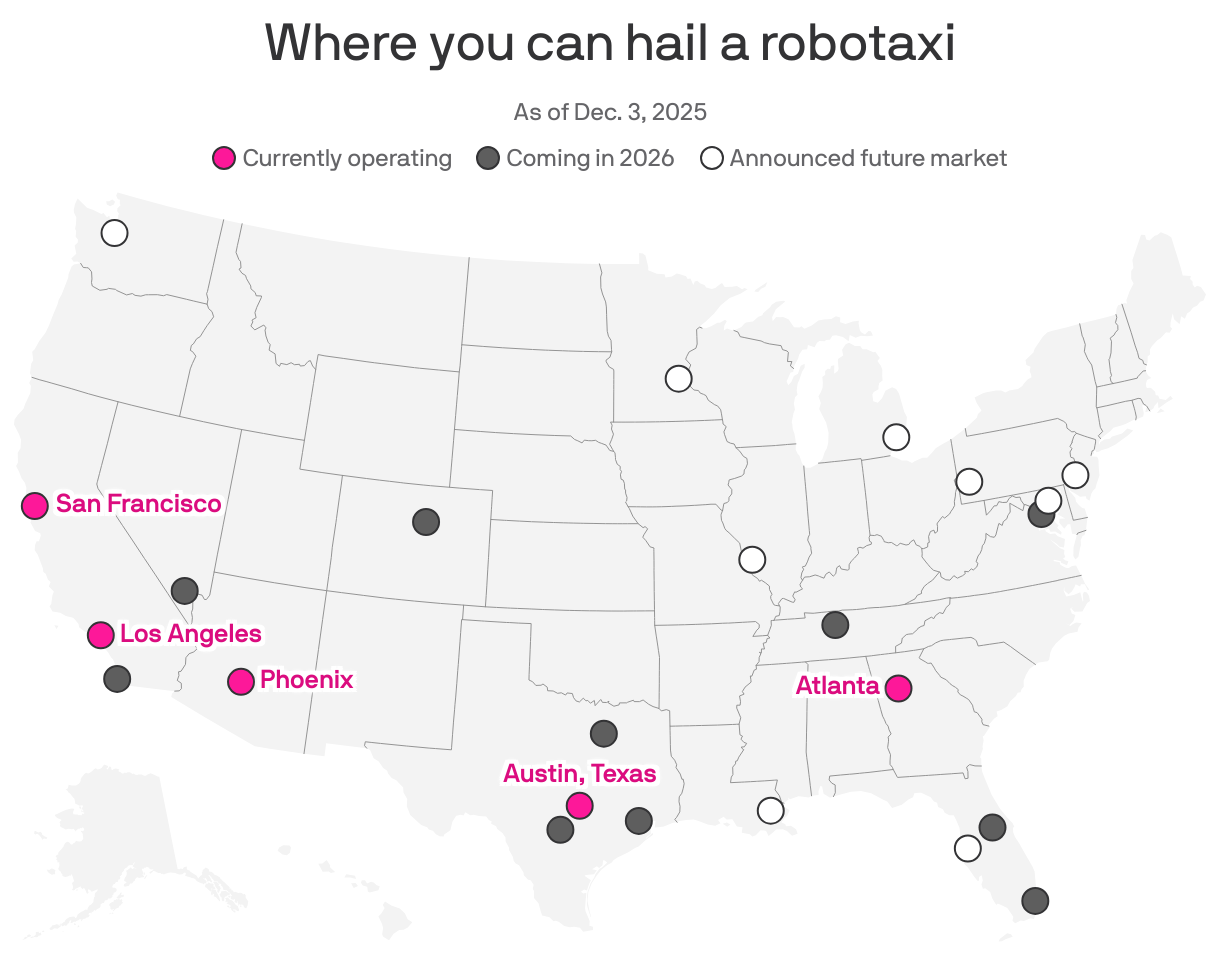
- It's currently operating in five cities — Los Angeles, Phoenix, San Francisco, Atlanta and Austin (the latter two in partnership with Uber, plus a relationship in Phoenix as well).
- 19 additional U.S. cities are coming in the next year or two, including four announced just this morning — Baltimore, Philadelphia, Pittsburgh and St. Louis.
- It's even hoping to take on Manhattan someday.
Yes, but: While self-driving cars are permitted in about half the country, the laws would have to be changed in places like Washington, D.C., and New York, where a human operator is still required behind the wheel.
- In other states, the law is silent on driverless cars, which means it's open to interpretation — and debate.
- More worrisome for Waymo, potentially: City leaders in some places, including Boston and Seattle, are proposing new ordinances that would prohibit autonomous vehicles.
The intrigue: Waymo replaced its global head of public policy in September to deal with the mounting headwinds.
- Justin Kintz previously led the policy team at Uber during its early growth period, when the ride-hailing network was unwelcome just about everywhere.
- At Waymo, he will likely draw on that experience to try to push local legislation that is more favorable toward robotaxis.
- That will require navigating opposition from labor unions and progressive Democrats, like Boston Mayor Michelle Wu, New York Mayor-elect Zohran Mamdani and Seattle Mayor-elect Katie Wilson, who built her reputation as a proponent of public transit.
What they're saying: "The biggest hurdle Waymo faces is not understanding local politics," says AV policy expert Grayson Brulte, founder and CEO of The Road to Autonomy, a strategic advisory firm.
- "They're going into markets where the policy is not ready yet," he said.
For the record: Waymo acknowledges the work ahead.
- "Expanding our footprint will require expansive attention on the development of AV policies that enable fully autonomous operations, including in many places that currently have none," the company said when it hired Kintz in September.
- A spokesperson tells Axios this week the company is "feeling more hopeful" about its prospects in D.C., where a more favorable law is currently being drafted. "We'll be ready in 2026," he said.
- In other states, including Washington, Minnesota and Illinois, Waymo is seeking "legal clarity" before its planned deployment, he says.
Zoom in: In Minneapolis, Waymo recently hired lobbyists to navigate complicated state and local dynamics, where opposition from Democrats and labor unions aligned with rideshare drivers could threaten its expansion plans.
- Multiple members of the Minneapolis City Council have signaled interest in passing a citywide ordinance requiring that a human driver remain in the vehicle.
- "Bringing autonomous fleets into Minneapolis without protections for workers puts jobs at risk, destabilizes communities & shifts wealth out of our city," Council Member Jamal Osman, a key swing vote on the council, wrote on X after Waymo's November announcement.
The bottom line: With 2,500 robotaxis on the road and more than 100 million fully autonomous miles driven, Waymo is by far the industry's 800-pound gorilla.
- But that early success isn't guaranteed to continue if it keeps running into the same obstacles.
Axios Twin Cities' Torey Van Oot contributed.
2. Archer plots next air taxi network in Miami
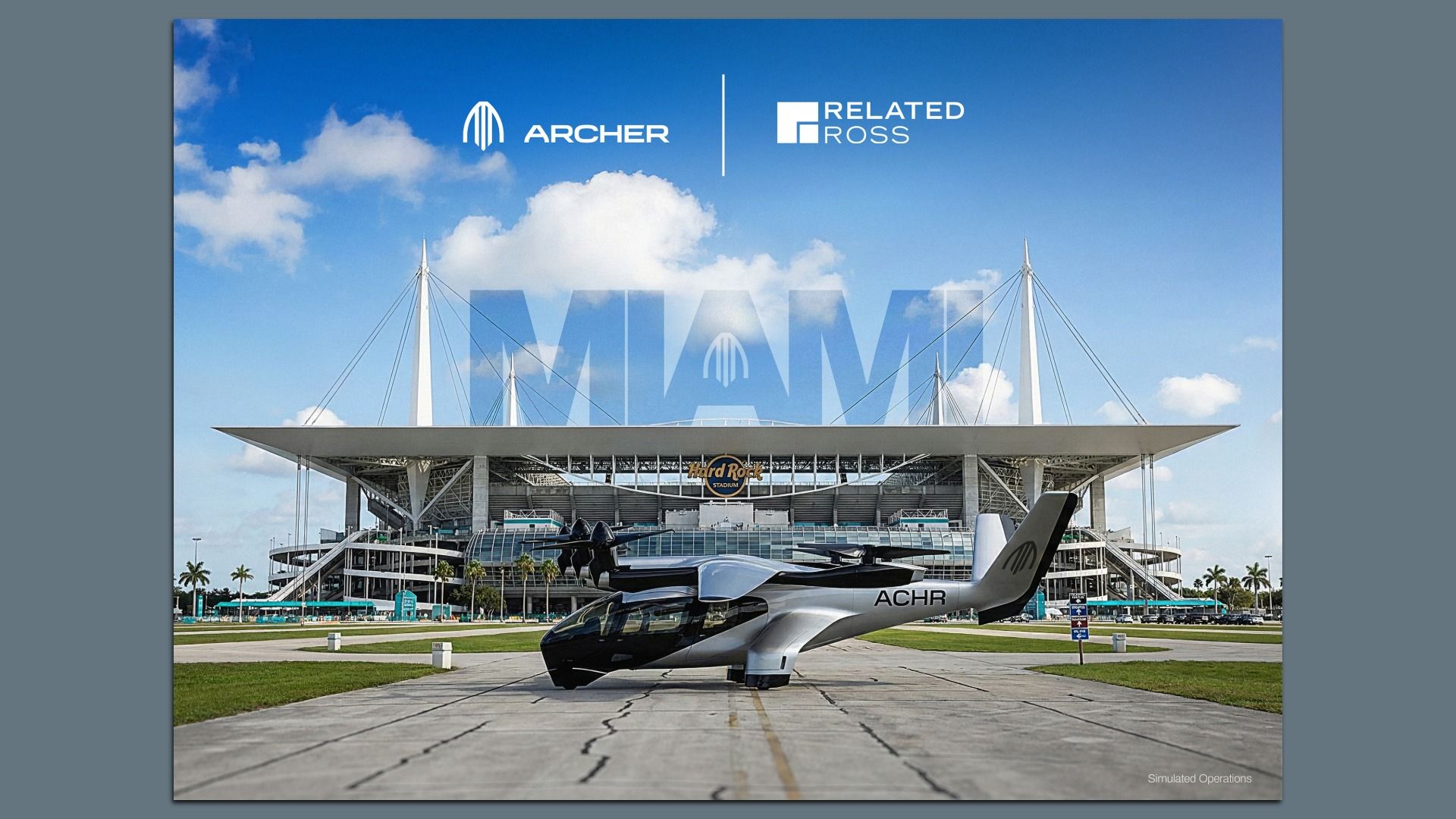
Archer Aviation plans to create an electric air taxi network in South Florida by linking regional airports with properties owned by Miami Dolphins owner and real estate developer Stephen Ross.
Why it matters: Traffic in Miami, one of the fastest-growing metropolitan regions in the U.S., can be a nightmare.
- Archer wants people to be able to zip over the congestion in electric air taxis, reaching popular destinations in 10 to 20 minutes.
Driving the news: Archer revealed plans for the first pieces of its Miami network today.
- Existing helipads at Hard Rock Stadium and Apogee Golf Club in Hobe Sound will be readied for electric operations. Ross is an owner of both properties.
- Ross's real estate company, Related Ross, also plans to partner with Archer to develop a vertiport within its West Palm Beach downtown development.
- Another real estate developer, Plaza Equity Partners, is partnering with Archer to develop a vertiport in Dragon Global's Magic City Innovation District, a mixed-use community in Miami's Little Haiti.
- The network will also offer travel options between the region's largest airports in Miami, Fort Lauderdale and Palm Beach, as well as several strategic private airports.
Reality check: It will be several years, at least, before the new mobility service is operational.
- Archer's multirotor electric aircraft, called Midnight, still needs to be certified by the Federal Aviation Administration.
- For now, the company is preparing for the next era of aviation by building the necessary infrastructure, which includes outfitting existing helipads with chargers and also building new "vertiports."
What to watch: Archer has already announced plans for air taxi networks in the San Francisco Bay area, New York and Los Angeles, where it plans to turn its recently purchased Hawthorne Airport into an air taxi hub and where it is the "official air taxi partner" of the 2028 Olympics.
- But Archer's first air taxi service is expected to launch in Abu Dhabi in 2026.
3. Walmart drones are buzzing over Atlanta
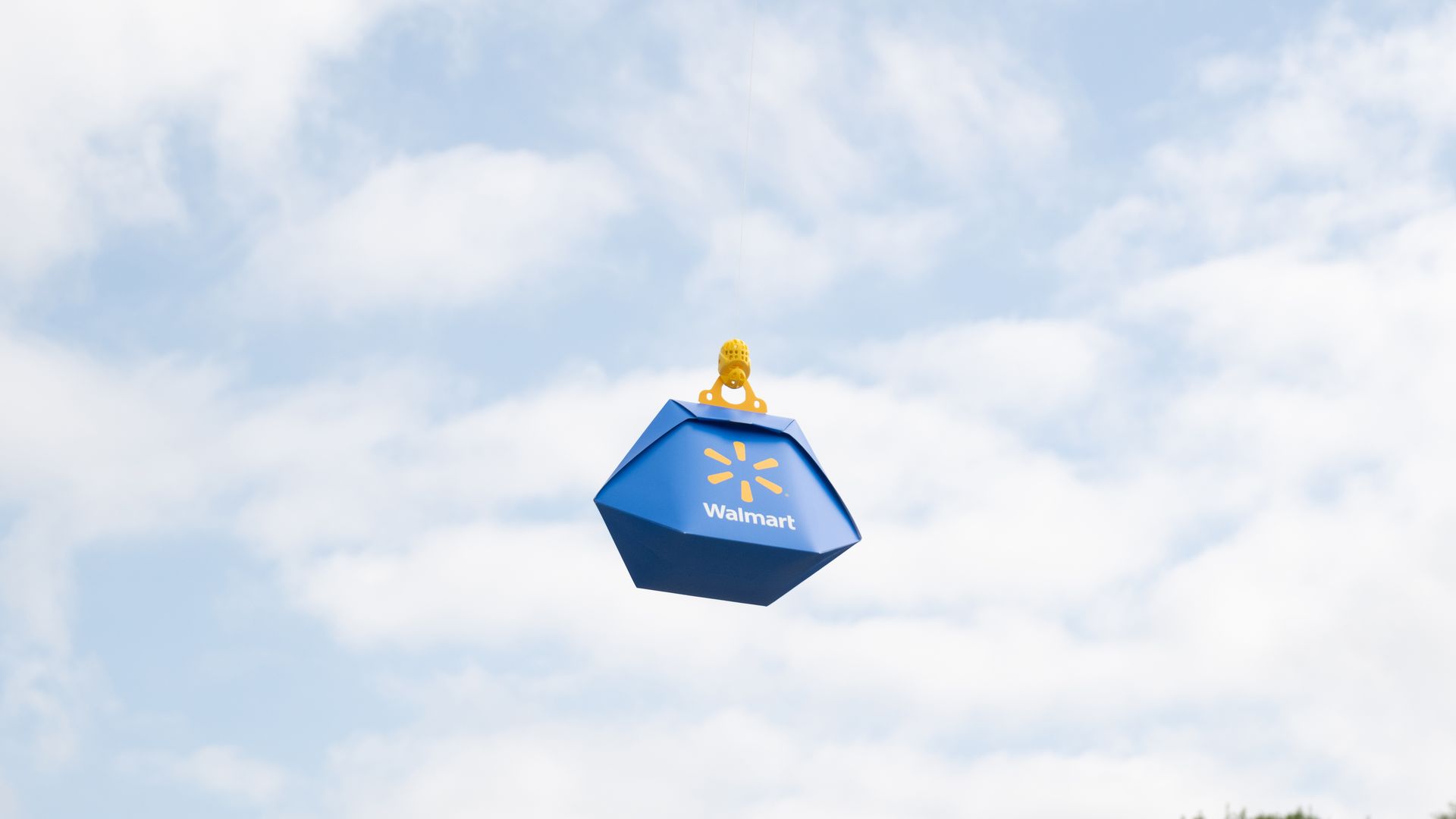
Starting today, six Walmart stores on the outskirts of Atlanta are offering drone delivery as an option for those last-minute purchases.
Why it matters: Shifting small package deliveries to the sky could help ease road congestion and cut tailpipe emissions — not to mention enabling shoppers to get their purchases delivered quickly, right to their doorstep.
Driving the news: Atlanta is the first of five expansion cities for Walmart and its drone delivery partner, Wing, following their successful pilot in Dallas.
- The Atlanta launch includes Walmart stores in Woodstock, Conyers, Hiram, Dallas, McDonough and Loganville, Georgia.
- Drones are also coming soon to Walmart customers in Charlotte, North Carolina; Houston, Texas; and Orlando and Tampa, Florida.
How it works: For now, Walmart customers must place their orders using Wing's app. (Longer-term, online customers will be able to select drone delivery on Walmart's app during checkout.)
- They'll first need to check whether their address is within the designated service area at wing.com/walmart.
- After selecting their items, they'll confirm their delivery spot — in the front or back yard, for example, or the driveway.
- Employees will pick and pack the selected products and load them into the drone for delivery.
- Once the drone arrives, typically within 30 minutes, it will automatically lower the package to the ground, where the customer can retrieve it.
What to watch: Walmart and Wing have permission to operate in limited areas, but President Trump has ordered the Federal Aviation Administration to fast-track rules so drones can fly beyond visual line of sight, which would unleash drones everywhere.
4. Drive-thru
⛽️ The Trump administration is expected to ease Biden-era fuel efficiency standards it blames for driving up the cost of new cars. Detroit auto execs are slated to attend a White House announcement today. (Bloomberg)
🧑💻 Stellantis is adding nearly 2,000 white-collar jobs in engineering, manufacturing, quality and other departments as it looks to rebuild its North American operations after a disastrous slide. (Automotive News)
🚖 Uber is adding robotaxis to its platform in Dallas via a new partnership with Avride. The autonomous Hyundai Ioniq 5 vehicles will have a safety operator for now.
- It's the latest in a string of global AV partnerships for Uber.
- Axios Dallas' Tasha Tsiaperas took a ride. (Axios Dallas)
5. What I'm driving: 2026 Honda CR-V TrailSport hybrid
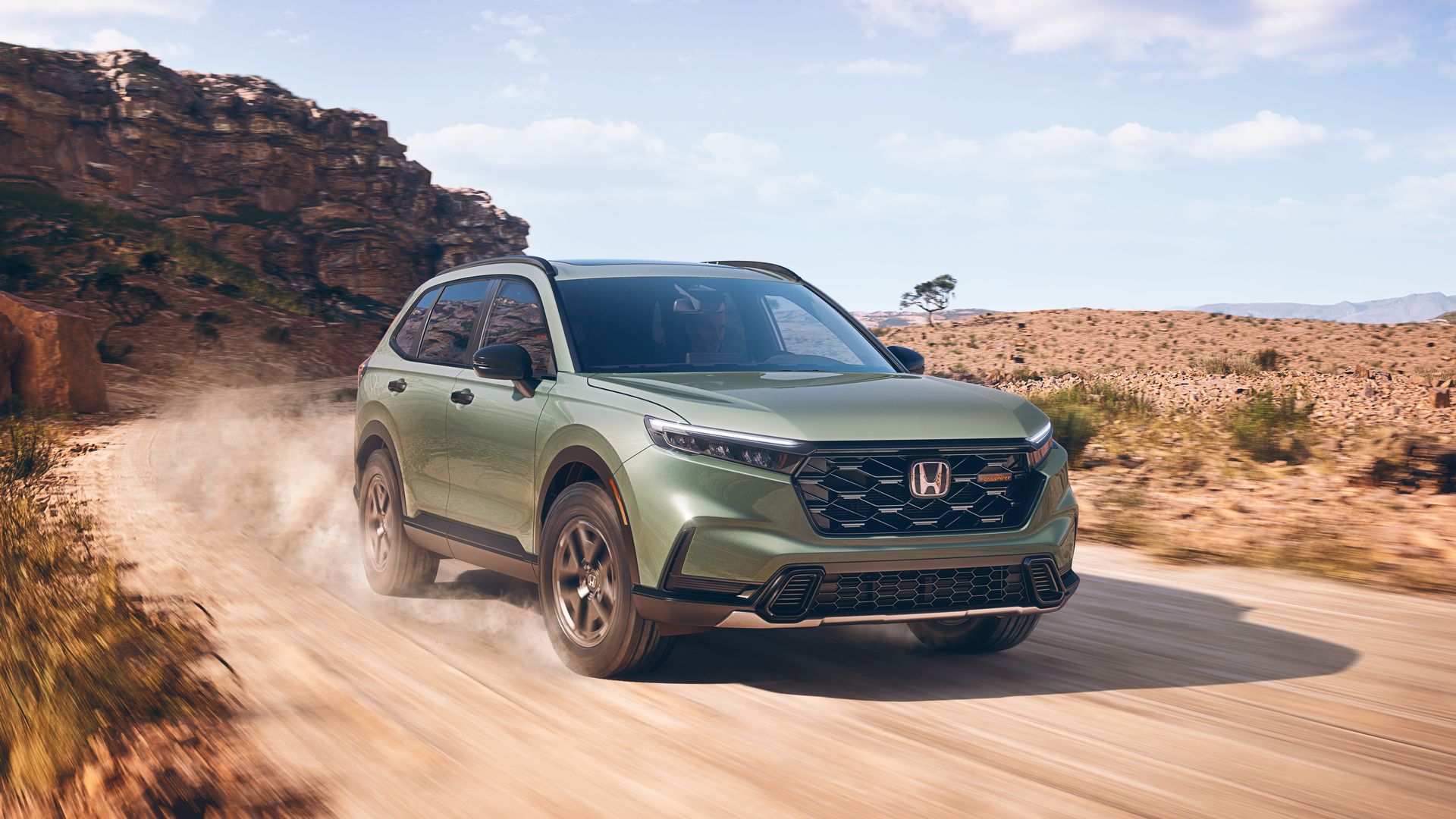
Honda's most popular model gets a little more outdoorsy for 2026, with the first-ever TrailSport version of the CR-V Hybrid.
Why it matters: I wouldn't try driving the CR-V TrailSport hybrid on challenging terrain like the Rubicon Trail, but it's definitely up for some fun dirt roads.
Between the lines: The TrailSport version offers some more rugged design cues that are mostly for show, along with all-terrain tires, standard all-wheel-drive and a traction control system. But there's not much else in terms of off-road equipment.
- Still, it's a CR-V, and there's a reason Honda sells a ton of them.
Fuel economy: The TrailSport hybrid gets an average 35 mpg in combined city/highway driving, slightly worse than other front-wheel-drive hybrid CR-Vs.
Pricing: The gasoline version of the regular CR-V starts at $31,000, while hybrids start at $35,630.
- The TrailSport hybrid has a sticker price of $38,800.
The bottom line: Honda wants you to think it's getting more rugged. But that's not why people love Hondas.
I test-drive vehicles in my role as a juror for the North American Car and Truck of the Year awards. Opinions are my own.
Thanks to Ben Berkowitz and Bill Kole for editing. Please get your friends to sign up!
Sign up for Axios Future of Mobility