Axios Future of Mobility

August 20, 2025

Happy Wednesday! 🍁 It's starting to feel like fall ...
🦾 You've heard plenty about how AI is changing workplaces, but today we're considering its less glamorous, more industrial side, thanks to an exclusive peek inside GM's strategy.
- Plus, why car prices are likely going up.
1,364 words, a 5-minute read.
1 big thing: GM's practical approach to AI

While tech companies tout chatbots and humanoids, General Motors is using artificial intelligence in less glamorous but more practical ways to make better cars and smoother-running factories.
Why it matters: GM's AI strategy is less about sci-fi and more about wringing efficiency, safety and quality from its massive industrial footprint.
Driving the news: David Richardson, GM's senior vice president of software and service engineering, laid out the automaker's vision for AI in an exclusive interview with Axios.
- He joined GM from Apple in 2023 and is now assembling an ambitious AI organization, led by Silicon Valley veterans like chief AI officer Barak Turovsky and John Anderson, head of AI research.
What he's saying: Richardson is bullish on AI in the auto sector, but believes there's too much hype, especially about humanoid robots.
- GM co-developed a humanoid robot with NASA years ago, and it flew to the International Space Station in 2011.
- But that doesn't mean it wants humanoids operating in its factories any time soon.
- "I don't want to say it's never going to happen," he said. "I think it's very early, and I do think there's a question as to what is the overall value you get from that?"
- "Right now, our vision is we want to use AI to actually drive real ROI for the business, as well as develop consumer-facing products that people actually need and they actually want."
GM is training AI "cobots" — robots that work alongside humans to assist with jobs that are dull, dirty or dangerous — so workers can do less strenuous tasks and focus on craftsmanship, he said.
- "We've got so much proprietary data around how to do manufacturing," he said, "and that's like a treasure trove of data for us to train AI to do that."
- When building new production lines, for example, GM uses AI to create a digital twin of the manufacturing process to spot bottlenecks or safety issues in the virtual world before building the real thing.
- GM factories are also using AI vision systems to detect paint imperfections or welding defects, painstaking work that used to be done manually.
- AI also helps with predictive maintenance to avoid, say, a costly shutdown of a production line.
Beyond manufacturing, GM is deploying AI where it can have an immediate effect on productivity and profits.
- In vehicle design, for example, AI helps engineers quickly optimize things like vehicle aerodynamics, saving time and money.
- Another AI tool enables GM to detect voltage anomalies in battery packs before they make their way into an EV.
The intrigue: More than 15% of the software code GM develops is now done using AI-assisted tools. AI has helped GM catch 10x more software bugs, far earlier in the development cycle.
🏎️ 1 fun thing: GM is even using AI tools in motorsports to try to win more NASCAR and IndyCar races — and starting next year, Formula 1 races, too.
The bottom line: GM's strategy is a reminder not to overlook the practical side of artificial intelligence.
2. Why even domestic cars could see higher prices
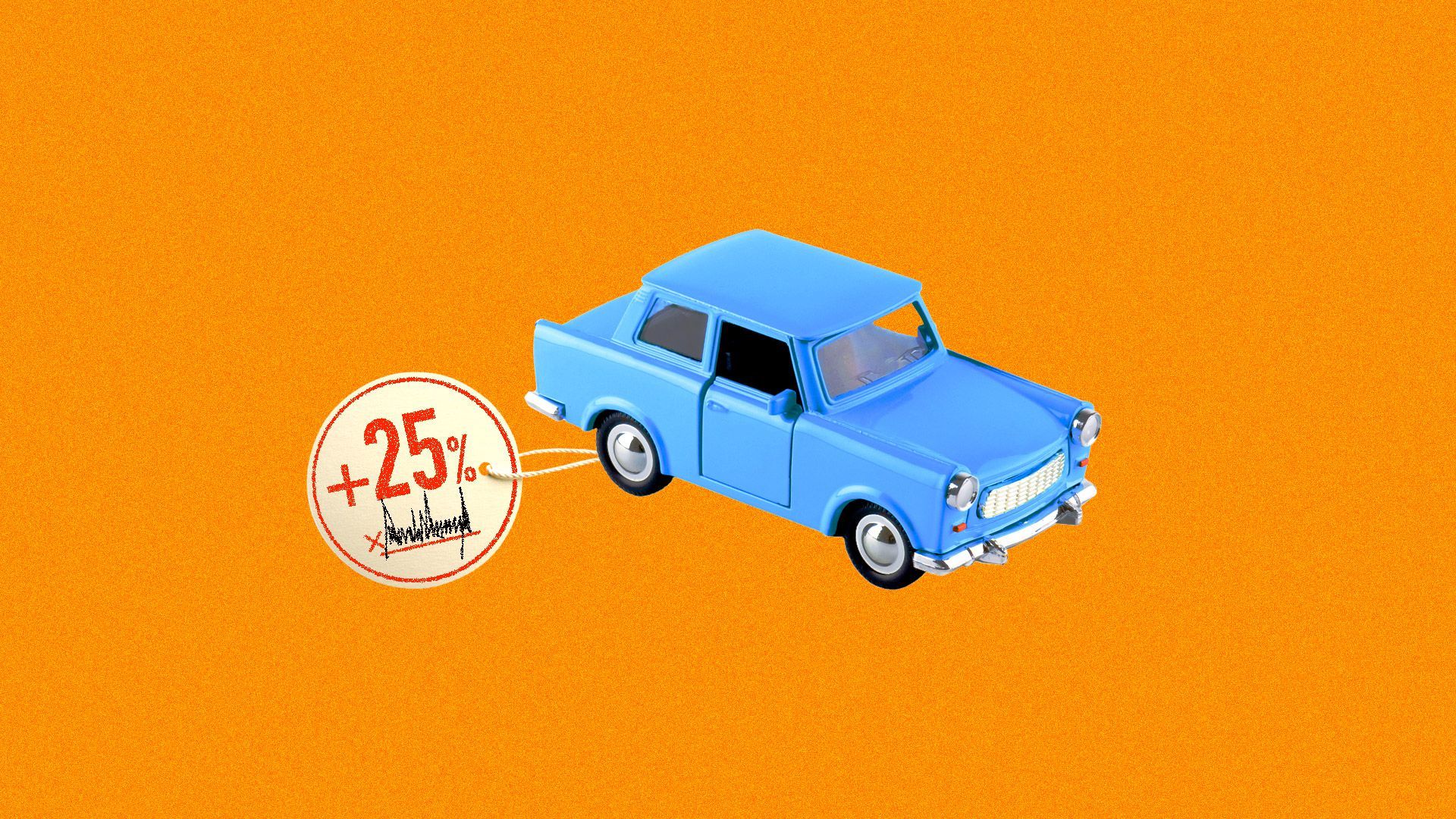
Car buyers are likely to pay more this fall as tariffs begin to drive up sticker prices — and not just on imported vehicles.
Why it matters: Automakers can't eat the cost of tariffs forever, so September is a convenient time to adjust prices as the 2026 models begin arriving in showrooms.
- It might not be obvious: Lower-priced trim levels could be eliminated, for example, or desirable features might be rolled into expensive option packages.
- Be on the lookout, too, for higher destination fees — add-on dealer delivery charges that aren't part of the manufacturer's suggested retail price.
The big picture: Across many industries, companies are raising prices, or signaling that increases are coming, to absorb some of the costs of the Trump administration's tariffs.
- Everyone from Home Depot to Procter & Gamble has indicated they need to start passing their higher costs on to consumers.
What to watch: The auto industry could be next. New vehicle prices have been mostly flat as automakers have eaten the cost of tariffs so far.
- That won't last, according to former GM executive Warren Browne, now head of RFQ Insights, which advises automotive suppliers.
- He annualized June's 2025 tariff data to conclude that tariffs are on track to cost automakers $2,200 per vehicle on average this year, as first reported in Joe White's High Speed Rodeo Substack column.
- "GM, Ford, Stellantis, Toyota — they can't support $2,200 per vehicle," Browne tells Axios. "That's impossible to sustain."
Yes, but: If companies try to offset tariffs on imported cars with higher prices, they'll need to make adjustments across their portfolio to maintain reasonable gaps between vehicle segments.
- GM's entry-level Chevrolet Trax, for example, is imported from South Korea, now subject to a 15% tariff.
- But if it raised the price of the Trax, it might end up costing about the same as a Chevy Equinox, currently made in Mexico but moving to the U.S. in 2027.
- Nudging Equinox pricing up might then conflict with Chevy Blazer pricing, and so on.
The bottom line: Managing tariffs and vehicle prices is a complex equation, but when all the numbers are crunched, Browne predicts industrywide prices will be 6.3% higher in 2026.
3. Drive-thru
😮 Fisker may have filed for bankruptcy last year, but a clever fleet operator in New York City bought up 2,800 of its unsold Ocean SUVs and rents them to ride-hail drivers, which means New York may be one of the only places you'll get to see one. (Bloomberg)
💵 California is considering new state EV credits to replace the $7,500 federal incentive that ends in September. The push is part of an ongoing battle with the Trump administration over the state's authority to regulate carbon emissions from automobiles. (Automotive News)
🔑 Key fobs are becoming obsolete as more people operate their vehicles with a phone app. But some luxury carmakers still put a surprising amount of effort into designing them. (Bloomberg)
4. What I'm driving: Mercedes Benz GLE 450e
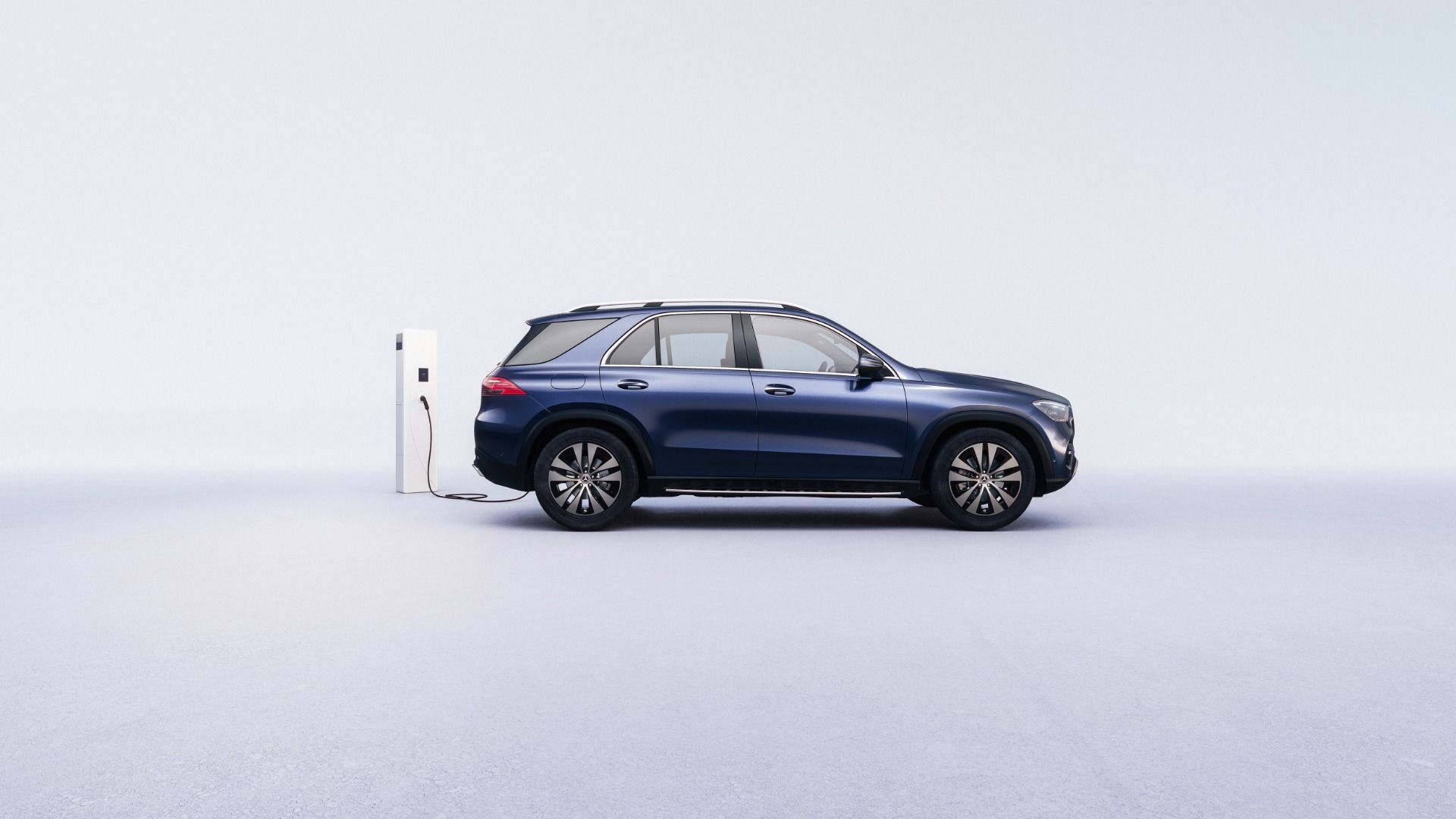
The Mercedes Benz GLE 450e plug-in hybrid SUV is for luxury buyers who aren't quite ready to go fully electric.
Why it matters: Plug-in hybrids run on electricity for most daily errands, but still have a gasoline engine that provides security for people who are nervous about finding a place to charge on longer trips.
Zoom in: The GLE 450e has 49 miles of electric range — more than most people drive in a day.
- After that distance, the engine turns on, providing another 450 miles of driving range, per EPA tests.
- I didn't burn a drop of gas during my weeklong test drive; I only topped off the battery once using my home charger.
Key specs: The turbocharged 2.0-liter four-cylinder engine combined with an electric motor generates 381 horsepower. All-wheel-drive is standard across the lineup.
- Unlike gasoline versions of the GLE, which have an optional third row, the plug-in hybrid has two rows and seats five passengers.
- The interior is loaded with plush materials and luxury features you'd expect from Mercedes, including a wide infotainment screen that stretches two-thirds of the way across the dashboard.
One gripe: The MBUX voice assistant had an annoying habit of barging into conversations where it wasn't invited.
- It's supposed to activate when it hears the keyword "Hey Mercedes," but it sometimes mistakenly interjected when it heard a similar sound or phrase.
The GLE 450e comes in three versions, ranging in price from around $71,000 to $78,000.
- I drove the base model, but with options including a panoramic sunroof, driver-assistance package and other upgrades, the price shot up to $87,800, including a $1,300 destination charge.
The bottom line: The GLE 450e is the best of both worlds — luxurious and efficient.
I test-drive vehicles in my role as a juror for the North American Car and Truck of the Year awards. Opinions are my own.
Thanks for reading! Please encourage your friends and colleagues to sign up.
Thanks to Ben Berkowitz and Bill Kole for editing.
Sign up for Axios Future of Mobility