Axios Future of Mobility
April 01, 2026

1 big thing: Technology's safety record

Mounting research shows that vehicle safety technologies are making roads safer and reducing insurance claims.
Why it matters: Nearly 40,000 people — including more than 7,000 pedestrians — die each year in U.S. vehicle-related accidents.
Driving the news: The National Highway Traffic Safety Administration today reported that traffic deaths fell 6.7% in 2025 from the year before, to an estimated 36,640.
- And the year saw the second-lowest traffic fatality rate on record, with 1.10 fatalities per 100 million vehicle miles traveled, according to NHTSA.
Between the lines: The Highway Loss Data Institute recently found significantly fewer insurance claims for cars equipped with safety features like automatic front and rear emergency braking, lane departure prevention and high-beam assist.
- HLDI's study, announced in March, found that cars with one basic feature — automatic emergency braking, known as AEB — saw a 13% reduction in property damage claim rates.
- Bundling safety features together — AEB with pedestrian detection, adaptive cruise control, high-beam assist, lane departure warning and prevention and rear emergency braking — saw up to a 39% drop in claims, the data showed.
Separately, preliminary data from the Governors Highway Safety Association found pedestrian deaths dropped nearly 11% in the first half of 2025 from the same period the prior year.
- A report accompanying GHSA's data did not directly attribute reasons for the decline, but noted that AEB can improve safety.
- Previous data from the Insurance Institute for Highway Safety, from 2022, found that the feature reduces pedestrian crashes by 27%.


By the numbers: The drop in pedestrian deaths in the first half of 2025 is the largest annual decline since GHSA began tracking pedestrian fatalities 15 years ago.
💵 Friction point: Critics, including some in Congress, have said advanced technologies are driving up the price of new vehicles, though others put the blame on convenience features — like hands-free power liftgates and fancier sound systems.
What we're watching: The impacts of hands-free driving systems. 🙌
- While crash prevention technologies can save lives, there is continued scrutiny on more advanced systems that add automation to these building block technologies, enabling drivers to take their hands off the wheel in certain situations.
- NHTSA is escalating its safety probe into Tesla's Full Self-Driving software after a series of crashes, for example.
- Yesterday, the National Transportation Safety Board concluded that drivers' overreliance on Ford's Blue Cruise hands-free system contributed to two fatal crashes.
NTSB is calling for stricter performance standards for these automated systems and improvements to driver monitoring systems.
The bottom line: Cars are getting better at preventing crashes — but drivers' growing reliance on automation may be creating new ways for things to go wrong.
2. Live from New York
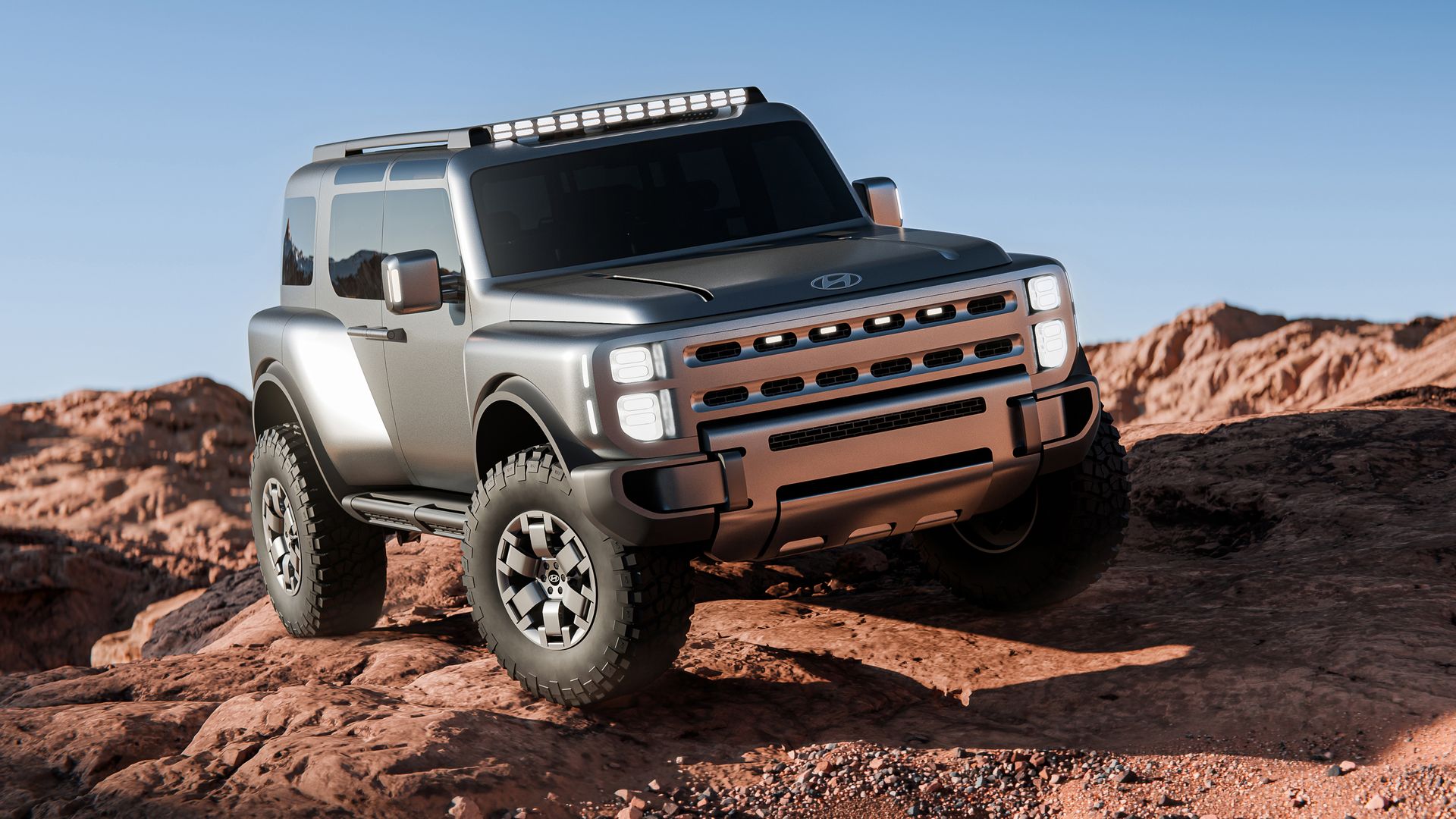
Hyundai's reveal of the rugged Boulder concept vehicle at this week's New York International Auto Show is proof that automotive trade shows can still generate excitement.
Why it matters: It's the Korean auto giant's first true truck platform and a shot across the bow of Detroit's domestic automakers, who dominate the category.
- While the Boulder is an SUV-shaped design, it previews a new body-on-frame architecture that will underpin future rugged products capable of serious off-roading, towing and hauling.
- A midsize pickup will be the first model and will arrive by 2030.
Between the lines: The Boulder concept's creation was led by the Southern California-based team at Hyundai Design North America.
- It was developed with a specific focus on catering to the desires of off-road enthusiasts and the goal of attracting new buyers to the Hyundai brand.
- The body-on-frame truck is one of 36 new Hyundai vehicles coming to North America by 2030.
- It will be built in the U.S., using steel produced at a recently announced Hyundai steel plant in Louisiana.
What they're saying: "The Boulder Concept demonstrates how Hyundai is seeking to give American customers more of what they want," CEO José Muñoz said.
- "Body-on-frame vehicles are the backbone of American work and adventure, and we intend to compete in the midsize pickup segment with everything we have."
- "We are entering segments we have never competed in before, and we are doing it the right way: designed in America, built by Americans for American customers."
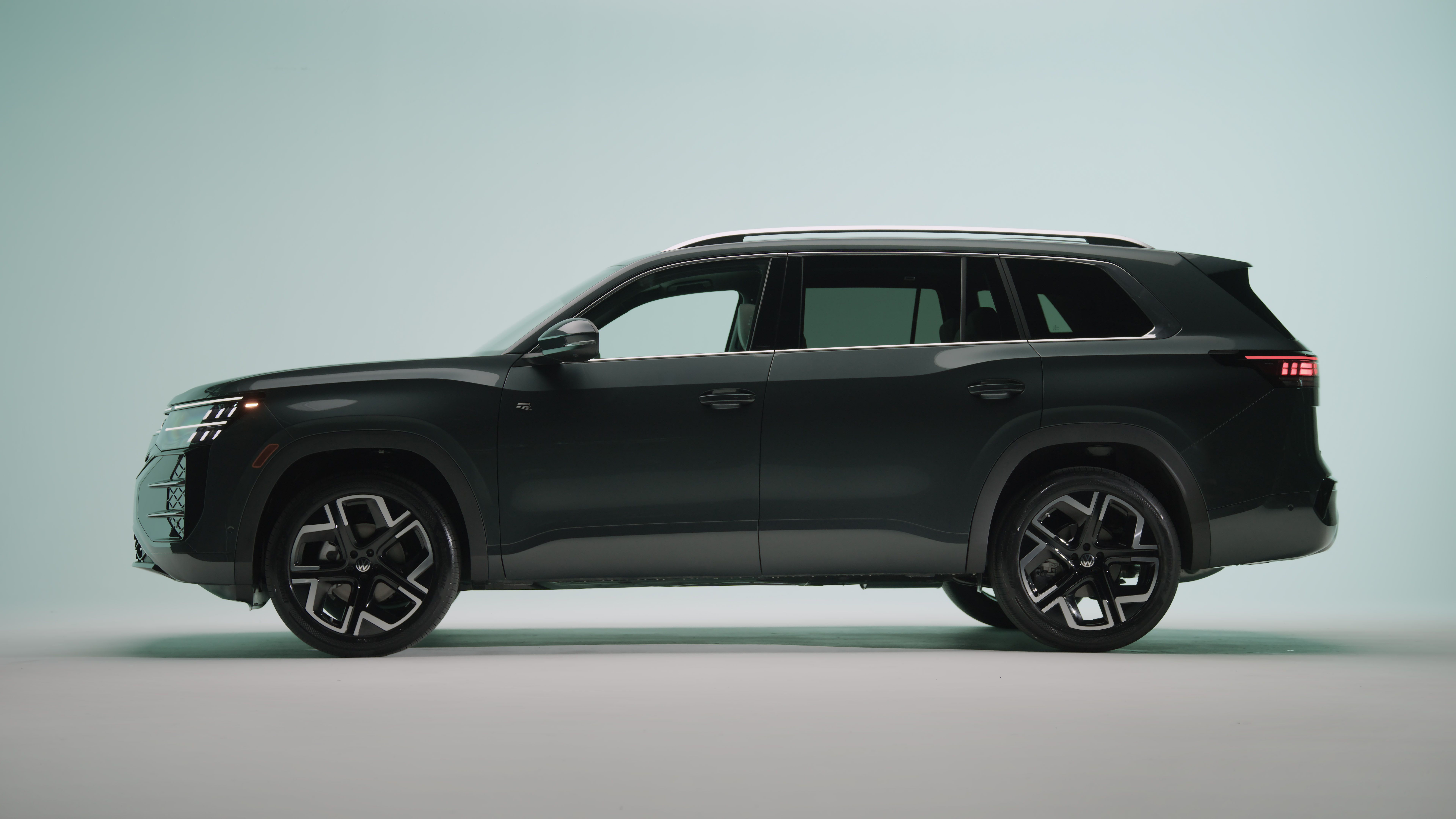
Other noteworthy debuts in New York include a redesigned VW Atlas family SUV, a next-generation Kia Seltos small SUV and the all-electric Subaru Getaway, which shares its electric chassis with the new Toyota Highlander EV.
3. Acts of kindness for robots

4. Drive-thru

5. 🚘 What I'm driving
Axios Future of Mobility