Axios Future of Mobility

July 09, 2025

📡 Cars are now connected to the internet, which opens up all kinds of revenue opportunities for automakers.
- But there's one big missed opportunity we're exploring today.
975 words, a 3.5-minute read
1 big thing: Missed connection for car dealers

The built-in modem that delivers live traffic and streaming apps to the dashboard of most modern vehicles works the other way, too — if anyone actually uses it.
Why it matters: That untapped potential could unlock billions of dollars in revenue for car dealers looking to expand the most profitable part of their business — parts and service.
The big picture: New vehicle sales account for more than half of car dealers' revenue, but the margins are razor-thin.
- Servicing vehicles is far more profitable than selling them.
- But as gasoline engines and transmissions give way to electric vehicles with fewer mechanical parts, traditional repair work is expected to shrink.
- Car dealers need to expand their service offerings to keep customers coming back, so they're more likely to buy their next car from them, too.
Yes, but: Dealers are leaving tons of money on the table because they're not taking advantage of existing vehicle connectivity to expand their service business, says Bank of America automotive analyst John Murphy.
- "This is where the opportunity is for the industry" — not trying to push subscriptions for fancy features customers don't want to pay extra for, Murphy recently told members of the Automotive Press Association.
By the numbers: The nation's 17,000 auto dealers capture only about half of the $2.4 trillion spent annually on aftermarket service and parts, Murphy says.
- "There's another $1.2 trillion that gets away from dealers" — going instead to repair shops and auto parts retailers — because "calling and bugging the consumer has been incredibly ineffective" as a marketing tool, Murphy said.
How it works: Instead of spamming customers via email or text with generic service offers, automakers can tap directly into the vehicle to identify when it needs an oil change, warranty repair or other type of maintenance.
- Then they can nudge owners on the car's touchscreen, or via their vehicle app, to make an appointment with their dealer.
Between the lines: Some of the most innovative dealers are leveraging that connectivity to deploy remote service technicians for warranty repairs and routine vehicle maintenance at customers' homes.
- Replacing fluids, filters and wiper blades in a customer's driveway frees up service bays at the dealership for more value-added repair work, says Amit Chandarana, CEO of Curbee, a startup that helps dealers manage their mobile service operations.
- Customers are happier, and dealers get to grow their service business.
Zoom in: Warranty inspections and software recalls are easy mobile service jobs, adds Chandarana.
- While some software updates can be completed over-the-air, especially in EVs, many customers still need a dealer's help to update their vehicle or fix a software problem, he says.
What they're saying: Mobile customer service "is a no-brainer," Brendan Harrington, president of Autobahn Automotive, a Dallas-area car dealer, tells Axios.
- "We as dealers have to be ready for when motors go away and engines go away," he said.
- "All the stuff we ignored — wheels, light body work, customization, mobile service, vehicle wrapping, tinting — we have to get good at that. Or we can wait until it's too late, and your service business is dead."
Reality check: Tesla has been offering mobile service since the start, and other EV startups do, too.
The bottom line: Connected cars are a missed service opportunity for automakers and their franchised dealers.
2. Drive-thru
/2025/06/30/1751242159325.gif?w=3840)
Catching you up on news you might have missed ...
🚕 Waymo kicked off data-gathering "road trips" this week in New York and Philadelphia. As we've reported, it previously applied to test its vehicles (with human supervision) in NYC. (TechCrunch)
⚡️ Nissan will delay production of two electric vehicles at a Mississippi plant by almost a year due to changes in federal incentives. (Automotive News)
🇨🇳 China is showing signs of cracking down on cutthroat competition in its automotive industry, especially price wars for electric vehicles. (AP via Detroit News)
3. What I'm driving: 2025 Chevrolet Traverse
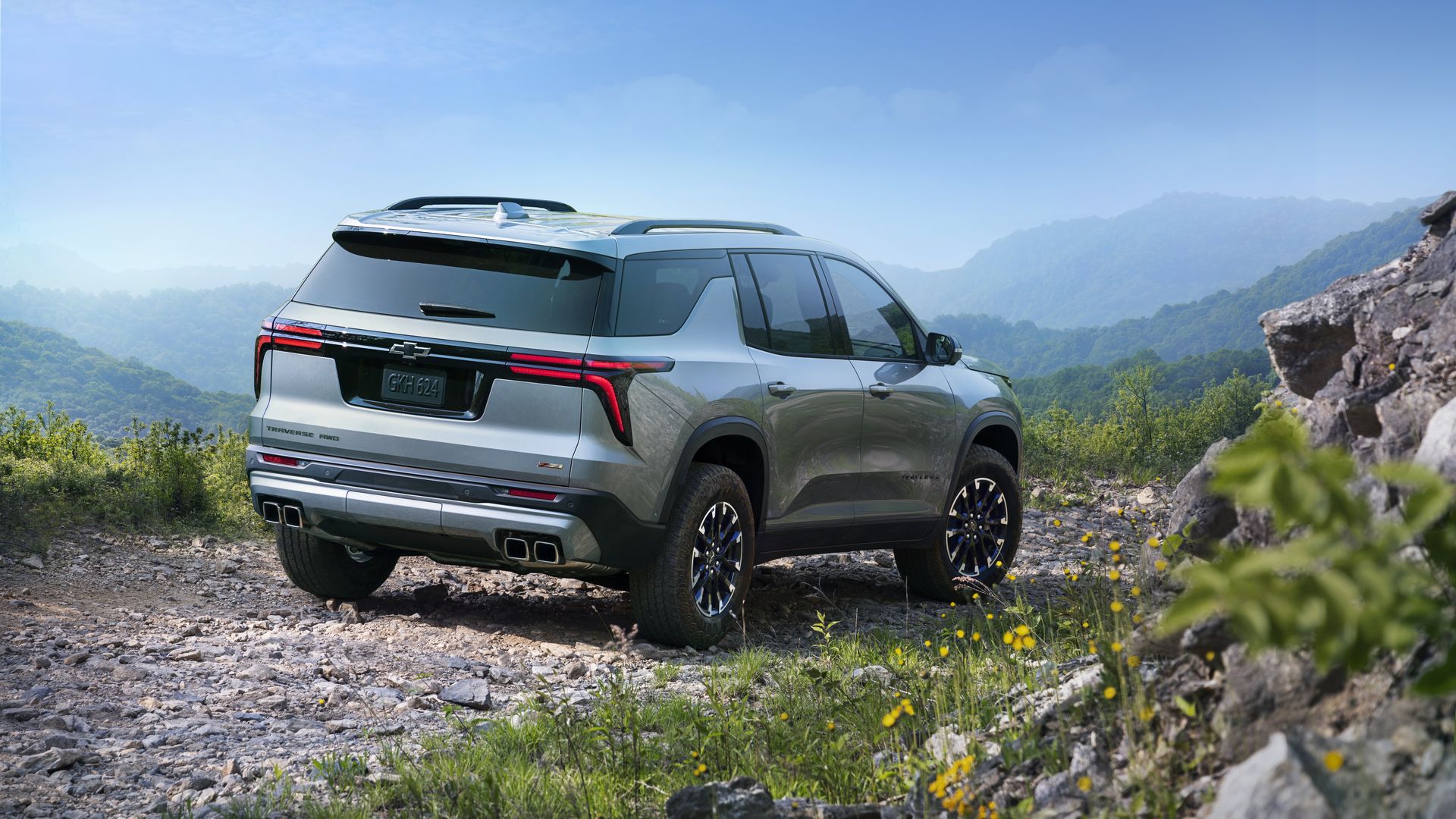
The 2025 Chevrolet Traverse is a three-row, mid-size crossover SUV that's ideal for families.
Why it matters: In the past two years, GM has completely overhauled its crossover lineup, one reason for its recent sales momentum.
The big picture: The Traverse faces some tough competition from other three-row crossovers like the Kia Telluride, Hyundai Palisade and Toyota Grand Highlander, and compares favorably for the most part.
Specs: A new 2.5-liter turbocharged engine delivers an estimated 328 horsepower, and the Traverse can tow up to 5,000 pounds.
- It's loaded with tech, and features a massive 18-inch infotainment touchscreen to access GM's Google-based software interface.
Pricing begins around $42,000 for the base LT trim.
- I test-drove the all-wheel-drive High Country version that sells for $55,600.
💭 My thought bubble: I spent a lot of time using the Traverse's Super Cruise hands-free driver-assistance technology on highways around Detroit.
- I've grown comfortable with resting my hands in my lap while Super Cruise is engaged, but the latest version is a little eerie because it now has automatic lane change capabilities.
- I set the speed, but the car decided when to pass the vehicle ahead of me.
- I would get a warning on the dash that the car was initiating a lane change, and then it would move one lane to the left, and return again after the passing maneuver was completed.
- I found myself nervously checking the side view mirrors again and again to make sure the lane was clear.
The bottom line: It's going to take a while for drivers to get comfortable sharing the wheel with a robot.
I test-drive vehicles in my role as a juror for the North American Car and Truck of the Year awards. Opinions are my own.
Thanks for reading! Please encourage your friends and colleagues to sign up.
Thanks to Ben Berkowitz and Bill Kole for editing.
Sign up for Axios Future of Mobility