Axios Future of Mobility

July 16, 2025

👋 Joann's out this week, but we've got a little roundup for you of some electric vehicle news from around the Axios newsroom ...
- Plus: The latest headlines.
700 words, a 2.5-minute read.
1 big thing: EV sales could collapse


Second-quarter EV sales fell 6.3% compared to April-June 2024, and the road ahead looks jarring with the loss of consumer purchase subsidies looming, per new Cox Automotive data.
Why it matters: While sales set a record in 2024, and the first half of 2025 narrowly did, too, the upward march was getting less consistent even before the GOP's new budget law nixed incentives.
Catch up quick: Tax incentives up to $7,500 for buying new EVs will end on Sept. 30 under the giant GOP budget bill that President Trump signed earlier this month.
- It quickly ends smaller subsidies for used EVs and credits for commercial EVs.
- Leasing incentives are also ending.
What's next: Cox analyst Stephanie Valdez Streaty, in a statement alongside the data, predicts a "rush ahead of the federal incentive phase-out, offering a short-term boost in an otherwise uncertain landscape."
- "Q3 will likely be a record, followed by a collapse in Q4, as the electric vehicle market adjusts to its new reality," she said.
State of play: The picture varies by automaker. GM sold over 78,000 EVs in the first half of 2025, more than twice its sales in the same stretch last year.
- Meanwhile, "Tesla's sales fell by more than 12% year over year in Q2, following a decline of nearly 9% in Q1," Cox notes.
What we're watching: The loss of credits isn't the only budget law provision that could affect EV sales.
- A new post on the law's impact from Columbia University's energy think tank flags new auto loan interest deductions — with income limits — for U.S.-assembled vehicles.
- "The deduction allowance largely benefits the early purchasing of lower-cost domestic gas cars, again increasing the incentive for consumers to switch away from EVs," it states.
Note: Cox Automotive's parent company, Cox Enterprises, also owns Axios.
2. Tesla looks to xAI

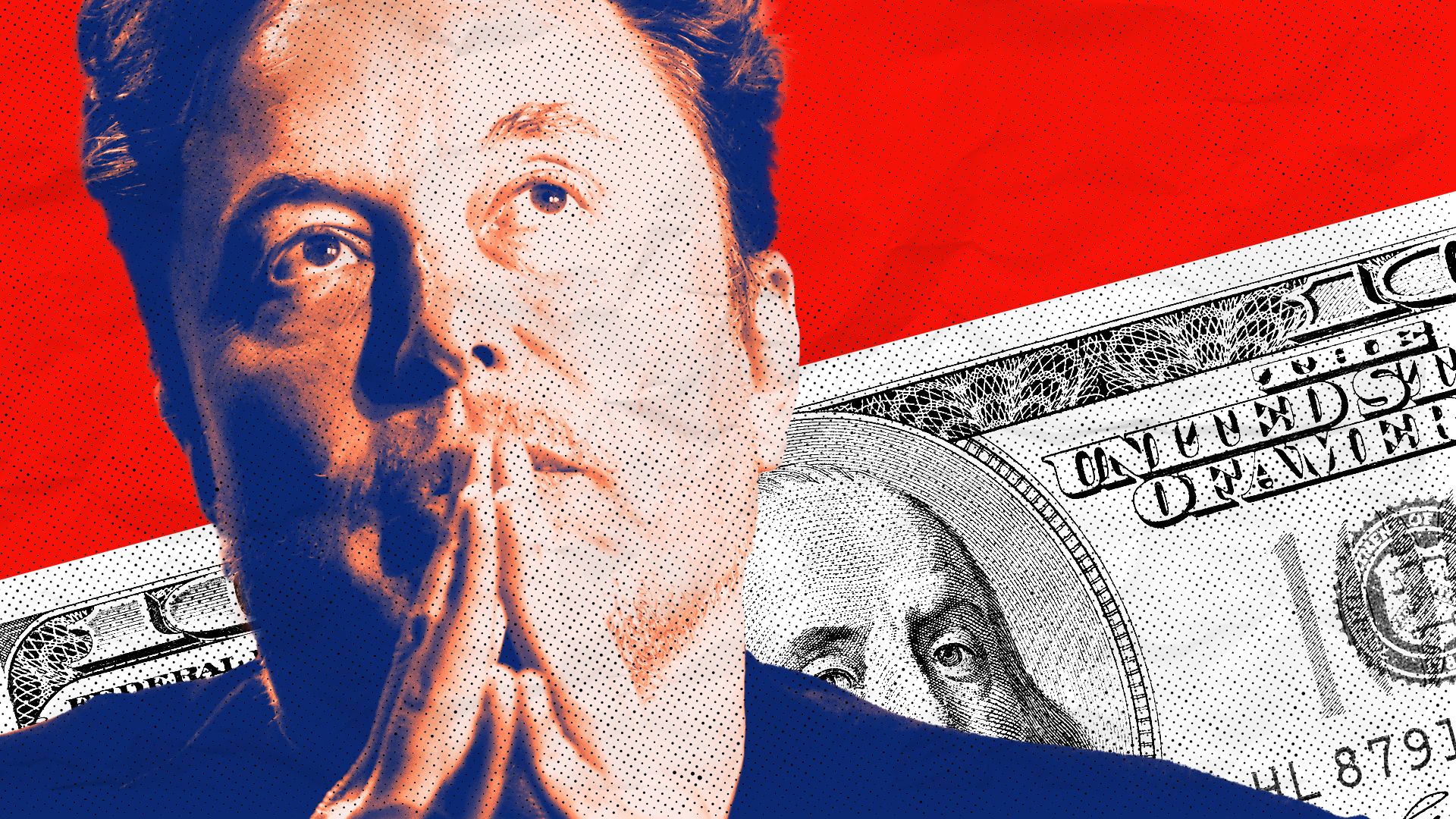
Elon Musk has never liked Tesla being identified as purely a carmaker — and now he could distance the company even further from its automobile heritage with a deal to invest in his AI startup xAI.
Why it matters: Musk is proposing that Tesla help back xAI, which owns the social media platform X and the ChatGPT competitor Grok.
- Tesla investors will need to approve the deal in a shareholder vote, he said Sunday on X: "It's not up to me. If it was up to me, Tesla would have invested in xAI long ago."
State of play: The world's richest person has always described Tesla as a tech company with expertise in autonomy and robotics — not an automaker.
- Investors have largely agreed, putting the stock in a special elevated class apart from its automotive contemporaries.
By the numbers: xAI is expected to burn about $13 billion in 2025 as it invests heavily in Grok, effectively necessitating the pursuit of outside partners, Bloomberg reported.
- The company is pursuing a valuation of up to $200 billion in its next fundraising round, FT and Reuters reported.
Between the lines: Tesla is not exactly a fountain of cash on its own.
- The company's vehicle sales have been plunging in 2025 amid a backlash to Musk's association with President Trump — but if he's concerned about the drop-off, he's not showing it.
- As WSJ noted earlier this month, Musk "has already moved beyond caring about cars."
- He's stated repeatedly that the company's future is predicated on autonomy — with all the value in the AI capability and none in actual car production.
Reality check: You can't have self-driving cars without the car part.
What's next: Tesla set its annual meeting in November, when investors will presumably vote on a possible xAI investment.
3. Drive-thru
👀 The nominee to lead NHTSA says the government should exercise more active oversight over self-driving vehicles. (Reuters)
💧 Stellantis is scrapping its hydrogen fuel cell vehicle program. The company says the market has no prospects for now. (Reuters via Yahoo Finance)
🔋 GM and LG will upgrade a Tennessee facility to make lower-cost electric vehicle battery cells. Commercial production is expected in 2027. (CNBC)
Thanks to Ben Berkowitz and Bill Kole for editing. See you next week!
Sign up for Axios Future of Mobility