Axios Future of Mobility

September 03, 2025

1 big thing: Electric school buses are running late
⚡ A five-year push to replace diesel school buses with electric ones has stalled amid a federal funding freeze and the collapse of leading manufacturer Lion Electric.
Why it matters: There's still lots of enthusiasm for cleaner buses, advocates say, but some school districts are scrambling for service or turning back to diesel because they didn't get the electric buses they were promised or don't know who will fix them.
Catch up quick: Canada's Lion filed for bankruptcy in December 2024 and shut down its only U.S. factory in Illinois.
- The new owners, a group of Quebec-based investors who took control in May, reportedly said they won't honor U.S. orders or warranties.
❌ Meanwhile, $2.3 billion in unspent federal funds is under EPA review after President Trump rolled back many clean-energy programs.
- Plus, Congress axed the Commercial Clean Vehicle Tax Credit, another Biden-era program, that provided up to $40,000 for electric trucks, vans and buses.
Zoom in: About $2.7 billion has been disbursed across three rounds of funding under the EPA's five-year, $5 billion Clean School Bus program.
- Applications for a fourth round of $965 million, announced in September 2024, closed in January, just before Trump took office, but no awards have been made.
- The agency expects to provide an update soon, an EPA spokesperson tells Axios.
🌱 What to watch: There's still optimism, however, that state and local governments will pick up the slack.
- California, Maryland, Illinois and New York are among the states that have recently announced funding programs to support the transition away from diesel school buses.
- All told, state-level funding grew dramatically from $268 million in 2020 to $2.47 billion in 2025, according to data from the World Resources Institute's Electric School Bus Initiative.
The big picture: Nearly half a million school buses carry more than 20 million children each day in the U.S., and about 90% run on diesel fuel, which has been linked to serious health risks and developmental issues in children.
- New research from WRI shows that the U.S. would see an estimated $1.6 billion in societal benefits annually by switching to electric.


Where it stands: There are nearly 14,000 committed electric school buses in the U.S. — meaning they're funded, ordered or delivered — including 5,300 already on the road, per WRI.
- They've been deployed in 49 states, the District of Columbia, four U.S. territories and more than 20 tribal nations.
Yes, but: That momentum died in 2025, with only 73 additional buses added to WRI's database.
- There is likely a lag in the data, however, WRI cautions.
What they're saying: "We're going to need some amount of incentives to keep moving forward," acknowledges Sue Gander, leader of the WRI initiative.
- "The economic benefits and health benefits are still there," she said. "Those are the reasons school districts want to move forward."
2. More kids are getting injured on e-scooters
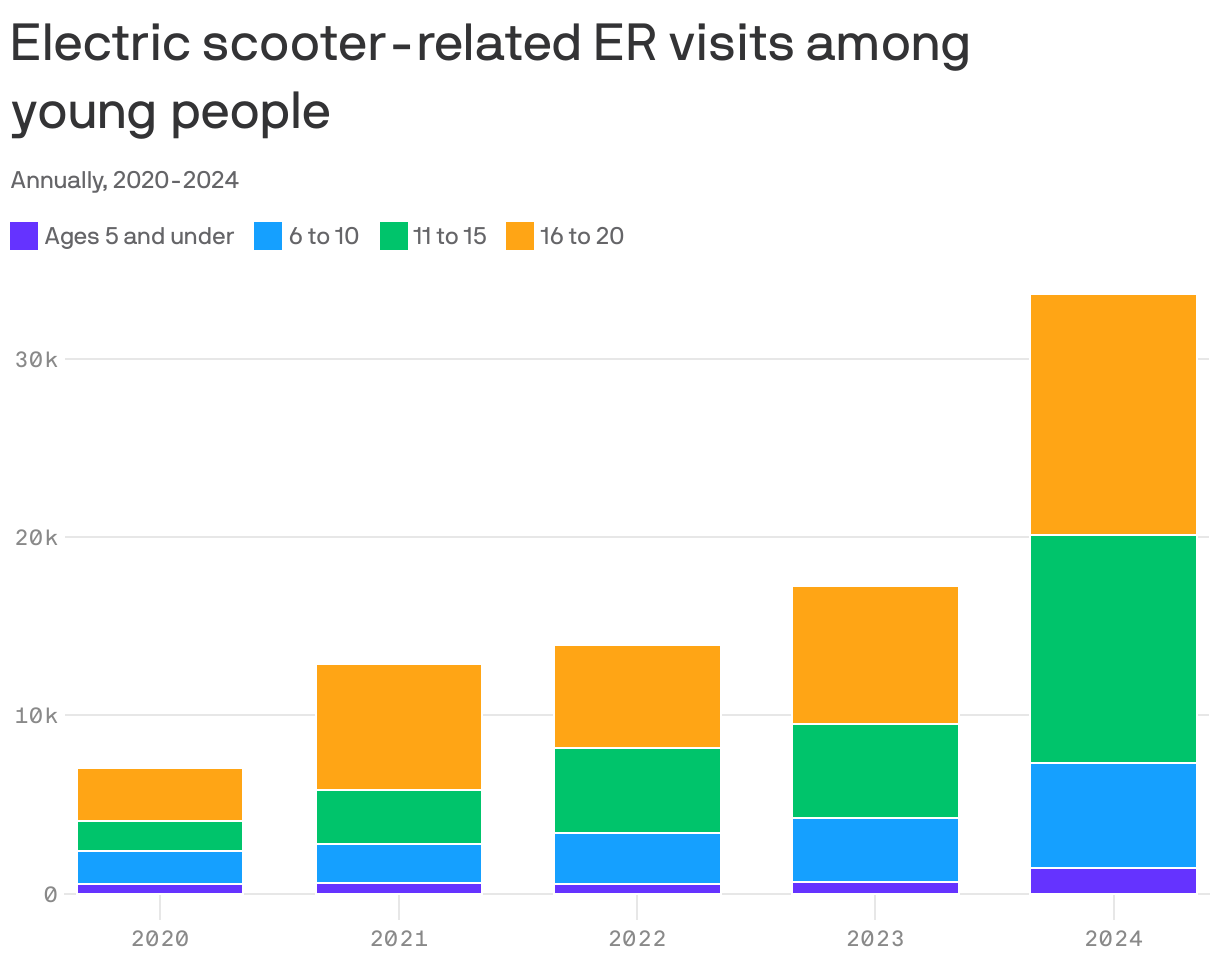
The U.S. is seeing an alarming rise in electric scooter injuries — particularly among children, according to data compiled by ERideHero, a consumer guide to electric micro-mobility.
Why it matters: E-scooters, despite their well-publicized boom and bust history, have become mainstream in many cities, yet lack the safety guardrails that govern other types of transportation.
- People often ride them on sidewalks, for instance, and without helmets.
- Children zip around on adult-sized scooters that go much faster than many parents realize.
The big picture: Some 81 million people took trips on shared e-scooters in the U.S. last year, according to the North American Bikeshare & Scootershare Association.
- Approximately 150,000 shared scooters are deployed across the U.S. on a daily basis.
- Scooters can be a clean, convenient way to travel, but there are also increased risks.
By the numbers: E-scooter injuries in the U.S. rose by 80% to nearly 116,000 in 2024, according to ERideHero's 2025 Electric Scooter Accident Report.
- Accidents among children more than doubled, with nearly 18,000 kids under 15 getting hurt — many suffering head trauma.
- People between 15-24 suffered the most e-scooter injuries, accounting for more than 23%.
- 68% of those injured were male, and over 10,000 injuries involved driving under the influence.
- eRideHero's analysis is based on data sourced from the Consumer Product Safety Commission's NEISS database, which tracks consumer product-related injuries from a sample of over 100 American hospital ER departments.
What they're saying: "The 80% jump in just one year can't be explained by adoption alone," says Rasmus Barslund, founder of ERideHero.
- "I think we're seeing the consequences of treating e-scooters like toys instead of vehicles," he said.
- "We're seeing adult-sized scooters marketed to young kids on Amazon — machines that can reach high speeds being given to children who lack the cognitive development to judge speed and distance safely."
- Plus, he said, there's no safety culture around e-scooters. "We basically put motor vehicles on sidewalks and expected everyone to figure it out for themselves."
The industry is responding with safety tips and other programs.
- Lime, a leading scooter company, for instance, offers an in-person safety course for first-time riders and strongly encourages the use of helmets.
- It also offers a slower-speed "training mode" option to help early riders build confidence.
3. Musk: 80% of Tesla value will be Optimus robots

4. Drive-thru
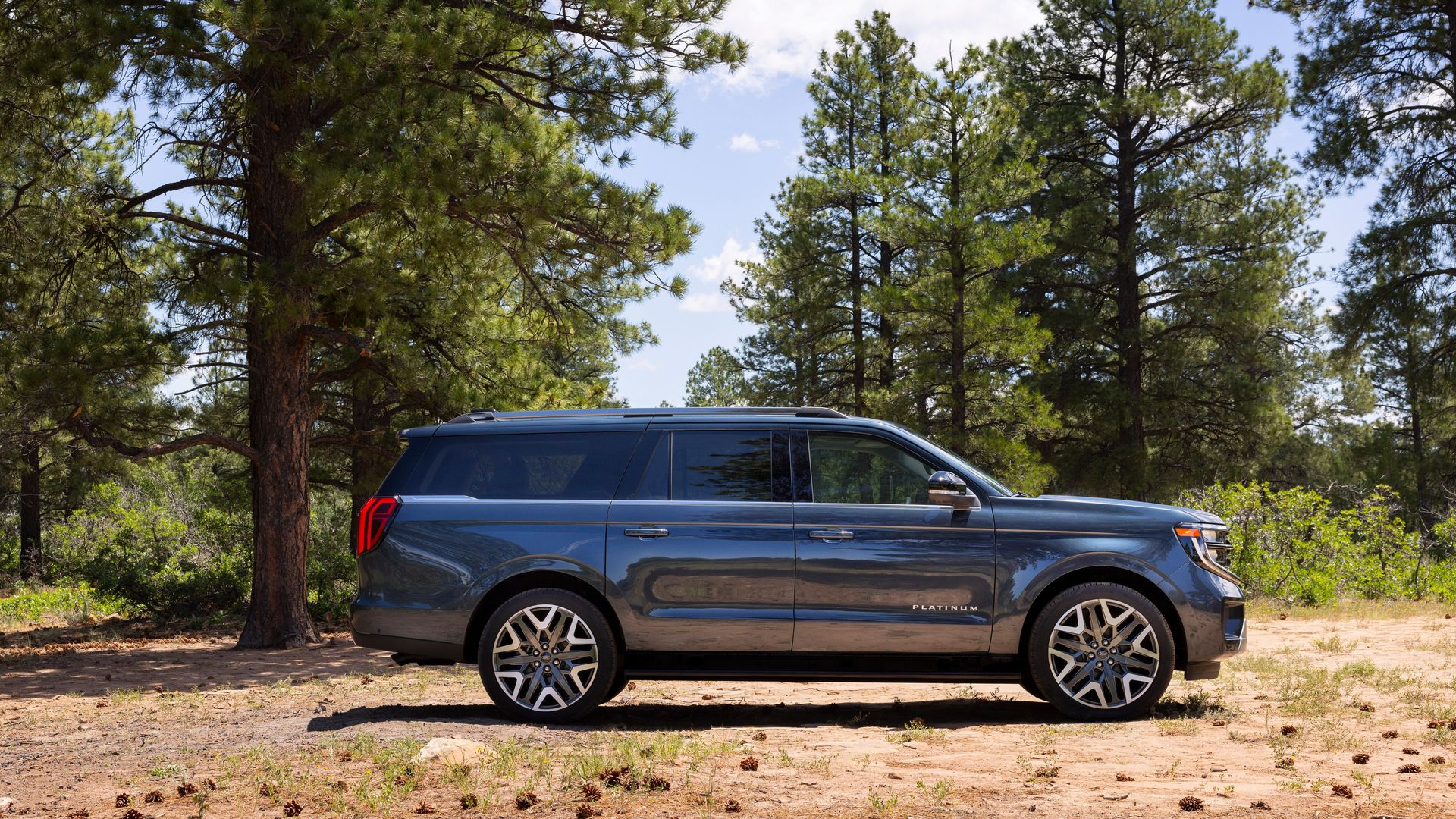
5. What I'm driving: 2025 Ford Expedition
Axios Future of Mobility