Axios Future of Mobility

April 08, 2026

Happy Wednesday! 👋
📉 Oil prices plunged on news of the Iran ceasefire, but there's still a lot of uncertainty out there.
- ⛽ The average U.S. regular gas price is $4.16 per gallon, per AAA, but could start dropping within days.
Higher prices on everything ought to be hurting car sales. But this year's fatter tax refunds could be cushioning the blow for some.
- Plus, we explain Toyota's late arrival to the EV party. Better late than never?
All in 1,693 words, a 6½-minute read.
1 big thing: Tax refunds might cushion car-buying pain
That fat tax refund consumers were hoping to put toward a new car purchase this spring might instead be gobbled up by higher prices for gas, insurance and other daily costs of living.
Why it matters: Tax season has long been a tailwind for car sales, but this year's heftier-than-average refunds are colliding with higher monthly costs that a one-time check can't fix.
It's not just pain at the pump, where gas prices have risen 35% since the start of the war in Iran.
- Higher sticker prices coupled with steeper borrowing costs are driving up new-car payments to an average of $770 a month. Used-car payments average $560, says the car-buying site Edmunds.com.
- Insurance premiums and repair costs are through the roof, too — up 55% since the pandemic, according to the National Automobile Dealers Association.
Eventually, these higher costs of vehicle ownership will cause stressed-out consumers to buckle, economists predict.
- But so far, there's only a hint of those pressures in the vehicle sales data.
- "Higher fuel prices have not yet caused consumers to hold off on purchasing a new vehicle," Patrick Manzi, chief economist at the National Automobile Dealers Association, tells Axios.
Driving the news: New car sales were down about 6% in the first quarter, compared with the same period in 2025, when buyers rushed to get ahead of tariffs, making year-over-year comparisons difficult.
- With the average new car price approaching $50,000, some buyers are trading down to lower-trim models or turning to the used-car market as they seek lower-cost alternatives.
- Used car sales rose about 1% in the quarter, while wholesale used car prices hit their highest point in nearly three years in March amid strong demand and limited inventory.
What they're saying: "2026 has started off on a strong note as tax refund season was a boon to consumers," says Cox Automotive chief economist Jeremy Robb.
- But he adds a note of caution: "The conflict in the Middle East has thrown a great deal of worry at the market and the economy overall since the beginning of March. While most of our trends look very healthy, we know the tide could turn soon."
Between the lines: It's possible that larger tax refunds due to last year's One Big, Beautiful Bill Act are supporting the market in ways that mask the impact of higher vehicle costs.
- All that extra stimulus — $222 billion pumped into the economy in the first quarter — should be turbocharging vehicle sales right now. Instead, they're holding steady.
- Likewise, those refund checks, averaging $3,521, up 11% over last year, might be helping to soften the pain for consumers.
- Automakers and lenders are responding by stretching loan terms, leaning more on subprime approvals, and pushing certified used cars and entry‑level trims to find a monthly payment that those households can still handle.
What they're saying: "For consumers, this is a timing and reality problem. Just as some expected a larger refund to help fund a car purchase or pay down debt, everyday costs, from gas to insurance to borrowing, have moved higher, effectively neutralizing that benefit for many," Erin Keating, Cox Automotive executive analyst, tells Axios.
- Consumers will have to weigh how necessary it is to buy a new car right now, she says.
- "This is the new mental calculus price-sensitive customers are having to wrestle with."
What we're watching: Falling gas prices could mean we won't end up seeing a notable shift in consumer behavior.
- Meanwhile, car-shopping websites are seeing more searches for electric vehicles and hybrids.
Disclosure: Cox Automotive is owned by Cox Enterprises, which also owns Axios.
2. EV party over? Toyota shows up fashionably late
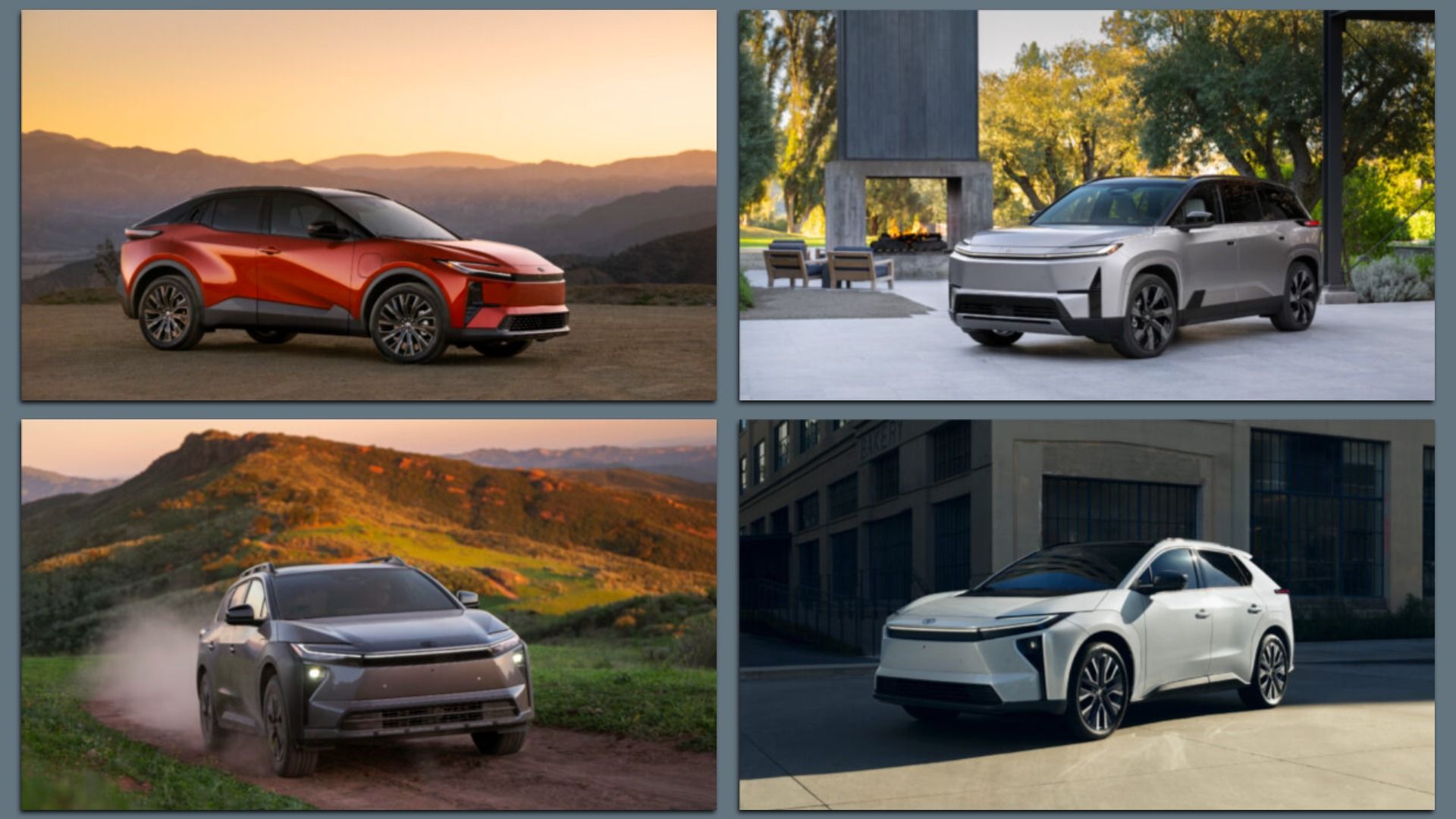
Toyota spent years drawing criticism for its hybrid-centric strategy while rivals went all-in on EVs.
- Now, the party is winding down, but here is Toyota, showing up with four new EVs for 2026.
Why it matters: Toyota is playing catch-up, but it hasn't really changed its strategy to offer a mix of hybrid, electric and gas vehicles.
- Until recently, however, it had only one mediocre EV in its lineup.
- By the end of this year, it will offer four much more competitive models.
What they're saying: "The cars we're launching now we've been planning for three, four or five years, so we think the timing is great." Toyota North America brand chief Dave Christ tells Axios.
- Plus, he says, "even if the BEV market is 5% of the industry, we want our share of that 5%."
Driving the news: Toyota recently launched three electric SUVs: the 2026 bZ, the compact C-HR, and the off-roading bZ Woodland.
- Later this year, the family-friendly, three-row Highlander EV will join Toyota's lineup.
Between the lines: Toyota's first EV, the bZ4X, was a rare screwup for the Japanese carmaker known for its reliability and quality.
- It was panned as a half-hearted effort from Toyota because of its below-average driving range, slow charging speeds and poor winter performance.
- In 2022, the car was recalled because Toyota said the wheels might fall off, and in 2025, the company paused bZ4X sales to fix a defroster glitch.
The 2026 bZ is a significant improvement over its predecessor, with a 25% increase in driving range (now up to 314 miles).
- It also features a built-in NACS port to recharge at Tesla Superchargers, and can recharge from 10% to 80% in around 30 minutes.
Early sales of the new bZ have been impressive.
- Toyota sold more than 10,000 units in the first three months of 2026, beating out GM's top-selling Chevy Equinox EV.
What we're watching: Toyota has finally caught up in EVs, but the rest of the industry, having pivoted away from them, is coming for Toyota's dominant share of the hybrid market.
3. Charging still stinks
We took a 320-mile trip to Ohio in an electric vehicle recently, and I was reminded why charging is still problematic.
- It's not hard to find a charger these days; a surge in construction in 2025 made that a lot easier.
- The experience just stinks.
Why it matters: High gas prices have rekindled consumer interest in EVs, even without last year's tax incentives. But the continued inconveniences of charging still make it a hard choice for many.
My own experience trying to charge the BMW i5 xDrive40 was typical of what's wrong with public charging.
- It takes too long, there's no shelter from the elements and it's expensive — up to 60 cents per kWh, which is three to four times the cost of charging at home.
- Plus, the cables for high-powered DC fast-chargers are as thick as your wrist and can weigh 20 to 30 pounds, sometimes more.
- I actually hurt my shoulder trying to plug in my car at a public charger.
The charging industry is fragmented, too, which means you have to download the apps for multiple networks.
- Some EVs support plug-and-charge, which streamlines public charging by pre-registering payment methods in the car's app so you don't need to use separate apps or a credit card.
- BMW features plug-and-charge at some participating charging networks, but as a media tester, I hadn't registered via the app.
One important lesson I learned, especially during a cold weekend in northeastern Ohio: Precondition the car's battery for faster charging.
- This can be done several ways: by setting a departure time using the vehicle app, or navigating to a DC fast-charger, giving the car 15-30 minutes to prepare the battery for optimal conditions before charging.
- But I forgot, which meant charging took longer than it should have.
- At one 180-kW charging station, for example, the BMW charged at speeds closer to 80 kWh.
It was the little indignities that annoyed me the most, like trying to scan a QR code in the biting wind just so I could download another network's app.
- Or the glare of the late-winter sun that made it impossible to read the screen on the charger.
- At one charging location, there was a trash can, at least, and a bucket of water to wash the windshield — but no squeegee.
The bottom line: Charging is more accessible, but it still tests your patience.
4. Drive-thru
🇨🇦 Stellantis is in talks with its Chinese partner, Zhejiang Leapmotor Technology Co., to potentially build EVs at an idled Canadian assembly plant. If it happens, it would be the first major Chinese auto investment in Canada since Prime Minister Mark Carney announced reduced tariffs on Chinese-made EVs in January. (Bloomberg)
🚖 Waymo is beginning to invite public riders in Nashville, where its robotaxis will also be available on the Lyft app later this year. (Axios Nashville)
🇨🇳 Why U.S. carmakers should be concerned about this $25,000 Chinese SUV with a 30-inch infotainment screen, built-in fridge and 808-mile driving range (Reuters)
5. 🚘 What I'm driving
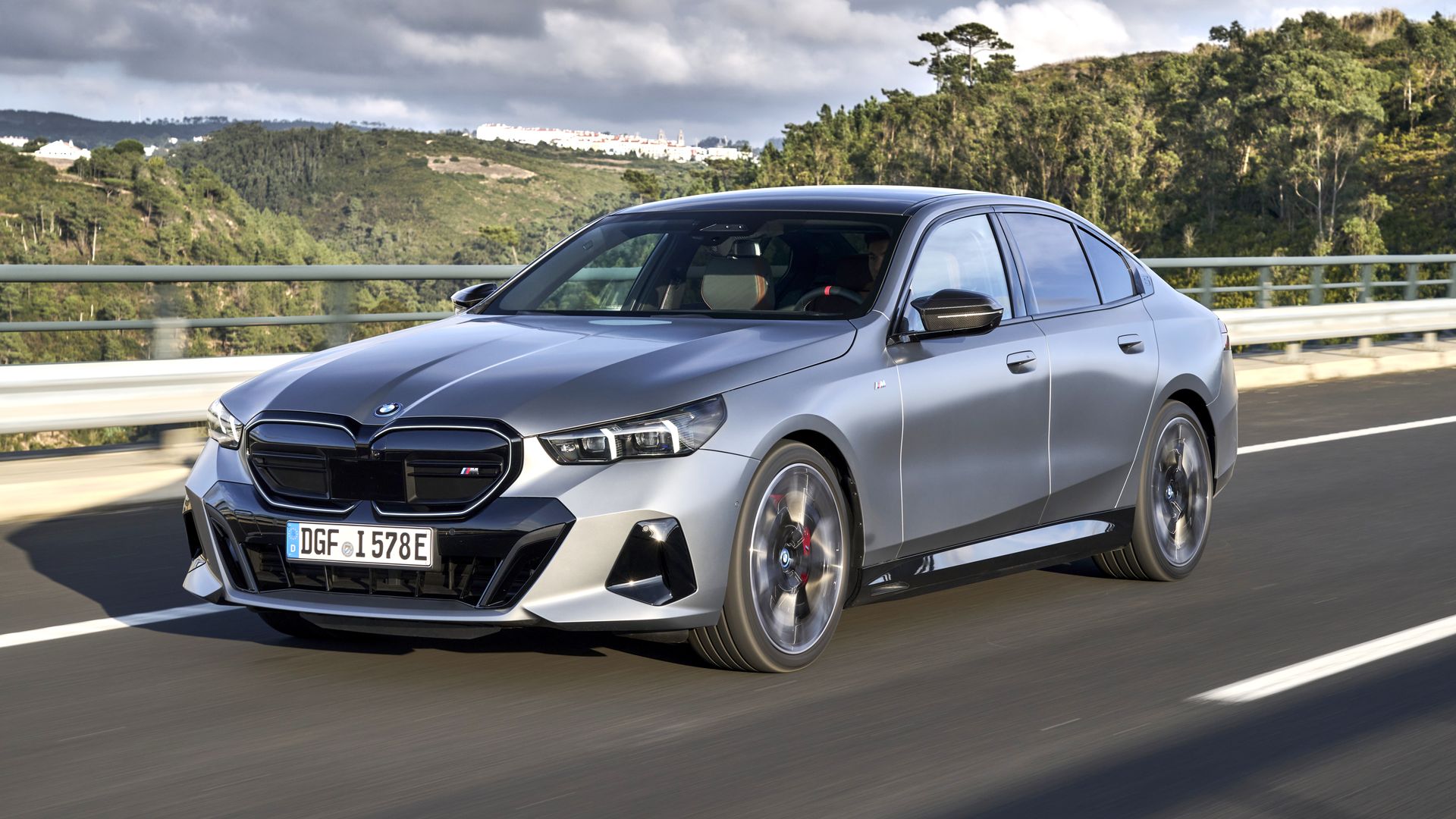
BMW i5 xDrive40
- MSRP: $70,100 for the all-wheel-drive electric version of BMW's iconic 5-series sedan.
- As tested: $82,700 w/ M performance package, assisted driving features and other options.
What I loved: Great performance and a lush interior, including a gorgeous curved display on the dashboard.
What I didn't love: The driving range (259-278 miles) could be better, and the infotainment system was complicated to operate.
Another frustration: Was the car on or off? The i5 comes to life when you enter with the key fob, but it's not really "on" until you push the start-stop button on the center console.
- Likewise, when parked, I wasn't really sure if the car would turn off on its own.
- Other EVs, like Tesla, just turn on and off by themselves when you enter or leave the vehicle.
I test-drive vehicles in my role as a juror for the North American Car and Truck of the Year awards. Opinions are my own.
Thanks to editors Megan Morrone and Bill Kole. If you're a fan of this newsletter, please ask your friends to sign up, too.
Sign up for Axios Future of Mobility