Axios Future of Mobility

May 06, 2026

Welcome back! Today's average U.S. gas price ⛽️: $4.54 a gallon.
🚛 Today we're looking at driverless trucks, which are getting closer to commercialization.
- Plus, I got a peek at Ford's EV skunk works on the West Coast. 🦨
1,572 words, a 6-minute read
1 big thing: The math on autonomous trucks
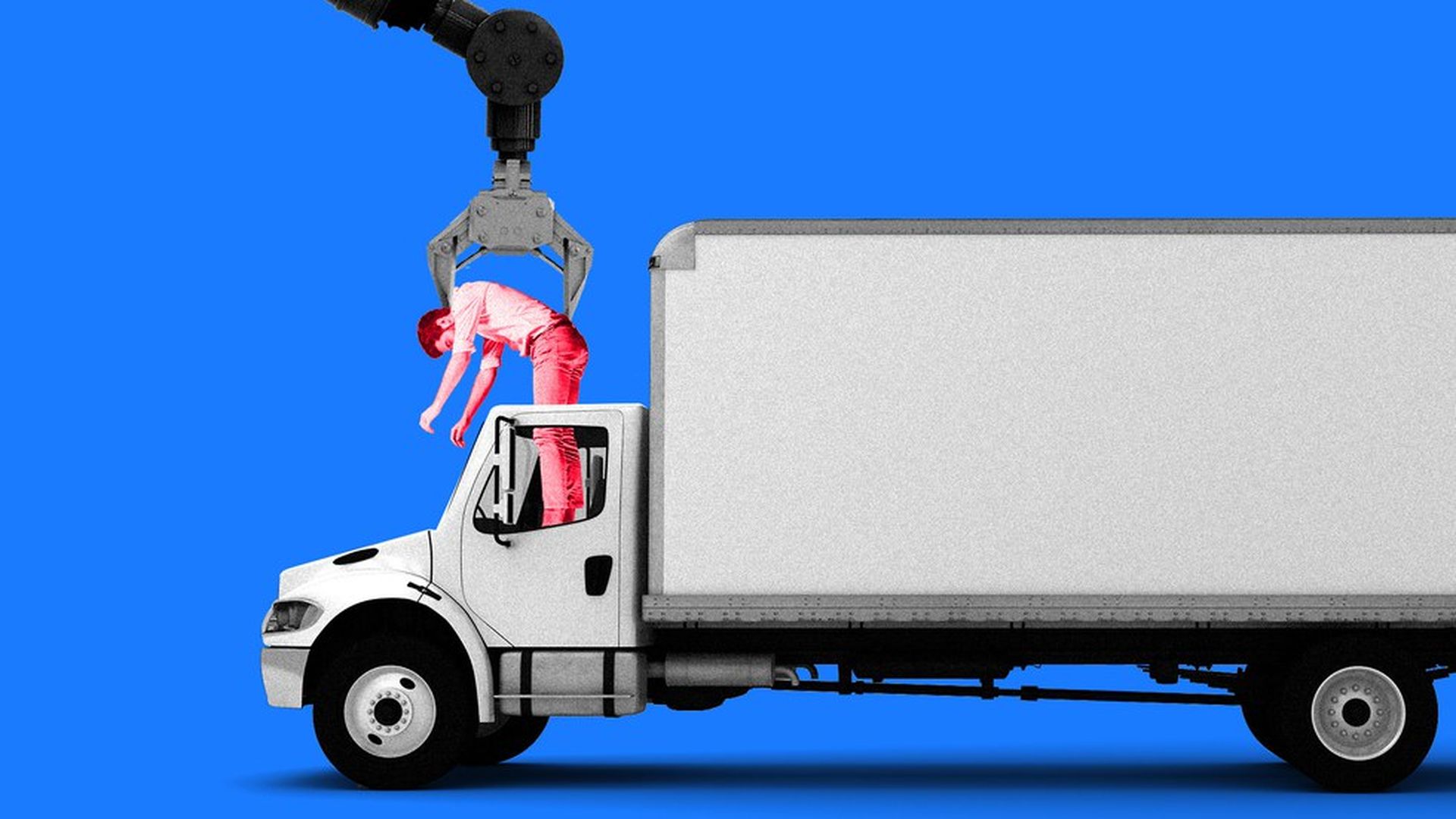
After years of development, autonomous trucks are gaining traction across the Sunbelt, but the industry's next breakthrough is economic, not technical.
Why it matters: Large-scale adoption won't happen until driverless trucks become cheaper to operate than human-driven ones — an inflection point that could soon reshape freight logistics, labor and supply chains.
State of play: Goldman Sachs Research expects autonomous trucks to become cheaper per mile than human-driven trucks in 2028.
- One AV company, Bot Auto, says its trucks are already cheaper than a human driver, at least on one route from Houston to Dallas.
The big picture: While robotaxis get most of the attention, autonomous trucking could be a bigger business.
- In 2035, the global market for autonomous trucking will eclipse that of self-driving cabs — $560 billion vs. $415 billion — Goldman predicts.
- In the U.S., the AV trucking market is projected to grow from $16 billion in 2030 to $105 billion in 2035.
The economics are shifting quickly, researchers say.
- A regular class 8 semi-truck — the tractor, but not the trailer — costs about $200,000.
- Autonomous technology — computers, sensors and software — adds roughly $125,000 to $150,000.
- By 2035, those costs could fall to roughly $35,000 to $40,000 as hardware costs improve and production scales up, per Goldman's forecast.
Between the lines: For shipping companies, all that matters is lowering the total cost of operation, typically measured as cost per mile.
- Costs include everything from monthly truck payments and insurance to fuel, maintenance, driver wages and tolls.
Zoom in: A human-driven truck today costs about $2.26 per mile on average, according to the American Transportation Research Institute.
- An AV truck costs around $8.60 per mile today, per Goldman.
- By 2035, however, the AV truck could cost as little as $2 per mile, the researchers project.
AV trucks have another advantage, too: They can drive all night, while human drivers are required to rest after 11 hours behind the wheel.
The latest: Xiaodi Hou has been obsessed with cost-per-mile since founding Bot Auto in 2023, after his previous AV trucking company, TuSimple, shuttered its U.S. operations and moved to China.
- Bot delivered its first commercial load without a safety driver onboard last week for Ryan Transportation, a freight broker.
- It's just one route, a 230-mile stretch between Houston and Dallas, but the math is encouraging, Hou, Bot's chief executive, said.
By the numbers: While the ordinary human-driven truck would cost $2.26 per mile to make the delivery, Bot's driverless truck completed the trip for $1.89 per mile — and collected revenue for the shipment that's equivalent to $2.70 per mile.
- "We're reaching the tipping point where we can make money," Hou tells Axios.
The bottom line: After years of delays, autonomous trucking may finally be on the verge of a commercial breakthrough: beating human drivers on cost.
2. State of play for driverless trucking
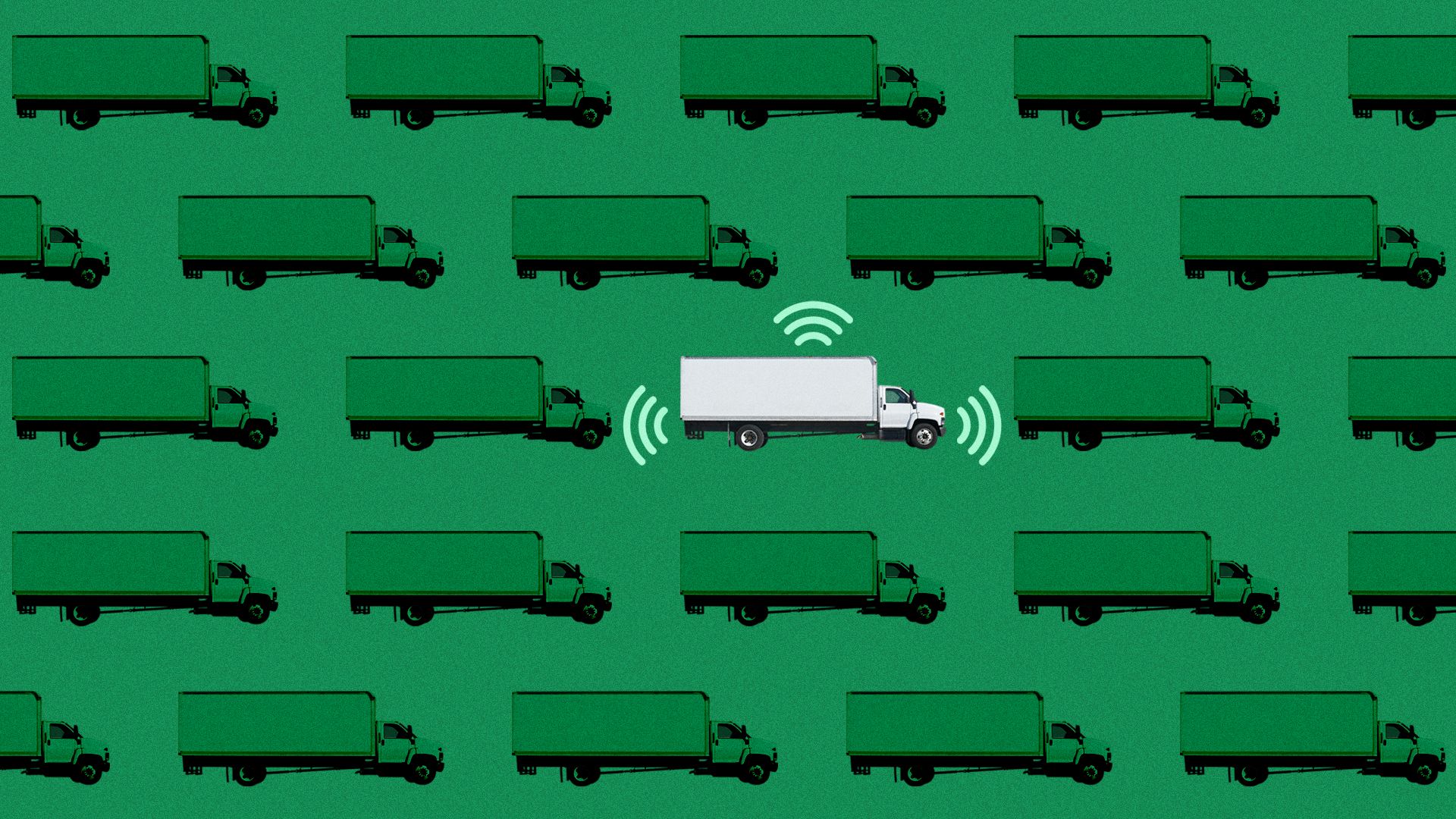
Signs that autonomous trucks are getting close to commercialization are stacking up — even if full-scale driverless operations are still somewhere over the horizon.
Here's the latest news from other leading AV trucking companies:
Early commercial scaling
- Aurora is expanding its autonomous freight network into Oklahoma while transitioning to fully driverless operations between Houston and Dallas for food distributor McLane.
- Gatik is scaling up its fleet of driverless box trucks for retailers, focusing on short, repeatable "middle-mile" routes such as warehouses to stores. The company says it has secured $600 million in contracted revenue.
- Kodiak is operating fully driverless commercial trucking routes in the Permian Basin, hauling frac sand for customers, while also expanding testing into Indiana and Ohio.
Testing, expansion and future deployment
- Torc Robotics, a subsidiary of Daimler Truck, is testing autonomous trucks in Michigan, Texas and Virginia, with commercial deployment targeted for 2027.
- Waabi secured up to $1 billion from investors, including Uber, to deploy at least 25,000 robotaxis using the same robot driver technology it is using for AV trucking.
- Stack AV emerged from stealth this week, unveiling its first autonomous truck with PACCAR at an industry event in Las Vegas. The startup is led by former Argo AI executives, including CEO Bryan Salesky.
- PlusAI canceled its plan to go public via a SPAC deal with Churchill Capital Corp. IX, but says it's still focused on its commercial rollout.
Reality check: Bumps in the road ahead
AV trucking companies still have to prove their rigs are safe for U.S. highways.
- There are no special rules for autonomous rigs, so operators are self-certifying their safety.
- Labor unions argue the technology will destroy jobs and isn't ready for prime time.
What we're watching: California just approved new rules clearing the way for AV trucks in that huge freight market, overcoming labor objections.
- Congress, meanwhile, could write clearer rules for the industry later this year when it renews a major highway funding bill.
3. Inside Ford's EV skunk works
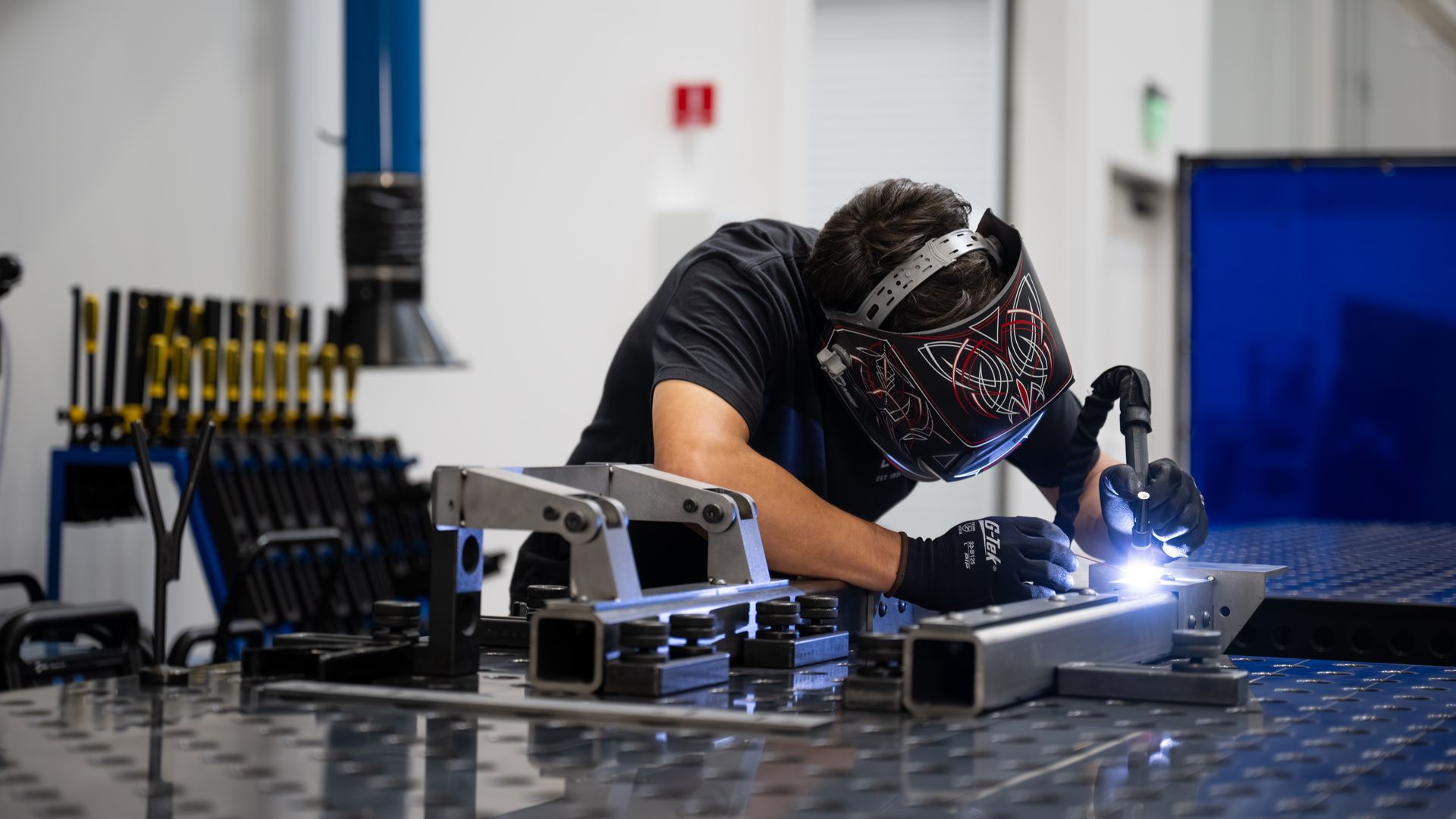
A former Tesla executive leading Ford's secretive West Coast effort to design an affordable electric vehicle has a bigger, unspoken mission: help Ford reinvent the way it designs and builds cars around the world.
Why it matters: If vice president Alan Clarke's team gets it right in Southern California, they will create a system Ford can replicate across the globe to stay competitive in a rapidly shifting market.
The big picture: CEO Jim Farley has been vocal about the existential threat Ford faces amid new technologies, whipsawing government policies and the onslaught of Chinese competitors.
- "If you don't make the right bet, the company will not exist," he bluntly told Rolling Stone magazine recently.
- The low-cost EV project is a "Model T moment" for Ford, he says.
Driving the news: Clarke gave reporters an inside look at the innovation labs inside the EV skunk works in Long Beach, which until recently had been strictly off-limits — even to Farley and other top executives.
- The idea was to isolate a small team — a mix of outsiders and Ford veterans — from the rest of Ford so they could explore fresh ideas and collaborate freely.
- They spent four years experimenting and iterating on new ideas as they rethought every design and manufacturing process, from simplifying the electrical architecture to revamping the assembly line in an effort to reduce costs or improve efficiency.
- Their first product, a midsize electric pickup truck, will be built in Louisville, Kentucky, and go on sale in 2027.
The mission is much bigger than delivering a new pickup truck, though.
- "This whole team has had the gift of focus, one platform, one product, to start off with," Clarke says.
- "We know that for it to be successful, it needs to be able to be produced at multiple factories throughout the world," he says. "Scale wins."
- Eventually, Ford expects the EV platform to anchor a whole family of EVs, from compact cars to full-size vans. If all goes well, the innovation culture and processes will spread across the company.
Reality check: Ford has already written off $19.5 billion in EV investments, and its top EV executive, Doug Field, is departing after a sweeping reorganization that merged Ford's EV and manufacturing operations.
- Clarke's team, already well down the development path, was left intact to pursue its clean-sheet effort.
He's not daunted by analysts who say the U.S. auto industry has already lost to the Chinese.
The bottom line: "We can either sit here and watch it happen, or we can be part of the fight to actually solve the problem," Clarke said. "This is the moonshot. Competition is good. The customer will win."
4. Drive-thru

🌈 Ouster unveiled a color lidar sensor that combines the imagery of a camera with the 3D depth perception of a traditional laser sensor. (TechCrunch)
- What we're watching: Can a single sensor resolve the debate over whether self-driving cars need both cameras and lidar?
🏍️ Harley-Davidson's latest turnaround strategy is focused on lower-priced motorcycles and improving its dealer network. (Reuters)
🚖 Hertz will manage Uber's robotaxis through a new subsidiary, Oro Mobility.
- Besides cleaning, charging and maintaining AVs, Hertz will also deploy its own fleet of cars and employee drivers on Uber's platform. (Fox Business)
5. What I'm driving
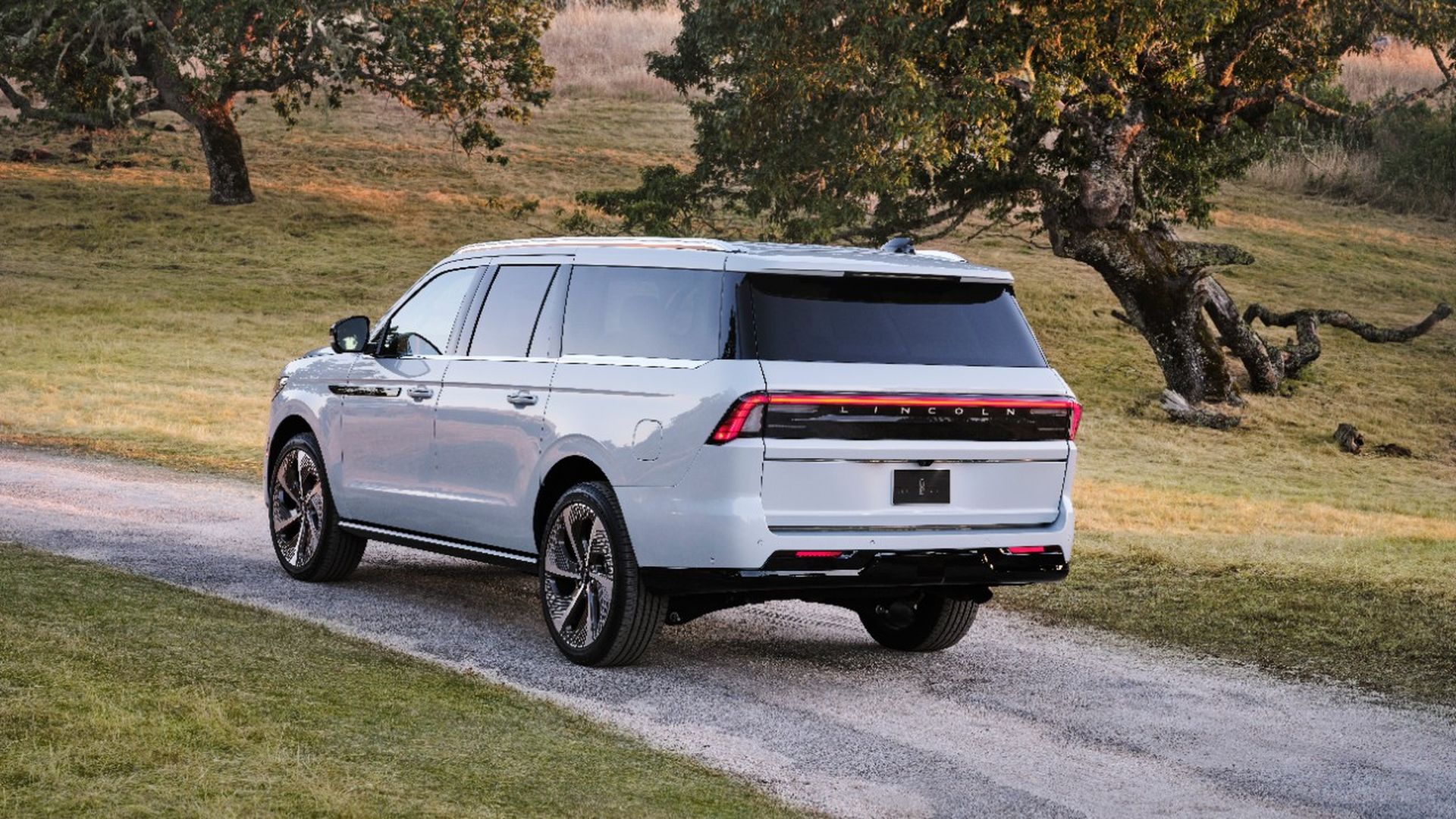
2026 Lincoln Navigator
- MSRP: $91,995 for entry-level Premiere trim. As tested: $105,740 for higher Reserve trim, including options and delivery charge.
- Under the hood: 440-hp turbocharged 3.5-liter V6, 10-speed automatic transmission and four-wheel drive.
The big picture: This is the car you want to take on a family vacation (or a girls' getaway weekend, like I did). It's opulent and comfy, with room for eight passengers.
- Yes, but: I drove it before the huge spike in gas prices. Now filling up this beast would cost more than $100 dollars. And at 17 mpg in combined city/highway driving, I might think twice about that road trip.
What I loved: The fold-out running boards made getting in and out easy. The combination of the heated, massaging seats and BlueCruise hands-free driving system washed away my stress.
What drove me crazy: To adjust the mirrors and steering wheel I had to fiddle with unmarked touchpads on the steering wheel. Just bring back the knobs and buttons please.
I test-drive vehicles in my role as a juror for the North American Car and Truck of the Year awards. Opinions are my own.
Thanks to editors Pete Gannon and Amy Stern. If you're a fan of this newsletter, please ask your friends to sign up, too.
Sign up for Axios Future of Mobility