Axios Future of Mobility
August 06, 2025

🚙 Last weekend, I helped a friend replace her 15-year-old car, and she was gobsmacked by all the technology in today's models.
- But with more automation also comes responsibility, as Tesla learned in a Florida courtroom the other day.
- Meanwhile, Ford is touting this century's Model T moment.
1,665 words, a 6.5-minute read.
1 big thing: Tesla verdict's chill on automated driving
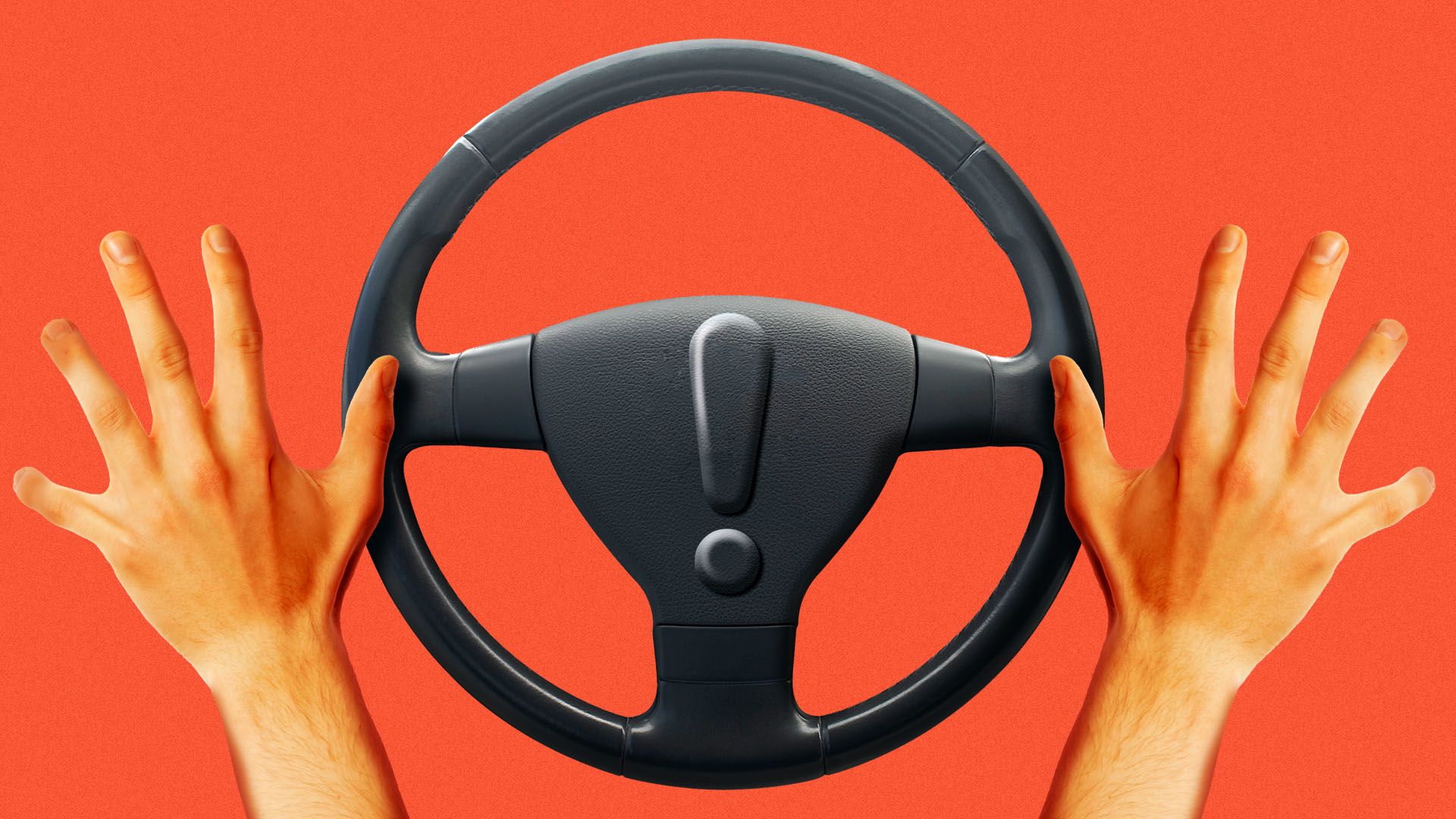
A stunning court verdict against Tesla last week exposed significant legal risks for every carmaker deploying vehicles that increasingly drive themselves.
Why it matters: For the first time, a jury found that it wasn't just the driver's negligence that caused a fatal crash in Florida.
- Tesla must also shoulder some of the blame, jurors said, because it didn't put enough guardrails on its Autopilot technology to prevent the driver from using the system improperly.
- With partially automated features like adaptive cruise control and hands-free driving becoming common in more cars — not just Teslas — the opportunities for confusion and risk are multiplying.
Catch up quick: A Miami jury decided Aug. 1 that Elon Musk's car company was partly responsible for the crash that killed a woman and injured her boyfriend on a dark road in 2019.
- The driver admitted he was distracted by his cellphone before the crash, but he had put faith in Tesla's assisted-driving system.
- "I trusted the technology too much," George McGee testified. "I believed that if the car saw something in front of it, it would provide a warning and apply the brakes."
- That didn't happen, and his vehicle slammed into the couple's parked car at more than 60 miles per hour.
- Lawyers for the plaintiffs argued that Tesla misled customers about Autopilot's capabilities and didn't restrict drivers from using the system on roads it wasn't designed to handle.
The verdict follows years of federal investigations and recalls related to Tesla's autonomous vehicle technology.
- And it's a blow to Musk, who is betting the future on self-driving technology as demand for Tesla's aging lineup of EVs has cooled.
- Just this week in Texas, shareholders sued Tesla and Musk for securities fraud, accusing them of concealing potential safety risks associated with the company's self-driving vehicles.
To be fair, Tesla's assisted-driving technology today is vastly improved from 2019's Autopilot, and it continues to make updates, as Musk noted today on his social media platform X.
What they're saying: The decision "is wrong," Tesla said in a statement, "and only works to set back automotive safety and jeopardize Tesla's and the entire industry's efforts to develop and implement lifesaving technology." The company plans to appeal.
Reality check: There's little evidence that any partial automation systems prevent collisions or save lives, the Insurance Institute for Highway Safety found.
- In fact, automation can create new risks by making it easier for the driver's attention to wander.
Between the lines: Some crash avoidance features, like automatic emergency braking, blind-spot warning and lane departure prevention, have proven safety benefits (although AEB is less effective at high speeds and at night).
- But automated technologies like adaptive cruise control or hands-free highway systems are conveniences — not safety features — that are meant to reduce the driving burden.
- Yet drivers who use partial automation on a regular basis often treat their vehicles as fully self-driving despite widespread warnings and numerous high-profile crash reports, IIHS research showed.
- "People have this assumption that more automotive sophistication means greater safety. But that's not a guarantee whatsoever," IIHS researcher Alexandra Mueller tells Axios.
- "Companies have to explicitly design those systems to be safe, otherwise you have convenience without safety, and as we've seen, that often comes at a great cost."
Zoom in: IIHS recently established minimum safety standards for partial automation systems and issued its first set of ratings on some of the leading technologies available.
- Almost all automakers scored "marginal" or "poor" ratings.
What to watch: The National Highway Traffic Safety Administration said this week it is launching a study of driver monitoring systems, which safety advocates welcomed as a step in the right direction.
- "Right now, there are no regulations at all around this technology — no requirements for driver monitoring or to prevent driver disengagement," says Michael Brooks, executive director for the Center for Auto Safety.
2. The bright side of Trump's policy upheaval
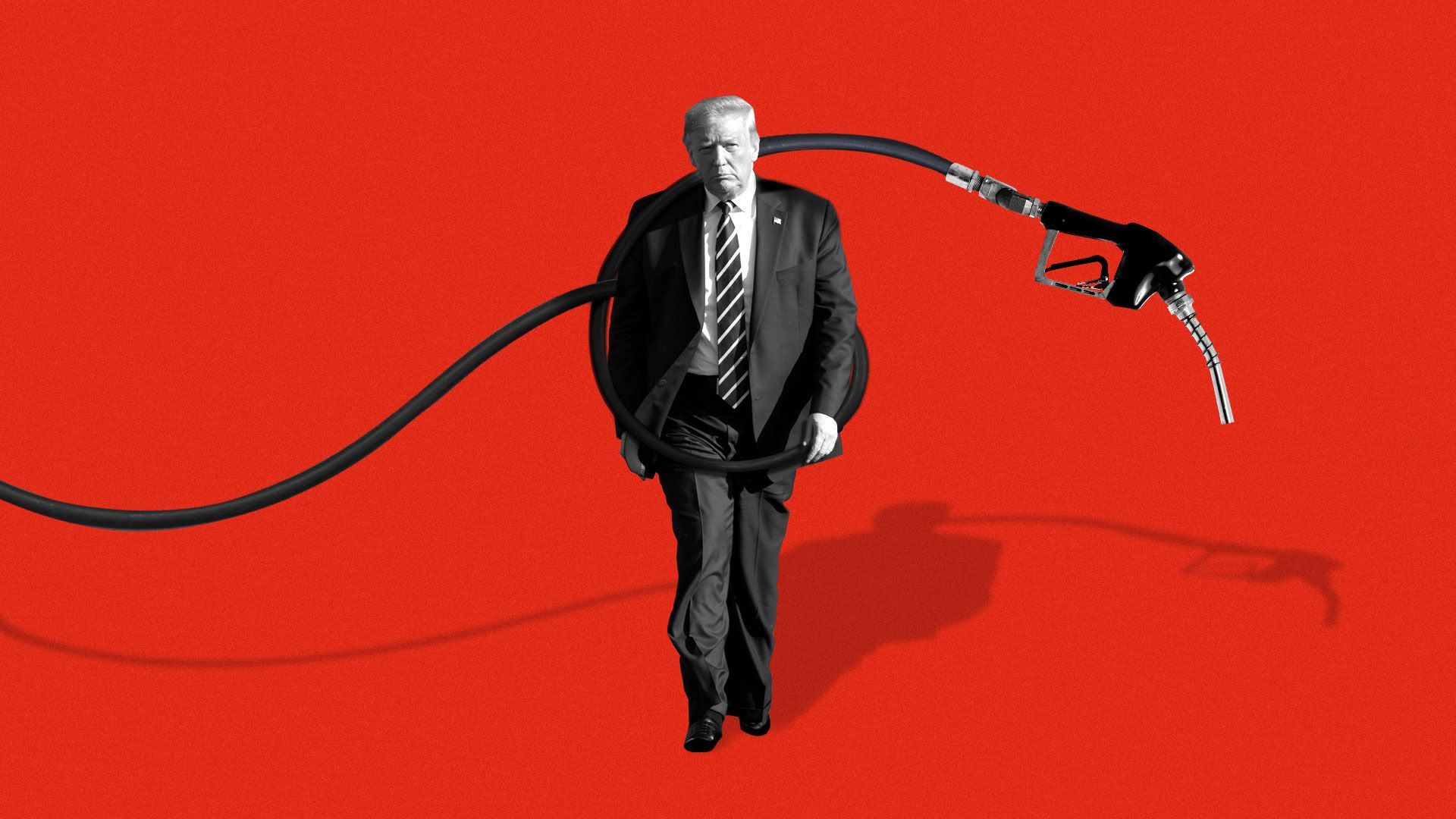
For all their complaints about how unfair President Trump's tariffs are for U.S. automakers, the industry seems quite pleased with his environmental policies, which lift a massive regulatory cost burden.
Why it matters: Trump's agenda could wind up as a net positive for the auto industry, allowing them to sell more high-margin, U.S.-built trucks and SUVs for the foreseeable future, while avoiding penalties for not building enough electric vehicles.
Stunning stat: Together, General Motors, Ford and Stellantis are projecting nearly $10 billion in gross tariff costs this year.
Yes, but: Trump's deregulation policies could help them offset most or all of that burden, depending on the outcome of continuing trade talks.
Driving the news: In quarterly earnings calls with analysts, the CEOs of the Detroit 3 said Trump's reversal of Biden-era EV policies will boost their finances.
- "To build what customers really want is going to be a tailwind for us," said Ford CEO Jim Farley, citing what he called a "multibillion-dollar opportunity" over the next couple of years.
- GM CEO Mary Barra had a similar message, calling Trump's regulatory policies a "huge opportunity" that allows the automaker to keep selling profitable trucks and SUVs while EV demand slowly builds.
- Stellantis, meanwhile, is bringing back muscle cars and Hemi engines now that it's no longer obliged to produce EVs and fuel-sipping engines. "And this will mean to us a lot of additional profit," said CEO Antonio Filosa, trying to steer a turnaround.
On the flip side, Musk says Tesla is staring down a "few rough quarters" as support for EVs goes away and it pivots toward autonomy and robots starting next year.
- Aside from vanishing tax breaks that will likely dampen EV demand, Tesla is also losing that easy money — $15 billion since 2012 — it made from selling regulatory credits.
What to watch: While the Detroit 3 welcome the relief from regulatory pressures, they're still anxious to see how Trump will revamp the existing trade agreement between the U.S., Mexico and Canada on which they depend.
3. Ford plans Model T moment for EVs
Ford CEO Jim Farley is teasing his company's new low-cost electric vehicle platform as "a Model T moment" for Ford.
Why it matters: The iconic Model T was the world's first affordable, mass-market automobile, made possible in the early 20th century by the efficiencies introduced by Henry Ford's moving assembly line.
- Ford aims to revolutionize manufacturing again with a new family of affordable EVs designed to compete with Chinese competitors like Geely and BYD.
Between the lines: "We believe the only way to really compete effectively with the Chinese over the globe on EVs is to go and really push ourselves to radically reengineer and transform our engineering, supply chain and manufacturing process," Farley told analysts during the company's Q2 earnings call.
- "The pure EV market in the U.S. seems to us very clear — small vehicles used for commuting and around town, so to speak," Farley said. "And we've been working really hard with our Skunk Works project and can't wait to show everyone where that lands."
What to watch: Farley and other Ford execs will share details at an event Monday at Ford's Louisville Assembly Plant, where production of the Ford Escape and Lincoln Corsair is winding down.
- "This is a Model-T moment for us at Ford. A chance to bring a new family of vehicles to the world that offer incredible technology, efficiency, space and features," he said.
4. Drive-thru
ICYMI ....
🚁 Joby Aviation is buying Blade Air Mobility's urban helicopter service for up to $125 million — a sign that electric air taxis are finally on the horizon after more than a decade of funding and hype. (Axios)
- The deal gives Joby immediate access to landing pads and customers, providing a head start over competitors.
🚐 Volkswagen's electric I.D. Buzz was supposed to be the modern reinvention of a much-loved symbol of 1960s hippie counterculture.
- "Instead, the vehicle is shaping up to be yet another American misadventure for the company, reaching dealers years late, over budget and just in time for a trade war." (Wall Street Journal)
🚖 Lyft is partnering with Baidu to deploy the Chinese tech giant's Apollo Go robotaxis across several European markets. (TechCrunch)
- This is Lyft's first foray into Europe and follows its recent acquisition of the German mobility app FREENOW.
5. What I'm driving: Acura ADX
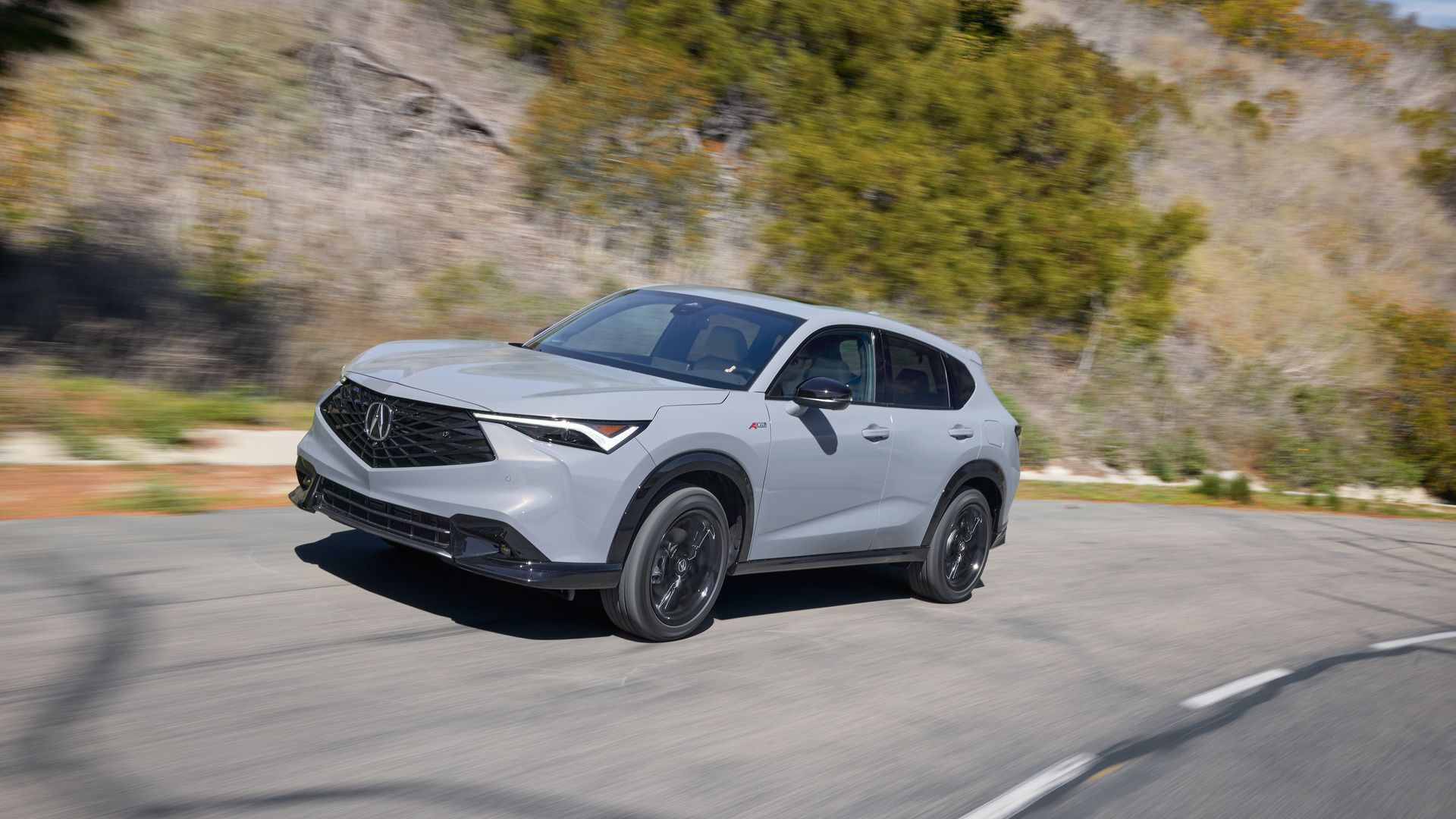
If you're a fan of the Acura Integra (and who isn't?), you'll enjoy its new stablemate, the ADX.
Acura is expanding its lineup with this entry-level crossover SUV that shares the same architecture and drivetrain as the sporty Integra compact sedan.
Specs: The 1.5-liter turbocharged engine offers 190 hp and is paired with a continuously variable automatic transmission. Front-wheel drive is standard, but all-wheel drive is available as an option.
- It gets an average of 28 miles per gallon in combined city/highway driving.
- The cabin has a premium feel with lots of technology, including a wireless charging pad, a 10.2-inch digital cluster and a 9-inch touchscreen that rises from the dash.
- Apple CarPlay and Android Auto are standard, but I was frustrated that I had to keep pairing my iPhone to the car each time I drove it.
- It comes with a long list of safety and driver-assist features, including adaptive cruise control, traffic jam assist and rear cross-traffic monitor.
Pricing: The ADX comes in three trim levels starting at $35,000.
- I drove the top-of-the-line, all-wheel-drive A-Spec with Advance Package, priced at $45,950 (including destination) which features a 15-speaker premium Bang & Olufsen audio system, heated steering wheel and a multi-view camera.
The bottom line: Some reviewers have complained that the ADX needs more oomph, but honestly, I thought it was a ton of fun to drive.
I test-drive vehicles in my role as a juror for the North American Car and Truck of the Year awards. Opinions are my own.
Thanks to Ben Berkowitz and Bill Kole for editing. Please tell your friends to sign up here!
Sign up for Axios Future of Mobility