Axios Future of Energy

September 16, 2026


🐪 Halfway! We're getting over the hump with a look at a major new AI-energy coalition, then moving on to...
- Diesel policy drama, a wonk-tastic pair of items, and more, all in 1,247 words, 4.5 minutes.
🙏 Thanks to Mackenzie Weinger, David Nather and Chris Speckhard for editing, and to our brilliant Axios visuals team.
🎹 This week marks 55 years since The Band released the album "Cahoots," which provides today's intro tune...
1 big thing: Tech giants launch flexible-power coalition for data centers

A new coalition launched today is seeking a triple win for a data center industry that lately has struggled to notch any wins at all.
The big picture: Tech giants Google and Nvidia are partnering with startup Emerald AI to back data centers that can flex their power demand — a strategy they say could curb electricity prices, mollify angry neighbors and grow the economy with more AI infrastructure.
- The launch comes amid mounting backlash to data centers centered on their resource impacts and power prices, and new polling shows the public-opinion challenge is getting steeper.
What they're saying: "It's really a win-win-win solution," Josh Parker, head of sustainability at Nvidia, told reporters Monday ahead of the official launch of the AI Energy Management Alliance.
State of play: The coalition brings together 20 companies and organizations spanning the AI and energy sectors, including Anthropic, utilities National Grid and AES, and power producers Constellation, NRG and RWE.
- The group is technically a relaunch. An earlier iteration, the Advanced Energy Management Alliance, was founded in 2014 to advocate for demand-response companies but had become largely inactive, Emerald AI CEO Varun Sivaram said on Monday's call.
- The revamped group is narrowly focused on making AI data centers more flexible power users — and convincing regulators and utilities to reward them for it.
Friction point: A whopping 84% of Americans say they're concerned about data centers' impact on local electricity prices, according to new AP-NORC/University of Chicago Energy Policy Institute polling released today.
- More than half of Americans are extremely or very concerned about AI's environmental impacts, up from 41% a year ago.
- In a rare point of bipartisan agreement, roughly equal shares of Democrats and Republicans — 79% and 76%, respectively — support requiring data center developers to pay for the grid upgrades needed to support them.
How it works: Data centers have traditionally been treated as giant, round-the-clock power users. The coalition wants to change the rules so facilities that can reliably cut their grid demand when electricity supplies are tight can get connected faster and potentially avoid some costly grid upgrades.
- The flexibility could come from shifting or pausing AI computing jobs, tapping batteries or nearby power generation, coalition leaders said.
- Google has committed 1 gigawatt of power demand it can reduce when needed through utility agreements nationwide, said Tyler Norris, Google's head of advanced energy market innovation.
- The group plans to push the approach with federal and state regulators, regional grid operators and utilities.
Yes, but: The bargain depends on data centers actually delivering the flexibility they promise. Sivaram said facilities should qualify for faster or larger connections only if their ability to cut demand is "verifiable and enforceable."
What we're watching: Whether regulators actually create the fast lane the coalition wants.
2. 🏃 Catch up quick: Diesel drama, LNG, carbon capture

⛽ The idea of banning diesel exports won't die no matter how many times Trump officials strongly downplay the prospect or say it would not help.
- Why it matters: The chatter reflects a view that something has to give with the fuel now hitting $6.31 per gallon, per AAA.
- Catch up quick: Senate Majority Leader John Thune (R) said yesterday that he's ban-curious but also signaled deference to the administration.
- Reality check: Interior Secretary Doug Burgum said this week a ban would not lower prices, and multiple analysts also say it would be ineffective.
- The bottom line: As long as record prices persist, so will speculation that it's a live option. "I think the odds of a diesel export ban announcement before [the] midterms is high," SoFi chief market strategist Liz Thomas said via X. Rapidan Energy Group, however, sees only 35% odds.
📈 The big Commonwealth LNG project under construction in Louisiana is getting even bigger. Developer Caturus plans to nearly double the capacity to over 17 million metric tons per year, it said yesterday.
- Why it matters: The expansion plan — still subject to financing decisions — is a long-term bet on robust demand for the fuel abroad, especially Asian markets. The first phase is slated to start up in 2030, with the expansion coming online in the early 2030s.
- Catch up quick: The company was founded by energy asset manager Kimmeridge, with investments from Abu Dhabi's Mubadala Energy and Canada Pension Plan Investment Board.
👍 Via the FT, Texas regulators gave Exxon a green light for underground CO2 storage.
3. 📊 Trump's energy data boss readies major product revamp
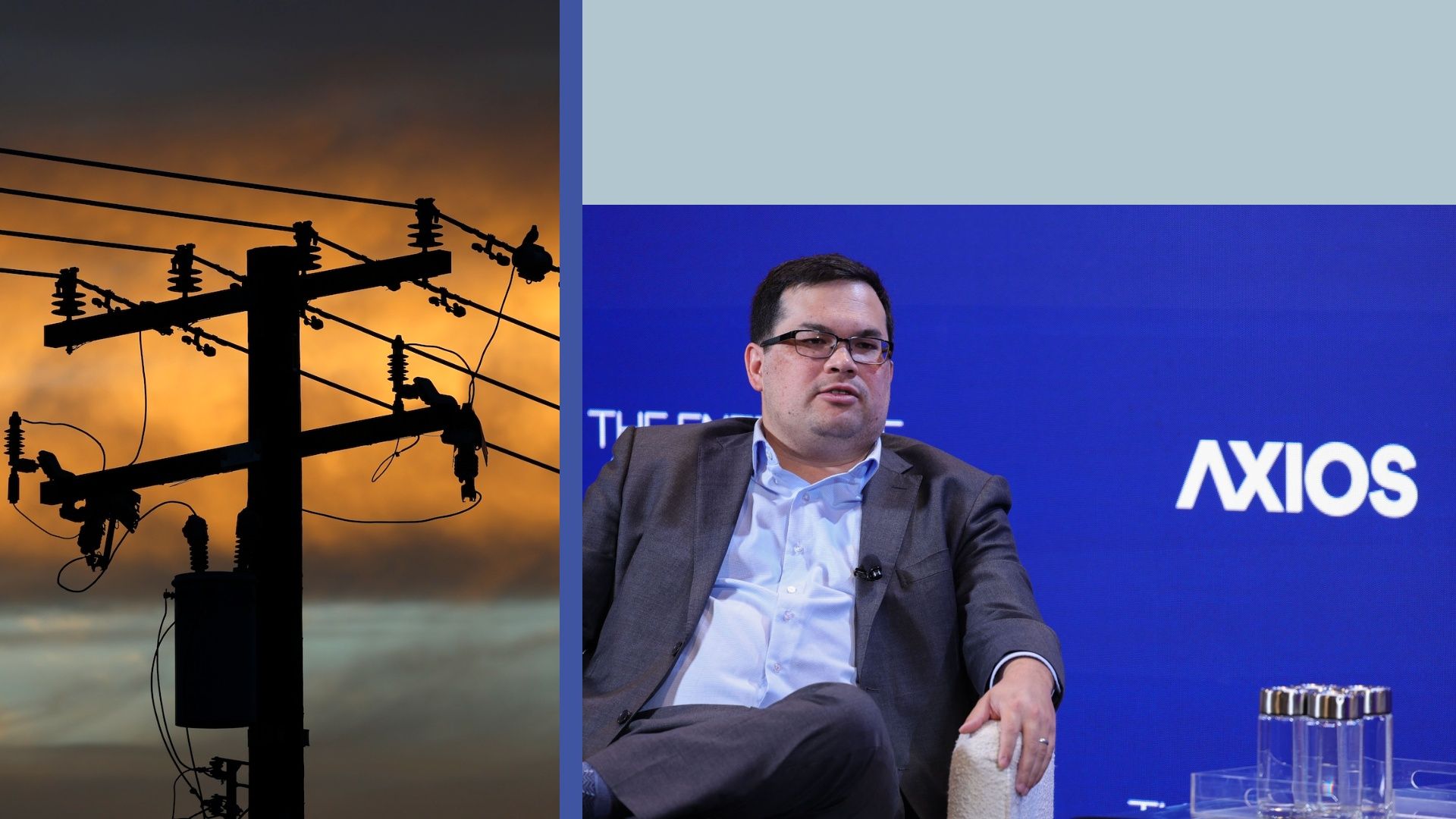
The Energy Department's stats and market analysis arm is readying a new weekly electricity report and a suite of other data products.
Why it matters: File under "wonky but important."
- Companies, academics, nonprofits and journalists (I could keep going) rely on Energy Information Administration data.
- And electricity is hot as demand grows and the grid mix evolves.
"EIA is the steward of vast amounts of energy data, and unfortunately, it is often difficult to access that data," EIA Administrator Tristan Abbey said at an Axios Live event yesterday.
Driving the news: The weekly report will replace the "Electricity Monthly Update" and the infrequent "Electricity Sales, Revenue, and Average Prices," which are duplicative of the main monthly power report, EIA said.
Zoom in: Other upcoming changes include...
- A new weekly coal report that will offer estimates of supplies and consumption, and encompass what are now two separate production and market reports.
- Another one of the seven new products: a "Monthly Petroleum Report" that will upgrade existing offerings, EIA said.
The bottom line: EIA is updating products that have been largely unchanged for many years, Abbey said, crediting the workforce with a "wellspring of terrific ideas."
- Staff have been working "to try to get their ideas through the bureaucracy, and they're finally able to do so," he said.
4. 👋 Meet the newest energy think tank

Today brings the launch of the Lighthouse Energy Institute, a nonpartisan think tank that lands at an awfully busy time in the energy world.
Why it matters: The founders come out of the R Street Institute, a center-right think tank.
- The guiding principles are "competitive markets, limited government, and quality institutions," Lighthouse said.
- They're also making the case that free markets can advance climate goals.
The big picture: "Research and education gaps are pervasive in the pursuit of informed policymaking," writes co-founder and president Devin Hartman in an introductory post.
State of play: The other two co-founders are Kent Chandler and Philip Rossetti.
- It's philanthropy-funded. Donors include Arnold Ventures, the Connected Grid Initiative, and Deploy/US.
There's growing "substantive alignment" between free-market and liberty-based approaches and climate, Hartman argues, citing steps like liberalizing power markets.
"Unleashing markets is the prime path to economic prosperity (energy cost reductions!) and emissions reductions," he said via email.
5. 🍔 Quote of the day: Data center "nothing-burger" edition
"What it means is nothing, really. It's a nothing burger ... It will have absolutely zero impact anywhere, because states are either already doing it or they're choosing not to do it, and there's nothing in this bill that's going to change that."— Rep. Sam Liccardo (D-Calif.), on the bipartisan Ratepayer Protection Act that the House is slated to pass this week
Liccardo laid out separate ideas for enabling grid investment during an Axios Live event yesterday morning.
📫 Did a friend send you this newsletter? Welcome, please sign up.
Sign up for Axios Future of Energy