Axios Future of Energy

July 15, 2026


🐪 Halfway! We're getting over the hump with a double dose of data center politics, then moving on to...
- The latest on oil, PJM's pickle, and clean energy manufacturing, all in 1,108 words, 4 minutes.
🙏 Thanks to David Nather, Mackenzie Weinger and Chris Speckhard for editing and to our brilliant Axios visuals team.
🎙️ Happy birthday to the great Linda Ronstadt, who has today's intro tune...
1 big thing: Utility boss calls for fighting "misinformation" on data centers
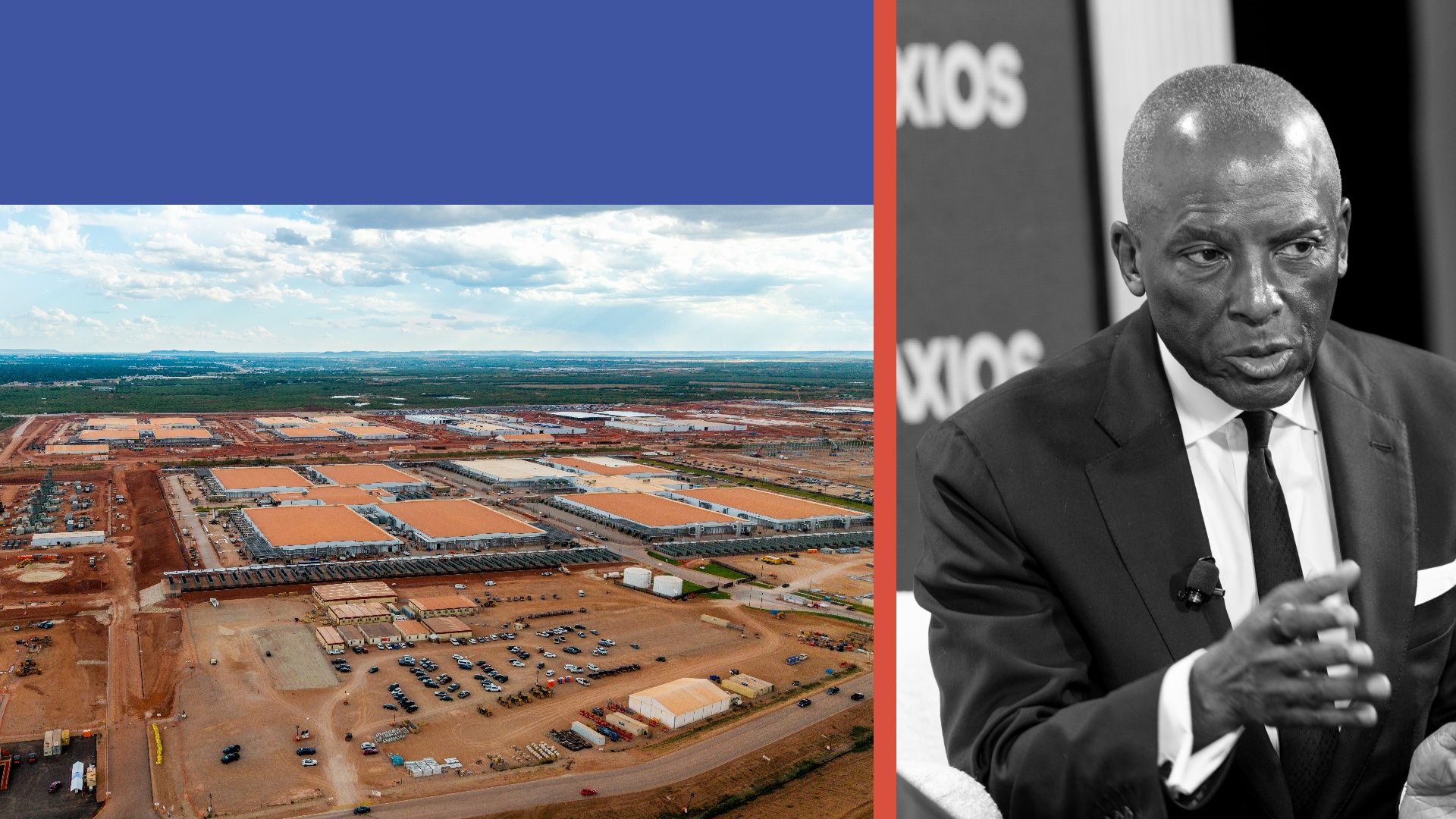
Chris Womack, CEO of power giant Southern Company, said there's a lot of "misinformation" about data centers' effect on power costs — and that it demands a more vigorous response.
Why it matters: Energy-thirsty data centers face growing public backlash, even as tech companies need more infrastructure for training and use of powerful AI models.
Driving the news: There's a "false narrative" about data centers raising consumers' power bills, he said in an interview at Axios House D.C. yesterday.
- "There is so much misinformation that is out in the public domain about these projects," said Womack, who leads one of the country's largest utilities.
- Womack said that Southern negotiates agreements to ensure data centers "pay their costs" and "fair share," and that the contracts actually help reduce rates.
What we're watching: Womack said that the power and data center industries need to more aggressively counter claims about the sector's impact on prices.
- "We all have to do a better job of telling the truth about these projects, what's real and what's not," Womack said.
Catch up quick: New York yesterday became the first state to impose a moratorium on new data centers via Gov. Kathy Hochul's (D) executive order that creates a one-year pause to craft a new regulatory framework.
- But the state is not among the country's major data center markets.
- The nationwide policy landscape is very fluid, with communities and states weighing a mix of new restrictions and protections around costs, water use, and more.
- Local opposition delayed or blocked at least $130 billion worth of data center projects in the first quarter of 2026, per the tracking firm Data Center Watch.
What they're saying: "We believe opposition will put upward pressure on costs and timelines, contributing to project dispersion across the US, as the country remains the priority region for US developers," Morgan Stanley said in a note yesterday.
- While local opposition is popping up nationwide, the advisory firm Capstone does not expect states outside New York and New England to implement statewide moratoriums, it said in a note.
Zoom out: The relationship between large new sources of power demand and consumer prices is complicated and regional — and still unfolding with many huge projects on the drawing boards.
- Two recent reports dispute claims that data centers are behind higher U.S. power bills in recent years, and even cite deflationary effects.
- But the analyses — via Columbia University's energy think tank and the nonprofit Electric Power Research Institute — also offer caveats about the relationship going forward.
What's next: In coming weeks and months, regional grid operators must respond to FERC orders showing how they'll enable data center grid connections while protecting ratepayers.
2. 🛣️ New York offers Dems a data center roadmap

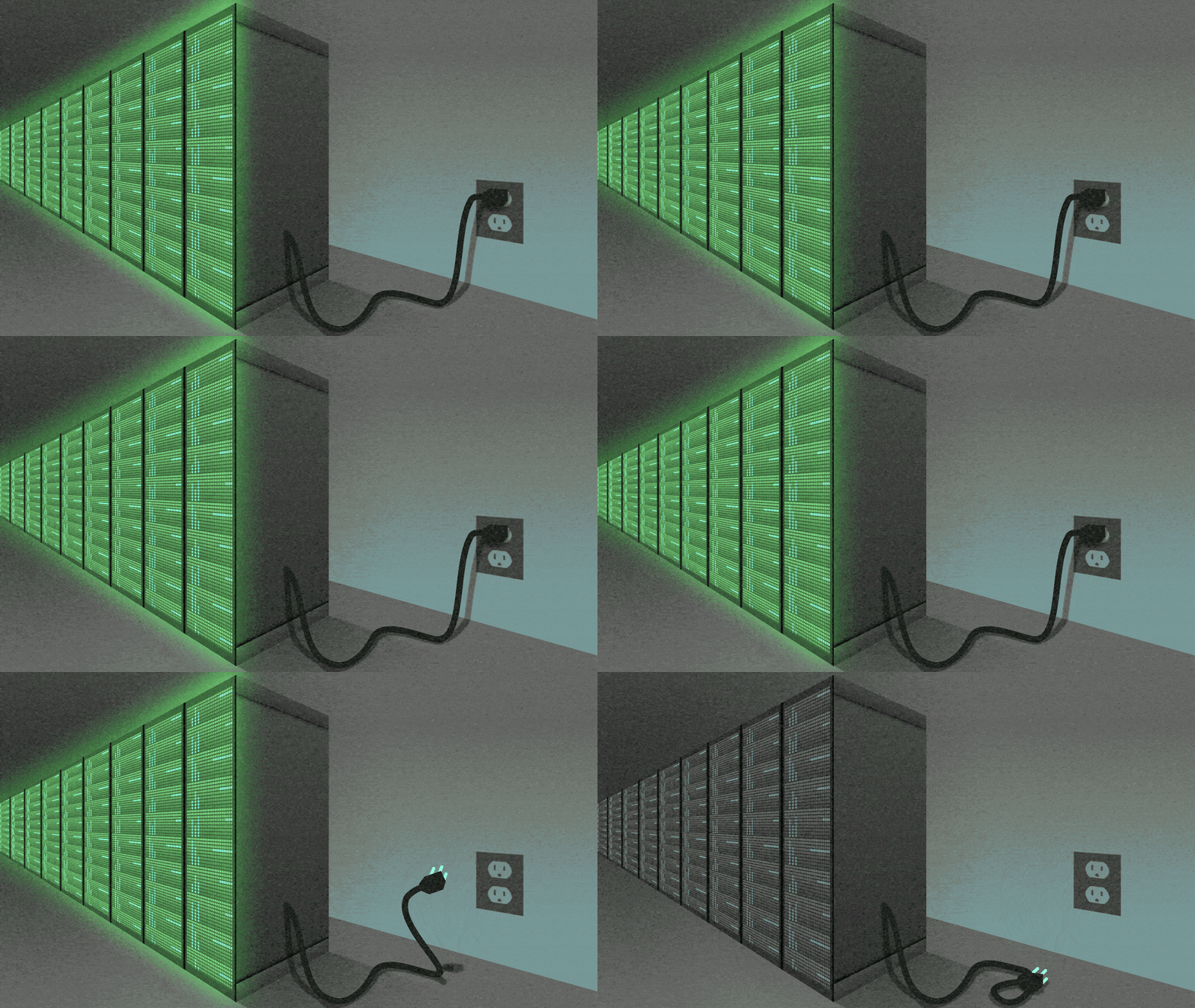
New York Gov. Kathy Hochul's first-in-the-nation data center moratorium could provide a playbook for other Democrats confronting one of the midterms' most heated issues.
Why it matters: Voters across the country are protesting data centers and looking for politicians to take decisive action to address concerns over the industry's rapid expansion.
- Hochul's approach — using executive authority while continuing to negotiate over broader legislation — could become a playbook for other governors.
State of play: Hochul went the executive order route in order to move as quickly as possible, her staffers say, while continuing to work with the New York legislature.
- State Sen. Kristen Gonzalez recently pushed a data center moratorium bill through the New York legislature, but instead of signing that, Hochul took executive action.
Zoom out: The backlash isn't limited to blue states.
- Texas Gov. Greg Abbott (R) recently called for banning new AI data centers in rural neighborhoods and to require the industry to shoulder more of its infrastructure costs.
Between the lines: Hochul is toeing the line between companies and voters, and acting fast without shying away from language viewed by some other Democrats as too politically charged.
3. 🏃 Catch up quick on oil and gas
⛽ Average U.S. gasoline prices are marching back toward $4 per gallon as oil prices spike anew amid the collapse of the U.S.-Iran ceasefire. AAA reports the national average for gasoline increasing just over 9 cents per gallon over the last week, to $3.89 this morning.
📃 A bipartisan group of senators is floating a revised Russia sanctions bill that the late Sen. Lindsey Graham (R-S.C.) helped finalize in one of his last efforts to broker a compromise and end the war in Ukraine.
- Why it matters: If enacted, the bill would ratchet up pressure on Vladimir Putin by imposing 100% tariffs on the five largest importers of Russian oil and gas — likely including China and India.
- What we're watching: President Trump stopped short of a full-throated endorsement today, but said: "There's a good chance it gets done." Full story
🏗️ Via Bloomberg, "The US is advancing talks for a pipeline that would carry oil from Iraq to Syria, a route that avoids the Strait of Hormuz and would reduce Iran's future leverage over global energy supplies."
4. 🛢️ Bonus: Charting the supply shock
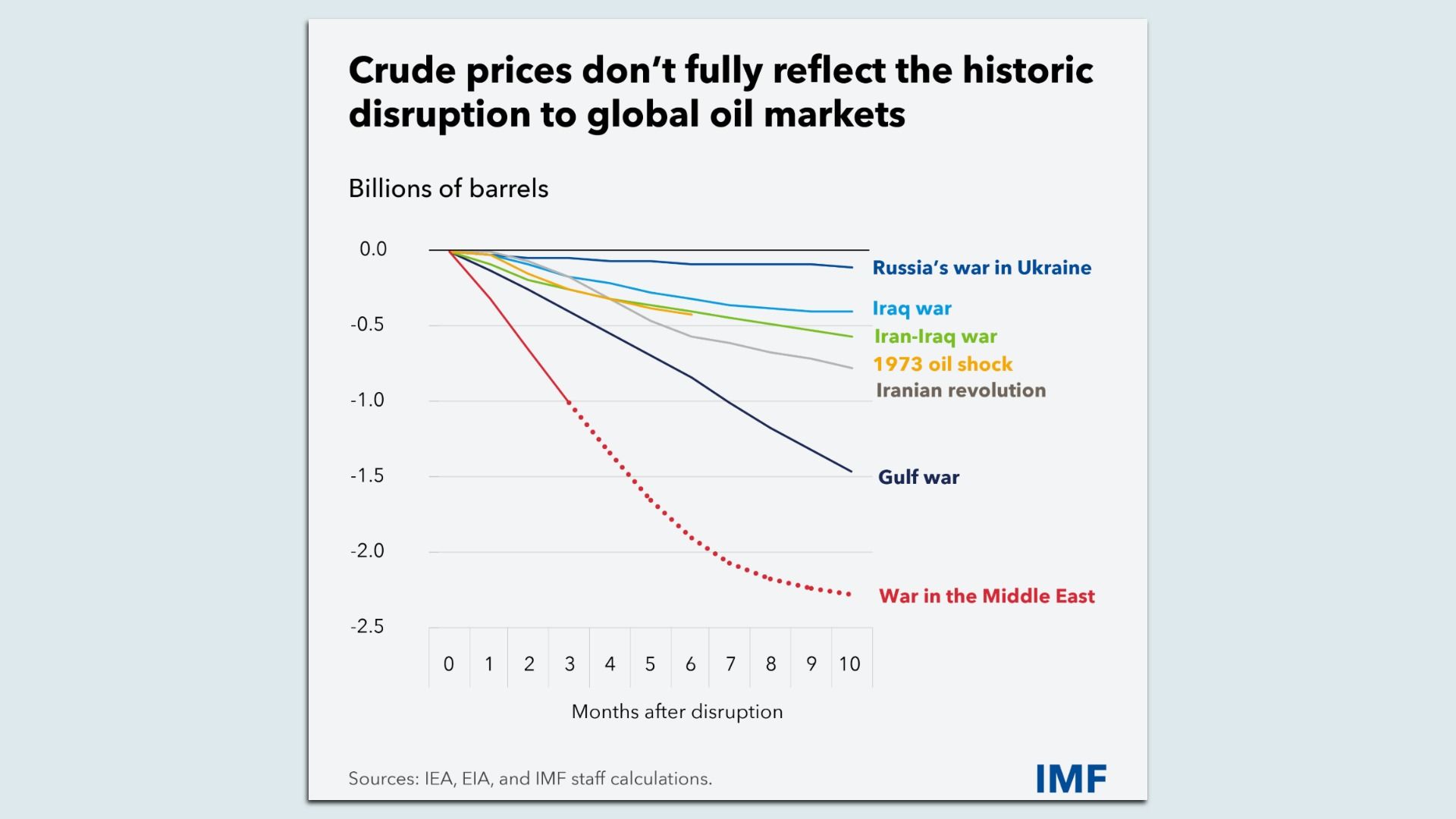
The International Monetary Fund is out with a lucid explainer on why oil prices haven't reached apocalyptic levels despite the historic disruption shown above.
Threat level: The market's shock absorbers are wearing thin, IMF warns.
- "As tensions flare again in the Strait of Hormuz, that room is now smaller and shrinking further as spare capacity has been deployed, demand has compressed, and inventories have been drawn down," the authors write.
5. 🧑🏭 Number of the day: $8 billion
That's U.S. investment in manufacturing various clean energy technologies in the second quarter of 2026, a 4% rise from the prior three months, per Rhodium Group and MIT researchers.
Why it matters: The uptick breaks a streak of six consecutive quarterly declines.
- "The electric vehicle (EV) supply chain — critical minerals, batteries, vehicle assembly, and charging equipment — continued to dominate manufacturing investment in Q2 2026, accounting for 88% of total manufacturing investment at around $7 billion," the analysis states.
Yes, but: Investment cancellations also ticked up to $1.7 billion, largely from solar projects. Go deeper
6. 💬 Quote du jour: PJM's eye of the storm edition
"These auction results show that demand for electricity continues to grow faster than electricity supply."— David Mills, president and CEO of grid operator PJM, in a statement
The auction for future power supply commitments fell short of reliability requirements for the year beginning June 2028, PJM said, which means operating with "slimmer reserves and a greater level of risk." Go deeper
📫 Did a friend send you this newsletter? Welcome, please sign up.
Sign up for Axios Future of Energy