Axios Future of Energy

May 18, 2026


🥞 Welcome back! We're opening the week with a packed but quick journey through...
- An earthshaking power merger
- The battle over data centers and power bills
- Alaskan gas deal, Congress and more, all in 1,305 words, 5 minutes.
🙏 Thanks to David Nather and Chris Speckhard for editing and to our brilliant Axios visuals team.
🎸 This month in 1984, The Waterboys released the album "A Pagan Place," which provides today's anthemic intro tune...
1 big thing: 😳 A U.S. power behemoth
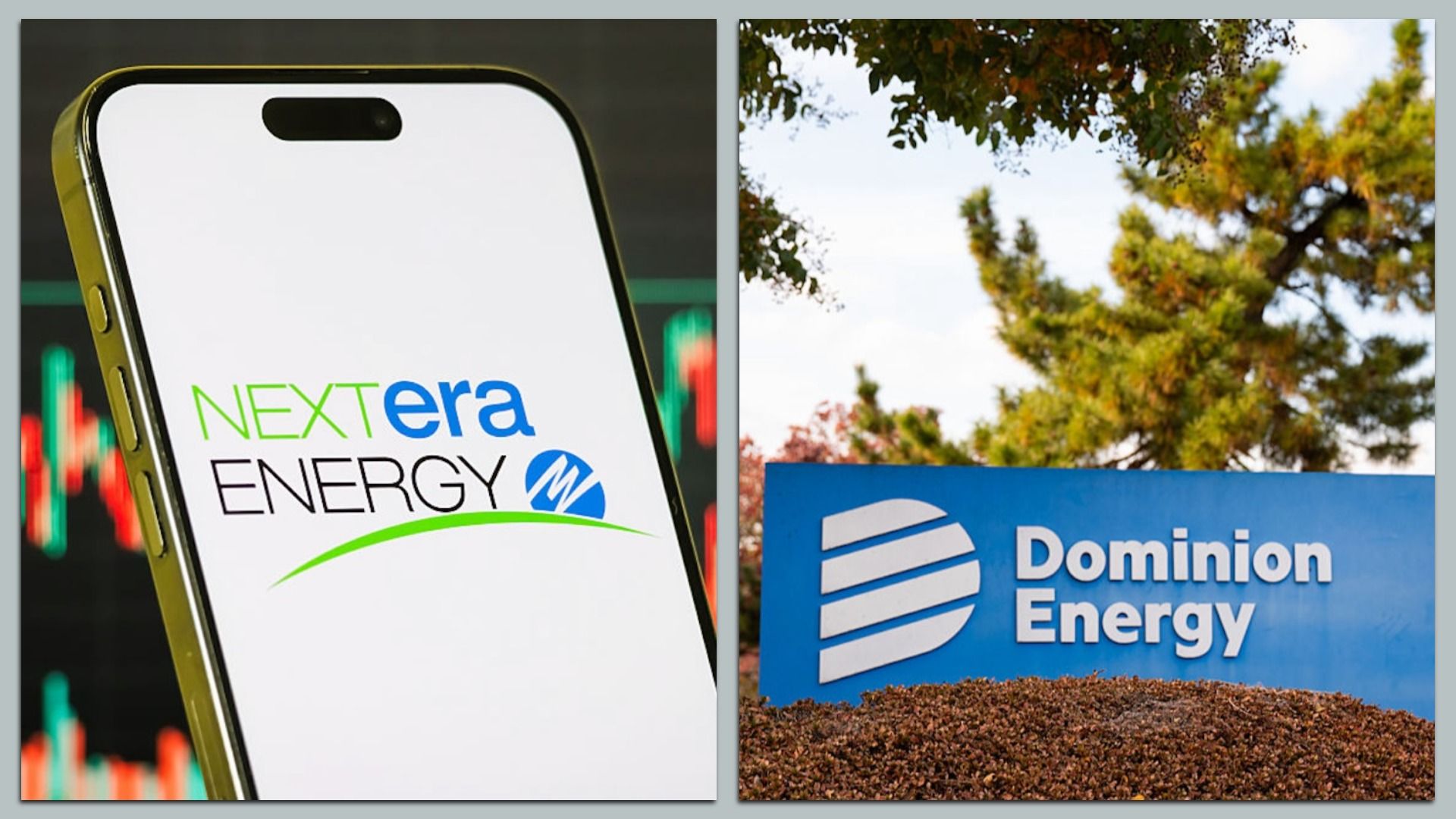
U.S. power giants NextEra Energy and Dominion Energy announced plans today to merge in the largest electricity deal — by far — since the mainstreaming of AI.
Why it matters: The deal, if approved by regulators, would enable massive scale as the industry looks to expand generation and related infrastructure to meet rising demand.
- The all-stock merger "creates the world's largest regulated electric utility business by market capitalization and one of the world's largest energy infrastructure companies," the companies said in a joint announcement.
- The potential merger would expand NextEra's presence in the fast-growing PJM grid region of the Midwest and mid-Atlantic.
Stunning stats: The combined company would serve about 10 million utility customer accounts across Florida, Virginia, North Carolina and South Carolina, and own 110 gigawatts of generation from a wide array of energy sources, the announcement states.
- It would be the world's largest player in renewables and battery storage, and would lead the U.S. in total power generation, the companies said.
- That means it would be the largest company in natural gas-fired power, and No. 2 in nuclear.
Driving the news: NextEra — which has a market capitalization of $195 billion — owns the utility Florida Power & Light and has renewables, battery, gas and other projects nationwide.
- Richmond-based utility Dominion serves what's currently the largest data center market — Virginia — and operates in several other states. Its current market cap is $54 billion.
The big picture: The deal lands amid U.S. electricity demand that's rising thanks to AI, re-shoring of manufacturing and the growth of electric cars, among other reasons.
- Power prices are also rising in many areas, putting pressure on utilities and regulators to enact new consumer protections.
- The companies said customers would benefit from increased scale and efficiency.
- They're also proposing to provide $2.25 billion in electric bill credits spread over two years for Dominion customers in Virginia, North Carolina and South Carolina.
Catch up quick: It would be the latest in a growing number of very large deals, notably Constellation's $29 billion acquisition of Calpine completed in January that greatly expanded its gas-fired fleet.
- Scale is becoming increasingly important, "not only to compete but also to access capital and execute transactions efficiently," Deloitte analysts wrote in a report on U.S. power deals.
What they're saying: While both NextEra and Dominion have a range of assets and project pipelines, power entrepreneur Jigar Shah says the deal would be important for expanding NextEra's battery storage skillset.
- "Dropping NextEra's storage expertise onto Virginia's data center load could be transformative," Shah, who led the Energy Department's loan program in the Biden-era, posted on X over the weekend.
What we're watching: The deal could face legal and regulatory challenges getting approved by federal and state officials.
- The companies hope to close the transaction in 12 to 18 months.
2. 👀 Data center industry ramps up pushback on cost claims

The tech and AI infrastructure industries are stepping up efforts to challenge the narrative that consumers are getting stuck with the bill for data center growth.
Why it matters: New analysis arguing the AI boom hasn't hit household budgets arrives amid a backlash to huge data centers.
Driving the news: There's "no quantitative evidence to date that data centers have historically been subsidized by other customers," the firm Energy and Environmental Economics (E3) concludes in the report out today.
- The Data Center Coalition (DCC) — which includes Big Tech, data center developers, and AI titans including OpenAI — commissioned E3's literature review.
What's next: The DCC plans to share the results on Capitol Hill and with regulators at national, state and local levels.
Friction point: Policymakers in multiple states are weighing new data center restrictions amid public pushback to energy-thirsty AI infrastructure.
- Cost is one battleground — there's also community opposition around noise, land and water use, and more.
- A record number of data centers were canceled in the first quarter of 2026, per Heatmap Pro data.
State of play: Many things are driving higher bills — power plant retirements, inflation, market designs, wildfire prevention, grid modernization costs, and lots more, E3 finds.
- There's no clear relationship between higher electricity demand and higher retail rates, it states. There are, however, research gaps on the nexus between data centers and rates.
- Regulators are already implementing special rates on large sources of new demand — like data centers — in various areas, it emphasizes.
The intrigue: The link between data centers and prices — past and future — is regional and complicated.
- For instance, a Lawrence Berkeley National Laboratory report found that from 2019-2025, many states with big demand sources coming online had small or even negative retail price changes.
- Several states in PJM, where growth is strong, saw big spikes in 2025.
- The grid operator's independent market monitor last week cited data centers in reporting a large wholesale cost jump in Q1 2026.
What's next: FERC plans to act by the end of June on Energy Secretary Chris Wright's push for rules to govern large data centers' connection to grids.
3. 🏃Catch up quick: LNG, EVs, motor oil
🤝 ConocoPhillips is the latest company to pledge to supply natural gas for a huge Alaskan gas pipeline and LNG project.
- Why it matters: The long-term deal, alongside agreements with Exxon and other producers, means there are now sufficient volumes to support a final investment decision on building the pipeline portion, developer Glenfarne said.
- What we're watching: The costly project, a Trump administration priority, still faces hurdles.
💵 A bipartisan House plan unveiled last night would impose fees starting at $130 on EVs to support highways and other infrastructure.
- Friction point: The fees, part of the huge 5-year transportation bill draft, face opposition among Senate Democrats, E&E News reports.
🚗 Motor oil could become the next supply-chain headache as major companies warn that Middle East turmoil is squeezing key ingredients used in synthetic lubricants. Axios' Kelly Tyko has more.
4. 🤝 Energy tech deals and news you may have missed

⚡️ Exclusive: Energy harvesting chip startup Casimir launched out of stealth with a $12 million seed round. Go deeper
⏰ Bankers spearheading the recent climate IPOs are betting on the most fickle commodity of all — investor patience. Go deeper
🌎 S2G Investments, the Chicago investment firm backed by Walmart heir Lukas Walton, announced last week that it had closed a $1 billion growth fund. Go deeper
🛰️ Cowboy Space (fka Aetherflux), a California startup developing orbital solar-powered data centers, raised $275m in Series B funding. Index Ventures led, joined by Breakthrough Energy Ventures and others. Announcement ... TechCrunch coverage
🛰️ More space! Star Catcher, a Florida startup with visions of space-based energy infrastructure, raised $65m in Series A finance. B Capital led the round, and there's backing from Shield Capital, Cerberus Ventures and others. More via Space.com
💧Crew Carbon, a Brooklyn-based wastewater carbon dioxide removal provider, raised $25m in equity and grant funding. Burnt Island Ventures led, joined by AP Ventures, Sony Innovation Fund and others. Announcement ... WSJ coverage
Talk to our sales team about Axios Pro Deals for a steady diet of scoops and smart analysis
5. 💬 Quote of the day: Old economy rising edition
"The Mag 7 is the largest unhedged molecule short ever underwritten by an equity market at the exact moment supply has never been more constrained."— Commodity analyst Jeff Currie on the risks facing investment in the "magnificent 7" tech giants
That's part of the Carlyle analyst's long, buzzy thread arguing that while investors are pouring money into tech, investors are overlooking the "old economy" of energy and commodities that AI needs.
🙏 Thanks to David Nather and Chris Speckhard for editing and to our brilliant Axios visuals team.
📫 Did a friend send you this newsletter? Welcome, please sign up.
Sign up for Axios Future of Energy