Axios Future of Energy

April 28, 2026


📈 Oil is climbing again, and we've got a timely look at a crucial variable in the standoff — Iran's storage situation. Today's packed edition also dives into...
- Fusion news, Shell's strategy, renewables data and more, all in 1,416 words, 5.5 minutes.
🚨 Breaking: The United Arab Emirates is leaving OPEC in a move that weakens the alliance. Go deeper
🎸 This week in 1992 brought XTC's release of "Nonsuch," which provides today's intro tune...
1 big thing: Iran may have oil options to drag things out
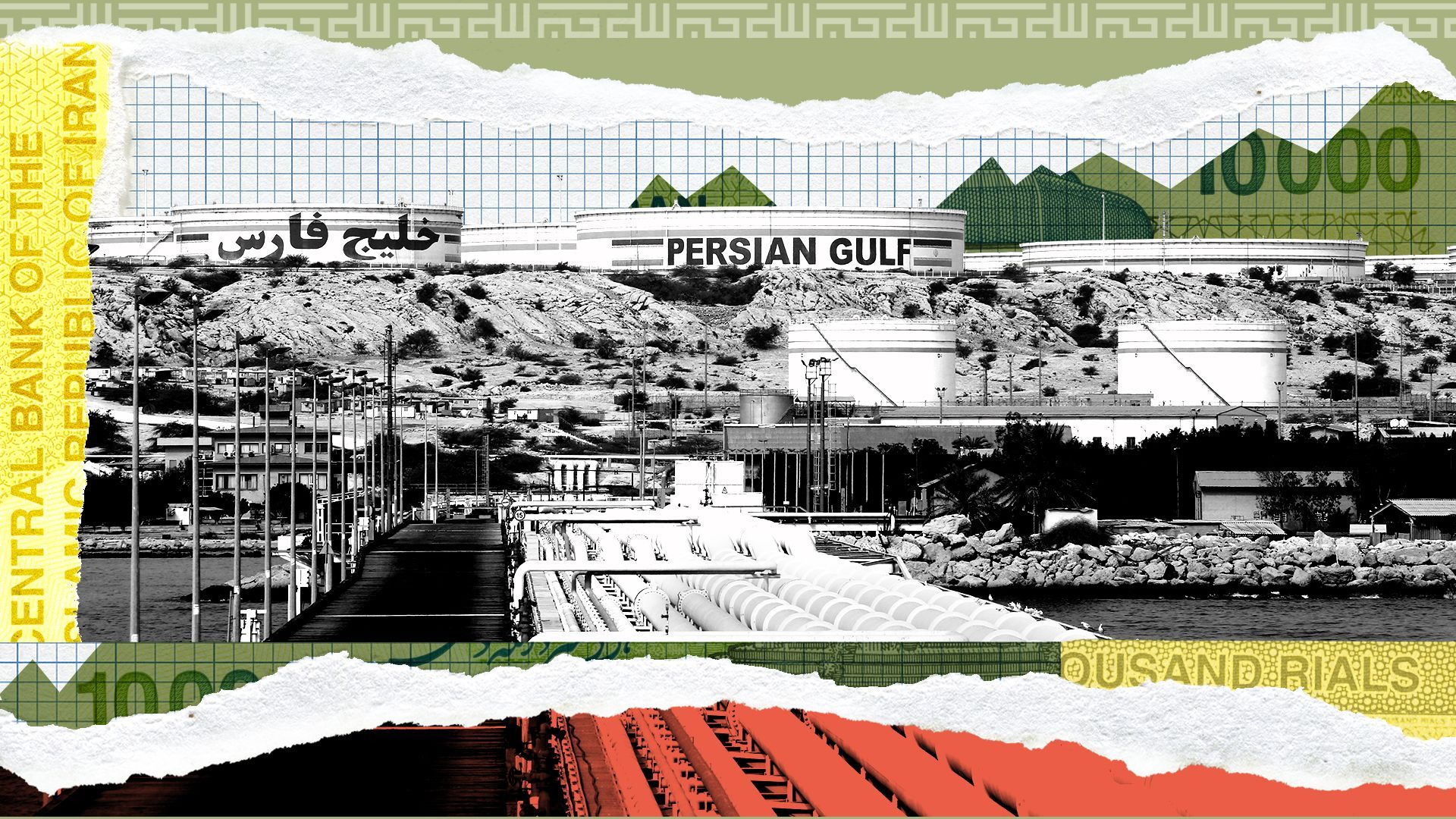
Iran has more cards to play to avoid the U.S. blockade halting its oil output — at least for now, analysts say.
Why it matters: Oil is Iran's economic lifeblood, and President Trump hopes blocking exports — which eventually causes production to halt — will force concessions.
- But Iran has extra storage capacity, and reportedly can get some tankers through the blockade — so it may be able to resist that pressure for a while longer.
- The state of Iran's oil infrastructure could sway regime strategy as the strait of Hormuz stalemate creates political pain for Trump.
What they're saying: The country "may not be in imminent danger of a major crude oil shut-in," writes Antoine Halff, chief analyst with the climate and energy data analytics firm Kayrros.
- Halff cited "Iran's experience in building stocks during the Covid crisis, available space at other facilities, and efforts to increase alternate storage and export facilities over the past 10 years."
- That's from his forthcoming blog post for Columbia University's energy think tank.
The big picture: Gregory Brew of the Eurasia Group challenges estimates in mid-April — when the blockade began — that Iran only had enough storage to maintain production for two weeks.
- "That estimate presumed Iran wouldn't be able to export oil during this time," said Brew, a senior analyst with the political risk consultancy.
- That presumption, he and others say, has not been borne out.
The intrigue: Brew said that Iran is capable of halting production without "catastrophic loss of pressure in the fields."
- He also argues the powerful Islamic Revolutionary Guard Corps has other revenue sources, like smuggling oil overland and in small tankers.
- "Even if the US blockade is completely successful — and, importantly, right now it isn't — IRGC would be able to rely on these alternatives to keep its troops paid and its position in Iran secure," he said via email.
Zoom in: Iran had access to 20 Very Large Crude Carriers — the kind of ship that holds 2 million barrels — as of April 20, per Rohit Rathod, a senior analyst with commodity tracking and analytics firm Vortexa.
- "These vessels can be easily repurposed by Iran to be used as floating storage and keep producing for about 2 months" before Iran must curtail oil production, he said via email.
- The firm also estimates that as of April 20, Iran had spare onshore storage equivalent to around three weeks of production.
The other side: Treasury Secretary Scott Bessent claimed production shut-ins have begun, and calls the blockade a one-two punch with sanctions.
- Miad Maleki, a former Treasury sanctions official now with the hawkish Foundation for Defense of Democracies, said in a detailed X post that Iran's storage strategy is "delay tactics measured in days, not weeks."
What we're watching: Iran's pain threshold.
2. 😬 Bonus: Oil's stalemate surge


Crude oil futures are at their highest levels in weeks amid the absence of a diplomatic endgame that frees up the Strait of Hormuz.
- "A lot of the risk-off sentiment that was driving markets in recent weeks is making way to a bleaker risk-on outlook," Rabobank analyst Florence Schmit said via Bloomberg.
3. ⚛️ A new step toward making U.S. fusion real

Commonwealth Fusion Systems revealed today that it has formally filed a request with grid operator PJM to connect its planned power plant in Virginia.
Why it matters: It's the first time a fusion developer has filed one of these detailed requests to link to a major grid region, Commonwealth said.
- This step isn't just box-checking to get on a waiting list, but rather the result of discussions with the grid operator going back over a year.
- It will bring even more detailed work in coming years as PJM vets what Commonwealth hopes will be commercial power generation in the early 2030s.
The big picture: The company cast the grid interconnection request as a bridge from the science phase of fusion to the real world.
- "It's a rigorous process, where you document what it will look like to the grid operator, how it will run, how it will start up, how it will shut down, all the details that go into an operating power plant," Commonwealth CEO Bob Mumgaard said in an interview.
Zoom out: Commonwealth is among the furthest along of the startups looking to commercialize fusion power — a prospect that remains fraught with technical and financial uncertainties.
- It's working with utility partner Dominion Energy and hopes to generate 400 megawatts from a fusion reactor called ARC near Richmond.
- Commonwealth already has a power purchase agreement with Google for half the output.
The bottom line: Making fusion reality is about learning curves that go beyond the core science — and this is a piece of the puzzle.
4. 🛢️ Catch up quick on Big Oil: Shell's sign of the times and BP's profit

🤝 Let's spend a moment on Shell's $16.4 billion deal — its largest in over a decade — to acquire Canadian oil and gas producer Arc Resources unveiled yesterday.
- Why it matters: It bolsters Shell's access to supply for its expanding Canadian LNG business — and analysts also see connective tissue to the Middle East crisis that's spotlighting the lower risk from resources elsewhere.
- What they're saying: "It represents a further commitment to the company's hydrocarbon business, particularly integrated gas, at a time the world is facing severe energy supply disruptions from the conflict in the Middle East," Andrew Dittmar, principal analyst at Enverus Intelligence Research, said in a note.
- The intrigue: HSBC Global Research called the deal "fair to slightly expensive," adding: "Shell's preference had been to transact in a weaker oil price environment; with oil having risen with the Middle East conflict, the company appears to have prioritised securing a high-quality, long-duration resource position."
📈 BP reported a sharp profit boost this morning on the strength of "exceptional" oil trading performance and higher prices.
- Why it matters: It's the first super-major to report earnings since the Iran war began.
- Catch up quick: The oil and gas giant banked $3.2B in Q1 profit, more than double what it reported in Q4 2025. Go deeper
5. 🏃 Catch up quick on policy: Offshore wind and geothermal

💵 It's officially a trend — and could end up in court. The Interior Department is paying two more offshore wind developers to abandon leases in exchange for pledges to investment in U.S. oil and gas projects.
- Catch up quick: The deals with BlackRock-based Bluepoint Wind and Golden State Wind total $885 million, and follow last month's similar agreement with TotalEnergies.
- Why it matters: It's a novel way for Interior to thwart offshore wind, the energy source the Trump administration most loves to hate.
- What we're watching: Don't be shocked if this gets litigated. Some attorneys say it's "unclear whether the agency has the authority to voluntarily reimburse companies for lease payments," the NYT reports.
♨️ A bipartisan Senate duo — Alaska's Lisa Murkowski (R) and Nevada's Catherine Cortez Masto (D) — are introducing legislation to boost federal support for next-wave geothermal.
- Why it matters: Geothermal has avoided getting caught up in partisan battles over renewables.
- State of play: It would expand backing via grants, data access, R&D and more. Several major green groups and the conservative energy organization ClearPath Action support it. Read the bill.
6. ☀️Numbers of the day: $79 billion and 79%
The solar, wind, and storage sectors invested a combined record of $79 billion in new U.S. projects in 2025, per new year-end data from the American Clean Power Association.
🗳️The intrigue: Seventy-nine percent of the generating capacity already installed is in congressional districts represented by Republicans.
Catch up quick: New deployments exceeded 50 gigawatts of capacity for the first time last year, aided by a record year for storage, a strong solar pace and a rebound in land-based wind.
What we're watching: The industry is cautioning that a bumpy road awaits given Trump administration policies.
- "Most of projects that we saw come online in 2025 long predated the current administration," John Hensley, a senior VP with the group, told reporters yesterday.
- That will be the case this year as well.
- "The challenges that we're talking about are going to really start to show up in years 2027 through 2030," he said, citing projects still seeking permits.
🙏 Thanks to Chuck McCutcheon, David Nather and Chris Speckhard for editing and to our brilliant Axios visuals team.
📫 Did a friend send you this newsletter? Welcome, please sign up.
Sign up for Axios Future of Energy