Axios Future of Energy
October 10, 2025

š· Happy Friday! Today's edition is 1,318 words, 5 minutes.
šļø We're off Monday for the holiday and back in your inboxes on Tuesday.
šØ Situational awareness: The federal Bureau of Land Management's website lists the large Esmerelda 7 solar project in Nevada as canceled. Heatmap has more.
š§ This week marks 45 years since Talking Heads released the album "Remain in Light," which provides today's intro tune...
1 big thing: Rivian founder's theory of the case in the Trump era

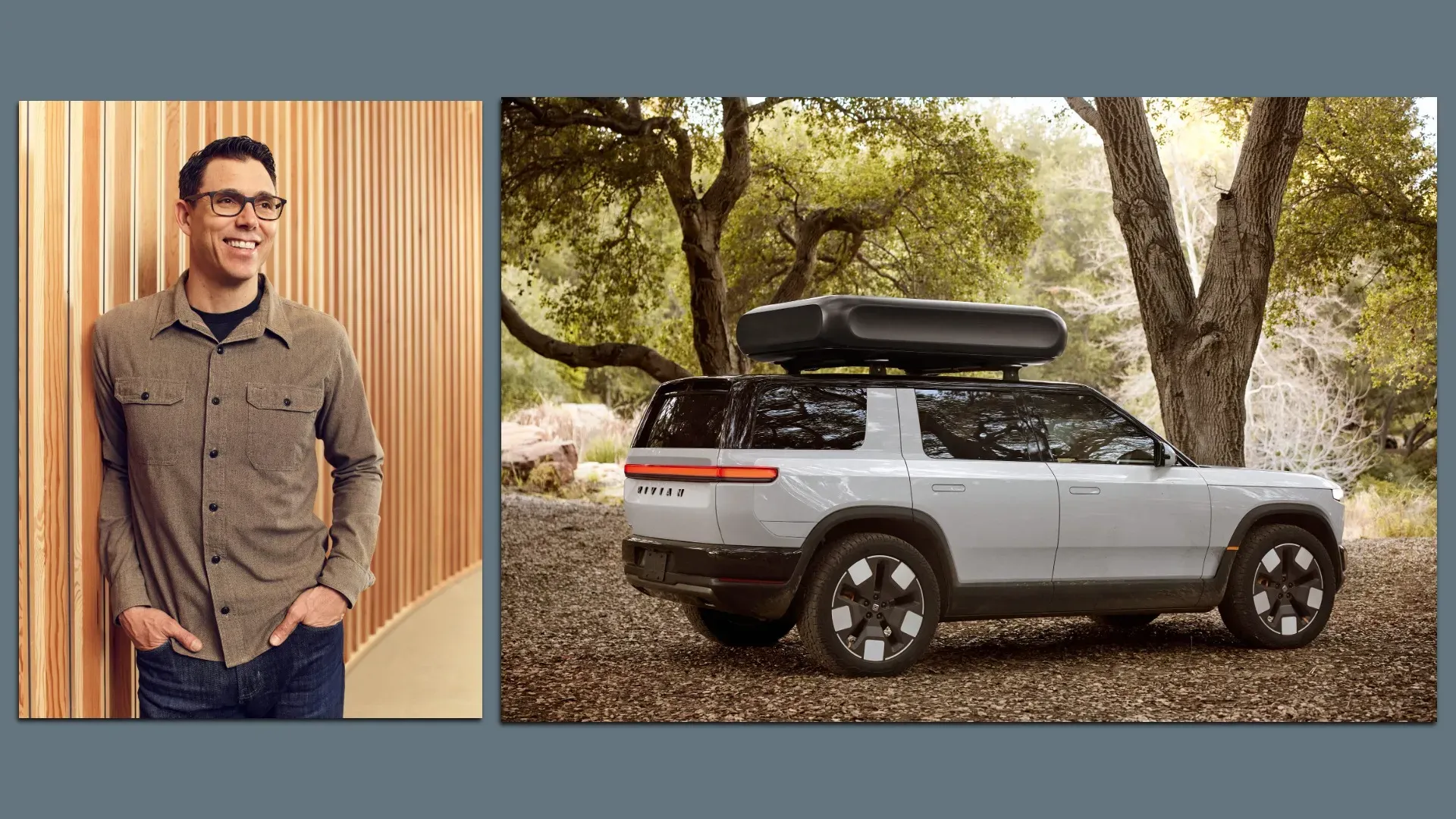
Rivian might be facing huge headwinds, but CEO RJ Scaringe is looking forward to 2026 and the launch of the company's next model, the $45,000 R2.
Why it matters: Backed by Amazon and Volkswagen Group, it's arguably the most competitive U.S. EV manufacturer behind Tesla.
- But Rivian, founded in 2009, is still navigating the fraught and expensive path from startup to commercial-scale automaker.
The big picture: "I've never been more confident in the company than I am today," he told me this week during a fireside chat I moderated for the Automotive Press Association.
- "We've got this product about to launch. It is insanely good. It takes everything that we've learned in launching the R1 and embodies it in a smaller package."
- "The teams are functioning with incredible accuracy and precision, and the way they're working would have been unimaginable 5-10 years ago," he said.
- "And along with that, the brand is resonating in ways that we'd only hoped to achieve."
Other highlights...
š On EV sales trends: Other than Tesla's Model 3 and Model Y, "if I were to look at the list of EV choices there are today, most fall into the category of OK, but not highly compelling, and as a result, they've been unsuccessful in generating sales."
- Better EV options like the R2 will expand the market, Scaringe said.
šļø On the Trump administration: "As much as there's been the perception of an anti-EV policy, I think the current administration is very much pro-business and pro-technology, or American technology first."
- Rivian is aligned with that view, he said, noting that 100% of its production is in the U.S., and its supply chain is vertically integrated here.
šØš³ On Chinese competition: Chinese manufacturers have extremely low cost of capital and very low labor costs. But those advantages would disappear if they tried to sell cars in the U.S. because they're likely to be heavily tariffed.
- Chinese carmakers' technology isn't any better than Tesla's or Rivian's, Scaringe said, but threatens legacy automakers that don't switch to modern software-defined platforms.
š¤ On autonomy: "This is by far the biggest investment category for us as a company. We're investing more money here than anywhere else in business."
What we're watching: Rivian, which delivered around 13,200 vehicles in July-September, reports Q3 earnings on Nov. 4.
2. āļø A green light for turning mine waste into nuke fuel

Federal regulators have approved a Wyoming company's request to process radioactive mining waste to eventually turn it into usable fuel for nuclear reactors.
Why it matters: DISA Technologies' approach aligns with Trump administration and congressional efforts to establish new domestic sources of uranium to reduce reliance on imports from Russia and elsewhere.
Driving the news: The Nuclear Regulatory Commission in late September approved DISA's license application for its "high-pressure slurry ablation" technology.
- The technology separates minerals in mine waste into different parts. One part contains the uranium that can be recovered or disposed of while another part can be left onsite.
- Russia was the top supplier of nuclear reactor fuel to the U.S. last year despite a ban on enriched uranium imports from that country becoming law, according to recent Energy Information Administration data.
- The ban allows the Energy Department to issue waivers through 2028 if no alternative source is available, or if the imports are found to be in the national interest.
Zoom in: The NRC ā which has been in the Trump administration's crosshairs as it seeks to overhaul the agency ā noted that the approval process was completed in six months, or shorter than 18 to 24 months under a previous schedule.
What's next: Nuclear proponents hope the technology can spur cleanup of abandoned uranium mine sites across the West, including hundreds located on Navajo Nation lands.
3. š Catch up quick on oil and gas: Climate rules, LNG, sanctions
š TotalEnergies and Siemens, acting on behalf of 46 companies, "called on European governments to abolish one of the EU's flagship corporate sustainability laws in order to boost the continent's competitiveness," Reuters reports.
- Why it matters: The effort shows widening discontent with policies that also affect U.S. companies that do business with the bloc or operate there, including Exxon.
- What we're watching: Brewing changes to the rules.
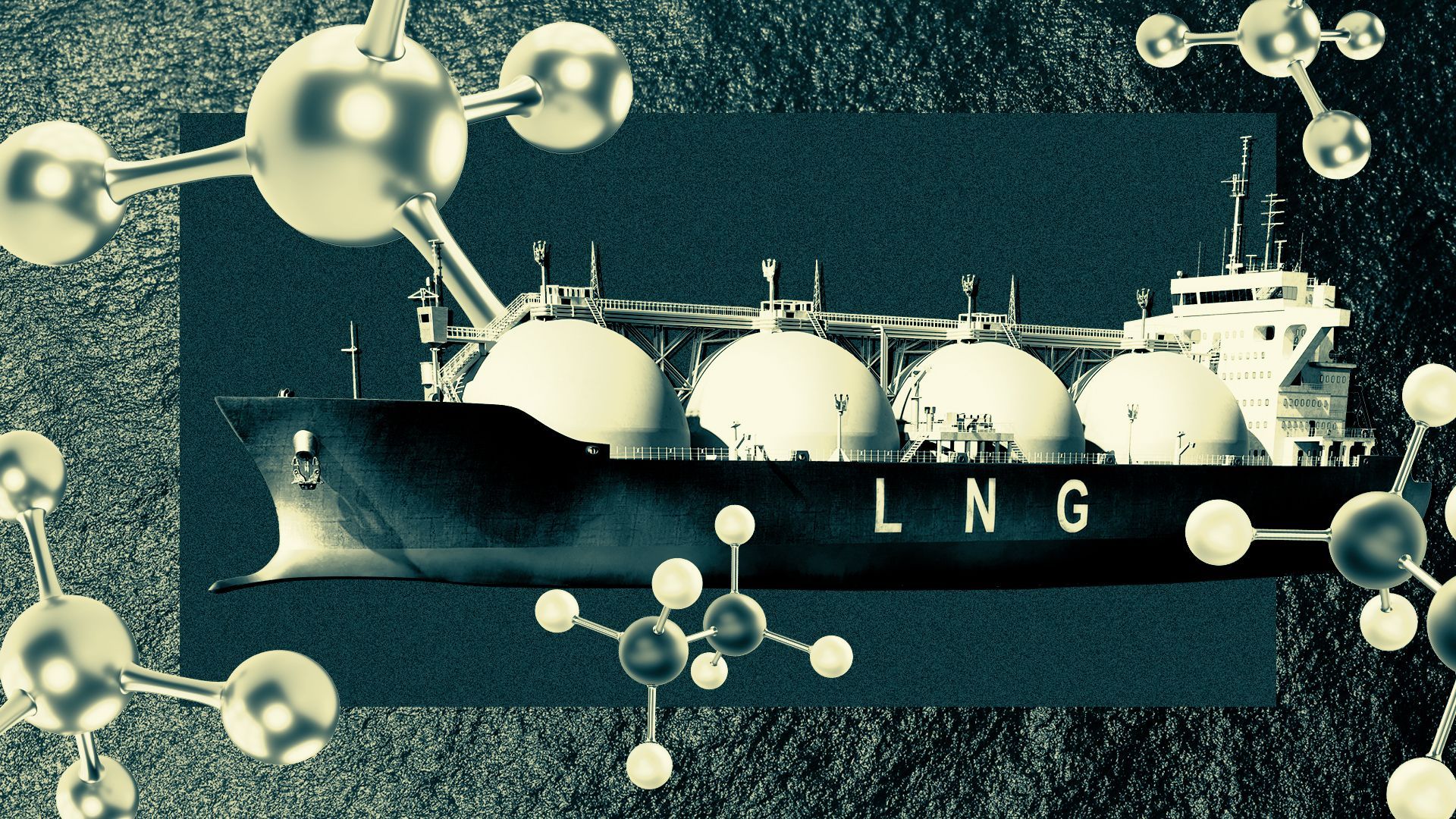
āļø U.S. LNG shipper Venture Global lost an arbitration process with BP over cargoes from Venture's Calcasieu Pass facility in Louisiana, an SEC filing shows.
- Why it matters: BP is seeking over $1 billion in damages, and Bloomberg reports the ruling "heightens uncertainty around Venture Global's financial exposure," noting claims by other companies.
- State of play: Venture's stock is down 18% in pre-market trading. But its filing on the ruling also expresses confidence, citing "facts verified by independent third parties and regulatory agencies with oversight of the Calcasieu Project."
āļø The Treasury Department is imposing fresh sanctions on "over 50 individuals, entities, and vessels" that help enable Iranian oil sales. List of parties...AP coverage.
4. š Dem leaders will have "anchor" energy plan for potential majority
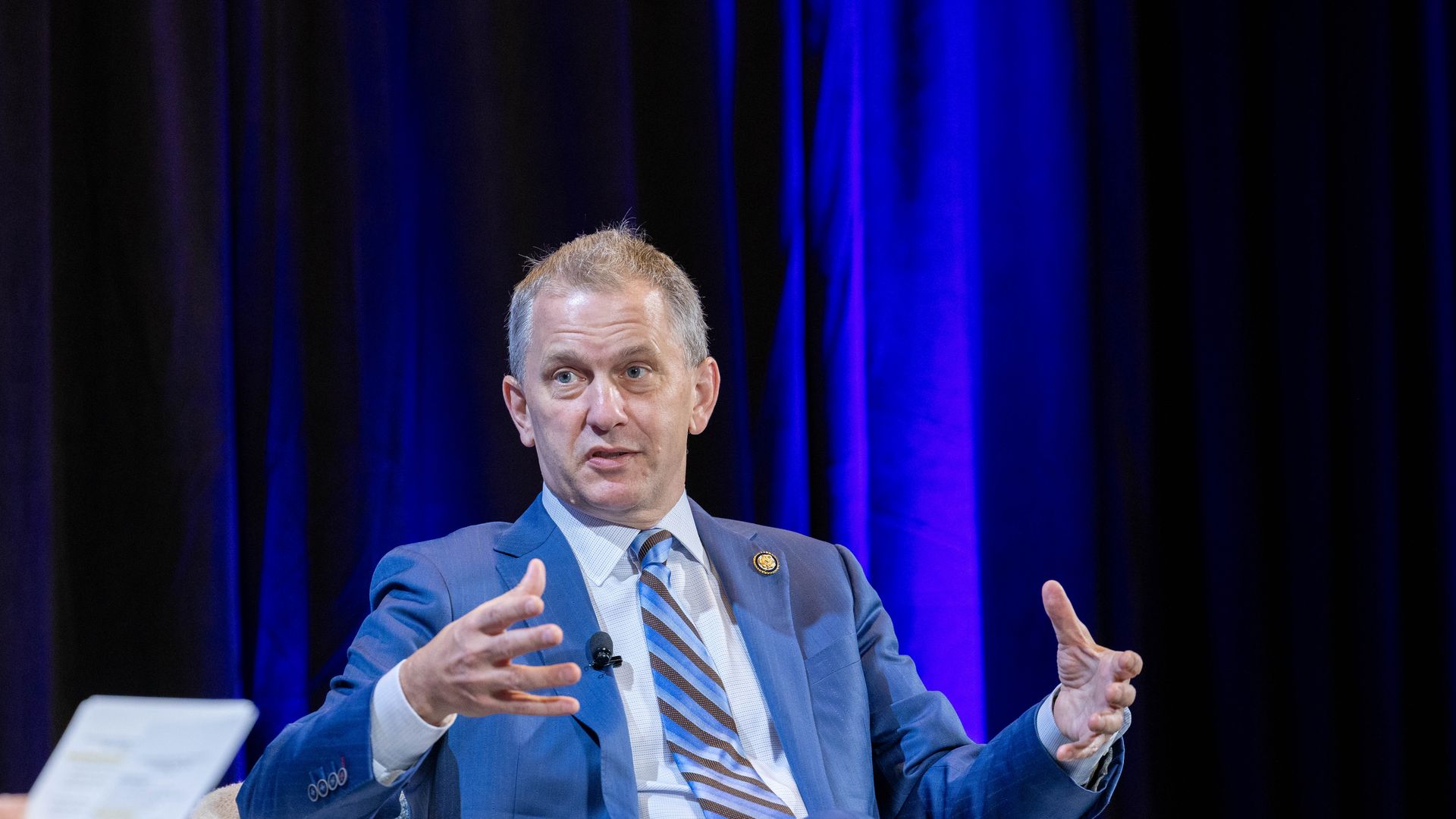
House Democratic leaders will look to have a detailed energy plan if the party regains control in the midterm elections, a prominent lawmaker on the topic said.
Why it matters: Electricity costs are rising on the political radar as policymakers from both parties float plans to address rising power demand due to AI and more.
State of play: "I know that Hakeem [Jeffries] really wants to have an anchor energy policy, energy and climate policy to come in that takes this seriously. You know, this can't just be 'let's rejoin Paris again,'" Rep. Sean Casten (D-Ill.) said at an Axios event on energy security yesterday.
- He's referring to the current House minority leader and the Paris Agreement.
What we're watching: Casten and Rep. Mike Levin (D-Calif.) are pushing their sweeping "Cheap Energy Agenda" legislative package.
- It would reinstate renewables tax credits; boost home energy and weatherization aid; new efficiency requirements for utilities; finance to address the electricity transformers; and tax credits for transmission investments, to name just a few parts.
5. ā” Gains in power access are stalling worldwide
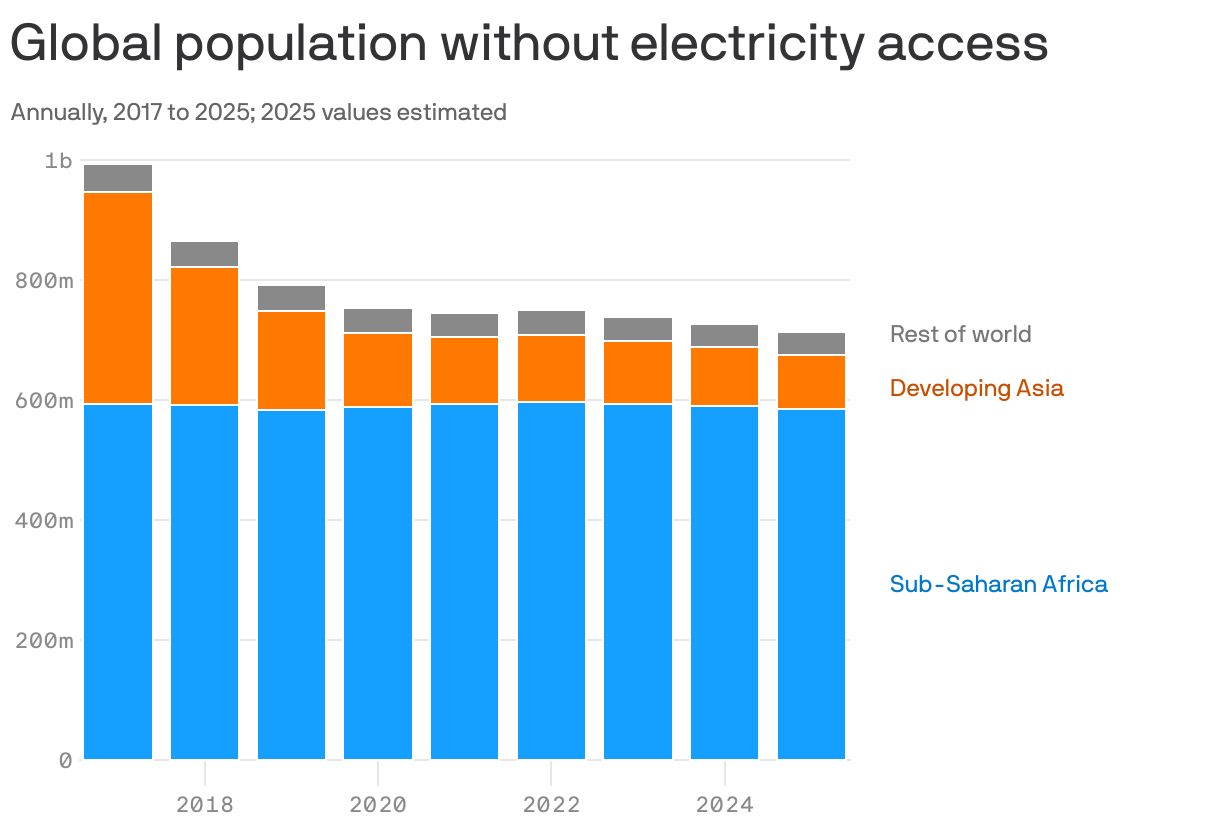
The number of people worldwide without access to electricity has "remained largely unchanged since 2020" after falling steeply for many years, an International Energy Agency analysis finds.
The big picture: The problem remains especially acute in sub-Saharan Africa, where population growth is essentially offsetting new electricity connections, it finds.
- Lack of access to electricity is a chief concern of Energy Secretary Chris Wright, and the future of Africa's market affects U.S. infrastructure providers.
Threat level: Looking at the data through other lenses reveals a mixed picture.
- Access in sub-Saharan Africa grew from around 30% of the population in 2012 to 50% in 2024.
- Yet "average household consumption has fallen by around a quarter during the same period."
Friction point: "Over the past decade, electricity tariffs in many African countries have increased more rapidly than household income, reducing their ability to pay and forcing them to cut back on consumption."
Catch up quick: Basic access, while vital, is only part of the story on lifting economies.
What we're watching: Progress on new connections is "broadly flat" this year, preliminary data shows.
- The agency sees colliding forces ā new policy momentum in some regions but also higher borrowing costs and falling development finance.
6. āļø Number of the day: 3%
That's how much global copper demand could come from data centers alone by 2030, per a wide-ranging new McKinsey & Co. mining analysis.
- And that tally doesn't include copper needed for energy projects to help meet growing power demand.
7. š³ļø Quote du jour: power politics edition
"Electricity is the new eggs."
ā David Springe of the National Association of State Utility Consumer Advocates, via NYT coverage of New Jersey's governor's race
š¬ Did a friend send you this newsletter? Welcome, please sign up.
š Thanks to Chuck McCutcheon and Chris Speckhard for edits to today's edition, along with the brilliant Axios Visuals team.
Sign up for Axios Future of Energy