Axios Future of Energy

March 24, 2026


☕ Good morning from the CERAWeek by S&P Global conference. We're in Houston but looking beyond, too, with items on...
- A wind offer TotalEnergies couldn't refuse
- A sobering take on energy flows
- The view from a big power C-suite and more, all in 1,251 words, 4.5 minutes
🙏 Thanks to Chuck McCutcheon and Chris Speckhard for edits to today's newsletter, along with the brilliant Axios Visuals team.
🎶 We're featuring Texas artists all week, so Khruangbin and Leon Bridges brilliantly fit the bill with today's intro tune...
1 big thing: Offshore wind reversal highlights shift under Trump
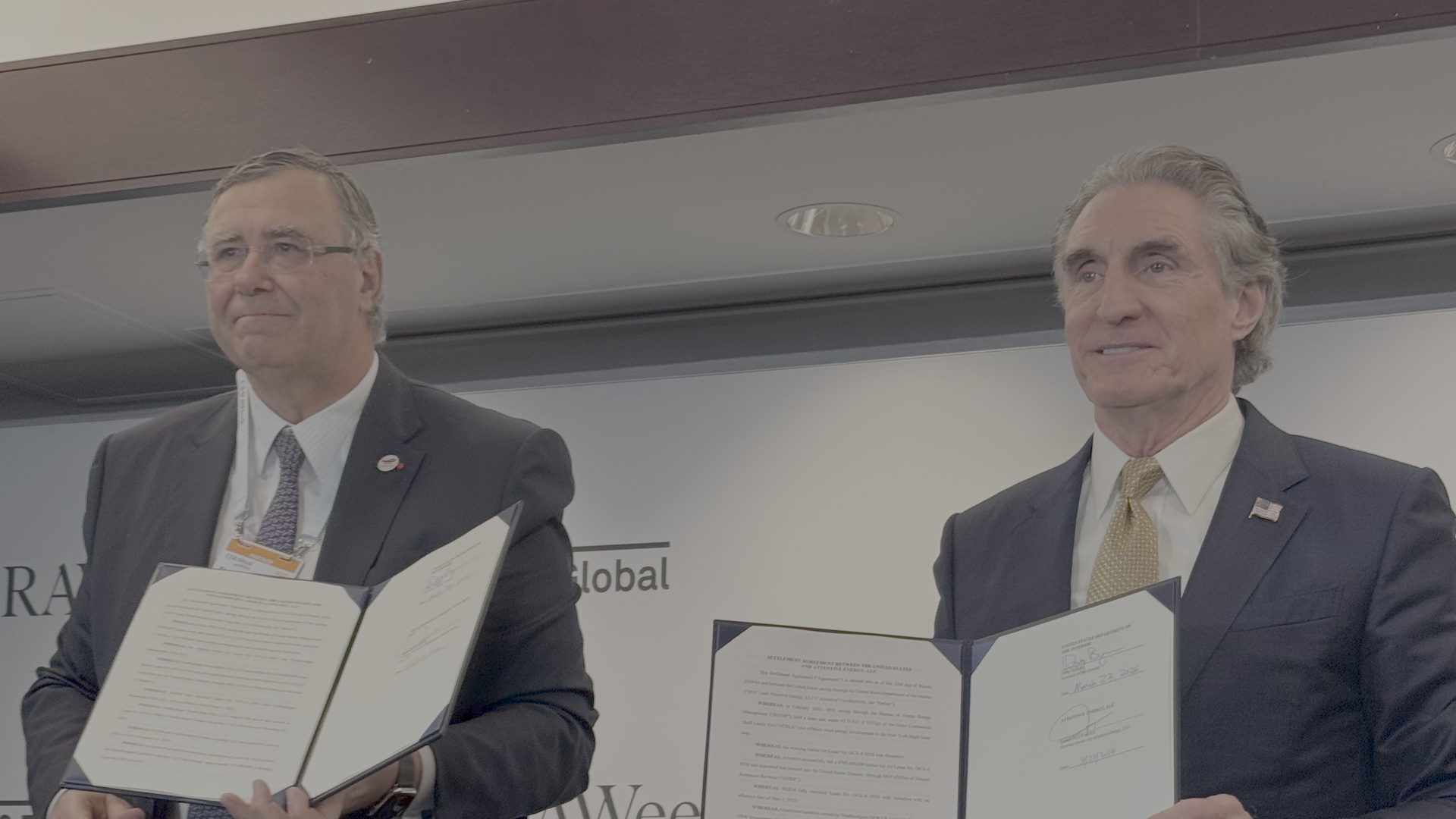
HOUSTON — Interior Secretary Doug Burgum shared a stage yesterday with the CEO of a French oil giant to take aim at offshore wind — a rare alignment between a government and a private company.
Why it matters: The moment, at one of the world's largest energy conferences, offered a stark snapshot of U.S. energy policy under President Trump.
Driving the news: Burgum and TotalEnergies CEO Patrick Pouyanné finalized an agreement to cancel federal offshore wind leases worth about $1 billion and redirect that investment to oil and natural gas projects in the U.S.
Flashback: The shift is notable because both men had recently expressed support for wind.
- As governor of North Dakota in 2024, Burgum highlighted the fact that wind supplied roughly one-third of the state's electricity.
- In November 2024, Pouyanné said he was hopeful his company's offshore wind projects could move forward once Trump left office.
The big picture: Since returning to the White House, Trump has moved aggressively to kneecap America's offshore wind industry, which was already struggling due to higher borrowing costs and supply chain snags.
- Several court rulings have set back Trump's efforts, leading to this unusual move by the administration to essentially pay off a privately controlled company to relinquish its leases.
What they're saying: The two leaders offered different rationales.
- Burgum made a distinction between onshore and offshore wind. "The cost of offshore is much, much higher than onshore," Burgum said in response to a question from Axios at a briefing yesterday in Houston.
Pouyanné was more direct about the political calculus:
- "It's important that our investments fit with the policies developed by the countries, and that's what we'll do here in the U.S.," he said. "Our decision on U.S. offshore wind, which is to renounce the technology here, has not been renounced in other places."
The other side: Environmentalists and clean-energy advocates blasted the move, which was first reported last week by The New York Times.
- The criticism highlighted the fact that the AI boom is causing a surge in electricity demand, straining power bills that are already rising in some regions of the country.
- "This deal is an outrageous misuse of taxpayer dollars to prevent Americans from having clean, affordable power exactly when they need it most," said Ted Kelly, director and lead counsel for clean energy in the U.S. at the Environmental Defense Fund.
Zoom out: Offshore wind is far more expensive than onshore wind, solar and natural gas.
- But it's closer in cost to similarly early-stage technologies, including advanced geothermal and nuclear power, which Big Tech companies and the Trump administration are both supporting.
What we're watching: Whether this signals more one-off deals — and whether the U.S. offshore wind industry can regain momentum at all.
2. 🧮 First day of CERAWeek in a nutshell

🇮🇷 Iran war prompts Middle East executives to cancel trips to Houston
🤨 The only thing certain in Houston is the uncertainty coming from the Iran war
🤖 AI is (still) everywhere: On the main stage, in side conversations and even in the conference app itself
⚡️ Natural gas is ascendant, thanks to both AI and the Iran war
🪧 Climate advocates marched in downtown Houston to protest fossil fuels
3. 🗞️ The latest on Iran: Mattis, prices, ripple effects

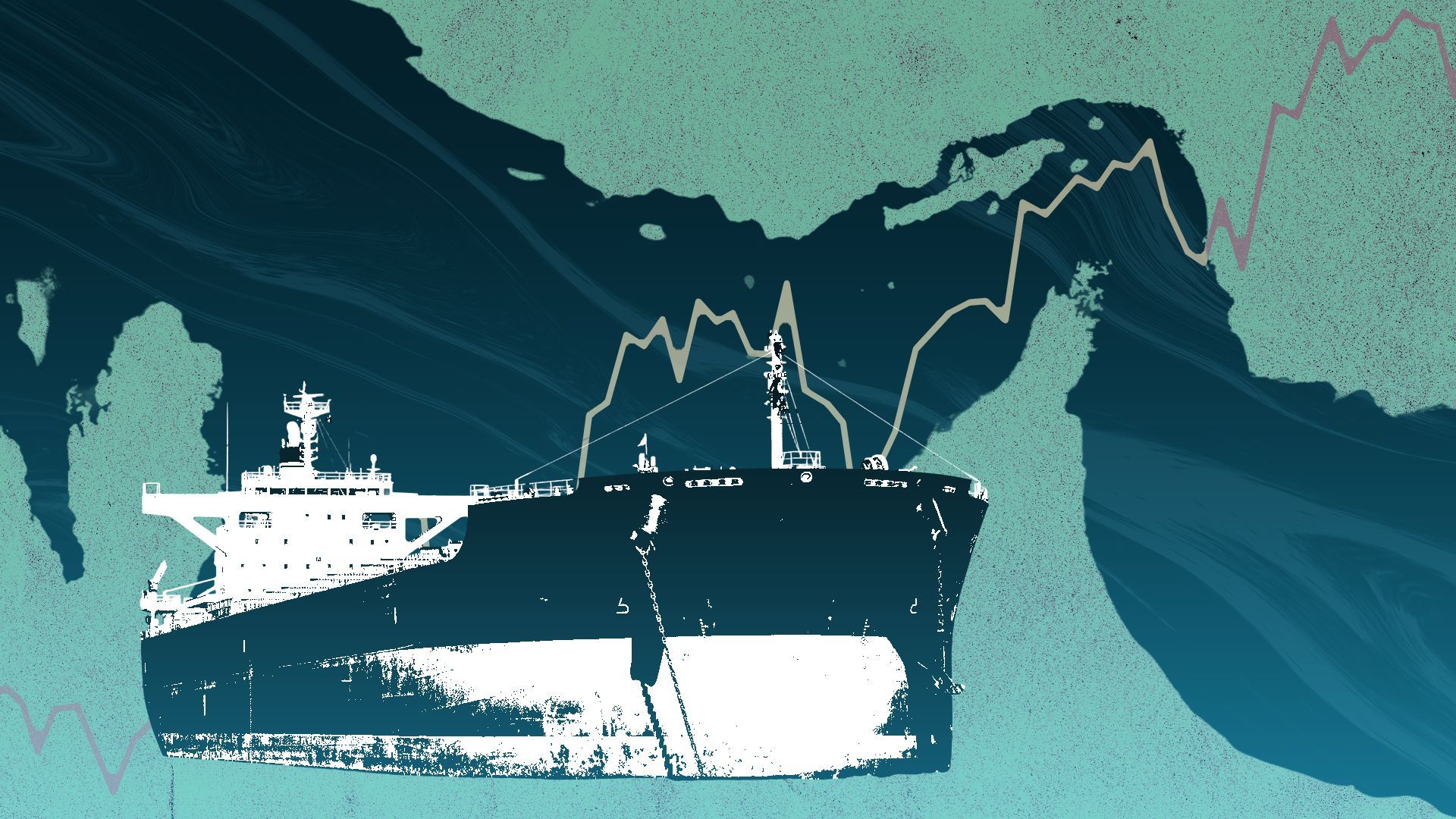
😬 HOUSTON — Former Defense Secretary James Mattis, who served in President Trump's first administration, offered a sobering take yesterday on the Strait of Hormuz.
- Why it matters: Mattis' speech was arguably the most important of CERAWeek's opening day — he said out loud what many were thinking and discussing among themselves.
- Threat level: If Trump declares victory and pulls back the U.S. military, Iran "would now say we own the Strait," Mattis said, adding: "I think that you could see a tax for any ship going through — something completely unsustainable in the international market." Full story
⛽ Average U.S. gasoline prices are now $3.98 per gallon, per AAA, with the politically important $4 mark imminent. Brent crude is back above $100 per barrel this morning.
- The intrigue: Energy Secretary Chris Wright tried to reassure the conference — and the oil markets — at CERAWeek. He said "prices have not risen high enough yet to drive meaningful demand destruction."
😧 While futures prices get the most attention, the changes in spot, or physical, costs are even more dramatic. Think jet fuel recently hitting $230 per barrel in Singapore, for instance.
👀 Via the BBC, "Traders bet hundreds of millions of dollars on oil contracts just minutes before US President Donald Trump announced on Monday that the US would postpone strikes against Iranian energy infrastructure."
📈 Via Reuters, the LNG disruption from the Iran war could make expansion of the big LNG Canada facility more likely.
- Why it matters: It shows how the crisis could have lasting effects on producers and expand the market for players in the U.S. and well beyond.
⚖️ California's AG is suing to thwart Trump administration plans to enable quick resumption of Sable Offshore Corp.'s offshore oil production and transit through pipelines in the state.
4. 🔨 A power CEO smashes some narratives
HOUSTON — Incoming NRG Energy CEO Robert Gaudette has a message for anyone tempted to see new nuclear reactors as the future: Be curious but skeptical.
Why it matters: The independent power heavyweight has assets and operations in some of the fastest-growing markets, and recently made a big bet on gas, acquiring 18 plants from LS power as part of a $13 billion deal.
The big picture: Gaudette, a longtime top exec with NRG, said he's had discussions with traditional and small modular reactor companies.
- "I would never say that we wouldn't be in nukes, right? Because I think that nuclear power, along with a lot of the other things are important for the future," he said in an interview here.
- "We are having conversations because we want to be educated and we want to understand what that looks like if there's a commercial deal that we can go make so that we could provide an SMR for a customer," Gaudette said.
Reality check: There are cost and speed hurdles, he said. "Everybody wants fancy nuke technology and they want it faster than I think is probably possible," he said.
- "The market doesn't support that investment yet," he said.
The intrigue: Gaudette doesn't see expanding LNG exports raising domestic gas prices as commonly alleged.
- "What LNG does is it provides an opportunity for product to move, and so basins to continue to be explored and developed," he said.
What we're watching: On another front, he think that interest in behind-the-meter power as a long-term solution for data centers — something he's not a fan of — has peaked and begun receding.
- Doing it with existing assets "effectively retires" those facilities and "creates more of a supply-demand problem," he said. He also argues it's not a solution for new electricity-producing sources.
5. 💬 Quote of the day: Stark analogy edition
"Much of the oxygen of the global economy runs through a single throat. And yet, there are those who believe choking that throat is an acceptable strategy."— UAE industry and advanced technology minister Sultan Ahmed Al Jaber, who's also CEO of state oil giant ADNOC, in a video message at CERAWeek
📫 Did a friend send you this newsletter? Welcome, please sign up.
Sign up for Axios Future of Energy