Axios Future of Energy

May 15, 2026

🍺 Happy Friday! We're sprinting into the weekend with content on...
- The hottest cleantech IPO in quite a while
- An eye-opening power stat
- The cooking fuel crisis, LNG and pipeline news, and much more, all in 1,341 words, 5 minutes.
🙏 Thanks to David Nather and Chris Speckhard for editing and to our brilliant Axios visuals team.
🎸 This week in 1984, R.E.M. released a perfect single that's today's intro tune...
1 big thing: Takeaways from the biggest, buzziest cleantech IPO in years

Geothermal startup Fervo Energy's IPO this week could hint at the future for what's now a minor energy source that's long on potential.
Why it matters: Geothermal is having a moment thanks to rising power demand, the AI boom, tech advances, and avoiding the Trump 2.0 ire that other renewables face.
Catch up quick: Fervo — which uses drilling methods pioneered in the shale boom — raised $1.89 billion in its upsized IPO. The stock price is up over 50% from the initial IPO pricing of $27 per share.
A few takeaways from Houston-based Fervo's public markets debut...
👟 It's a big step toward mainstreaming geothermal. It's the first IPO for "enhanced geothermal systems" (EGS) — emerging techniques for tapping huge, once inaccessible underground heat sources.
- Startups like Zanskar, Sage Geosystems, and XGS Energy are looking to commercialize their own methods.
- "It's signaling to investors that this is something that there's confidence in, and it can work, and it can be repeatable, and it can be scalable," Kate Adie of the research firm Wood Mackenzie tells the NYT.
💾 It's a Big Tech story — for better or worse. Fervo already counts Google among its customers, and its IPO filing talks up large-scale deals it's pursuing with other tech companies.
- That's a massive potential market of deep-pocketed companies that need stunning amounts of power.
- But Fervo's filing acknowledges the risks that data center demand estimates could be off-base.
⏳ Patience is a virtue. It's among several recent or planned cleantech IPOs for companies that don't yet have meaningful revenue, but have big plans.
- Fervo is operating one small 3.5 megawatt pilot plant. But it will start producing power this year at its first commercial site, Cape Station in Utah, targeting an initial 100 megawatts next year and 500 MW in 2028.
- But that Cape Station site has 4.3 gigawatts of potential capacity, and Fervo claims dozens of gigawatts in early-stage development across its leases in Western states.
📉 Watch the cost curve. Cape Station will deliver power at $7,000 per kilowatt, and Fervo's goal is to eventually create projects at $3,000 to win against natural gas.
- Policy helps. Tax credits are in place for projects that begin construction by 2034, and then ramp down, vanishing in 2036. But Fervo says its prospects are not dependent on subsidies.
The bottom line: "Our goal and expectation is for EGS to outcompete gas on price," Ben Serrurier, the firm's head of policy, posted on X.
- "There's [an] innovation pathway that gets there, following the shale revolution playbook. Policies will accelerate that timeline, but aren't the foundation of EGS value."
Talk to our sales team about Axios Pro Deals for a steady diet of scoops and smart analysis.
2. 🍲 The Iran war's cooking crisis


The Iran war is throttling supplies and driving up prices for liquefied petroleum gas, a new International Energy Agency analysis warns.
Why it matters: Billions of people worldwide rely on it for cooking, and growing use has displaced more polluting fuels — like wood and charcoal — that harm public health.
Threat level: "[H]ouseholds in emerging and developing economies are now facing a particularly severe challenge: whether there is enough fuel simply to cook a meal, and whether they can still afford it," IEA researchers write.
- It's the primary cooking fuel for about 3.4 billion people. Last year 30% of seaborne LPG exports went through the Strait of Hormuz.
- But prices are up all over the place, because "supply disruptions in one region rapidly affect prices in others."
What we're watching: Governments are adopting various measures to try to shield people from the impact, such as subsidies, rationing, and fuel switching.
- IEA is warning that the crisis is creating headwinds for extending clean cooking access.
- It's adding urgency to the IEA's next clean cooking summit in Kenya in July as the agency looks to mobilize more capital.
3. 🏃 Catch up quick: LNG, pipelines, EPA
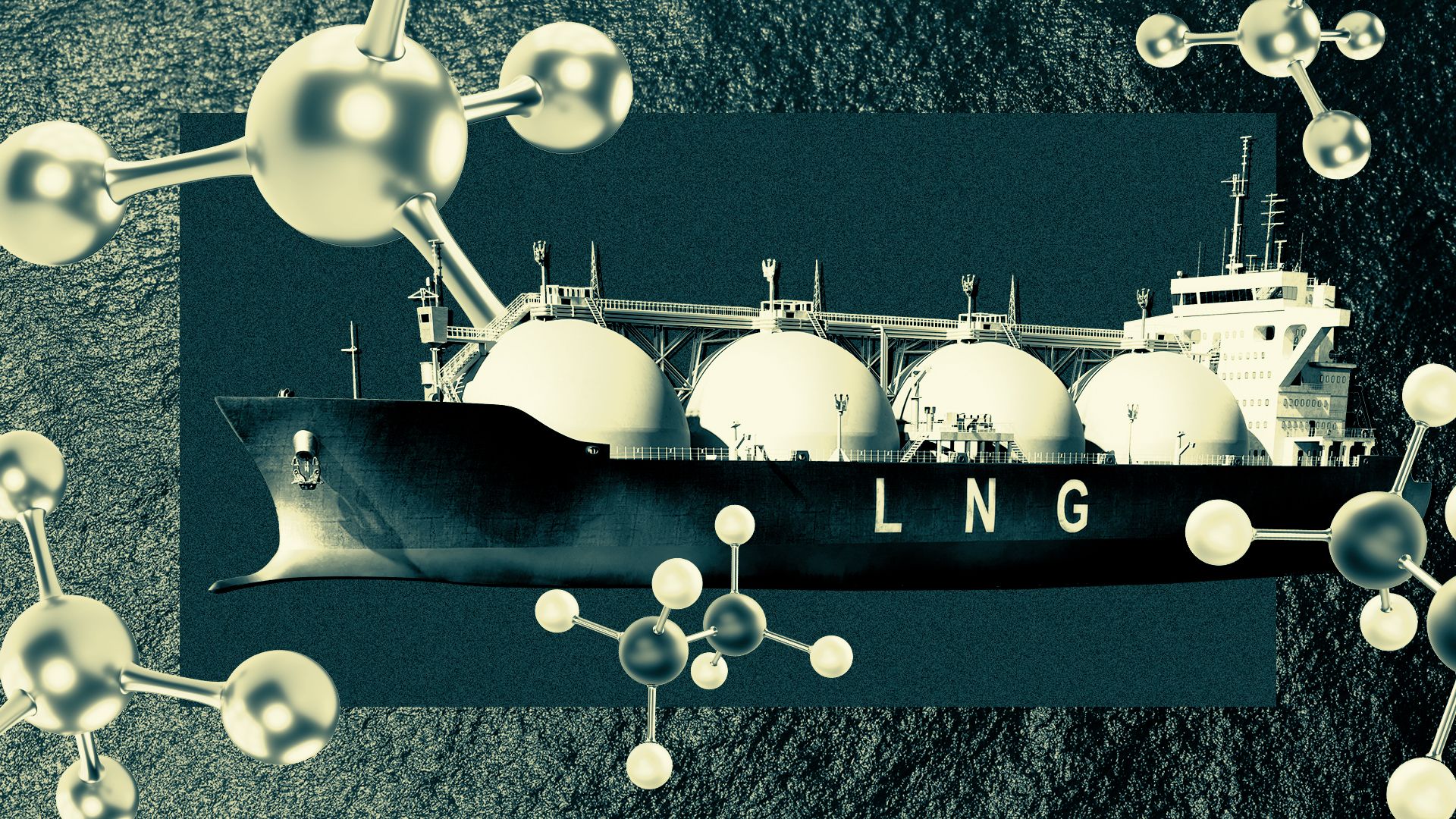
💵 The big Commonwealth LNG project in Louisiana is a go, with Kimmeridge and partners announcing a final investment decision this morning to launch construction.
- Why it matters: While Commonwealth has been planned for years, the go-ahead arrives as the Iran crisis is putting fresh focus on gas from outside the Middle East.
- The big picture: "Buyers have to look for security of supply and they have to diversify, which has been driving them towards taking more US cargoes," Kimmeridge managing partner Ben Dell tells the FT.
- Catch up quick: Kimmeridge unit Caturus LLC announced another $9.75 billion in project finance for construction this morning. Backers include Abu Dhabi's sovereign wealth fund, which also has an equity stake, Canada Pension Plan Investment Board, and BlackRock-managed funds.
- What's next: It's expected to commence operations by 2030.
👀 The UAE said today it's accelerating construction of a major oil pipeline that will double its export capacity through the port of Fujairah.
- Why it matters: It's a major signal that Persian Gulf producers will seek to lower their exposure to the Strait of Hormuz. The UAE's existing Habshan-Fujairah pipeline can carry 1.5 to 1.8 million barrels daily, per multiple reports. Go deeper
🏭 EPA plans to weaken limits on wastewater discharges — which include toxic metals — from coal-fired power plants.
- The big picture: EPA called Biden-era limits burdensome and said the plan would help prevent coal plants from shutting down, while environmental groups called it a dangerous rollback. The NYT has more.
4. 👓 Hot Reads: Climate, oil futures, gas infrastructure

Can Some Very Tiny Particles Cool the Planet? One Tech Company Says Yes. (New York Times)
Amy says: It's interesting how fellow scientists are surprised at the simplicity of the particle revealed. Also, the photos of the lab — though pretty generic relatively speaking — are revealing given how secretive the company has been.
Please Stop Trash-Talking Oil Price Futures (Robin Brooks on Substack)
Ben says: Brooks, a Brookings Institution economist, defends the performance of futures markets that are chic to bash these days for failing to show the depths of the crisis.
- The data-driven piece has fighting words, too, arguing that some "stratospheric" price forecasts are based on, well, motivated reasoning.
- "[T]here's a good reason why futures outperform commodity analysts in war-induced supply shocks. Apocalyptic oil price forecasts are really about industry lobbying and intended to scare Western policy makers from interfering too much in the oil sector," Brooks argues.
GE Vernova Is Turning Energy Uncertainty Into a Business Advantage (Time)
Amy says: This is a wild stat: "The company logged $2.4 billion in equipment orders for data centers in the first quarter alone, more than it made in equivalent sales in the entirety of last year."
5. 💬 Quote du jour: Ford's pivot to storage edition
"We believe that there is a fairly high likelihood that Ford signs an ESS [Energy Storage System] supply agreement with large commercial customers, and potentially hyperscalers, over the next few months."— Morgan Stanley analysts in a note on the automaker's newly announced stationary battery storage business.
Ford's share price is up this week following the rollout of its new Ford Energy business unit, which uses tech licensed from Chinese battery giant CATL.
- "Energy storage is a new business, but they have the right technology," Morgan Stanley concludes. Go deeper
6. 📈 Number of the day: up 76%
Wholesale power prices in PJM jumped 76% in the first quarter of 2026 compared to Q1 2025, the independent monitor for the nation's largest power grid reports.
Why it matters: The latest report from Monitoring Analytics points to the effects of data centers on the grid operator for huge swaths of the Midwest and mid-Atlantic region. E&E News has more.
Yes, but: Via Bloomberg, "The grid operator said it was taking further measures to support consumers, including by extending capacity market price caps."
🙏 Thanks to David Nather and Chris Speckhard for editing and to our brilliant Axios visuals team.
📫 Did a friend send you this newsletter? Welcome, please sign up.
Sign up for Axios Future of Energy