Axios Future of Energy

May 08, 2026


💵 Today, we're exploring new online tools that track the Iran war's impact, and then moving on to...
- Energy's role in a very hot Senate race
- New climate data.
- Oil futures wisdom, good weekend reads, and more, all in 1,264 words, 5 minutes.
🙏 Thanks to David Nather and Chris Speckhard for editing and to our brilliant Axios visuals team.
🔥 Happy birthday to singer-songwriter Philip Bailey, whose work with Earth, Wind & Fire ignites today's intro tune...
1 big thing: Tracking the costs and more Iran notes
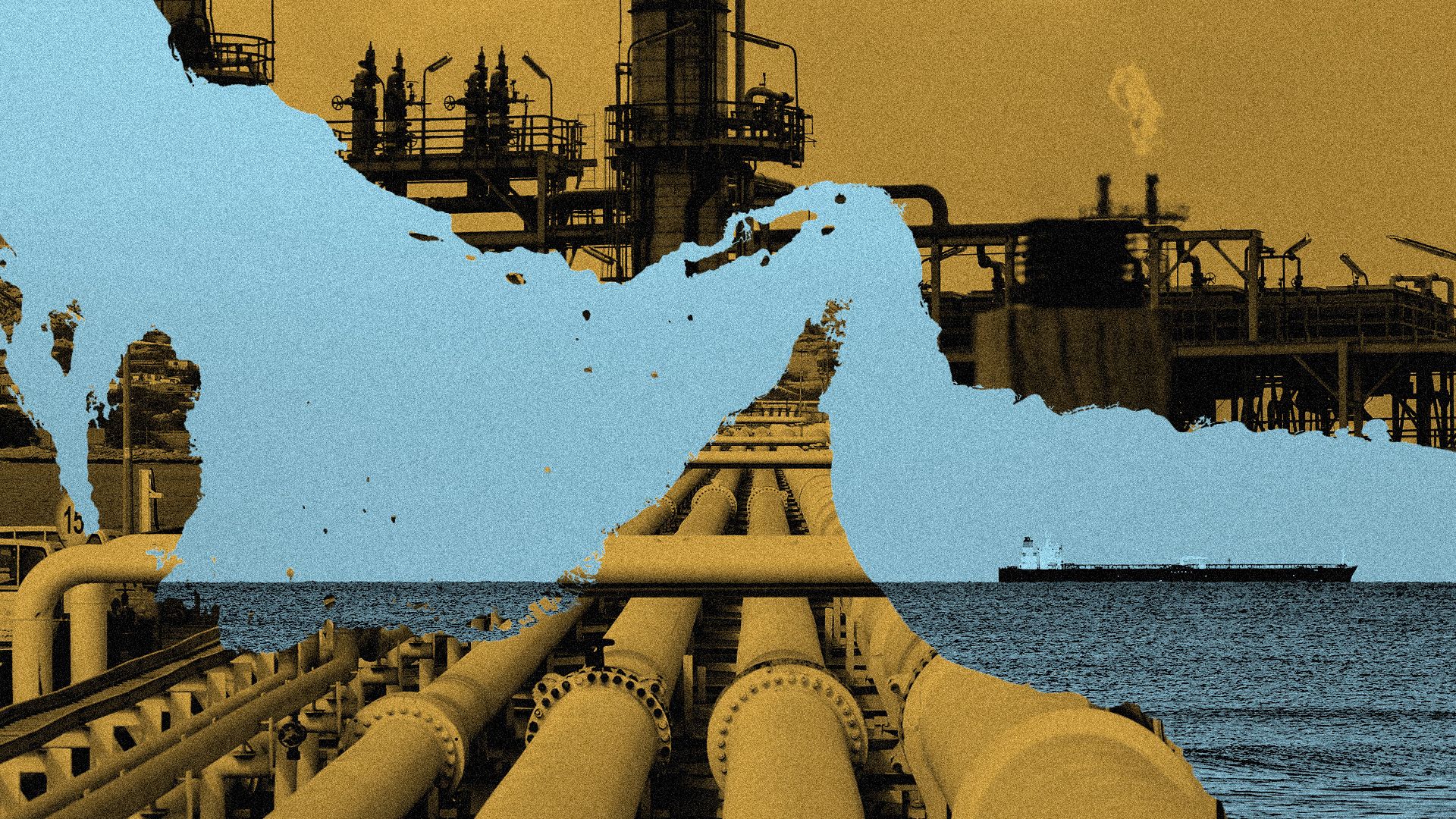
Let's close the week with a few things on my screen during this wild stretch in energy markets.
👀 First look: Greenline Insights, an energy and economics research firm, just unveiled an online tracker of how the war is hitting U.S. household budgets at the national and state levels.
- Why it matters: It looks beyond retail gasoline costs we've all heard so much about, instead looking at how higher oil prices are rippling through the economy more broadly via effects like lower spending on other goods and services.
Threat level: Their model sees, on a full-year basis:
- $1,555 in increased costs per household.
- A $215 billion hit to GDP.
- 1.6 million jobs lost due to increased household spending.
The big picture: "The goal is to provide a transparent, data-driven picture of the projected impacts of higher oil prices and how those impacts vary across the country," said founder and principal Jonah Kurman-Faber.
- The firm works with green groups and low-carbon energy advocates, among others, but this tool was not developed for a client, he said.
- What we're watching: How the estimates change over time. Their model uses federal Energy Information Administration oil price projections, and the site will be continually updated.
🛠️ Speaking of handy online tools, the International Energy Agency released an interactive site that shows how much specific countries rely on Middle East oil and gas.
- Why it matters: One feature provides the share of nations' total consumption met by those imports, and how it has changed over time, which is something of a proxy for vulnerability. You can also toggle by region.
🎶 The oil market — huh! — what is it good for? There's been lots of chatter about whether futures markets are giving an overly optimistic view of how dire things are and how fast disruptions could end.
- What they're saying: The Boston Consulting Group's Jamie Webster posted a short, lucid presentation on what the futures curve does — and, crucially, doesn't — tell us.
- The big picture: Contracts for much lower prices several months down the road compared to the front-month are not a sign that markets see a quick end to the conflict, it cautions.
- How it works: Instead, higher next-month prices show the immediate need for oil. "The greater the need for barrels today, the greater the downward trend [in the curve] to incentivize more barrels to be pulled from storage and incentivize immediate delivery of oil," it states.
- The bottom line: "The futures curve is helpful at providing a view of the current market and its relative inventory tightness, but is not, and does not have a track record of providing guidance of turning points in the market."
2. 🗳️ Platner calls for ending federal gas, diesel taxes

Graham Platner, the presumptive Democratic nominee in Maine's Senate race, today called for ending federal taxes on gasoline and diesel.
- Platner is also proposing a national freeze on electricity rates.
Why it matters: His race is likely among the nation's tightest — and critical for Democrats' uphill climb to regain control of the chamber in November's elections.
- Platner's proposal — part of a wider new energy plan — underscores the political importance of gasoline prices at four-year highs during the Iran war.
The big picture: It would replace the taxes — which finance highways, mass transit, bridges and more — with money from his proposed tax increases on the ultra-rich.
- "[R]egressive gas and diesel taxes hit working class Mainers the hardest. Relying on fossil fuels to fund basic infrastructure does not make sense if we want to reduce fossil fuels used in transportation," the plan states.
Driving the news: Other pillars of his plan include...
- A "windfall profits tax" on large oil producers. It shouts out legislation introduced by Sens. Sheldon Whitehouse (D) and Rep. Ro Khanna (D).
- A freeze on power rate increases and "direct, low-cost energy infrastructure financing to any state that freezes or lowers electricity rates for four years."
- This would be funded through the windfall tax and "repurposed federal fossil fuel subsidies and federal energy leases."
Reality check: Platner's plan would face long odds gaining enough buy-in to become law, even if Democrats regain a narrow majority.
- The gasoline tax has long survived proposals to suspend or replace them over the years. Proposals for windfall profits taxes on oil producers have fallen short many times.
- Both kinds of ideas tend to surface during price spikes going back many years.
The bottom line: The Iran war's toll at the gasoline pump is increasingly surfacing in the midterm election battle.
3. 🏃 Catch up quick: New York, carbon markets, DAC delay
⏸️ Via Bloomberg, "A tentative state budget deal in New York includes an agreement with lawmakers to soften a landmark climate law that had called for steep and immediate cuts to planet-warming emissions."
🤝 China, the EU and Brazil unveiled a joint effort to "enhance the effectiveness, transparency and integrity of domestic carbon markets worldwide."
🗓️ E&E News reports: "Occidental Petroleum's plan to begin operating the world's largest carbon removal facility has hit an unexpected delay, with company leaders saying they're uncertain how soon the problems can be fixed."
4. 👓 Hot Reads: Climate, data centers, wave power

'Point of no return': New Orleans relocation must start now due to sea level, study finds (The Guardian)
Amy says: Wow, this story is a sobering reminder that the impacts of climate change are pushing ahead despite what feels like more imminent crises with the Iran war and more.
- Also, this is a wild stat about Louisiana: "The rate of land loss is so rapid that a football pitch-sized area is wiped out every 100 minutes."
'The smokin' hot trophy wife of the oil and gas industry': The role of petro-masculinity in geothermal rhetoric and policy (Energy Research & Social Science)
Ben says: This critiques the bro-y, Maxim mag messaging from some geothermal advocates as they promote the tech in the age of MAGA.
- The author, Catherine Lambert, criticizes the framing on several grounds — and concludes it will erode public acceptance of next-gen geothermal.
Using diesel generators to power the AI revolution would kill hundreds of Americans a year (The Conversation)
Ben says: As tech companies look to build data centers ASAP, Carnegie Mellon engineering prof Peter Adams fears a turn to diesel generators that are more readily available than new power projects.
- "[U]sing diesel generators rather than grid electricity would cause significant amounts of fine particulate matter pollution that would be dangerous to people's health," he and a colleague conclude.
Peter Thiel backs $1bn ocean data centre start-up powered by waves (Financial Times)
Amy says: This is almost as wild as going to space. I wonder what kinds of permits (if any) they'll need to operate in the open ocean.
5. 🌎 Number of the day: 1.43°C
Global average temperatures last month were 1.43°C above the estimated 1850–1900 average used to define the pre–industrial level, per new data from the EU's Copernicus Climate Change Service.
- Temps were also 0.52°C above the 1991-2020 average for April, the research service said.
Why it matters: It was the third-warmest April on record behind 2024 and 2025.
What's next: More heat.
- The coming months are expected to bring strong El Niño conditions, the climate pattern characterized by warmer-than-usual sea surface temperatures.
- That's bringing projections that 2027 will exceed 2024 as the hottest year on record.
📫 Did a friend send you this newsletter? Welcome, please sign up.
Sign up for Axios Future of Energy