Axios Future of Energy
December 15, 2025

👟 We're sprinting into the week with a pair of exclusives, then roaming around, all in 1,491 words, 5.5 minutes.
🙏 Thanks to Chuck McCutcheon and Chris Speckhard for edits to today's newsletter, along with the brilliant Axios Visuals team.
🎸 This week in 1971, the late David Bowie released the album "Hunky Dory," which provides today's intro tune...
1 big thing: New money to stop grid crises before they start

👀 Exclusive: IND Technology, which provides infrastructure monitoring tech for utilities to stop wildfires and outages before they start, just landed $33 million in new growth funding.
Why it matters: The firm's North American expansion is a story of this moment, thanks in part to AI.
- "IND sits at the intersection of increasing electrification and rising climate risks," Anil Tammineedi, a partner with the Angeleno Group that's a lead investor, told Axios.
- Power companies are looking to keep grids reliable and safe amid rising demand and extreme weather like heat waves — without breaking the bank.
Driving the news: Angeleno Group, a clean energy and climate tech-focused growth equity investor, co-led the round with prominent VC firm Energy Impact Partners.
- Edison International and Virescent, a major climate and energy investor in Australia, also took part.
How it works: IND sells various "early fault detection" systems to prevent fires and outages via sensing transmission and other equipment — and applying AI and machine learning to vet large amounts of info.
- Think of detecting contact between tree branches and other vegetation with power lines, birds' nests on transformers, or damage to insulation equipment.
- Offerings include sensing equipment for underground cables, among others.
Catch up quick: The company was founded in 2013 in response to the massive and fatal 2009 "Black Saturday" wildfires in Victoria, Australia.
- It now has operations there, as well as the U.S., Canada, Europe, and Southeast Asia.
- CEO Alan Wong tells Axios it already works in about 10 U.S. states with customers like PG&E in California and PPL Energy in Pennsylvania.
Follow the money: Tammineedi connected IND's work to helping utilities limit price increases.
- Reasons for higher bills are complex, but grid-maintenance costs are in the mix.
- Efficiencies like remote inspection tech and savings from avoiding wildfires help control costs.
Threat level: Rising demand means more power traveling through existing cables, which increases temperature and makes lines sag more, Tammineedi said.
- That can lead cables to break or crack and cause power loss — and even fires when they come into contact with vegetation.
- "IND's technology will flag that, hey, there's a partial discharge, there's an electrical fault, so they can go and see what's happening and fix it," he said.
What's next: Wong said utilities' wildfire mitigation plans and requirements — which regulators are increasingly imposing — are a growth driver.
The bottom line: "For a long time, the money going into the grid has gone into fixing things after that break," Wong said.
- "What is changing now is that utilities and investors are realizing that it is actually cheaper to stop problems before they happen."
2. ⚛️ Exclusive: Bill signals fusion's bipartisan appeal
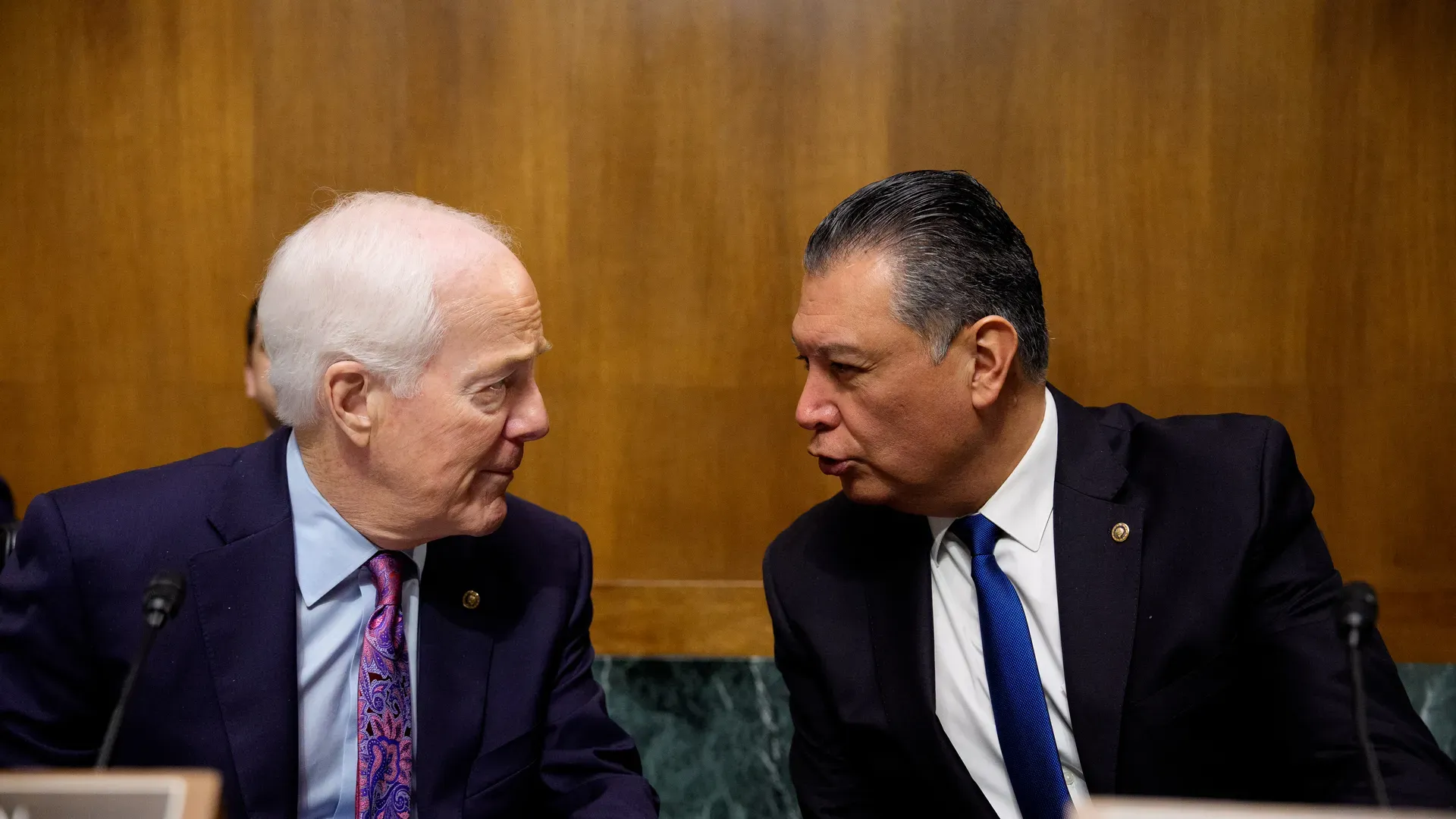
Fusion hasn't actually arrived in reality, but a bipartisan group of lawmakers is already looking to make sure it sticks around in Washington.
Why it matters: A bill codifying a new fusion office at the Energy Department was introduced might seem like inside baseball, but it's a concrete sign it's emerging as a bipartisan energy solution in U.S. politics.
Where it stands: Fusion — power from the stars — is still early in its development, and federal government support will likely be essential for it to ever actually exist.
Driving the news: The bill was introduced by Sens. Alex Padilla (D-Calif.) and John Cornyn (R-Texas), along with Reps. Don Beyer (D-Va.), Jay Obernolte (R-Calif.) and Lori Trahan (D-Mass.) in the House.
The intrigue: Surging power demand from the AI boom and rising electricity prices were key factors in the push, according to the senators' statements announcing the bill.
Catch up fast: The Energy Department's Office of Fusion is one of several new ones that are part of Energy Secretary Chris Wright's sweeping changes at the department.
- That includes adding new offices but also renaming or doing away with some offices that have not been codified.
- One example is the Office of Environmental Justice, which the Biden administration created and which the Trump administration did away with earlier this year.
What we're watching: To what extent the federal government will support fusion projects, which is a key goal of the Fusion Industry Association, which met with senior Energy Department officials last week.
3. 🗳️ Data centers charge up key Dem primary fight
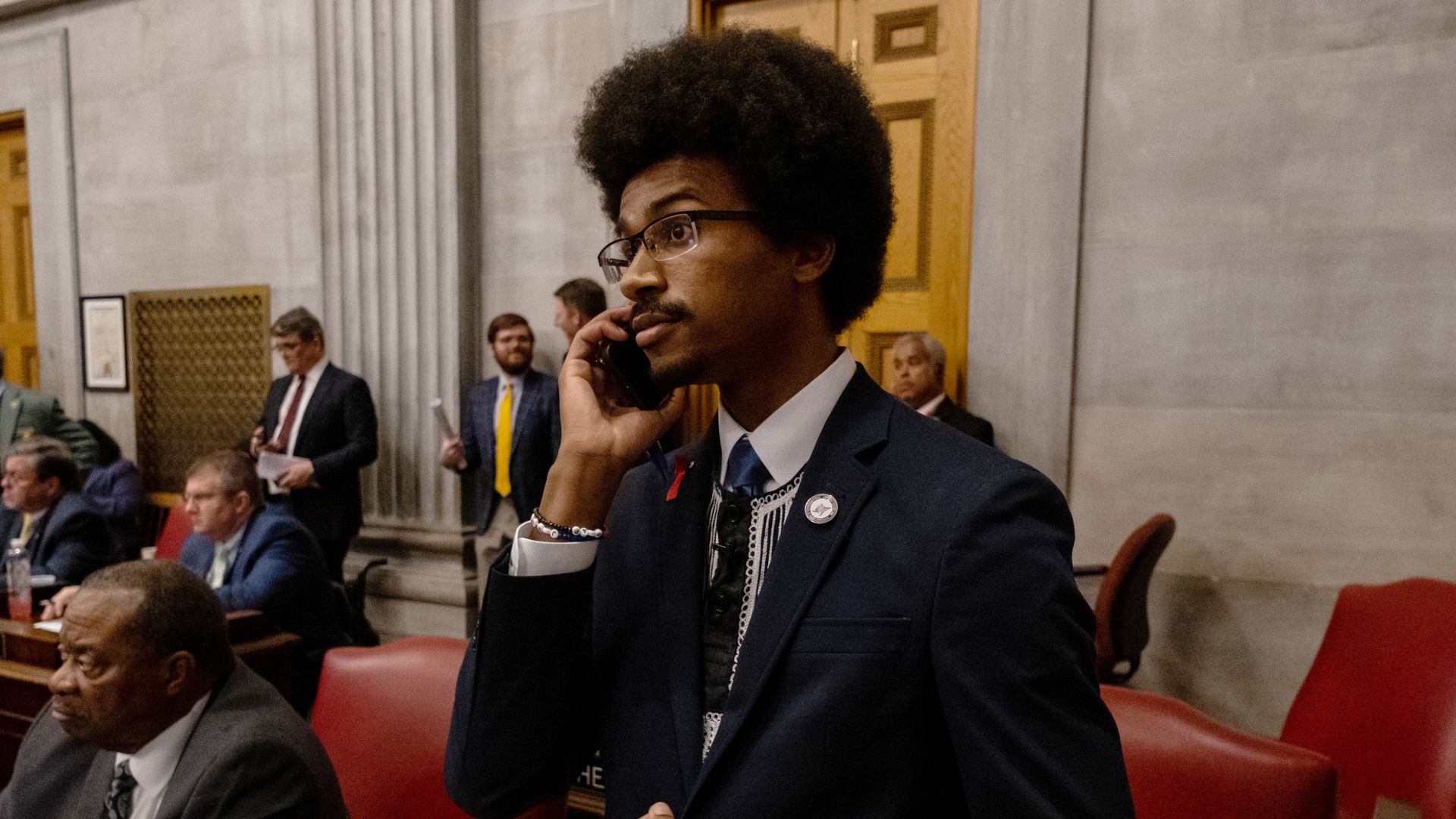
Data centers could be a flashpoint in a closely watched primary in Tennessee as prominent activist and state lawmaker Justin Pearson (D) challenges incumbent Rep. Steve Cohen (D).
Why it matters: Whether in primaries or general elections, AI infrastructure growth is rising on the political radar.
- Pearson's a prominent voice against the use of gas turbines to power an xAI supercomputing site in Memphis, citing air pollution in an already burdened area.
Driving the news: "I think it's going to be a significant part of our campaign, because this is a significant reality for my constituents right now," Pearson told reporters Friday at a Washington NAACP summit about data centers.
- "I represent one of the most polluted districts in the state of Tennessee and one of the most polluted areas in the United States of America, and having xAI data centers polluting using fossil fuels is contributing to the problem," the Memphis state lawmaker said.
What we're watching: One conference focus was developing playbooks for communities to fight data centers that pose environmental justice risks.
- Just one example: NAACP president and CEO Derrick Johnson said it's important for communities to look at what type of utility serves the area.
- "Will it be an investor-owned company? Will it be an electric cooperative or muni? All those three have different obligations, which gives different opportunities to push them to do something differently," he said during one session Friday.
4. 🗓️ Big this week: Permitting and FERC
Two big policy events are on tap this week: A House vote on a bill that would streamline permitting, and possible FERC action on co-location of power generation and data centers in the huge PJM grid.
Why it matters: Both permitting and placing large electricity users like data centers next to power generation sites are key pieces to help enable President Trump's "energy dominance" agenda.
Driving the news: The SPEED Act would speed up agency reviews and limit litigation-related timelines under the National Environmental Policy Act.
- House Natural Resources Chairman Bruce Westerman (R-Ark.), the bill's sponsor, has sought to make it bipartisan. But many Democrats — including some key Senate ranking members — contend it would weaken the review process.
Zoom in: Business groups are mounting a full-court press for the SPEED Act's passage.
- "Unfortunately, bad actors have abused the National Environmental Policy Act and its environmental review processes," Charles Crain, the National Association of Manufacturers' managing vice president for policy, told lawmakers in a letter exclusively given to Axios.
What we're watching: FERC's Thursday meeting has PJM's co-location policy on the agenda.
- This "suggests a positive outcome for nuclear and gas plant owners hoping to contract with data centers behind-the-meter (BTM) and avoid paying full grid charges," the firm Capstone said in a research note.
5. 💵 Energy deals you may have missed
🏠 Exclusive: Home heat pump maker Quilt raised a $20 million Series B to ramp growth and develop new products, says Quilt CEO Paul Lambert. Go deeper
🌋 Geothermal startup Fervo Energy closed a $462 million Series E round to develop its first commercial power plant in Utah and other projects. Go deeper
🚌 Highland Electric Fleets raised a $150 million equity round to deploy more electric bus and truck fleets in cities across the U.S., says CEO Duncan McIntyre. Go deeper
☀️ Sun King has closed a $40 million equity round to accelerate the deployment of solar kits across sub-Saharan Africa, says CEO T. Patrick Walsh. Go deeper
6. 🧮 Number of the day: -33.8%


Shares of Fermi America plunged nearly 34% on Friday after it disclosed that the first tenant for its planned power and data center campus allowed an agreement to lapse.
Why it matters: Fermi, co-founded by former DOE head Rick Perry, is planning a massive West Texas project to directly power data centers — what the firm calls "private grids."
What we're watching: Is this another crack in the AI-power foundation? Fermi said talks with this and other potential tenants continue.
- Fermi "remains confident that it will be able to meet its expected power delivery schedule at Project Matador as the demand for behind-the-meter power for AI remains robust over the near and long term," an SEC filing states.
7. 💬 Quote of the day: Bookmark this one edition
"Very soon you'll see a stop of the rise of electricity prices, and with the continuation of Trump policies of energy addition, you will see declines in electricity prices later this term."— Energy Secretary Chris Wright, speaking on Fox News Sunday
My thought bubble: If this proves true, it's obviously good news politically for Republicans under pressure on the topic.
- If it doesn't, it's fodder for Democratic midterm ads.
📬 Did a friend send you this newsletter? Welcome, please sign up.
Sign up for Axios Future of Energy