Axios Future of Energy

January 28, 2026


🐪 Halfway! We're getting over the hump with 1,438 words, 5.5 minutes.
🛢️ Situational awareness: Interim Venezuelan President Delcy Rodríguez has committed to opening the country's energy sector to U.S. companies and providing "preferential access" to production, Secretary of State Marco Rubio says in prepared remarks to Congress.
- What we're watching: His appearance before the Senate Foreign Relations Committee later this morning.
🎸 On this date in 1997, indie explorers Built to Spill released the album "Perfect From Now On," which provides today's intro tune...
1 big thing: What gives energy leaders pause on AI

Covering the energy demands of AI while increasingly using AI feels like a strange form of immersion therapy.
Why it matters: We're all humans first, and only then journalists, founders, philanthropists or experts. And AI is fast reshaping how we work, think and find meaning.
Catch up quick: This is a follow-up to my Finish Line article on this topic. It's taken on additional currency with Anthropic CEO Dario Amodei's warning this week of the imminent "real danger" that superhuman intelligence will cause civilization-level damage absent smart, speedy intervention.
Driving the news: I've begun asking interviewees to drop their talking points and answer as humans: How are you using AI, and what worries you?
"I'm certainly most scared about the loss of meaning in human life," said Varun Sivaram, founder of startup Emerald AI. He is referring to the loss of reason to do economically useful work, which gives people initiative in life.
- Some people may see AI as helping liberate them from their jobs, Sivaram said, instead spending their time just seeing art and music.
- "But a lot of people don't want only that right, right? And I really worry about that a lot for the human soul," Sivaram said.
Reality check: Others emphasize agency over inevitability.
- "I think what's missing in this conversation is the idea we have agency. We get to make choices," said Mike Schroepfer, former CTO of Meta, now a founder of cleantech venture capital firm Gigascale Capital.
- For example, he said, he can choose not to use GPS to preserve his sense of direction.
- "I have faith in people to make good decisions about it and figure it out as we go along," he said.
The intrigue: Getting people to truly open up has been hard. Some retreat to safe language; others invoke children or grandchildren as a proxy for deeper unease.
Flashback: In a live interview last fall at Caltech, philanthropist Bill Gates responded with humor that carried an uncomfortable truth.
- "Someday the AI is going to say to me, 'Hey, stop messing around trying to eradicate malaria. I'm so much smarter than you. You just go play pickleball, and I'll get back to you.' And I'm going to be a little disappointed, like 'Oh geez, I'm not that good at pickleball, '" Gates told me.
The bottom line: None of us knows where this lands yet.
- "Hopefully, future lectures will appear to answer that question," Gates said after giving a lecture.
📬 How has AI been most useful for you, and what musings do you have? Share with me ([email protected]) and Axios leaders at [email protected]. (Please include your name, occupation and hometown.)
😴 Sign up for Finish Line, a weekly nightly newsletter that delves into the transcendent ideas and tips gleaned from talking to leaders in business, tech and culture.
2. 💵 The money quandary threatening a nuclear boom

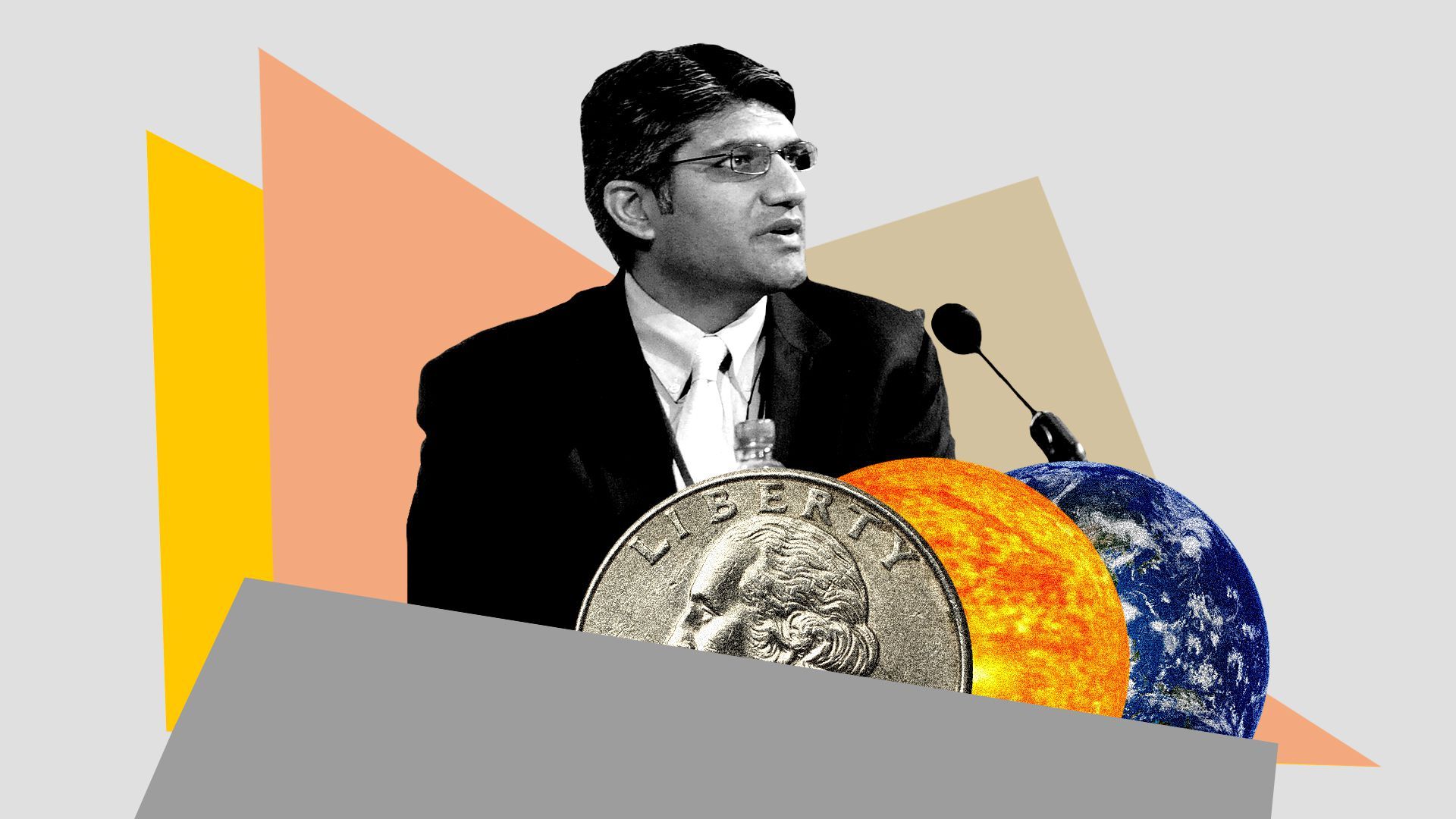
One big question standing in the way of new nuclear plants in the U.S. is who will cover the inevitable cost overruns, Jigar Shah tells Axios Pro.
Why it matters: Investors, tech firms, and the Trump administration have pledged to spend billions of dollars on new nuclear power plants — so far with little to show for it.
Driving the news: Shah, an energy investor and former Biden administration official, joined Axios Pro to discuss whether nuclear power press releases will turn into actual facilities.
What they're saying: When asked why demand for electricity alone isn't sufficient to justify the risk of these nuclear projects, Shah said utilities have made it crystal clear that they have no appetite for risk.
- "They are not going to be the pathway by which we build these reactors, unless the federal government takes cost-overrun risk ... Will Meta or Microsoft or Google and others do it? They are willing to sign above-market power purchase agreements. They are not willing to take construction risk and cost-overrun risk."
3. 🛑 Powerful Dem isn't budging on permitting talks

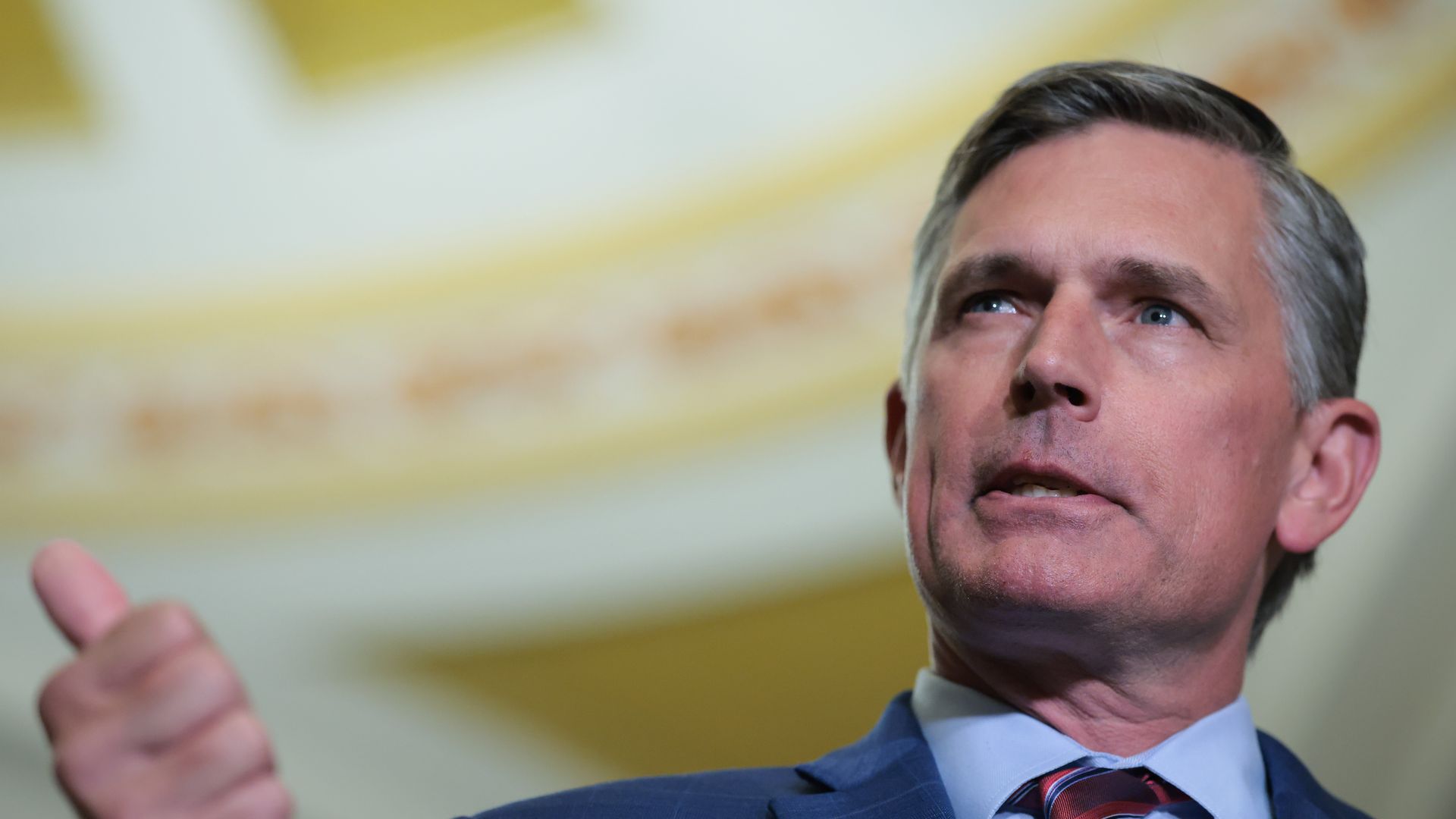
As the Senate holds a hearing today on overhauling permitting, a key Democrat sees no evidence that Trump officials are making what he sees as the mandatory clean-energy moves to let permitting talks proceed.
Why it matters: Hill observers of all shapes and sizes are clamoring for Congress to pass a bill this year that streamlines the federal process of green-lighting energy and other projects.
Driving the news: New Mexico Sen. Martin Heinrich, the Energy and Natural Resources Committee's top Democrat, said officials are stalling approvals of solar and wind projects while pushing nuclear and fossil fuel initiatives.
- "If the administration is going to be so unbound to the law that they can say, 'We'll just do these and not those,' even though those are fully and legally compliant, that doesn't work," Heinrich told Axios last night on the sidelines of a Heatmap event on transmission.
- Asked if he had spoken with the administration, Heinrich said, "I'm not going to characterize conversations there, but it is disappointing that we're not seeing [projects] move."
Zoom in: At the event, Heinrich lauded transmission-line developers for being "much more sophisticated than they were a couple of decades ago" about securing local backing.
- Back then, he said, "They looked kind of like the data-center developers right now who have no f—-ing idea how to engage in a community and will walk straight into a wall, because they don't do the front-end work that is needed to build support."
What we're watching: Today's Environment and Public Works Committee hearing.
4. 🏃 Catch up quick on policy: Ethanol, offshore wind, ocean mining

🌽 President Trump said in Iowa yesterday that he's confident that Congress will strike a deal allowing year-round sales of gasoline with 15% ethanol.
- Why it matters: It's a huge priority for the agriculture and biofuel sectors — but subject to delicate talks with the oil refiners, and the path forward is hazy.
⚖️ A Massachusetts federal judge issued a preliminary injunction yesterday to allow Vineyard Wind to resume construction off the state's coast.
- Why it matters: It's the latest in a string of legal setbacks for Trump officials' bid to halt five Atlantic Coast projects. Four so far have received injunctions letting construction resume while court battles proceed.
- State of play: The Oceantic Network, an industry group, linked the decision to the winter storm, claiming the project will help people that "depend on the continued, reliable delivery of electricity, especially during these cold winter months."
- Catch up quick: The Interior Department issued stop-work orders in December, claiming national security risks from the projects. But developers say the topic was addressed in prior reviews, and that it's a pretext by an anti-wind White House.
🌊 The Interior Department is gauging companies' interest in mining off Alaska's coast, a preliminary step toward a potential lease sale.
- Why it matters: Trump officials want to enable mineral extraction from the sea floor in various regions, envisioning potentially huge resources. But environmentalists say it could be ecologically devastating.
5. 🚘 Number of the day: 22.6%
That's fully electric vehicles' share of EU auto sales last month, per new data from the European Automobile Manufacturers' Association.
Why it matters: Pure EVs inched ahead of full petro-powered cars for the first time.
Yes, but: Hybrids, which run largely on fossil fuels, far outpaced them both.
- And auto analyst Matthias Schmidt cautions, via Reuters, that it also reflects reclassification of some petro-models as "mild hybrids."
The bottom line: It's a noteworthy marker of EVs' rise in the bloc.
6. 🛢️Quote du jour: Projections have consequences edition
"The consequence of five years of delusion is misallocation of capital, partly under-investment in oil and gas, upstream and downstream, and that, I think, will manifest itself, not this year, not next year, but early next decade."— Rapidan Energy Group founder Bob McNally at a National Center for Energy Analytics forum yesterday
He argues that IEA's projections of relatively near-term peaks in oil and gas demand — which he disagrees with — swayed investment decisions.
- The event also explored IEA's 2025 revival of its "current policies scenario," which sees much longer-term demand growth. Full replay
Editor's note: Yesterday's newsletter was corrected to reflect that energy analyst Jesse Jenkins used the term BYONCE (but did not coin it).
🙏 Thanks to Chuck McCutcheon and Chris Speckhard for edits to today's newsletter, along with the brilliant Axios Visuals team.
📬 Did a friend send you this newsletter? Welcome, please sign up.
Sign up for Axios Future of Energy