Axios Future of Energy
November 05, 2026

🧇 Welcome back! We're looking at how the election clouds prospects for near-term action on the permitting bill, then moving on to...
- A tech finance exclusive, how markets are weighing the midterms, and more, all in 1,351 words, 5 minutes.
🙏 Thanks to Mackenzie Weinger, David Nather and Chris Speckhard for editing, and to our brilliant Axios visuals team.
🎶 Exactly 25 years ago, Mary J. Blige ruled the Billboard Hot 100 with today's brilliant intro tune...
1 big thing: Democrats' big win clouds the permitting picture
Democrats' blowout win further complicates the fraught path to passing a permitting deal in the lame duck.
Why it matters: Cutting hurdles for projects is a top priority for fossil fuels and renewables sectors.
- But critics argue the Senate plan unacceptably weakens environmental protections and tribal input.
The big picture: Dems' looming control of Congress "worsens the outlook" for the bill this year, the advisory firm Capstone said in a note.
- The firm sees Democrats as "further emboldened" to punt the bill into 2027.
- President "Trump is likely to put pressure on House Republicans to support the package, but with his standing diminished in the wake of the midterms, his political capital may be limited," it states.
- Analysts with Jefferies also see reduced odds of lame duck support for a package that makes it easier to build gas pipelines.
Yes, but: The bipartisan bill's Democratic co-authors argued yesterday that now remains the time, with Sen. Sheldon Whitehouse (D-R.I.) calling it a "bird in the hand" and saying "we'd be fools not to take it."
- "Democrats ran and won on affordability, and this bill lowers costs for families and will allow us to start delivering on our election promises," he said in a statement.
🏈 State of play: Rapidan Energy Group now sees a 20%-25% chance in the lame duck, down from 30% pre-election.
- Yet Rapidan's rather bullish on a permitting deal with Trump in 2027-2028. That challenges the view of many bill supporters who see a fleeting opening right now.
- Rapidan's logic: Trump struck first-term deals with Dems on the debt limit, government funding and more — at times against the will of GOP congressional leaders.
"Democrats need only five or six Republican votes to reach 60 on a bill Republicans helped write, and Trump's first-term precedent ... suggests he may be willing to make deals with Democrats to reduce the veto risk," their note states.
👟 Catch up quick: TD Cowen analysts quickly dropped their assessment of lame duck passage from 40% to 25%, while the firm ClearView Energy Partners also argues that Dems' bicameral win could weaken the prospects.
💬 What they're saying: American Clean Power Association head Jason Grumet told reporters yesterday the bill reflects voters' interest in cheaper energy.
- "I think that the understanding in Congress is that this is a really unique opportunity, and if you don't move forward in the next three or four weeks, it's hard to imagine a bipartisan effort over the next couple of years," said Grumet, whose group represents renewables, storage and transmission companies.
🥊 The other side: Rep. Jared Huffman (D-Calif.), who is likely to helm the Natural Resources Committee, is arguing that Democrats should show that the days of Trump's "supplicant Senate" are over. Huffman, who wants to wait until next year, said Dems should demand hearings and amendments on the bill he currently opposes.
The bottom line: The White House is still pushing for lame duck action, but did not directly say whether it would be open to a deal on an altered bill next year.
- "The White House supports the bipartisan deal worked out between Republicans and Democrats and agrees that the time to get permitting reform done is now," a White House official said.
Amy Harder contributed reporting.
2. 🚨 Exclusive: Stopping grid woes before they start
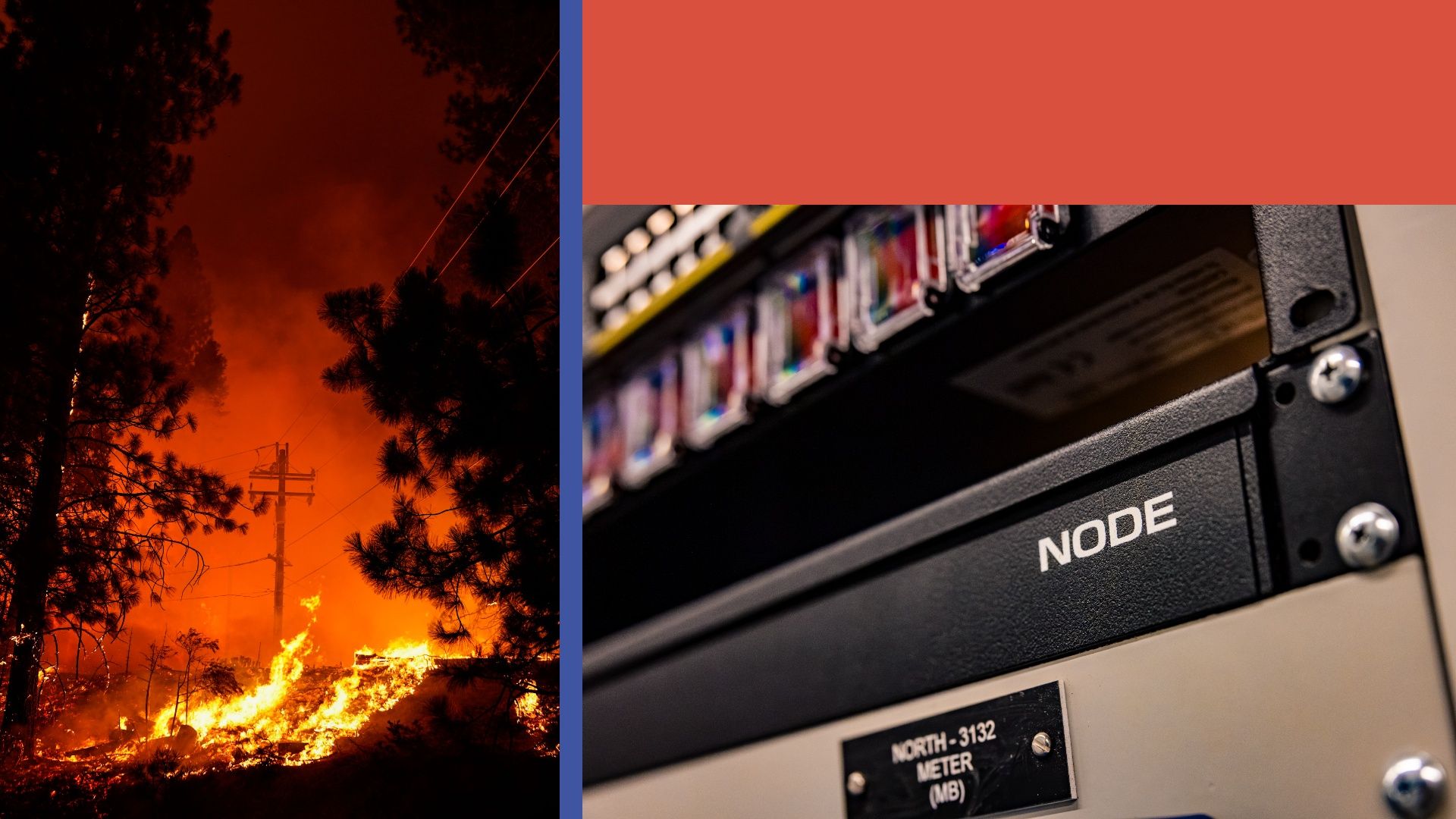
Nyquis, a startup providing grid-monitoring technology, raised $6.3 million in seed funding led by Gigascale Capital and South Park Commons.
Why it matters: The financing comes as extreme weather heightens power supply risks, energy demand is rising, and a bipartisan push is underway to greatly expand U.S. transmission.
🏀 State of play: The firm founded this year attaches its "Nyquis Node" to substations to allow granular, digital tracking of line conditions.
- It can detect changes that can become expensive, dangerous events, like branches hitting lines, deteriorating connections, or arcing — releases of electricity that can create sparks and heat.
- This provides a more detailed window into the system, especially local distribution lines, to prevent problems like wildfires and outages.
The big picture: Utilities currently rely on separate data streams that are often "scattered and siloed," co-founder and CEO Daniel Hunter said.
- "We've built a high-resolution continuous monitoring system that finds these problems while the lights are still on," he said in an interview.
- The tech is akin to a "high-resolution EKG for the grid," a funding announcement this morning will state.
3. 📊 Dems' rout brings energy winners and losers


The congressional and gubernatorial election results are quickly surfacing in the share price performance of energy stocks.
Why it matters: Market moves are a window into the expectations of policy changes or new resistance to White House tendencies.
Driving the news: Several solar companies and clean energy funds saw immediate gains yesterday.
- So did companies in the offshore wind space.
What they're saying: The election "potentially reduces the risk of further political interference with renewable energy incentives and provides greater protection for the long-term economics of US wind, solar and battery storage investments," Barclays analysts said in a note, per Bloomberg.
Threat level: Shares of some large independent power producers, such as NRG Energy and Vistra Corp., fell sharply yesterday in moves.
- Multiple Wall Street analysts see risks to power producers from new threats to data center development, especially in Texas.
- "The election of Democrat [Gina] Hinojosa in the Texas gubernatorial race in our view increases risk of data center delays and cancellation," Morgan Stanley analysts said in a note.
4. 🛢️ Oil markets weigh Trump's post-election exit strategy


Oil prices fell by nearly 9% yesterday as traders weigh signs — including a widely circulated post by Vice President JD Vance — that the midterm election will add pressure on the White House to find an offramp from the Iran conflict.
Why it matters: Elections have consequences.
- Yesterday's price drop deepened after Vance posted on X that "everyone knows" the war is why Republicans got pummeled and "any honest conversation about where we go from here must start there."
- Sen. Chuck Schumer (D), the likely Senate majority leader in the next Congress, vowed that Democrats will push to end the war.
"This crude price drop is entirely about the U.S. election and the belief that Trump will de-escalate rather than escalate on Iran. JD Vance's statement amplified that sentiment," Ben Cahill, a nonresident senior fellow with the Atlantic Council, told Axios via email. Cahill later argued that it's "premature" to read Vance's post as a signal of de-escalation on Iran.
What they're saying: Pavel Molchanov, an analyst with Raymond James, said in remarks circulated to reporters that Vance's post was a "key catalyst" for yesterday's oil price plunge.
- "The market is saying that Congress and members of his own administration are likely to start acting as a constraint on President Trump's war in Iran," Seb Barker, a strategist with the hedge fund Marshall Wace tells the Financial Times.
Catch up quick: Oil prices were already falling to start the week on signs of new U.S.-Iran diplomacy.
Yes, but: Prices moved back upward this morning, but not nearly enough to undo yesterday's decline.
What we're watching: "[I]t remains unclear whether Vance's comments signal a more dovish stance toward Iran," Molchanov said.
- "For oil prices to sustainably move lower, a durable off-ramp is needed," he added.
5. 🔪 Quote of the day: The sharpest knife
"We went and found the sharpest knife in the drawer, that was the goal. How do we inflict the most damage with the money that we have available to us?"— Tom Matzzie, founder of a super PAC funded by clean energy investors, on why the group focused its election ads on corruption and loyalty to President Trump.
Catch up quick: The Invest in Tomorrow Coalition spent millions targeting politicians who opposed clean energy policies, but Matzzie said none of its ads mentioned clean energy.
📫 Did a friend send you this newsletter? Welcome, please sign up.
Sign up for Axios Future of Energy