Axios Future of Energy

August 06, 2026

π₯ Amy's opening today's edition with a fiery climate dispatch from Seattle, then we move on to...
- Breaking news on Ford's next EV move
- Rising U.S. diesel exports, a big new fund, electric flight and more, all in 1,431 words, 5.5 minutes.
π Thanks to Mackenzie Weinger, David Nather and Chris Speckhard for editing and to our brilliant Axios visuals team.
π» At this moment in 1983, the late great Donna Summer ruled Billboard's R&B charts with today's intro tune...
1 big thing: Climate change is fueling wildfire risk β and anxiety
SEATTLE β Wildfire smoke blanketing this coastal city and much of the West is bringing an ominous reminder that the reach of destructive fires is growing.
Why it matters: Climate scientists study how global warming increases the odds of wildfire. People living through it are confronting a more immediate question: where is truly safe anymore?
The big picture: Wildfires intensified by climate change are like an unforgiving spotlight sweeping across the world. No one really knows where it will stop next.
Driving the news: Right now, that spotlight is on Spokane, Washington, where a historic wildfire has destroyed neighborhoods and remains uncontrolled. Fires are also burning in the Bordeaux region in France, outside Madrid and in British Columbia.
- "I don't think we've had one single year in the past decade where there hasn't been at least one catastrophic fire event of some magnitude that looks just like this," said climate scientist Daniel Swain, in a virtual presentation Monday showing Spokane neighborhoods burned to the ground.
My thought bubble: The Spokane fires were a wake-up call for my parents, who live in another part of the city near forested land.
- We didn't talk about climate change. We talked about evacuation plans and how quickly they could get their cats into carriers.
Reality check: Climate change doesn't cause wildfires, which have always been part of nature. Spokane itself suffered a devastating wildfire in 1991.
- But climate change is creating hotter weather and drier vegetation that make wildfires larger and more intense.
- Meanwhile, population growth into fire-prone landscapes is also increasing exposure.
Threat level: When those latent trends intersect with highly variable factors β high winds, lightning or even a suspected arsonist, such as in Spokane β devastating fires are ignited.
What they're saying: "Wildfires may look random on a map, but they're rarely random from a risk perspective," said Firas Saleh, who directs wildfire models at Moody's.
- Places as varied as Spokane, France and Hawaii share hotter temperatures, longer fire seasons, more burnable vegetation and growing development in fire-prone landscapes, Saleh said.
Between the lines: Climate change is only one factor behind destructive fires, making direct attribution difficult β and often beside the point for people living through them.
- Susan Prichard, a forest ecologist at the University of Washington, said she wonders if the scientific community made a mistake assuming people would become more concerned about climate change as extreme weather β made worse due to climate change β becomes more common.
"I'm not a social scientist, but I do know through lived experience that saying 'it's getting so bad, are you now going to be part of the solution?' doesn't seem to work," said Prichard, who has evacuated from the small town where she lives in the Cascade foothills in Washington, five times in the last 20 years due to wildfires.
What we're watching: Two conversations are increasingly happening in parallel: One about near-term adaptation and another about long-term climate mitigation.
2. π¨ Breaking: Ford's next-gen electric pickup will start at $28k

Ford says the first model produced on its new low-cost electric vehicle platform will be called Fathom and have a starting price of $28,350.
Why it matters: The truck, arriving in 2027 as part of a new family of affordable EVs, is Ford's answer to increasing competition from Chinese competitors.
By the numbers: The starting price puts Fathom right on top of Ford's small Maverick hybrid pickup, which starts at $28,145.
- Add $1,595 for delivery, and the base Fathom costs just shy of $30,000 for the standard battery package.
- Ford has not shown the vehicle to the public yet.
Zoom in: The Fathom was designed from the ground up by a skunkworks group of engineers obsessed with efficiency and cost reductions.
- It will seat five adults and is projected to have more passenger volume than a Toyota RAV4.
- The truck will also feature a large, high-resolution touchscreen, bidirectional power capability, and a front trunk, or "frunk," in addition to the pickup cargo bed.
What's next: Pre-orders begin in early 2027.
3. β½ A tale of two exports: Crude and diesel


Weekly U.S. exports of distillate fuel oil β which is mostly diesel β hit a record last week, per U.S. Energy Information Administration data.
Why it matters: Yes, I know, weekly numbers are volatile. But it underscores the wider trend of U.S. diesel exports climbing as the global refined fuel market tightens.
- Ukrainian strikes on Russian refineries have prompted Moscow to restrict diesel exports, while the Iran crisis has also disrupted petroleum product supplies.
The intrigue: Distillate shipments are rising even as U.S. crude oil exports have backed off their record highs earlier in the crisis. The increase is also occurring with U.S. diesel prices perched at around $5.35 per gallon.
What they're saying: The research firm ClearView Energy Partners notes that slowing crude exports have coincided with strong shipments of petroleum products.
- U.S. refiners are processing more crude β which reduces exports β in a profitable environment (also known as strong "crack spreads") for refined products given the global thirst.
The bottom line: The U.S. is "one of the world's few producers of diesel with ample capacity to produce fuel and ship it abroad," Bloomberg reports.
4. π€ Where air taxis meet robotaxis
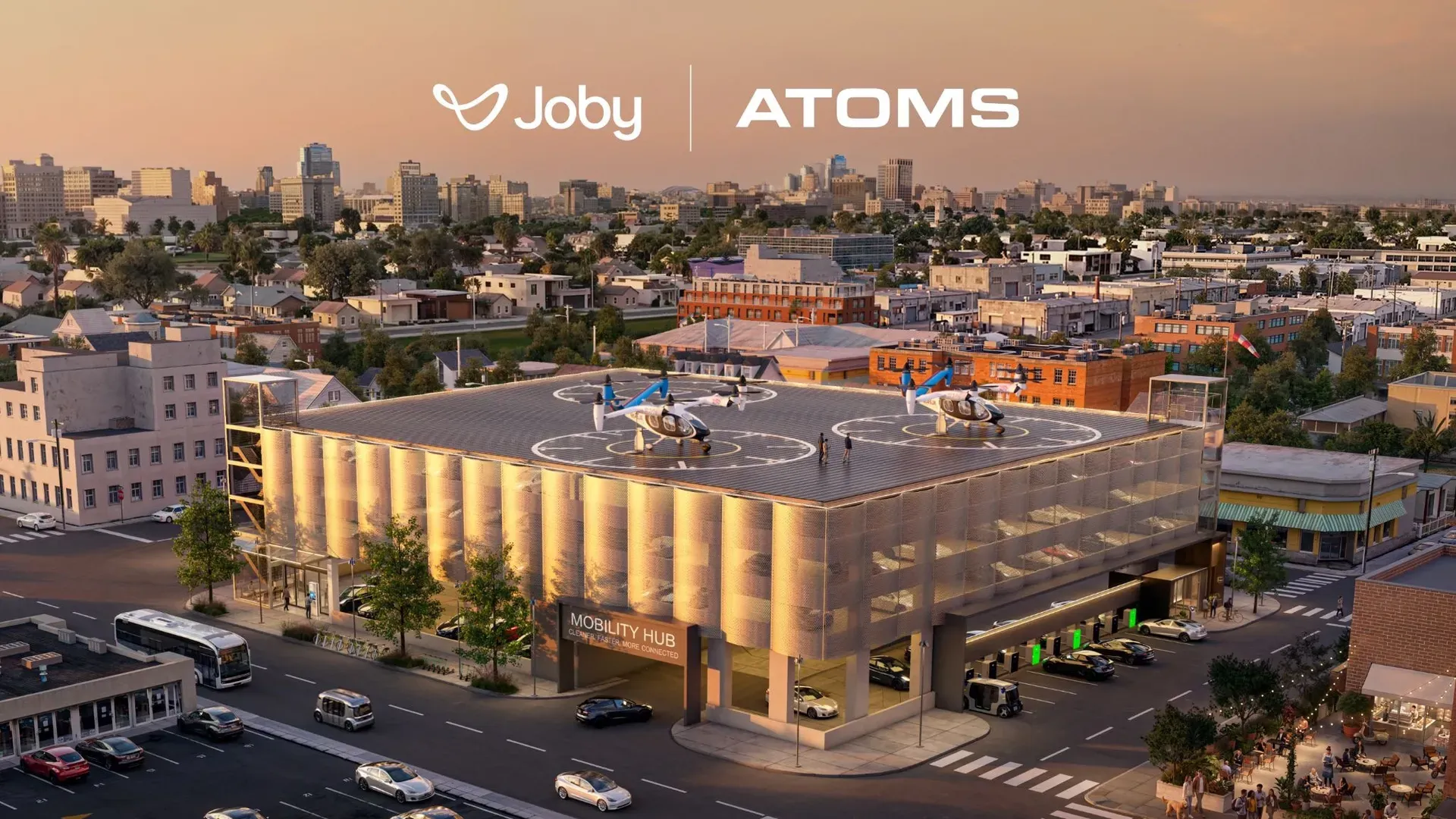
Battery-powered flight startup Joby is partnering with former Uber CEO Travis Kalanick's new company, Atoms, to develop next-generation transportation hubs where electric air taxis, robotaxis and ridesharing services will converge.
Why it matters: As urban air taxis get closer to reality, they'll need places to land, charge and connect passengers to the rest of their journey.
The big picture: Infrastructure is rapidly becoming the backbone of the next era of mobility.
- Charging and maintenance depots are critical components for large-scale robotaxi fleets, with AV companies racing to lock up the best sites and secure power to enable frequent charging and quick turnarounds.
Follow the money: Private equity firms β including EQT and BlackRock's Global Infrastructure Partners β are betting that robotaxi depots will become a new category of infrastructure investment, much like data centers, warehouses and cell towers.
- Electric air taxis need a similar foundation, and Kalanick, whose firm just raised $1.7 billion, recognizes the need.
Zoom in: Atoms will initially focus on building hubs in Florida, New York, Texas and California.
5. π Catch up quick on energy finance: Big new fund, oil deals, data centers

π Energy Capital Partners this morning said it raised $8.1 billion for its latest investment fund, which is focused on power generation, renewables, storage, and other infrastructure
- Why it matters: The funding β far above the initial target β is an AI story, but not only that, as ECP listed multiple power sector investment opportunities.
- The bottom line: The firm highlighted power demand "growing at a pace not seen in decades" thanks to AI, wider electrification of economies, and industrial onshoring.
π’οΈ Dealmaking in the U.S. oil and gas exploration and production sector fell to $9.1 billion in the second quarter, the third lowest since 2020, per Enverus Intelligence Research data.
- Why it matters: The lull does not reflect a lack of interest in pursuing new assets, but instead market volatility tied to the Iran crisis and other factors that have "complicated valuations," the market intelligence firm said in its latest M&A report.
- State of play: "We view that as a temporary negotiation obstacle rather than a demand problem. Public companies are willing to pay ever-higher prices for tier-one Permian acreage," principal analyst Andrew Dittmar said in a statement.
β‘ Partners Group, the private equity heavyweight, is acquiring a majority stake in AVK Power Solutions, a U.K. firm that provides energy systems for data centers and AI infrastructure in Europe.
- Why it matters: Private equity investments in the data center boom are expanding as tech companies scramble for electrons to support AI. AVK products include backup generators and microgrids.
- What's next: Partners plans to invest over $1 billion to accelerate AVK's growth.
6. βΈοΈ Number of the day: Almost 20%
That's the share of the U.S. data center pipeline that could face medium-term delays under Texas Gov. Greg Abbott's pause on new connections pending an audit, per research firm BloombergNEF.
Zoom out: It's a major new wrinkle in growing pushback against data centers that's crossing party lines, and Texas is among the biggest markets.
- A lengthy Texas delay could put "billions of dollars in data center leasing revenue at risk," BNEF finds.
π« Did a friend send you this newsletter? Welcome, please sign up.
Sign up for Axios Future of Energy