Axios Future of Energy

February 03, 2026


🕺 Let's do this! Today's playlist includes...
- ⛏️ Analyzing Trump's new mineral plan
- 💵 New U.S. power manufacturing
- 👀 Lots o' policy news in Congress and the exec branch
- 🛢️ Shale deal analysis and more, all in 1,366 words, 5 minutes
🙏 Thanks to Chuck McCutcheon and Chris Speckhard for edits to today's newsletter, along with the brilliant Axios Visuals team.
📻 Exactly 25 years ago, Shaggy and RikRok were No. 1 on Billboard's Hot 100 with bad advice but great vocals on today's intro tune...
1 big thing: What to watch in Trump's newest minerals plan
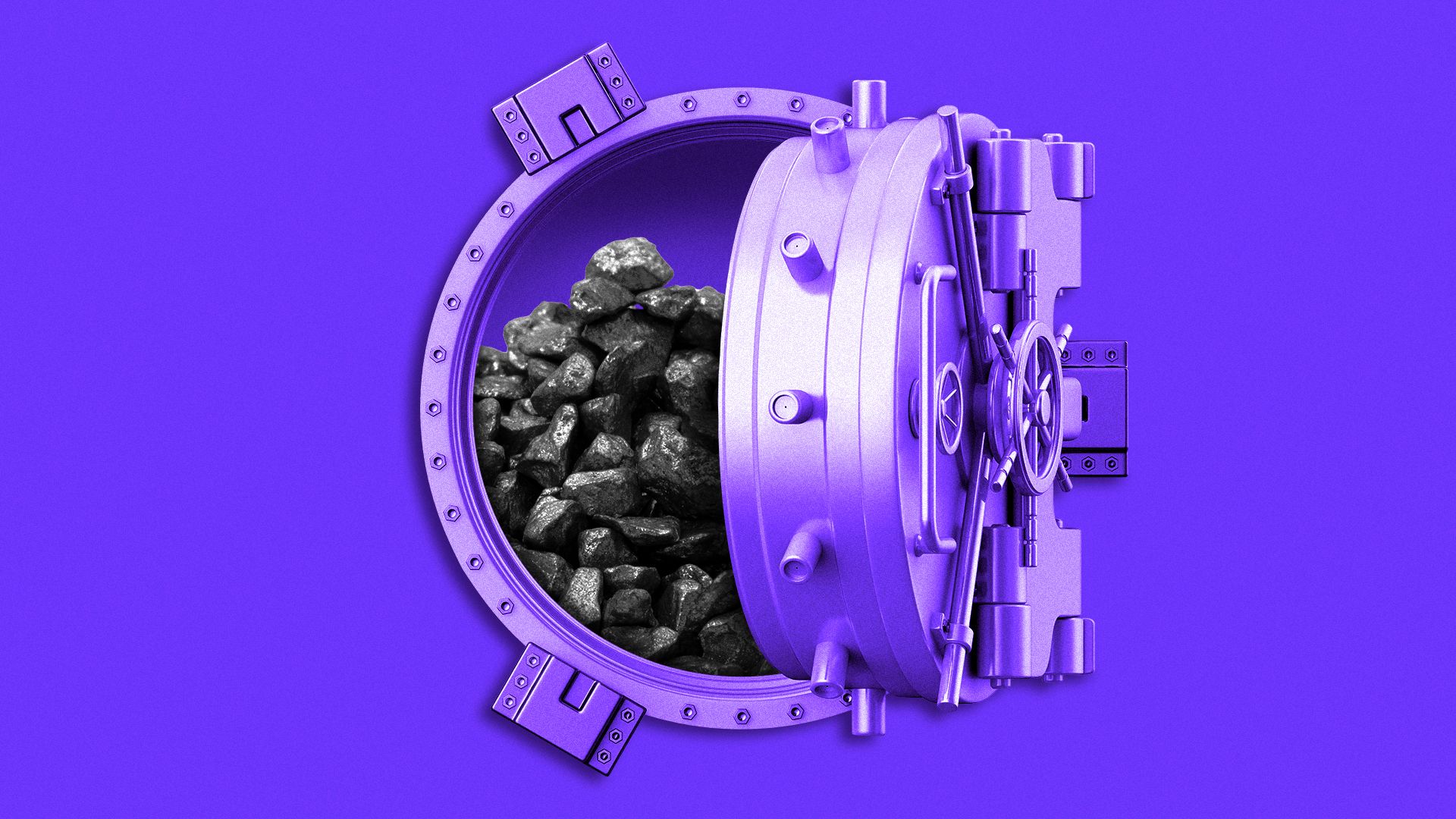
It's early days, but here are a few things on our radar as the Trump administration aims to build a U.S. strategic reserve of critical minerals for commercial use.
Why it matters: This opens a new front in U.S. efforts to ease reliance on China, which dominates production or processing of key materials.
Driving the news: The Export-Import Bank of the U.S. is providing up to $10 billion in loans for a public-private reserve called Project Vault.
- It's the largest loan in Ex-Im bank history, according to the agency, and Project Vault also includes $1.67B in private finance, per the White House, which confirmed Bloomberg reporting.
The big picture: It's designed to protect domestic manufacturers from supply shocks, "support U.S. production and processing of critical raw materials, and strengthen America's critical minerals sector," EX-IM Chairman John Jovanovic said in a statement.
State of play: An Ex-Im Bank summary says companies with "initial indications of participation" include Boeing, GE Vernova, battery player Clarios, and, on the supply side, commodity traders including Mercuria Americas.
- Others interested include GM, Stellantis, and Google, officials said.
- GM CEO Mary Barra met with President Trump at the White House yesterday with other execs and lawmakers.
How it works: Project Vault will "store essential raw materials" across the U.S., ensuring American manufacturers "have stable access to critical raw materials during periods of market disruption," per the Ex-Im bank, which said it will provide returns for taxpayers.
- Per Bloomberg's piece, companies making purchase commitments at a specified price — and pay some fees up front — can "present Project Vault with a shopping list of preferred materials they need."
- The project would procure and store materials, and manufacturers would pay "carrying costs," it reports.
What we're watching: How much it's actually used, and what specific materials might be in play.
- "Project Vault uptake will be determined by commercial interest, which is reflective of pricing, and therefore impacts" the administration's sensitivities toward China, TD Cowen analysts said in a note.
- "Absent US tariffs on Chinese critical minerals or supplier exclusions, we'd anticipate Chinese prices adjust, such that Project Vault advantages are narrowed."
The intrigue: Easing reliance on China has buy-in across the aisle, though Democrats are more interested in the clean-energy supply chain case for it.
- A bipartisan legislative plan to authorize a stockpile arrived last month.
Yes, but: Another pillar of Trump's strategy — taking stakes in rare earth and other mineral companies — is attracting skepticism in both parties.
- Senior Capitol Hill Democrats yesterday queried Trump officials on the terms and guardrails around investments in MP Materials, USA Rare Earth, Lithium Americas and others.
What's next: The State Department is hosting a multilateral critical minerals summit tomorrow.
2. 🧁 Bonus: China's mineral dominance, charted


3. 👀 $1 billion for U.S. power tech and more biz notes

📈 Siemens Energy said this morning that it's investing $1 billion to boost U.S. manufacturing of gas turbine and power grid equipment like transformers.
- Why it matters: The company cited rising U.S. electricity demand from data centers and more when announcing the expansion in several states, which it said will create over 1,500 jobs.
- State of play: The company is expanding plants in North Carolina, Alabama, New York, Texas and Florida — and building a new plant in Mississippi that makes and tests collections of circuit breakers, fuses, and switches.
- Friction point: Siemens praised the Trump administration for prioritizing grid reliability. But President and CEO Christian Bruch tells the FT that more policy "stability" is needed, citing tariffs and stop-work orders on offshore wind.
⚛️ Fusion startup Avalanche Energy this morning unveiled a $29 million fundraise for developing small modular units, led by RA Capital Management, with backing from a mix of new and existing investors. TechCrunch has more.
🛢️Kuwait plans to open some oilfields and parts of its pipeline network to international oil companies, a "significant move by the OPEC member as it looks to position itself as a key investment destination in the Middle East," Bloomberg reports.
4. 🏎️ House looks to fast-track mining projects — on GOP terms

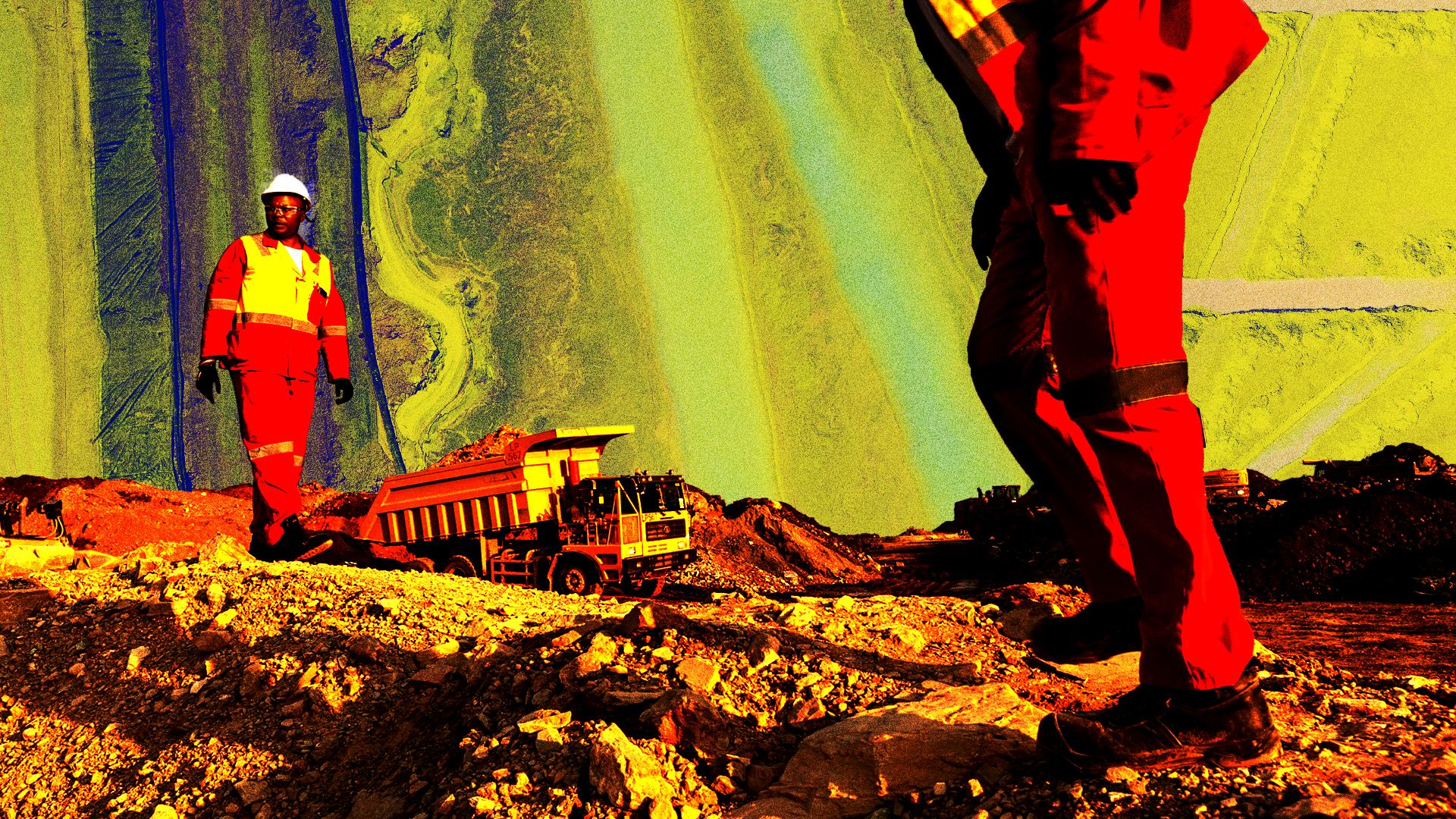
The House is expected to take up a bill today that would require the Interior Department to fast-track high-priority hardrock mining projects.
Why it matters: The Critical Mineral Dominance Act is part of a multifaceted Republican push to produce more critical minerals domestically and ease reliance on China.
Driving the news: Minnesota Republican Pete Stauber's bill would require agencies to identify pending projects on federal lands containing copper, zinc, iron and other minerals used in vehicle batteries, solar panels and other products that can win immediate approval.
- It also would codify sections of executive orders that President Trump issued last year intended to lift barriers to domestic critical-mineral production.
The other side: Democrats and environmental groups fear the bill would create more pollution while not doing enough to set up long-term mineral supply chains.
Catch up quick: The Natural Resources Committee approved the measure last September with two Democrats — Maine's Jared Golden and Nevada's Susie Lee — joining Republicans to back it.
What we're watching: Whether it draws substantially more Democratic support.
5. 🛢️ What they're saying about shale's new landscape
The huge Devon-Coterra merger could signal even more consolidation among U.S. oil and gas producers, but don't expect a frenzy, a top analyst said.
Why it matters: The combined company will be the largest independent oil and gas producer in the lower 48 states, per Wood Mackenzie, with an especially aggressive hold in the prolific Delaware Basin region of the wider Permian Basin.
- That deal with an enterprise value of $58 billion comes after a relatively slow M&A year in 2025.
- The company will be the second-largest Permian producer, per Enverus Intelligence Research.
What they're saying: "[T]he wave of consolidation sweeping U.S. shale isn't finished yet and the march towards fewer, larger producers feels inevitable," Andrew Dittmar, principal analyst at Enverus, said in a note.
What we're watching: The number of acquisition opportunities has dwindled after years of dealmaking.
- "[I]t doesn't necessarily presage a stampede of mergers like was seen in 2023 and 2024 when companies may have felt pressure to jump in or be left behind," Dittmar said.
6. 🏃 Catch up quick on policy: Oil, AI, offshore wind, Venezuela

🛢️ Interior is asking industry for specifics on its interest in the Arctic National Wildlife Refuge as it prepares to auction leases.
- Why it matters: The formal "call for nominations and comments" will help show whether companies are truly chomping at the bit for developing ANWR.
⚛️ Atomic Canyon, a startup that uses AI to aid nuclear compliance and licensing, registered to lobby for the first time via Continental Strategy.
⚖️ A federal judge issued a preliminary injunction allowing Ørsted's offshore Sunrise Wind project to resume construction.
- Why it matters: Courts have now revived all five Atlantic Coast projects that Trump officials halted in December while legal battles play out.
- What they're saying: "We hope the consistent outcomes in court bode well for the completion of these projects," Hillary Bright, executive director of the offshore wind group Turn Forward, said in a statement. Interior did not comment, citing pending litigation.
- Yes, but: The delays have been costly. Ørsted wrote in court filings that it was losing $2.5 million each day the project was paused, the NYT reports.
🛢️A dozen House Democrats are warning oil companies that a future Congress or White House could interfere with investments or transactions around Venezuelan oil.
- Why it matters: Signatories of their letter include ranking Democrats on the Foreign Affairs and Financial Services panels. It notes the administration hasn't sought legal authority from Congress or the UN.
7. 🧮 Number of the day: Over 650
That's how many new LNG tankers will be needed worldwide by 2040 as demand grows and "maritime emissions regulations are accelerating fleet turnover," Wood Mackenzie said in a report.
📬 Did a friend send you this newsletter? Welcome, please sign up.
Sign up for Axios Future of Energy