Axios Future of Energy

April 27, 2026


🦋 Carbon removal companies are trying to adapt to the Trump era. We're diving into the trend and then exploring ...
- The latest on Iran.
- Nuclear news, Meta's space energy vision and more — all in 1,499 words, 5½ minutes.
🙏 Thanks to Chuck McCutcheon, David Nather and Bill Kole for editing and to our brilliant Axios visuals team.
📻 Exactly one year ago, Kendrick Lamar (featuring SZA) was midway through 13 weeks atop Billboard's Hot 100 with today's intro tune ...
1 big thing: How carbon removal tech is adapting to Trump's energy agenda

The carbon removal industry is reframing its pitch to win support in the Trump era, by focusing on energy dominance over climate change.
Why it matters: Billions of dollars have already flowed into a sector built to fight global warming, and its future may depend on how well it fits President Trump's priorities.
Driving the news: The shift was on display when two major Biden-era projects got the green light from Trump's Energy Department to move forward earlier this month.
"Carbon removal can be the next prosperous and competitive American industry," said Giana Amador, founding executive director of the Carbon Removal Alliance.
- Amador said last week the sector "has a really compelling case to help support the Trump administration's goals around energy dominance."
- The industry can provide sustainable aviation fuel and even help extract oil through a process known as enhanced oil recovery, Amador said.
The big picture: The industry took off under Biden-era laws aimed at tackling climate change.
- It has since been stuck waiting more than a year for Trump's review of that funding.
- Its biggest voluntary backer, Microsoft, has also paused new purchases.
State of play: A joint venture between startups Heirloom and Climeworks in Louisiana is one of two federally backed major carbon removal hubs moving forward under Trump.
How it works: The sector includes a range of technologies that pull carbon dioxide from the air and store or use it.
- Heirloom uses minerals to absorb CO₂.
- Climeworks uses large fans and filters.
By the numbers: The Energy Department recently greenlit at least 10 carbon removal projects — including two major hubs in Texas and Louisiana — out of 21 previously approved under Biden.
- The large hubs could receive roughly $600 million each.
- A smaller Pacific Northwest project backed by RMI was also preserved, a spokesperson for the nonprofit confirmed last week.
"Many people who might assume that direct air capture or carbon management doesn't sit inside the president's energy dominance framework are actually missing the broader point," said Vikrum Aiyer, head of global public policy at Heirloom.
Inside the room: Heirloom executives said they emphasized three things to Trump officials:
- The industry could eventually sustain itself without subsidies — similar to fracking, and eventually geothermal and nuclear.
- It aligns with energy security goals, including providing offsets for liquefied natural gas companies exporting to Europe or hyperscalers facing community pushback when building data centers, Aiyer said.
The third reason Aiyer cited is that Louisiana's local community — including its Republican leaders — supports the project, Vikrum said.
The other side: Not everyone in the state is on board. Carbon capture projects in Louisiana face growing local resistance over perceived safety and environmental risks, underscored by Earth Day protests at the state Capitol just last week.
What we're watching: The projects may change in size and scope based on the Trump administration's preferences.
2. 🍰 Bonus: Carbon removal leader says Microsoft pause isn't a death blow
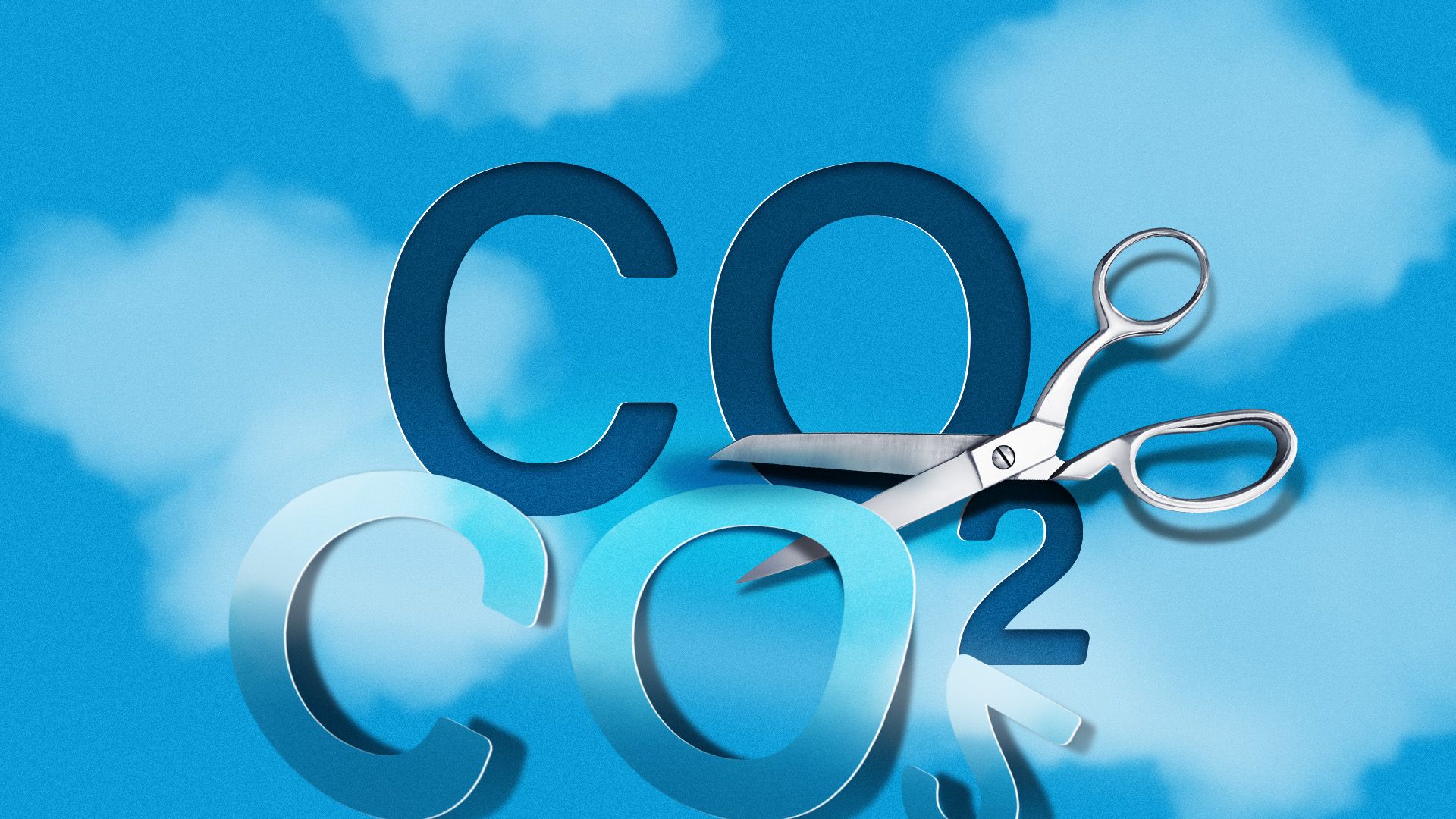
The carbon removal industry isn't panicking over Microsoft's recent pullback — at least not yet.
Why it matters: Microsoft has been the sector's biggest buyer, so any shift raises questions about demand for a very new market.
Driving the news: "I really don't think the Microsoft news is the death knell for the carbon removal industry for a couple reasons," said Giana Amador, founding executive director of the Carbon Removal Alliance, in an interview last week on the sidelines of San Francisco Climate Week.
- Microsoft has already committed to buying tens of millions of tons of carbon removal — much of which hasn't been delivered yet.
- Those past deals will still shape the market over the next several years as projects come online and scale.
Reality check: Microsoft's carbon removal purchases — over 36 million tons — far outpace other major buyers, most of whom have committed less than 2 million tons each.
Between the lines: "The carbon removal field has long known that Microsoft could not be the only anchor buyer for the market," Amador said.
- In the near term, the sector is trying to bring in more corporate buyers.
- Longer term, they're looking to governments to create more stable, policy-driven demand.
Zoom in: The bigger issue isn't demand — it's supply, Amador said.
- Most carbon removal projects today operate at thousands of tons per year, far short of the millions of tons companies like Microsoft need.
- That mismatch has made it difficult for buyers to find projects that can deliver at scale.
The bottom line: Microsoft's move may mark a turning point — but more for how the market matures than whether it survives.
3. 🏃 Catch up quick on Iran: Markets, climate, airlines

⛽ Crude oil and U.S. gasoline prices opened the week higher with Mideast energy transit still throttled.
- The latest: Brent crude is up slightly to $106.31 per barrel this morning, while the average U.S. gasoline price is $4.11 per gallon, up from $4.04 a week ago, per AAA.
- What's next: President Trump is expected to hold a Situation Room meeting on Iran today with his national security and foreign policy team, Axios' Barak Ravid reports.
🌎 The focus of whether the Iran crisis will hasten the energy transition is in Colombia, site of a multinational conference on moving away from fossil fuels.
- Why it matters: This week's long-planned summit is now unfolding against unprecedented disruption of oil and natural gas shipments.
- What they're saying: Countries are getting a "visceral reminder of just how volatile, unpredictable, and unstable it is to rely on fossil fuels," Natalie Jones of the International Institute for Sustainable Development tells Bloomberg.
- Yes, but: It lacks participation from major fuel producers and importers, including the U.S., China, India, Russia and Saudi Arabia.
🛬 Via the WSJ, budget U.S. airlines struggling with fuel costs are "seeking $2.5 billion in government assistance in exchange for warrants that could convert into equity stakes in the companies."
4. ✏️ A big federal move to license microreactors

The NRC unveiled draft rules to speed approval for deploying very small reactors.
Why it matters: Bite-sized, easily transported units are drawing increased support from the DOE, Pentagon and VC firms in recent years.
Driving the news: Friday's proposal envisions "rapid, high-volume licensing" — maintaining safety while recognizing they present lower risks.
- The NRC hopes for timelines of 6–12 months for construction permits and operating licenses. The plan also offers combined approvals for fleets of identical units.
- The rule implements the 2024 ADVANCE Act and one of Trump's nuclear exec orders, the commission said.
Zoom out: The tech has applications for powering remote communities, data centers, disaster relief and more.
- The rule doesn't define microreactors based on power levels — instead, it looks at potential radiological release consequences and fuel mass levels.
- Companies are developing units below 1 megawatt into double digits — far less than SMRs (which can run up to 350MW-ish), or gigawatt-size plants.
The bottom line: NRC Chairman Ho Nieh said it's part of the commission's wider push to ease hurdles.
- "Regulatory uncertainty is capital risk, and capital will go elsewhere if the risks are too high," he told reporters.
5. ☀️ Meta wants to power data centers from space

Meta has reserved generating capacity from Overview Energy, a startup that hopes to deploy satellites that direct solar energy to the ground round-the-clock.
Why it matters: Today's announcement shows how AI giants are pushing the tech envelope in their quest for electricity.
Driving the news: Meta's and Overview's "reservation agreement" is for up to 1 gigawatt of capacity.
- Overview, which emerged from stealth in late 2025, hopes to begin commercial deployment in 2030.
Zoom (way) out: The idea is to collect solar energy in space and beam it to on-the-ground solar projects, "allowing these assets to maximize utilization and produce power around-the-clock," the companies said.
- This would, in theory, enable more power from existing solar installations without needing new land and grid interconnection queue waits.
The bottom line: It sounds kinda out there (no pun intended).
- But Overview's backers include known quantities in the VC world like Lowercarbon Capital and Engine Ventures.
6. 💵 Energy deals you might have missed



🏭 Sustainable jet fuel-maker Twelve is commissioning its demo plant and plans to raise a Series D — but what comes next is far from clear. Go deeper.
⚙️ Early-stage deep-tech startups showed off their tech at SF Climate Week. Go deeper.
👀 Nuclear power developer Blue Energy raised $380m in equity and debt to partly fund its first project — one that will first run on natural gas. Go deeper.
7. ⚛️ Number of the day: +27%
That's the rise in the share price of newly public X-energy, the startup that began trading Friday.
Why it matters: It's an auspicious market debut for the small modular reactor and nuclear fuel company riding a wave of Big Tech interest in nuclear power.
- But there's a long way to go before its tech is commercialized. Go deeper.
📫 Did a friend send you this newsletter? Welcome, please sign up.
Sign up for Axios Future of Energy