Axios Future of Energy
October 28, 2026

⏰ The first Senate permitting vote is drawing closer, so we start with the intense fight over the bill, then roam widely with items on...
- COP31, tech deals, methane data, EVs' home power potential and more, all in 1,342 words, 5 minutes
🙏 Thanks to Mackenzie Weinger and Chris Speckhard for editing, and to our brilliant Axios visuals team.
📻 At this moment in 2013, Lorde was into her monster nine-week run atop the Billboard Hot 100 with today's intro tune...
1 big thing: Granholm's permitting warning to Trump and fellow Democrats
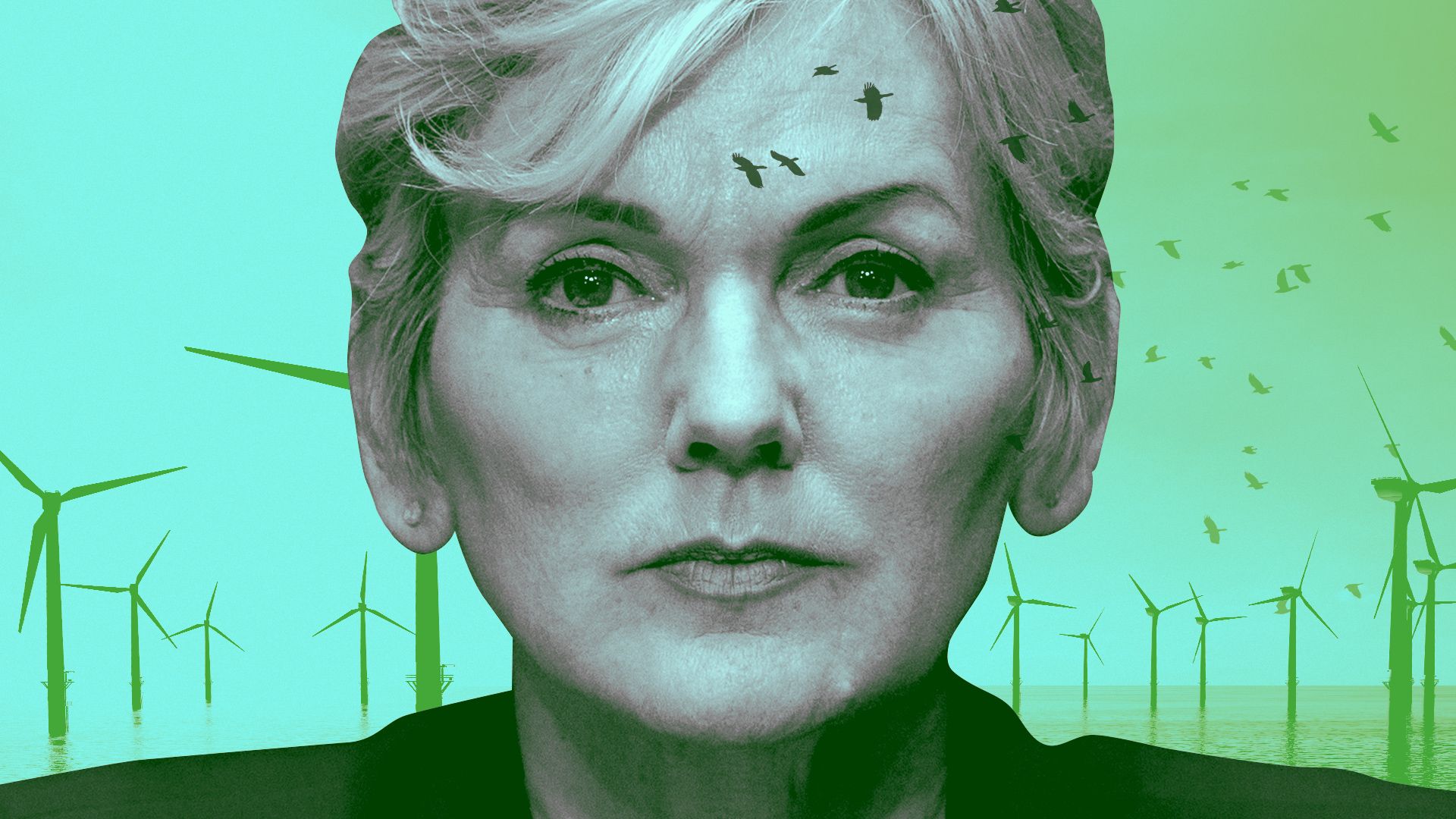
Former Energy Secretary Jennifer Granholm is urging Democrats to pass a sweeping bipartisan permitting bill now, while warning President Trump that his restrictions on wind energy could derail the deal.
Why it matters: The former Michigan governor is an influential Democratic voice on energy policy, and her comments come as the party weighs whether to embrace a major permitting compromise despite opposition from some environmental and tribal groups.
Driving the news: Granholm said Trump's actions against renewable energy could prompt Democrats negotiating the legislation to walk away.
- "If they want permitting reform, knock it off," Granholm, who served as energy secretary under President Biden, told Axios in an interview this week.
- But she also urged Democrats to seize the chance to pass the bill. "I think we should pass it. I know it's not perfect," she said.
- "Who's to say we're going to get a better deal?" Granholm said. "We still need a presidential signature in the next two years."
Catch up quick: The bipartisan bill, unveiled Sept. 30, would make it easier to build energy projects and power lines, while helping clear a backlog of projects waiting to connect to the electricity grid.
State of play: Granholm warned that without faster permitting, more technology companies could double down on building their own natural gas power plants rather than connecting to the grid.
- "I am very concerned about those projects actually coming to fruition," Granholm said.
- She acknowledged the bill could also accelerate fossil fuel development, but said: "If we're on an equal playing field, clean energy wins.
Yes, but: Granholm singled out concerns from Native American tribal nations as an area where she wants the legislation improved, though she didn't indicate that it should slow down the legislative process.
- "There is concern clearly among the tribal governments, and I think we should listen to that, and we should make the bill better when we have the opportunity to do so," Granholm said.
What they're saying: The Native American Rights Fund, a nonprofit legal group representing American Tribal Nations, said it opposes the bill.
- It "severely weakens Tribal opportunities to engage as sovereign governments, curtails Tribal consultation requirements, and restricts access to legal recourse in court," the group said in its Oct. 20 statement.
- The bill's sponsors say it preserves tribes' ability to participate in formal consultations.
The other side: The White House didn't immediately respond to a request for comment about Granholm's comments or opposition by Tribal Nations.
- A White House official told Ben yesterday the administration was approving more onshore wind farms that had been delayed by military reviews (see below for more).
What's next: The Senate has scheduled an initial procedural vote for Nov. 9, less than a week after the midterm elections — leaving little time to resolve the growing disagreements.
2. 🧁 Bonus permitting news: Analysis, endorsements, negotiations

The permitting deal is poised to reduce emissions and lay the groundwork for steeper cuts if federal climate policy ever gets stronger, a new analysis finds.
Why it matters: The conclusion, via scholars with a Columbia energy think tank, arrives as lawmakers are weighing positions on the most important energy bill in years.
🗞️ Driving the news: "The bill's 'all of the above' reforms are likely to produce a net reduction in emissions relative to business as usual, although the extent of that reduction is highly uncertain," the white paper states.
Yes, but: It adds that without permitting reforms, rapid clean energy buildout needed for steep cuts will keep facing barriers.
- The bill isn't a stand-in for a strong climate policy, but making infrastructure easier to build is "an important step toward one," the analysis states.
Zoom out: Lower energy prices from more generation and transmission are "plausible but conditional," it finds.
🏃 Catch up quick: The administration said yesterday it's allowing three wind projects in Illinois and one in Iowa to proceed, following action last week on projects in Maine and South Dakota.
- Democratic co-sponsors have been calling for ending bottlenecks as a show of good faith.
💬 What they're saying: Longtime progressive climate activist Tom Steyer yesterday endorsed the bill.
🔭 What we're watching: The White House isn't in a mood to make new commitments outside wind approvals.
- Remember yesterday's story on several Senate Dems seeking reinstatement of clean energy grants? "The text of the legislation has been published and all there is left to do is vote," a White House official told me in response.
- The White House is working with Senate negotiators and is "looking forward to action on this historic legislation to unleash more energy," the official said.
3. 🛢️ The stakes of EPA's methane rollback


The U.S. is the top emitter of methane from oil and gas operations, per International Energy Agency data.
Why it matters: EPA yesterday proposed to relax Biden-era requirements on industry to crack down on methane emissions.
- Separate analyses also show the U.S. as the largest source, though some show a smaller overall share than IEA.
- Oil and gas operations are among the largest global sources of the potent planet-warming gas.
Friction point: The administration — which had already delayed many requirements — called the rules onerous, and touted leak-reduction efforts and other programs and industry practices.
- The new plan "rolls back reckless Biden-era red tape" and will save money, officials said.
The other side: It would mean "more wasted energy, more methane pollution and greater health risks for communities living near oil and gas operations," the Environmental Defense Fund said.
4. ⚡ Catch up quick: COP31, big power deal, oil

🌏 The Turkish hosts of COP31 released the text of the voluntary "Antalya Artificial Intelligence Pledge" that it's urging countries to back.
- Why it matters: AI is increasingly making its way into the global climate diplomacy scene.
- State of play: The pledge asks for more efforts to power AI with climate-friendly energy, but also harness AI for emissions-cutting and adaptation.
- What they're saying: The pledge "the right direction of travel but lacks the accountability mechanisms to steer countries and tech companies on to a better path," the World Resources Institute said (h/t Bloomberg).
🤝 Power infrastructure giant GE Vernova is acquiring Trench Group, which makes high-voltage grid equipment, in a $9 billion deal. Reuters has more.
🛢️ Oil prices are up this morning following reports that Yemen's Iran-backed Houthi rebels struck a major Saudi oil refinery. Brent crude is trading at $115.10.
5. 🤔 Why EVs aren't powering U.S. grids yet
Electric cars have been touted for years as a secret weapon against the growing crunch on America's electricity grid. So why aren't we using them?
Why it matters: As electricity demand surges, millions of parked EVs could help utilities manage power shortages, lower costs and keep the lights on.
The big picture: The theory is simple enough: EV batteries can store electricity from the grid when it's plentiful and supply it when demand peaks.
- But expensive equipment, complicated utility regulations and consumer skepticism have kept vehicle-to-grid (V2G) technology from catching on.
Driving the news: Ford says its new Fathom electric pickup, arriving in 2027, could help break the logjam by slashing the cost of two-way charging.
- The truck, starting below $30,000, has a built-in inverter that converts the battery's electricity into power homes can use, eliminating a costly piece of external equipment.
- EV owners could save money — or even get paid — for sharing their batteries.
6. ⚛️ Number of the day: 1.1 gigawatts
That's the boost expected from Constellation Energy's Energy Department-backed plan to expand output at nuclear plants in Illinois, Maryland, and Pennsylvania.
Why it matters: Increases from existing plants — called uprates — are so hot right now.
- Yesterday's announcement of up to $5 billion in DOE loans is the latest in several federal, nuclear industry, and Big Tech-backed moves to wring more power from today's fleet.
📫 Did a friend send you this newsletter? Welcome, please sign up.
Sign up for Axios Future of Energy