Axios Future of Energy
October 20, 2026


🍜 We're into food today, opening with a look at how the energy shock threatens food security. Today's edition also explores...
- Permitting and diesel news, AI energy bottlenecks, Big Tech, and the NextEra-Dominion deal, all in just 1,297 words, 5 minutes.
🙏 Thanks to Mackenzie Weinger and Chris Speckhard for editing, and to our brilliant Axios visuals team.
🎸 On this date in 1977, a plane crash claimed several Lynyrd Skynyrd members, and we're marking the moment with today's intro tune...
1 big thing: How the energy crisis could become a food security crisis

The Iran war and the Ukraine-Russia conflict are creating a "multidirectional squeeze on world agriculture" that could spiral into a crisis, a new report finds.
Why it matters: Wars and extreme weather are colliding to threaten global food supplies and drive up prices, especially in vulnerable economies.
- The report explores how the El Niño phenomenon could compound the problems of restricted supplies of key fertilizer ingredients, higher fuel costs on the farm and more.
- The S&P Global Institute report is an unusually holistic look at the topic.
Driving the news: The analysis comes alongside new warnings about food from the International Monetary Fund.
- Its World Economic Outlook last week sees an overall 10% increase in fertilizer prices this year and food costs rising by 5% in 2026 and 2.4% in 2027, though it depends on the region.
- "Higher energy and food prices could have severe effects on poverty and food security" and threaten political stability in vulnerable economies, the IMF warned.
State of play: Food producers need steady supplies of natural gas and sulfur for fertilizer, diesel for farm machinery and food transport, and open sea lanes for trade, S&P notes.
- "Conflict is now testing all of them at once, just as El Niño tests the harvest," states the report from the research and consulting firm.
- "The risk is increasing, especially for low-income countries, where food costs amount to about half of household spending," it states.
Zoom out: The disruptions could affect agricultural production worldwide, from soybeans and corn in Brazil to wheat in Australia, S&P finds.
The intrigue: The S&P report also warns of something that has received somewhat less attention.
- The diesel supply crunch doesn't just raise costs for farmers. It also works alongside pro-biofuels policies to make biodiesel production more attractive.
- "The knock-on effect is that, in some regions, crops for fuel become more valuable than crops for food."
Zoom in: A few stats via S&P illustrate the overlapping threats.
- Middle Eastern prices for exported sulfur, a fertilizer ingredient, reached a record $1,000 per metric ton in July, after starting the year at a historically high $500 per metric ton.
- 47% of the global sulfur trade normally goes through the Strait of Hormuz.
- In Indonesia, industrial use of palm oil, largely for biodiesel, is expected to be roughly five times its 2015-16 level.
The bottom line: A global food crisis is by no means certain.
- But if wars keep disrupting energy and fertilizer supplies, and weather cuts harvests in key regions, "the elements of such a crisis will be falling into place," S&P warns.
2. 🍰 Bonus: Charting the natural gas divide


While the diesel spike is driving up farmers' costs, one bright spot in the U.S. is that it's isolated from natural gas price surges elsewhere.
Why it matters: Fertilizer costs have risen here, too, but S&P's report notes that U.S. fertilizer producers are "largely insulated from disruptions to the global gas market."
3. 🚨 Exclusive: The AI race is hitting an energy wall

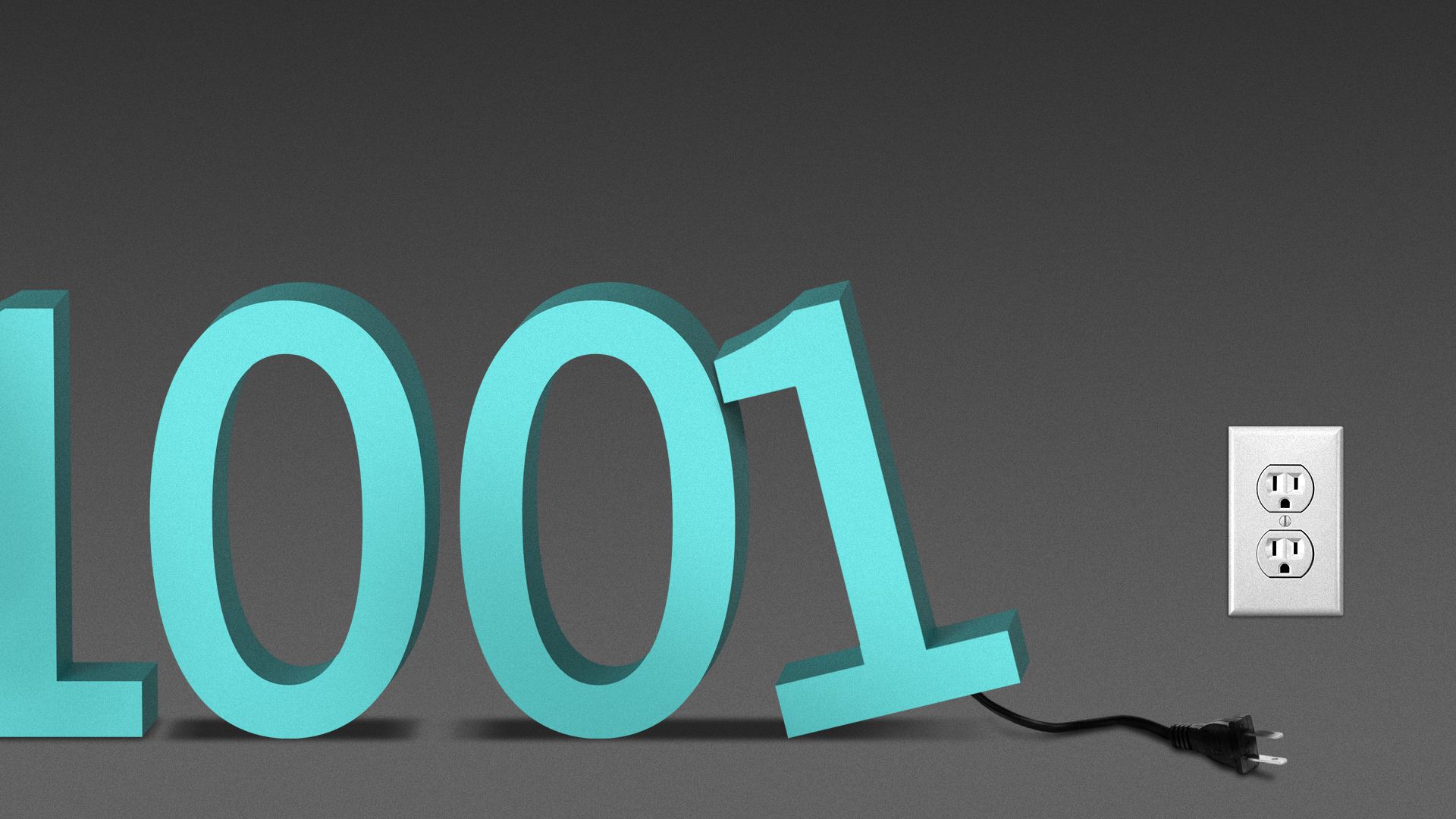
Silicon Valley moves fast and breaks things, but the U.S. electrical grid moves slowly and requires permits.
- The explosive growth of AI is colliding with the glacial pace of building out new power infrastructure, prompting a new warning from Goldman Sachs that energy bottlenecks are set to stall the AI race.
Why it matters: Amid a wave of anxiety from Wall Street about the debt-fueled AI buildout, Goldman points to power as the biggest risk to trillions in spending in a new report shared exclusively with Axios.
Driving the news: Goldman expects global data center power demand to surge 170% between 2025 and 2030, with more than 60% of that growth coming from the U.S., according to the report.
- The bank estimates roughly $7.6 trillion in capital spending between 2026 and 2031 across computing, data centers and power infrastructure.
4. ⚠️ Fresh signs of a rocky path to a permitting law

The Natural Resources Defense Council is seeking substantial changes to the bipartisan Senate permitting deal.
Why it matters: It's among the biggest green groups and has close ties with Democratic lawmakers — so its stance could influence votes.
Driving the news: NRDC, in a memo yesterday, listed "critical" areas where it's seeking improvements.
- One is revision of "project certainty" provisions so they don't "unduly favor the current administration's energy choices."
- The group also fears the bill strips too much judicial power to "fix unlawful permits and pause construction" of projects.
Friction point: The bill goes too far in weakening water quality and endangered species protections, the memo states.
- And "changes to historic preservation law should be developed with Tribal Nations and preserve meaningful consultation."
Yes, but: The NRDC analysis praises major transmission, grid and geothermal provisions.
- The group, with plenty of hedging, sees "modest to significant greenhouse gas benefits."
What we're watching: Tribal consultation provisions are something to watch, with Punchbowl News reporting that Native American tribes are pushing back against changes to the National Historic Preservation Act.
The bottom line: The political space in the lame duck for substantial changes will likely be extremely narrow.
5. 😲 More policy news! Diesel, mining, pipelines

⛽ The Trump administration plans to provide $8 billion in payments to farmers struggling with higher costs for diesel, which has smashed price records during the Iran war.
- Why it matters: The midterm politics are unmistakable. President Trump announced the program at a Kansas rally last night for Sen. Roger Marshall (R), who faces a surprisingly tight reelection race in his typically red state.
- Go deeper: USDA announcement ... NYT coverage.
⛏️ The Interior Department yesterday finalized terms for its first-ever lease sale for harvesting ocean-floor minerals that's planned for Nov. 19 for tracts off American Samoa.
- Why it matters: Trump officials are keen to foster an emerging industry that would harvest seafloor nodules with copper, nickel, zinc and other resources.
- Yes, but: Environmental and community groups, and a number of scientists, fear ecological harms. The leasing plan faces litigation.
💵 The Energy Department is providing up to $42 million under the Defense Production Act to try to advance Williams Companies' Constitution Pipeline, a major proposed gas line from Pennsylvania to New York. Go deeper
6. 🏃 Catch up quick on Big Tech energy moves

⚛️ Amazon, nuclear startup X-energy and the utility American Electric Power will "explore" developing 960 megawatts worth of X-energy's small modular reactors in Indiana, they said yesterday.
- Why it matters: Tech giants are making all kinds of plans with small reactor companies (including other Amazon work with X-energy). If they come to fruition, the AI boom will have played a major role in finally getting SMRs into commercial use.
- Driving the news: The Indiana "joint development agreement" unveiled yesterday envisions 12 of X-energy's Xe-100 units at the site of a retired coal plant in Sullivan County. Go deeper
🤝 Google and power company Entergy said the tech giant is expanding energy investments by hundreds of millions of dollars to help serve a major data center campus it's building in West Memphis, Arkansas.
- Why it matters: Tech companies are eager to show tangible examples of creating new AI infrastructure that protects ratepayers.
- State of play: It expands an existing partnership that the companies say will save consumers money, and includes battery projects, new transmission, and more. Go deeper via Arkansas Business
🧢 H/t to Bracewell's Frank Maisano for shouting out the Lynyrd Skynyrd moment.
📫 Did a friend send you this newsletter? Welcome, please sign up.
Sign up for Axios Future of Energy