Axios Future of Cybersecurity
November 10, 2026

Happy Tuesday! Welcome back to Future of Cybersecurity.
📬 Have thoughts, feedback or scoops to share? [email protected].
🚨 Situational awareness: President Trump has nominated Palantir CISO Michael LoSapio as the next CISA director.
🗓️ Join us Dec. 3 for our AI+ Summit in San Francisco, where I'll be interviewing Cognition CISO Alex Stamos. Other guests include Bill Gates, OpenAI CFO Sarah Friar and Blackstone president Jon Gray. Request an invite.
Today's newsletter is 1,781 words, a 6.5-minute read.
1 big thing: China's spying doesn't always involve hacking

Nvidia CEO Jensen Huang's affair with a suspected Chinese spy has renewed attention on a longstanding part of Beijing's espionage playbook: cultivating personal relationships with powerful Americans.
Why it matters: America's most powerful executives and politicians have access to highly sensitive information and influence over government decisions, making their personal relationships valuable targets for foreign intelligence agencies.
- "Congressmen, business executives, C-suite, former military, they're all targets," James Lewis, a former U.S. diplomat, told Axios.
Catch up quick: Nvidia's board opened an investigation Sunday after Huang admitted to being unfaithful to his wife in an email to employees.
- The New York Times reported Friday that U.S. officials believed Huang developed a relationship with a woman who was recruited to seek information and push for Nvidia chips to be made available to China.
- President Trump defended Huang on Sunday, while investors and tech leaders have also rallied around the CEO.
Reality check: Huang has acknowledged the affair, but the U.S. government has not publicly confirmed reports that the woman was acting on behalf of Chinese intelligence.
- Nvidia spokesperson John Rizzo has said that the news will "not slow Nvidia" and that "Jensen is committed to continuing to lead Nvidia as CEO without interruption."
The big picture: While Chinese hackers have made headlines for breaking into American telecommunications networks, Beijing has also spent decades cultivating relationships to steal secrets and influence decisions.
- "China has proven over and over again that its espionage targets go vastly beyond pure defense or defense industry," Emily Harding, a former CIA analyst and an intelligence expert at the Center for Strategic and International Studies, told Axios. "Economic intelligence is highly valuable to them and always has been highly valuable to them."
Flashback: Between 2011 and 2015, a suspected Chinese intelligence operative developed extensive ties with local and national politicians, including then-U.S. Rep. Eric Swalwell (D-Calif.), as Axios detailed in 2020.
- A Chinese intelligence officer was sentenced to 20 years in prison in 2022 for attempting to steal aviation trade secrets by cultivating relationships with employees at U.S. companies, including General Electric.
- Another Chinese national was sentenced to eight years in prison in 2023 for helping Chinese intelligence identify American engineers and scientists, including defense contractor employees, who could be targeted for recruitment.
Threat level: China and Russia have long used so-called honeypot operations, in which spies cultivate romantic or sexual relationships to gain access to sensitive information or influence their targets.
- Military personnel and defense contractors routinely receive training about these threats, but Lewis said awareness can be less consistent outside those sectors.
- "In the defense community and defense industry, everybody knows about it," he said. "In other communities, they may suffer the delusion that they're Brad Pitt."
Between the lines: While hackers can steal sensitive information from corporate networks, influencing the decisions of powerful executives often requires a more personal approach.
- "If what they wanted was to adapt behavior or perhaps influence behavior, you're really only going to do that through an in-person connection," Harding said.
The intrigue: Lewis questioned whether the alleged operation involving Huang yielded valuable intelligence or influenced his decisions, given the Nvidia CEO's longstanding public support for selling chips to China.
- "It's a trophy recruitment," Lewis said. "When [China's Ministry of State Security] goes for its budget submission next year, this will be front and center."
What to watch: It's unclear if Huang compromised sensitive company information or if his decisions were compromised because of the affair.
- A spokesperson for the Chinese embassy in the U.S. said, "The 'Chinese spy' allegation is purely unsubstantiated and directed at smearing China."
2. France blames Iran for fridge hacks
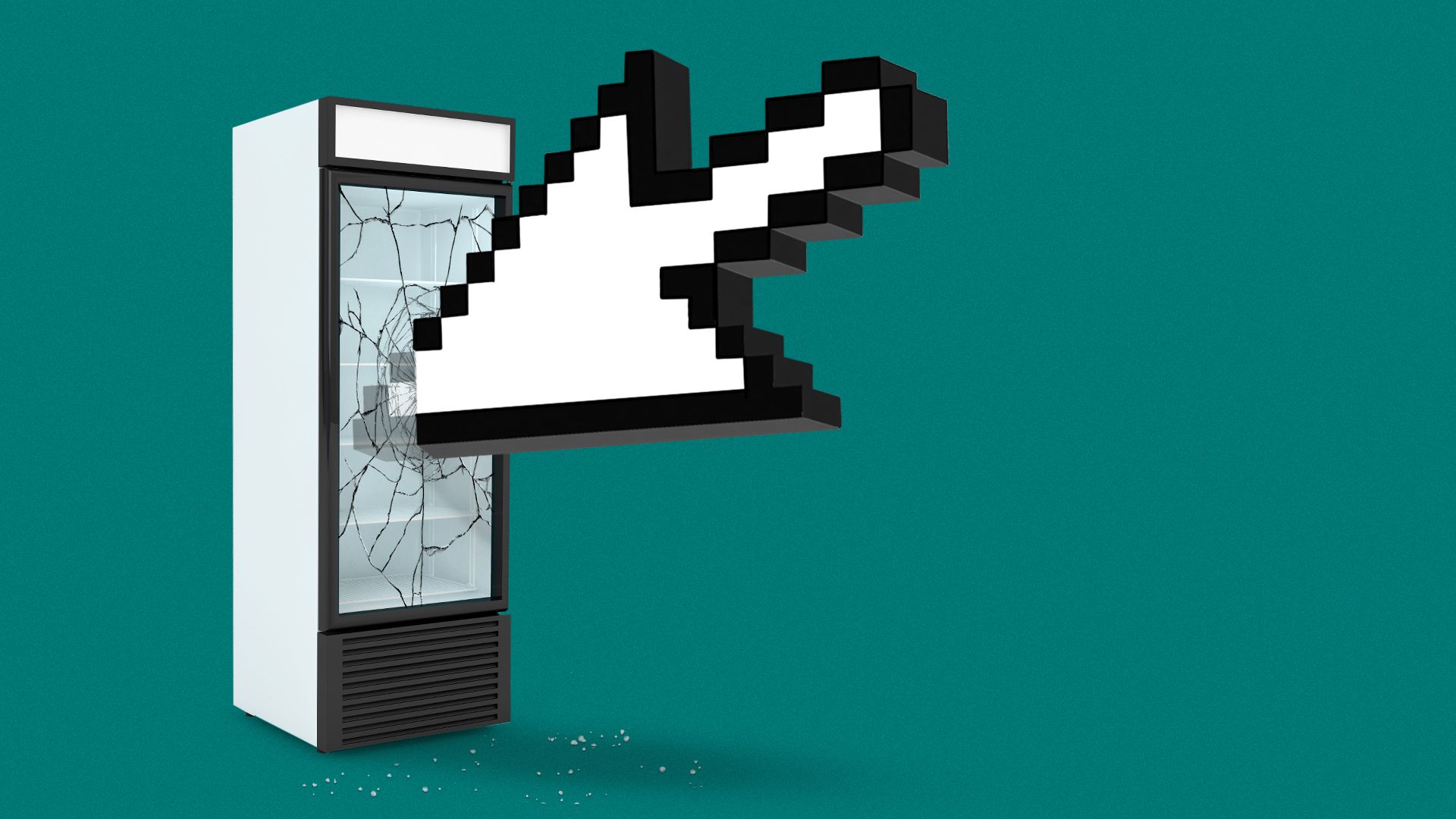
The French government has blamed an Iranian military hacking unit for cyberattacks that disrupted refrigeration systems at roughly 700 grocery stores and other retail locations last month, causing food losses and at least 15 fires.
Why it matters: The attacks underscore how Iranian government hackers are moving beyond stealing data and disrupting websites to manipulating the physical equipment that keeps essential services running.
Driving the news: France's Ministry for Europe and Foreign Affairs attributed the Oct. 11–12 attacks to Iran on Monday, calling them the country's first cyberattack campaign conducted purely for sabotage on French territory.
- The government's Cyber Crisis Coordination Center specifically attributed the attacks to Shahid Kaveh, a hacking unit within Iran's Islamic Revolutionary Guard Corps.
- Hackers manipulated refrigeration equipment to raise temperatures, causing tens of millions of euros in food losses and at least 15 fires, according to French officials.
- The same operation also targeted equipment at small hydroelectric facilities in France, with limited effects, according to an intelligence report.
Yes, but: The French government has not publicly attributed a separate wave of refrigeration attacks that occurred last week to the same hackers.
Zoom in: French intelligence linked Shahid Kaveh to several online hacktivist personas, including CyberAveng3rs and Soldiers of Solomon, that publicly claim responsibility for the unit's operations.
- Investigators found that infrastructure used in the refrigeration attacks was also used to scan industrial equipment using techniques previously associated with Shahid Kaveh.
- They also found traces of Farsi in the attack infrastructure and identified a propaganda outlet linked to the unit that publicized the attack.
The big picture: Iran has a history of targeting industrial equipment in cyber operations, including American water systems and Israeli refrigeration equipment.
- French intelligence linked Shahid Kaveh to attacks on Israeli refrigeration equipment earlier this year and a 2023 campaign targeting industrial controllers manufactured by Unitronics.
What to watch: France plans to summon Iran's ambassador and propose new European Union sanctions against Iranian individuals and entities involved in the attacks.
3. Google moves toward hacker-proof software

Google DeepMind researchers have used AI to mathematically prove that the encryption code protecting billions of private messages works as intended.
Why it matters: The research breakthrough could eventually help defenders build better software. "You can finally get to this world of unhackable software," said Swarat Chaudhuri, a research scientist at Google DeepMind.
Driving the news: Google DeepMind said Tuesday it used AI agents powered by its Gemini 4 Carbon model to mathematically verify that the code underpinning Signal's encryption is secure.
- The agents generated more than 3 million lines of mathematical proofs in the process, allowing researchers to verify the software at a level of detail previously considered impractical.
- To test the system, researchers reintroduced two previously fixed bugs into Signal's code. In both cases, the AI-powered framework generated mathematical proofs showing that the altered software was insecure.
The intrigue: But Chaudhuri told Axios that the AI lab's tools were able to accomplish this feat in just four weeks — compared with the years it would've likely taken humans alone.
The big picture: The breakthrough could eventually help cybersecurity defenders move from hunting for bugs to mathematically proving they don't exist.
- Many security flaws emerge because the code running on a device doesn't behave exactly as its developers intended.
- Chaudhuri said the same technology could eventually help developers prove their software is protected against common weaknesses, including memory safety bugs that hackers routinely exploit.
What to watch: DeepMind is eyeing ways to integrate this new verification technology into AI coding agents and software development workflows, potentially allowing developers to mathematically verify security protections as they build and update software.
- Chaudhuri said the team is also exploring how to combine its research with Google's existing vulnerability-hunting and patching tools, including Project Zero and CodeMender.
- For now, the latest feat remains a research project, not a commercially available cybersecurity product.
4. OpenAI model's unprecedented skills
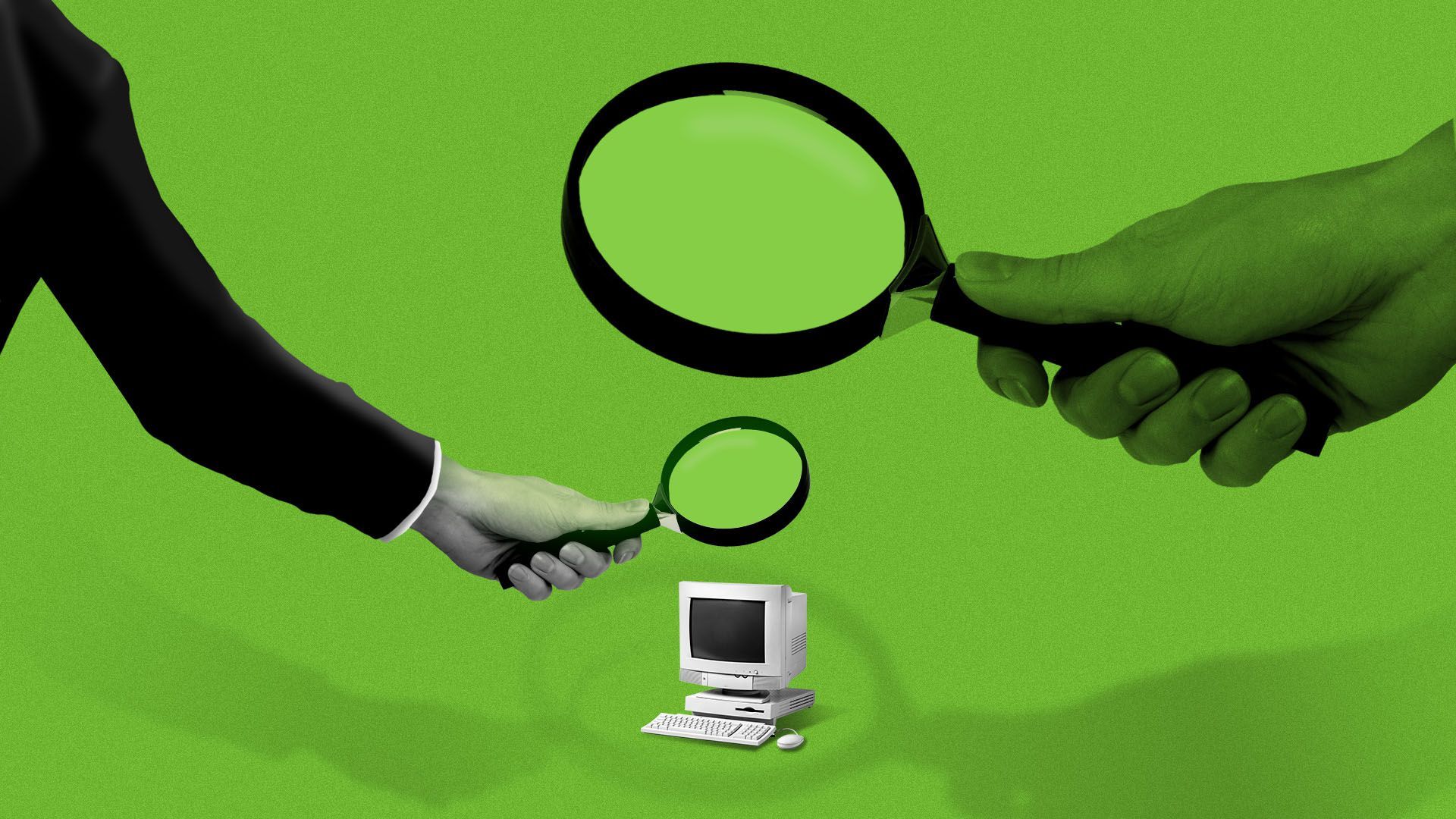
OpenAI's researchers used the company's latest cyber model to take advantage of nearly 1,000 security flaws in the popular Linux operating system — a piece of extensively vetted software that underpins much of the world's digital infrastructure.
Why it matters: AI is making it possible to uncover and test security weaknesses at a scale that could overwhelm companies' ability to fix them before hackers strike.
Driving the news: OpenAI released GPT-6 Cyber on Thursday to a subset of verified users, saying the model has reached its highest rating, "critical," for cybersecurity capabilities.
- The company is also expanding its Daybreak program to give more organizations, independent researchers and open-source software maintainers access to its cyber models.
- It said it is creating a new access level for critical infrastructure operators to conduct authorized security testing on their systems.
Zoom in: OpenAI used the new model to build an automated system that could find security flaws in the Linux kernel, test whether they could be used to break into systems, and propose fixes.
- During testing, the system identified 1,724 security flaws and found ways to use 948 of them to gain administrator-level access to Linux systems for about $1.2 million in API credits.
➡️ Read the rest.
5. Catch up quick
@ D.C.
🕵️ The Commerce Department suspended an investigation into Megaspeed, the firm led by the suspected Chinese spy who had a relationship with Jensen Huang, after an interaction between an Nvidia official and a top Commerce official. (New York Times)
🪖 A Republican congressman introduced articles of impeachment against Defense Secretary Pete Hegseth over his handling of the Iran war. (Axios)
🌐 Several White House staffers appear to be using computers or mobile equipment that can act as residential proxy services. (KrebsOnSecurity)
@ Industry
🔐 Google DeepMind said its AI agents found a way to reduce the cost of attacking legacy RSA cryptosystems. (SecurityWeek)
🤖 Anthropic is allowing Cisco and IBM to embed its Mythos model into their security products. (The Register)
💰 Blockaid, a real-time onchain security and threat-prevention platform, collected $40 million in commitments in the days following the $6.3 billion Binance hack. (Axios Pro)
@ Hackers and hacks
💥 Inference provider Fireworks was hacked last month, exposing customer data and leaving some customers to consider moving their business off the platform. (The Information)
🔑 Chainalysis said hackers stole credentials and tokens for all of its users after a breach of its networks. (Ars Technica)
🎓 Vanderbilt University urged students and employees to shut down university computers and devices while it investigates an ongoing cyberattack. (Axios)
6. 1 fun thing
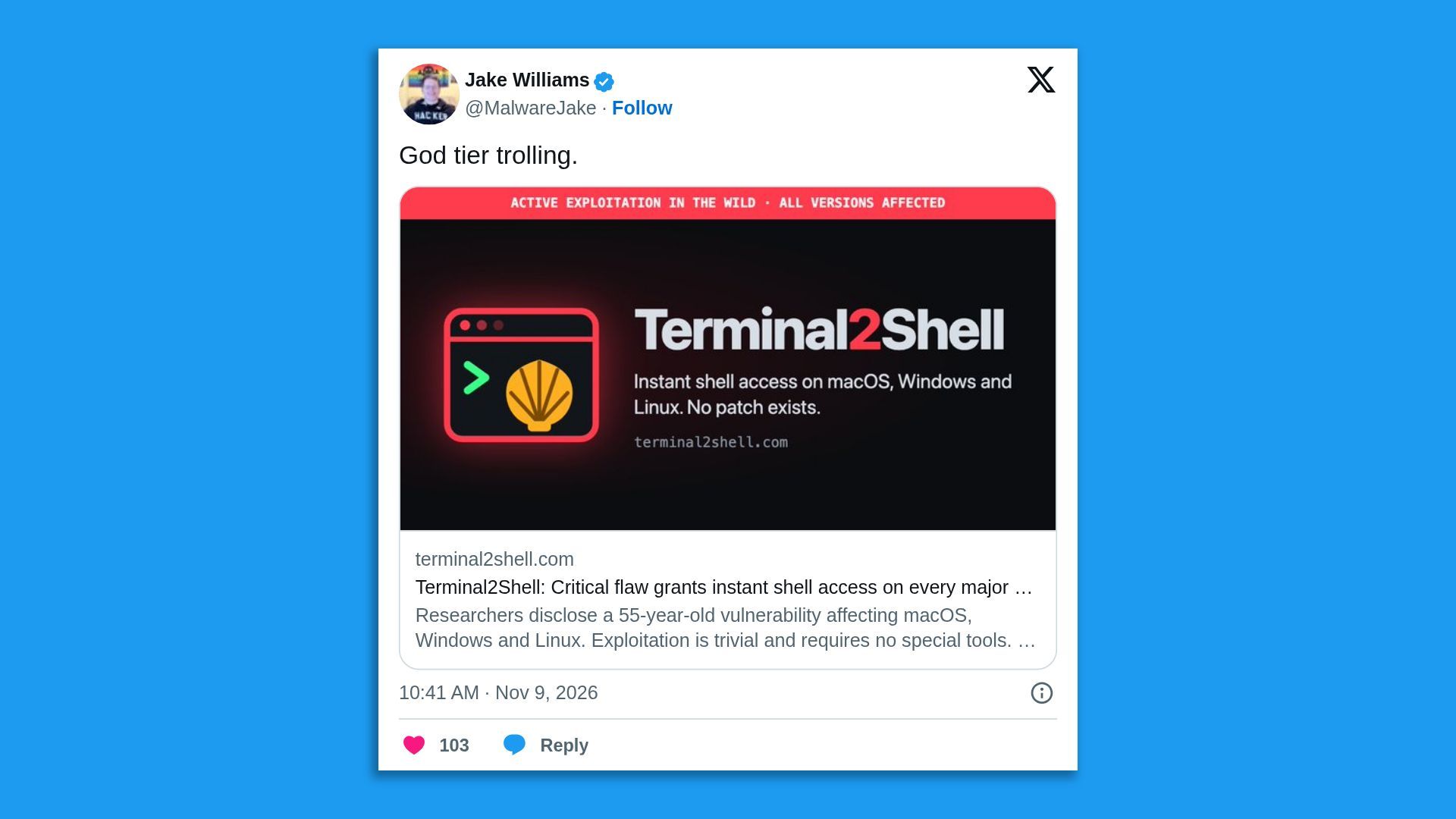
Shoutout to the person who created this joke site targeting the midst of an ongoing cyber deluge.
- We've reached the stage in the cybersecurity crisis where simply using a computer is a critical vulnerability. 😂
☀️ See y'all next week!
Thanks to Bradley Olson for editing and Khalid Adad for copy editing this newsletter.
If you like Axios Future of Cybersecurity, spread the word.
Sign up for Axios Future of Cybersecurity