Axios Future of Cybersecurity
April 14, 2026

Happy Tuesday! Welcome back to Future of Cybersecurity.
📬 Have thoughts, feedback or scoops to share? [email protected].
🚨 Situational awareness: Rep. Eric Swalwell (D-Calif.), ranking member of the House Homeland Security Committee's cyber subcommittee, is resigning from Congress following the launch of an Ethics Committee probe into allegations of sexual misconduct by four women. Swalwell has denied the allegations.
Today's newsletter is 1,494 words, a 5.5-minute read.
1 big thing: Funding cuts, political battles muddy Trump's response to Mythos

Anthropic's new Mythos Preview model could bring huge security advancements to under-resourced critical infrastructure sectors, like water systems and gas suppliers, that have struggled to update their technology stacks.
Friction point: The U.S. government, which typically acts as a coordinator between major tech vendors and those utilities, is in a huge fight with Anthropic.
- The government also spent the last year cutting resources at the Cybersecurity and Infrastructure Security Agency, the federal cybersecurity agency that would lead these efforts.
The big picture: It's a matter of when, not if, malicious hackers will get their hands on some of the advanced hacking capabilities that models like Mythos Preview possess.
- Water, energy, transportation and communications are some of the biggest targets for adversarial hackers, including cybercriminals and state-backed groups.
Driving the news: The Trump administration has reportedly held calls with major tech and cybersecurity CEOs to discuss the advanced cyber capabilities of models like Mythos Preview.
- National cyber director Sean Cairncross is leading the administration's efforts to respond to security threats posed by the latest AI models, per the Wall Street Journal.
- Anthropic unveiled the new model last week, noting it had found serious security flaws in nearly every operating system during testing.
- To keep the model out of the hands of malicious hackers, the company has decided to give access only to a hand-picked group of technology and cybersecurity companies. Anthropic also briefed government partners, including CISA and the National Institute of Standards and Technology, a company official said.
Reality check: Touching the topic has become a hot potato for Trump officials given the ongoing, politically charged fight with Anthropic.
- Several sources declined to weigh in due to the pending litigation over President Trump's decision to designate Anthropic a supply chain risk.
The big picture: Typically, CISA would take a leading role in determining the ways a new AI model like Mythos could benefit critical infrastructure organizations' security defenses.
Yes, but: The Trump administration has slashed the agency's funding, staffing and resources and has proposed more cuts next year.
- The administration's nominee to run CISA has been in limbo in the Senate for more than a year.
- CISA declined to comment on Mythos. The Office of the National Cyber Director did not respond to several requests for comment.
What they're saying: "This is not just a technical opportunity but a strategic imperative," Jen Easterly, former CISA director, wrote in a post about Anthropic's Mythos Preview rollout.
- "CISA, as both America's Cyber Defense Agency and the National Coordinator for critical infrastructure security and resilience, could play a critical coordinating role."
The intrigue: Patching operational technology devices — the technology that sits on a cargo ship or cell tower and helps it run — isn't as easy as running a software update, Chris Grove, director of cybersecurity strategy at Nozomi Networks, told Axios.
- "Security has generally been like a game of cat and mouse," Grove said. "Now, [AI] puts the cats and the mice on caffeine."
Between the lines: Even as the White House convenes industry meetings, turning those conversations into actual policy will be a heavy lift that requires agencies like CISA and NIST, Jake Braun, former deputy cyber director at the White House, told Axios.
- "Engagement for engagement's sake is usually a huge waste of time," Braun said. "Ideally they also have a back-end apparatus of people who are taking the do-outs from those meetings and synthesizing all of them into broader policy analysis and talking to operators to understand how these things would actually manifest in the real world."
- Government agencies can help critical infrastructure organizations determine how exactly they should shore up their defenses, Ellen Boehm, senior vice president of strategy and AI innovation at Keyfactor, told Axios.
Zoom in: The Operational Technology Cybersecurity Coalition, an industry group of cybersecurity companies, infrastructure operators and policymakers, is already working with member companies to develop AI guidelines and principles, executive director Tatyana Bolton told Axios.
- "In the face of AI-driven threats, silos and human speed are luxuries we can no longer afford," Bolton said. "The federal government and the private sector have to move as one."
- She added that the Office of the National Cyber Director should step in to help critical infrastructure organizations that don't have the resources to fend off the increasingly volatile threat landscape.
What to watch: Critical infrastructure security firms don't appear to have a strong presence in Anthropic's limited rollout of Mythos Preview, but some are already clamoring to get access to the model.
- The Treasury Department is also seeking access to Anthropic's model, according to Bloomberg.
2. Iran hackers escalate threats to utilities
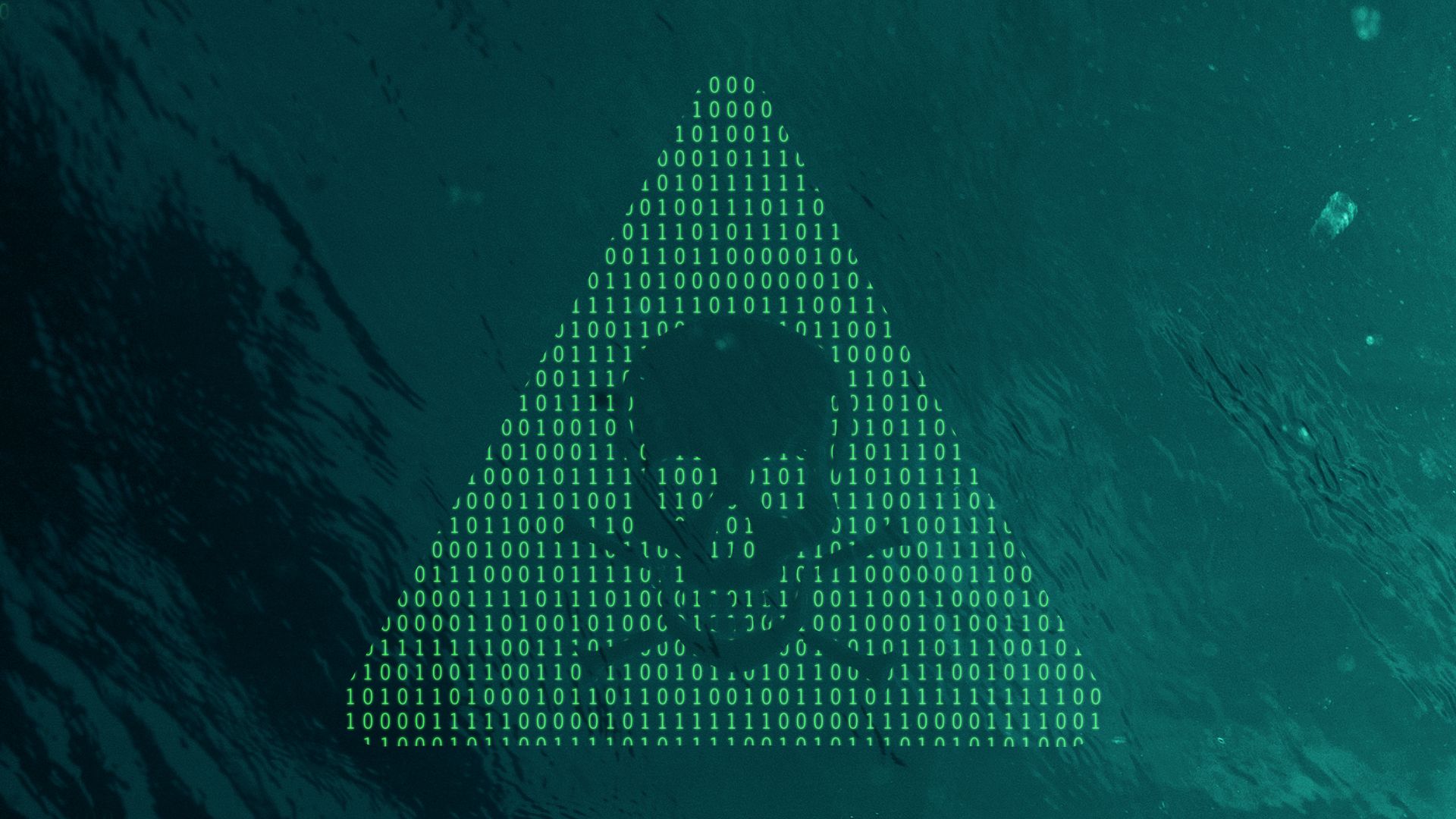
Alarm bells are getting louder — and harder to ignore — about the possibility of a cyber physical attack on U.S. critical infrastructure.
Why it matters: Lights could go out. Factories could pause production. Water supplies could be tainted.
Driving the news: CISA warned that Iran-linked hackers are actively attacking the water and energy sectors through internet-facing systems found in their operational technology devices that operate their physical equipment.
- The attacks include those on Rockwell Automation's Allen-Bradley programmable logic controllers, which are industrial computers that automate manufacturing processes, machinery and robotics.
- It's possible controllers from other equipment manufacturers are also being targeted, the agency warned.
The big picture: Iran-affiliated hackers are carrying out these attacks even before the advanced bug discovery and exploit writing capabilities in Mythos and similar models become widely available.
- "Organizations should be planning for sustained volatility in both supply chains and digital infrastructure," Justin Rude, senior intelligence analyst at Flashpoint, said.
Threat level: Hackers are likely to target an organization with ransomware or through an attack on its third-party suppliers or cyber-physical systems, analysts at Gartner warned in a recent note shared with Axios.
- They recommended security leaders map out their supply chains, take inventory of Internet of Things and operational technology devices in their environments, and coordinate with other C-suite leaders to determine top business priorities in the event of a disruptive cyberattack.
What to watch: Pro-Iran hacking group Ababil of Minab claimed responsibility last week for a cyberattack on the Los Angeles County metro system.
3. 2025: Year of the investment scam


Consumers lost more than $8.6 billion to investment scams in 2025, according to the FBI's annual internet crime report, released last week.
Why it matters: Scammers aren't doing much to advance their tactics, but they're bringing in more than ever from their schemes.
By the numbers: Consumers lost a total of $20.9 billion to internet crimes in 2025, a 26% increase from 2024.
- The biggest share of that was lost through investment scams, where fraudsters lure people in with fake investment offers and promises to make a return on their investment.
- Consumers lost $3 billion to business email compromise, where a criminal poses as someone a victim regularly interacts with, and $2.1 billion to tech and customer support scams.
Between the lines: In some cases, AI appears to be amplifying these scams — and the FBI says that 4% of losses, or $893.3 million, was lost in AI-related incidents.
4. Catch up quick
@ D.C.
⛓️💥 The FBI has found a way to extract copies of incoming Signal messages from an iPhone even after the app was deleted, according to testimony given in a recent trial. (404 Media)
🧑🏻⚖️ The nation's intelligence court has re-approved the surveillance program authorized through Section 702 of the Foreign Intelligence Surveillance Act for another year as Congress debates new privacy measures. (New York Times)
💸 The private sector is actively bidding to be part of the growing U.S. government market for offensive cyber capabilities. (Nextgov)
@ Industry
📉 Software stocks took a turn for the worse as Anthropic unveiled Mythos. (Axios Pro)
📚 A consortium of former government officials and cybersecurity leaders weighed in on a new paper laying out a unified strategy for responding to Mythos' threats. (Cloud Security Alliance)
💰 Flock Safety, the controversial surveillance tech provider, is raising $275 million at a $7.5 billion valuation. (Axios Pro)
@ Hackers and hacks
👀 A hacker has allegedly stolen more than 10 petabytes of sensitive information from a state-run Chinese supercomputer. (CNN)
⚠️ OpenAI said Friday it was affected by the Axios npm supply-chain attack and will soon stop supporting older versions of some MacOS applications as a precaution. (Axios)
📲 Researchers have uncovered several Telegram groups and channels where thousands of men advertise and sell hacking and surveillance services to harass the buyers' friends, loved ones and former partners. (Wired)
5. 1 fun thing
📺 I really enjoyed this WSJ video that helps people figure out whether their devices are part of a botnet!
☀️ See y'all next week!
Thanks to Dave Lawler for editing and Khalid Adad for copy editing this newsletter.
If you like Axios Future of Cybersecurity, spread the word.
Sign up for Axios Future of Cybersecurity