Axios Future of Cybersecurity
September 23, 2025

Happy Tuesday! Welcome back to Future of Cybersecurity.
📬 Have thoughts, feedback or scoops to share? [email protected].
Today's newsletter is 1,479 words, a 5 ½-minute read.
1 big thing: Cybersecurity 101 still applies in the AI world

In the hype cycle of AI development, one thing still rings true for security professionals: securing AI doesn't look any different from securing any other enterprise software tool.
Why it matters: AI is already amplifying and automating many of the cyber threats that businesses face on a day-to-day basis. Making the wrong investments in tools to fend off these threats could be a costly mistake.
The big picture: Many of the biggest AI-driven cyber threats seen today are amplifications of longstanding security issues.
- Hackers recently targeted widely used agent Salesloft Drift by compromising authentication tokens and using them to log into systems. The attack started with a hacker gaining access to a GitHub repository.
- In July, researchers found that chats with McDonald's AI hiring bot were exposed because the administrator's password was still the default "123456."
- Earlier this year, researchers also found that hundreds of Model Context Protocol servers, which help connect AI models to their data sources, were misconfigured — making them easy targets for cyberattacks.
Between the lines: Securing against each of these cases requires basic cybersecurity tools that companies are already investing in — such as insider threat monitoring, zero-trust frameworks and multifactor authentication (MFA).
- The problem with securing AI tools is that enterprises aren't treating them with the same level of rigor that they apply to human accounts, cloud infrastructure and enterprise software, Anton Chuvakin, senior staff consultant in Google Cloud's Office of the CISO, told Axios.
- "This problem isn't new, it's just faster," he said.
State of play: Currently, bad actors are predominantly using AI just to amplify existing tactics, such as writing phishing emails, researching targets and creating new malware strains.
- "AI is lowering the entry bar for a threat actor," said Vikram Thakur, technical director at Symantec, a division of Broadcom. "They don't need to know how to code. They don't need to know how to harvest somebody's email address from the web. They can essentially just go through a public system and make them do all the hard work."
Reality check: The tools to defend against these threats already exist — and cybersecurity vendors and startups are increasingly rolling out new tools to help defenders keep up with the onslaught.
- Last week, CrowdStrike introduced new phishing-resilient MFA to help secure both human and AI agent identities.
- Both Microsoft and Google have rolled out agents to help defenders, including agents that can help triage phishing reports and detect zero-day bugs on their networks.
- Symantec has been building tools to better predict which new threats could target a company's networks, Thakur said.
Yes, but: Advancements in the AI threat landscape are coming, and experts warn that no one really knows what AI tools will be capable of a year from now.
- Cyber veterans have warned that hackers will soon be able to tap AI tools to find new zero-days and customize their attacks for each company at scale.
- Researchers are already using LLMs to create ransomware that can fully automate attacks and are finding evidence that the models can help create polymorphic malware.
2. Sen. Rand Paul pushes key cyber law to the brink
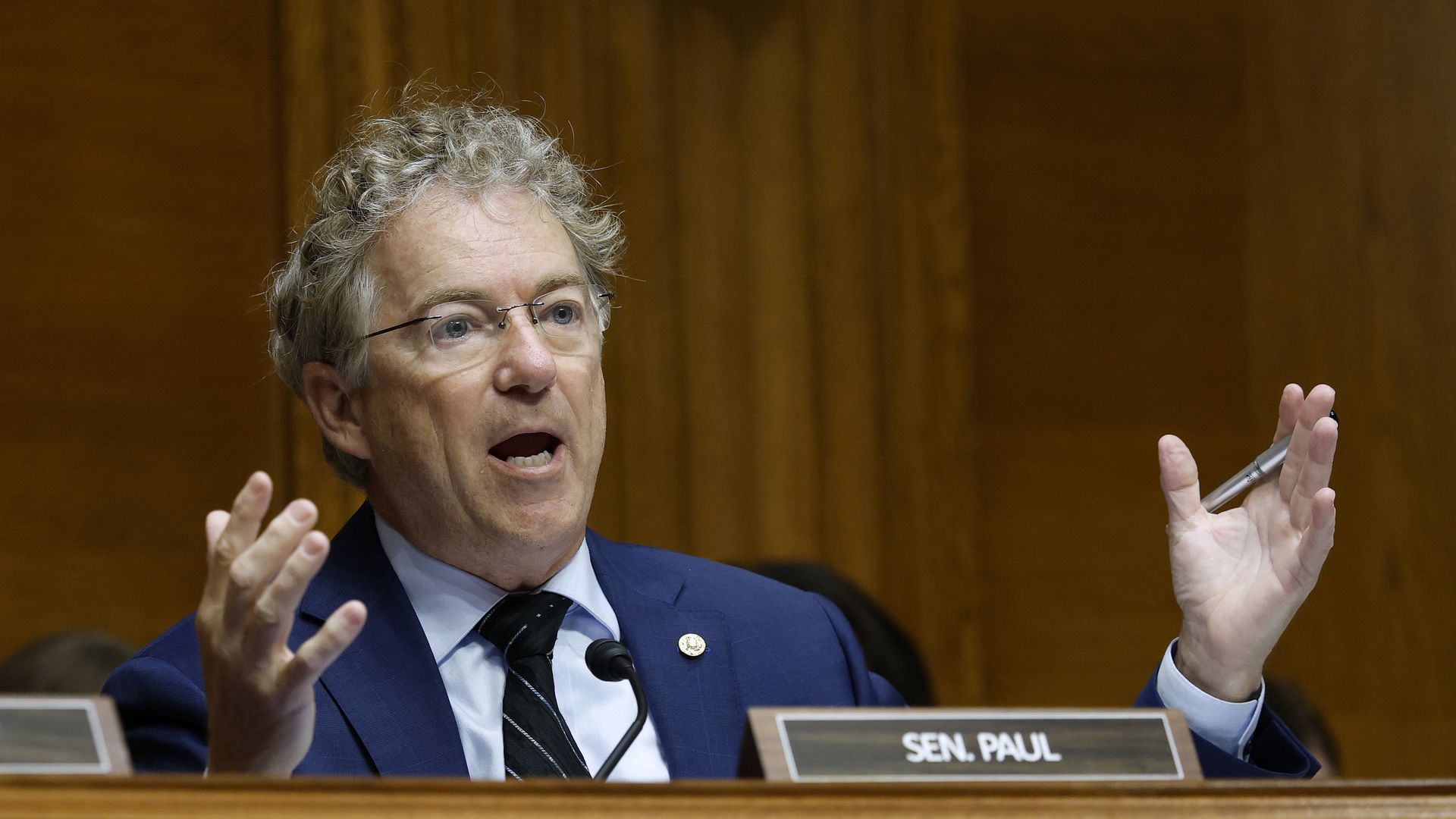
A key cybersecurity law with broad bipartisan backing is in danger of expiring because of last-minute demands from Sen. Rand Paul (R-Ky.), who seems reluctant to engage with the private sector or other committee members on the issue, congressional aides from both parties tell Axios.
Why it matters: The authorities that expire in late September underpin most information sharing on cyber threats between the private sector and the U.S. government.
- If they lapse, that trading of information could cease next month, lawmakers and private sector executives have warned.
Driving the news: The Senate Homeland Security Committee canceled a markup planned for Thursday on a bill that Paul, the committee's chair, was introducing that would make major changes to the Cybersecurity Information Sharing Act of 2015.
- The law provides liability protections for companies that share threat intelligence with the U.S. government, including information that might suggest their own security was lacking.
- Paul's draft bill, obtained by Axios, has proposed removing liability protections for companies if their security incidents are found to have violated their own user agreements and privacy policies.
- That's caused an uproar among industry sources who say those last-minute changes threaten to completely undermine the 10-year-old program.
The intrigue: The law has the public support of senior Trump administration officials and was expected to be renewed without much of a fuss before Paul's interventions.
- Senate aides, who requested anonymity to discuss sensitive legislative negotiations, tell Axios the rest of the committee was clued into the proposed changes only two weeks ago.
- The aides describe the negotiations since then as one-sided, with Paul's office appearing closed off to making concessions.
- They don't expect the committee to reschedule the canceled markup before the Sept. 30 deadline.
Friction point: The aides argue Paul's office is trying to unilaterally rewrite a law against the desires of the administration and other Republican lawmakers.
- A House aide, who also requested anonymity to speak freely, added that the key provisions of the law have the backing of "most members of Congress, industry leaders, the privacy community, and state and federal government partners," regardless of party.
The other side: A spokesperson for Paul told Axios: "We dispute the characterization that we have not been open to changes, and any assertion otherwise is false."
3. Open-source players call for funding reforms
Stewards of some of the biggest open-source repositories are calling for urgent changes to how the tech community maintains and funds these projects in an open letter published today.
Why it matters: Increasing traffic from generative AI tools is putting a strain on the open-source software that underpins the worldwide web.
Driving the news: The Open Source Security Foundation (OpenSSF), a project of the Linux Foundation, published an open letter calling for the community to find new ways to fund the open-source projects and ensure they're secure against hackers.
- Several high-profile repositories — including Sonatype's Maven Central, the Python Software Foundation and OpenJS Foundation — have already signed onto the letter.
The big picture: Open-source code and software is used to power many of the most trivial aspects of the modern internet.
- Common open-source projects are used for tasks like logging who is accessing what on a network, compressing files, and even signing into an online account.
- However, many of these projects are overseen by nonprofits and volunteer collectives that don't have the bandwidth to investigate and patch every vulnerability reported to them.
Between the lines: The Biden administration's efforts to establish a foundation for funding and maintaining open-source infrastructure have fallen apart after top Cybersecurity and Infrastructure Security Agency officials left office and tech companies turned their energy to generative AI projects, according to a Cybersecurity Dive report.
Zoom in: The letter calls for stakeholders to invest in new ways to fund open-source infrastructure "in proportion to usage or in exchange for strategic benefits."
- Signatories also want to see the open-source community look into tiered access models that would still allow the general public to access these tools for free but would also consider more "scale performance or liability options for high-value consumers."
What to watch: CISA is still awaiting Senate confirmation of its new director — but once political staff arrive, it's possible the agency will reinvest efforts into securing open-source software.
4. Catch up quick
@ D.C.
🪖 The Defense Department is looking at ways to potentially consolidate its cyber enterprise, which is made up of more than 400 organizations and has upward of 60,000 personnel and contractors. (DefenseScoop)
🌎 CISA says it wants more international participation in the Common Vulnerabilities and Exposures (CVE) program. (Nextgov)
👀 Foreign adversaries have been amplifying news content and social media posts about the killing of Charlie Kirk to sow distrust. (Politico)
@ Industry
📈 Lightspeed Venture Partners' investment in cloud cybersecurity company Netskope is now worth more than five times its original value after its U.S. IPO last week. (Bloomberg)
@ Hackers and hacks
🚔 The United Kingdom arrested two teenagers suspected of being members of the Scattered Spider cybercrime collective and participating in last year's hack of the Transport for London. (The Record)
🎣 Microsoft seized nearly 340 websites tied to a phishing-as-a-service outfit based in Nigeria and that was responsible for attacks that stole at least 5,000 Microsoft user credentials. (Reuters)
⚠️ VC firm Insight Partners notified thousands of people, including its limited partners, that their personal information was stolen during a ransomware attack last year. (TechCrunch)
5. 1 fun thing
📺 👀 Now that it's been nearly a week: If you have thoughts on the end of "The Summer I Turned Pretty" Season 3, I'm all ears.
☀️ See y'all next week!
Thanks to Dave Lawler for editing and Khalid Adad for copy editing this newsletter.
If you like Axios Future of Cybersecurity, spread the word.
Sign up for Axios Future of Cybersecurity