Axios Des Moines

September 14, 2026


👋 Good Monday morning.
- Today, we're taking a closer look at Parkinson's disease — from the Iowans living with it to the research, risks and policy questions that hit close to home.
🌧️ Today's weather: Rain with a high of 82 and a low of 67.
🎂 Happy birthday to our members Deanna Clingan-Fischer, Scott Miller, Lynsey Oster and Sheila Nelson!
Today's newsletter is 953 words — a 3.5-minute read.
1 big thing: Exposure may shape Parkinson's

People with Parkinson's disease who were exposed to pesticides at work may experience more severe symptoms than those who weren't, according to new research.
Why it matters: The findings could sharpen scrutiny of pesticides in Iowa, which has both heavy agricultural pesticide use and thousands of Parkinson's cases.
Driving the news: Occupational pesticide exposure was associated with worse motor function and some non-motor symptoms, according to a study published last month in NPJ Parkinson's Disease, a peer-reviewed scientific journal.
- Anxiety, daytime sleepiness and sleep disturbances were among the symptoms associated with exposure.
Between the lines: Researchers say the findings show an association, not a cause-and-effect relationship.
State of play: The study analyzed more than 9,000 people with Parkinson's.
- It doesn't prove pesticides caused the symptoms, and researchers found no consistent evidence that exposure accelerated the disease's progression.
The big picture: For decades, Iowa has been at the center of research into pesticides and Parkinson's.
- While much previous research has examined whether pesticides are associated with the risk of developing Parkinson's, the new study focuses on symptom severity among people who already have the disease.
By the numbers: An estimated 20,000 Iowans have Parkinson's.
- Roughly 53 million pounds of pesticides were used in the state last year.
The intrigue: EPA says studies on paraquat, an herbicide some have linked to Parkinson's, have produced conflicting results and that it has not found a clear link to labeled uses.
The agency has announced it will host a roundtable on the issue but hasn't set a date.
What they're saying: The new study adds weight to concerns about pesticides and Parkinson's because similar findings are emerging through different research approaches, Anne Hubbard, chief public policy officer for the American Parkinson Disease Association, tells Axios.
What we're watching: How studies like this shape efforts in Iowa to restrict or ban herbicides such as paraquat.
2. Iowa senator pushes to ban paraquat

Iowa Sen. Art Staed (D-Cedar Rapids) has watched Parkinson's disease change nearly everything about his life, and now he's trying to keep other Iowans from potentially developing it, according to Midwest Newsroom.
Why it matters: He introduced a bill this year that would place Iowa in a growing national debate over paraquat, a widely used U.S. herbicide that some studies have linked to an elevated risk of Parkinson's.
- The bill never got a hearing, but it is part of a wave of similar efforts in statehouses nationwide.
State of play: Lawmakers in at least 10 states, including Missouri, Illinois, Minnesota and Michigan, proposed banning or restricting paraquat's sale or use this year. Three more states considered barring its use near schools.
- Only Vermont has enacted a statewide legislative ban.
- More than 70 countries have banned it outright, including every EU nation and China, which is also among the largest exporters of paraquat to the U.S., Midwest Newsroom reports.
The other side: Agricultural groups opposing restrictions say paraquat is an affordable and effective tool for farmers, including for drying soybeans before harvest, the Midwest Newsroom reports.
- The EPA describes it as "an important tool for the control of weeds" and says there are no direct one-to-one alternatives for some uses.
Yes, but: The EPA also classifies it as a restricted-use pesticide because of its toxicity and allows only trained, certified applicators to use it.
What they're saying: Staed, who announced his own Parkinson's diagnosis last year, says he's lost the ability to enjoy long walks and bike rides and now sometimes uses a wheelchair.
- "The difficult thing is to know there's no cure," Staed told Midwest Newsroom. "The hard thing is knowing it's not getting better."
What's next: He plans to reintroduce the ban in the 2027 session.
Read more: Gubernatorial candidates' views
3. The Ear: Tractor attention this way

💰 The DSM City Council is expected to vote on $12.5 million in proposed budget cuts. (WHO-TV)
🕋 Three former Drake University buildings are slated for redevelopment as part of a nearly $24 million, 121-unit apartment project. (DSM Register)
⛽ Record-high diesel prices are straining Iowa farmers' budgets as harvest season approaches. (KCCI-TV)
4. Parkin goes public, fundraising jumps
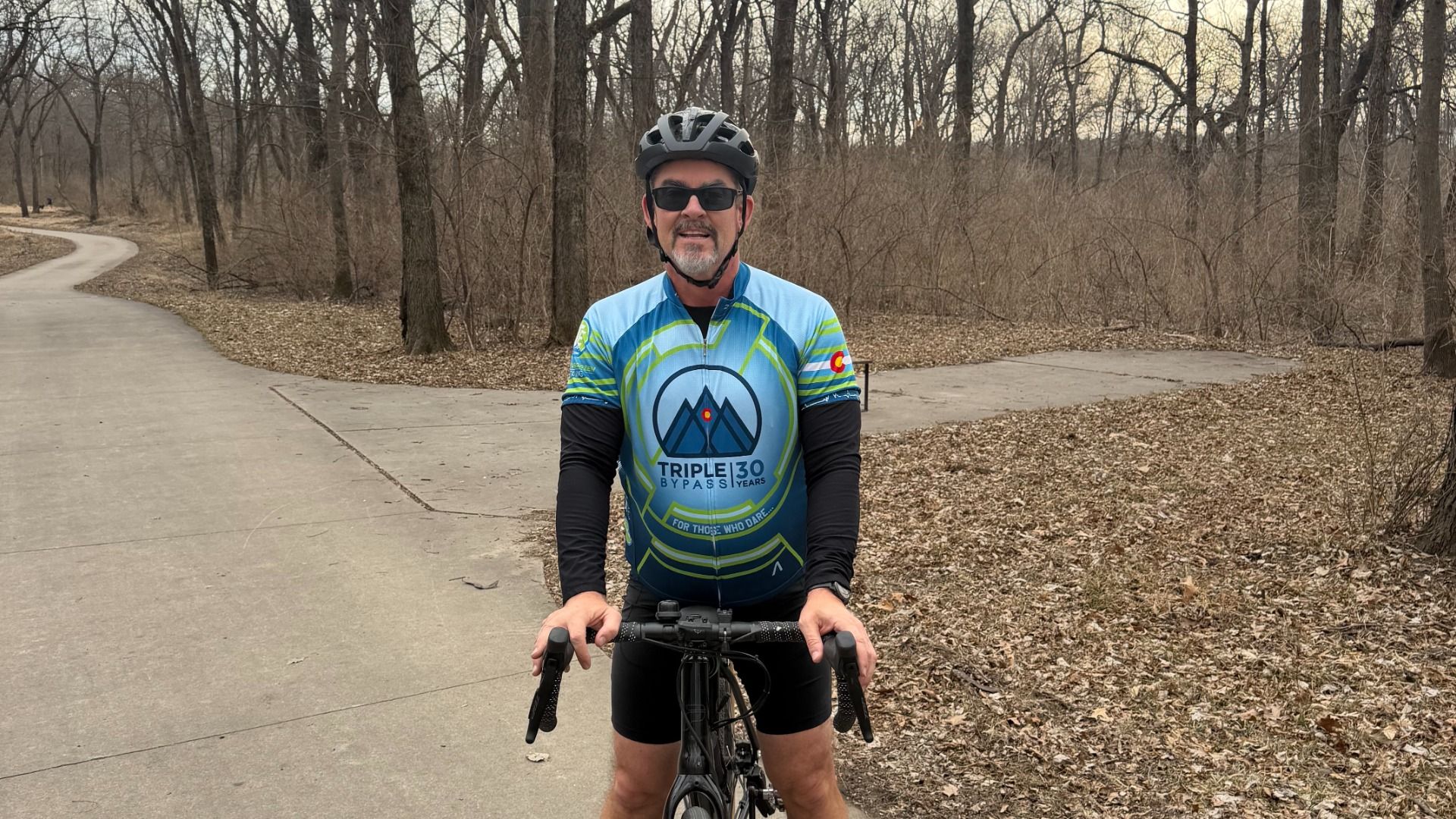
WHO 13 meteorologist Jason Parkin says going public with his Parkinson's diagnosis brought an outpouring of support — and organizers believe it has helped boost an upcoming Iowa fundraiser.
Why it matters: The Iowa Optimism Walk on Saturday is tracking ahead of last year in turnout and fundraising as demand for Parkinson's services continues to grow.
Driving the news: The American Parkinson Disease Association's Iowa chapter expects more than 1,000 walkers this year, up from just under 800 last year, executive director Shelly Charter tells Axios.
- Charter credits Parkin's public announcement for helping to raise awareness and participation.
What he's saying: Parkin tells Axios he was "very hesitant" to disclose his diagnosis but is glad he did.
- "People have been so kind," he says.
Zoom in: Money raised at the Iowa walk stays in the state to support exercise classes, support groups, educational events, referrals and social programs, Charter says.
What's next: Parkin, the walk's honorary chair, will help lead the Sept. 19 event at Walker Johnston Park in Urbandale.
- People can participate in the walk or donate to Parkin's fundraising team.
🧬 One interesting thing to go: University of Iowa researchers help manage and analyze data for the Michael J. Fox Foundation's global Parkinson's study.
- Their work helped validate a major Parkinson's disease biomarker in 2023.
Sign up for Axios Des Moines
