Axios Des Moines

April 28, 2025


Welcome to a special edition of Axios Des Moines, in which we explore data centers and their implications as they grow in our city, state and the Midwest region as a whole.
☔️ Weather: Thunderstorms and possible severe weather later today. High of 82.
🎂 Happy birthday to our Axios Des Moines member Denise Swartz!
Today's newsletter is 859 words — a 3.5-minute read.
1 big thing: The Midwest's data center boom
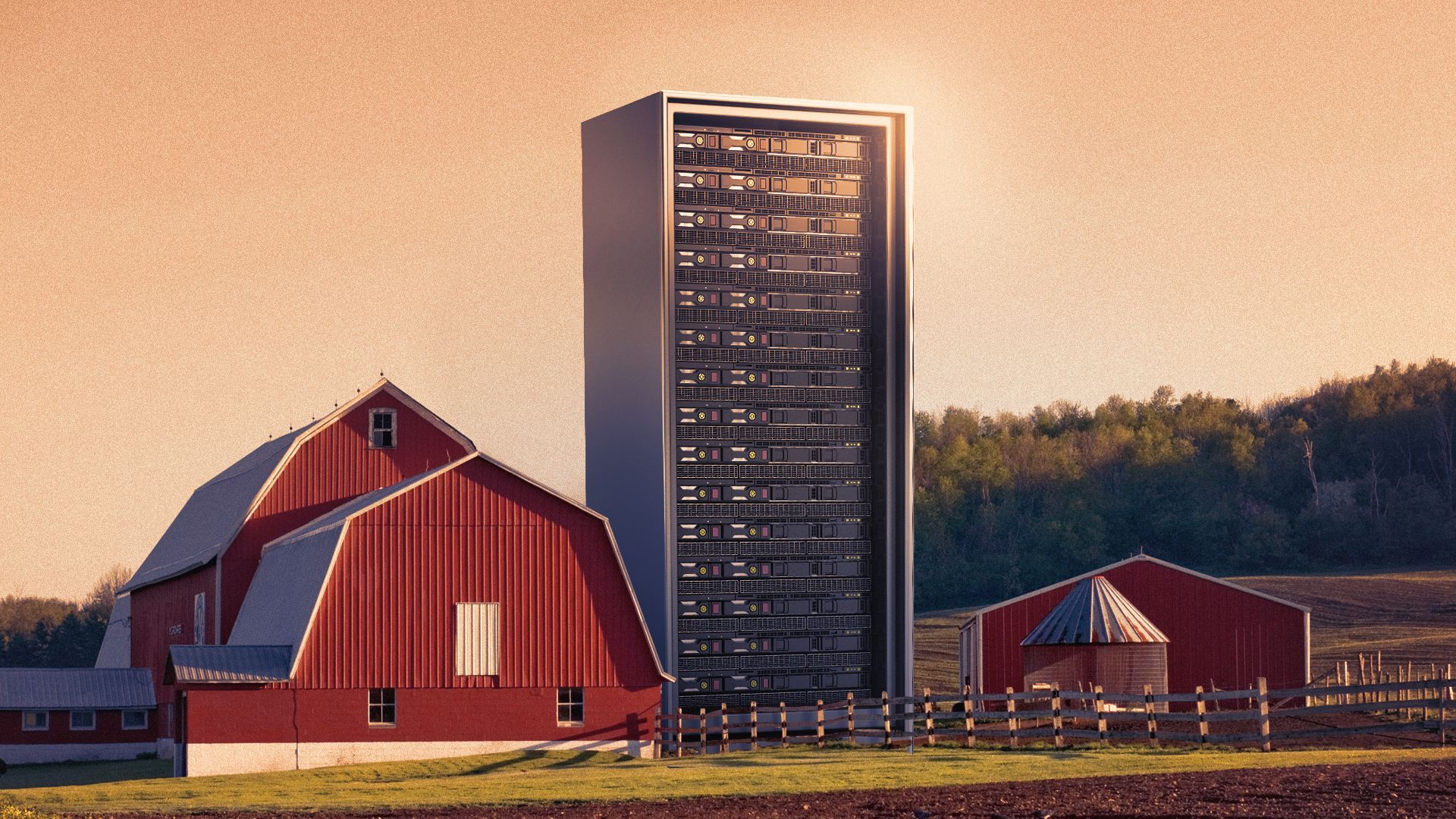
The Midwest is emerging as one of the nation's fastest-growing data center hubs, with development stretching from Kansas and Iowa to Great Lakes states like Ohio, Michigan, Indiana and Wisconsin.
Why it matters: Data centers power the AI boom — but their soaring energy and water demands often go unreported, with unclear benefits for local communities and few permanent jobs created.
- Data centers used 4.4% of U.S. electricity in 2023 and could consume up to 12% by 2028, per the Department of Energy.
- Data center construction is at an all-time high, increasing 69% year-over-year from 2023 to 2024, per CBRE, a commercial real estate firm.
State of play: Columbus, Ohio, and Chicago remain the region's primary data center markets. But companies are increasingly eyeing secondary cities like Minneapolis, Des Moines, and parts of Indiana, where land is cheaper and energy is more available, says Andy Cvengros of real estate firm JLL.
- The Midwest's abundant tax incentives are particularly appealing for companies, Jon Davis, a policy strategist for The Council of State Governments, tells Axios.
- Cooler Midwest temperatures and proximity to the Great Lakes reduce the need for energy-intensive cooling — an advantage over warmer southern states.
Yes, but: The expansion often happens behind closed doors.
- Local governments frequently sign nondisclosure agreements with tech firms, limiting public knowledge of energy and water usage, says Helena Volzer of the nonprofit Alliance for the Great Lakes.
- Fewer than one-third of data centers track water consumption, according to a 2021 study.
- "That is kind of startling," Volzer says.
2. Water and energy usage

Data centers house server farms that store our information, along with electrical equipment that gets hot, requiring 24/7 air cooling that annually uses millions of gallons of water as a refrigerant.
Yes, but: Their true water consumption is unknown, since most of them rely on municipal utilities, Volzer says.
Plus: Data centers also use a large amount of electricity, which requires generating water. However, water consumption is attributed to power plants rather than data centers, further obscuring their impact.
The big picture: Our world is growing increasingly digital, and the data needs to go somewhere.
- U.S. households had an average of 21 digital devices in 2023, per a Deloitte survey.
Zoom in: In Iowa, MidAmerican experienced 2.8% electricity demand growth in 2023 and 1.5% in 2024.
- That's expected to be higher in 2025, primarily due to data center growth, Geoff Greenwood, spokesperson for MidAmerican, said in an email.
- The company is proposing several projects to keep up with higher energy demands, particularly in the summers, including expanding its solar installations and constructing a natural gas-fired combustion turbine project in Adair County.
- If approved by the Iowa Utilities Commission, the projects could start generating energy as early as 2027.
Plus: MidAmerican will likely seek to add a small modular reactor to help meet long-term energy demands through the mid-2030s, Greenwood said.
What they're saying: Current energy usage and projected future usage are confidential, Greenwood said.
3. Municipalities weigh economic benefits
Attracting data centers from big tech names like Google, Meta and Amazon sounds appealing, but local leaders need to consider their economic priorities before offering incentives, says Peter Orazem, an economics professor at Iowa State University.
The big picture: If leaders' priority is jobs, there are better industries to compete for, Orazem says.
- But if they're counting on future property tax revenue, he says, the investment may be worth it.
Zoom in: Council Bluffs' $5.5 billion Google data center is one of the largest in the world, taking up 3 million square feet and receiving over $36 million in tax incentives.
- But it only employs 900 people — a small number considering the size of the project, Orazem says.
- However, Google has made other local investments, such as free, citywide Wi-Fi and a recent $1.3 million investment in clean water.
- It's up to local leaders to decide if they think it's worth it, Orazem says.
By the numbers: A 2023 state-commissioned report in Virginia, the country's data center hub, found the initial construction phase of a data center reaped positive economic benefits, but those fall off once the center is complete.
- Building a 250,000-square-foot data center employs up to 1,500 local employees for 12-18 months. But that declines to 50 full-time workers, half of them contracted.
The other side: A recent Data Center Coalition report touts the economic benefits of data centers beyond the jobs inside them.
- That includes bolstering supply chain businesses, employees' spending in the community, and companies' state and local tax contributions — which come without straining public services like schools.
Empower our Community

Become an Axios Des Moines member and fuel our mission to make readers smarter and faster on the news unfolding here.
Why it's important: The generosity of our members supports our newsroom as we work on the daily newsletter.
What's in it for you: Insider notes from the local reporters and other perks.
Thank you for trusting us.
4. Future technology
/2025/04/24/1745506177831.gif?w=3840)
Another caveat to data center discussions is that technology is always changing.
Between the lines: It can be difficult to accurately predict future energy demand because as time passes, systems are becoming more efficient, a 2020 study found.
- China's new energy-efficient ChatGPT rival, DeepSeek, is also complicating the situation.
- Companies shopping for land in multiple markets may also inflate demand while the market is hot.
What's next: Cooling systems that use refrigerants instead of evaporating water are already being developed, along with better ways of recycling water.
- Greener power sources such as on-site wind turbines and, perhaps eventually, small modular nuclear reactors may also alter the picture.
📬 How do you feel about data centers' growing presence? Or is there more that you want to know?
- Reply to this email and share your thoughts on this special edition.
Sign up for Axios Des Moines
