Axios Denver

May 26, 2021

💛 It's Wednesday, and it's great to see you.
- Today’s weather: Mostly cloudy and a high near 80°.
🎉 Big news: We’ve surpassed 100,000 subscribers! Our Axios Denver community crossed this amazing threshold in just 12 weeks.
- Thanks for all your support, and please don't forget to refer us to friends to win prizes! More details.
Today's newsletter is 947 words — a 4-minute read.
1 big thing: What’s changed in police training
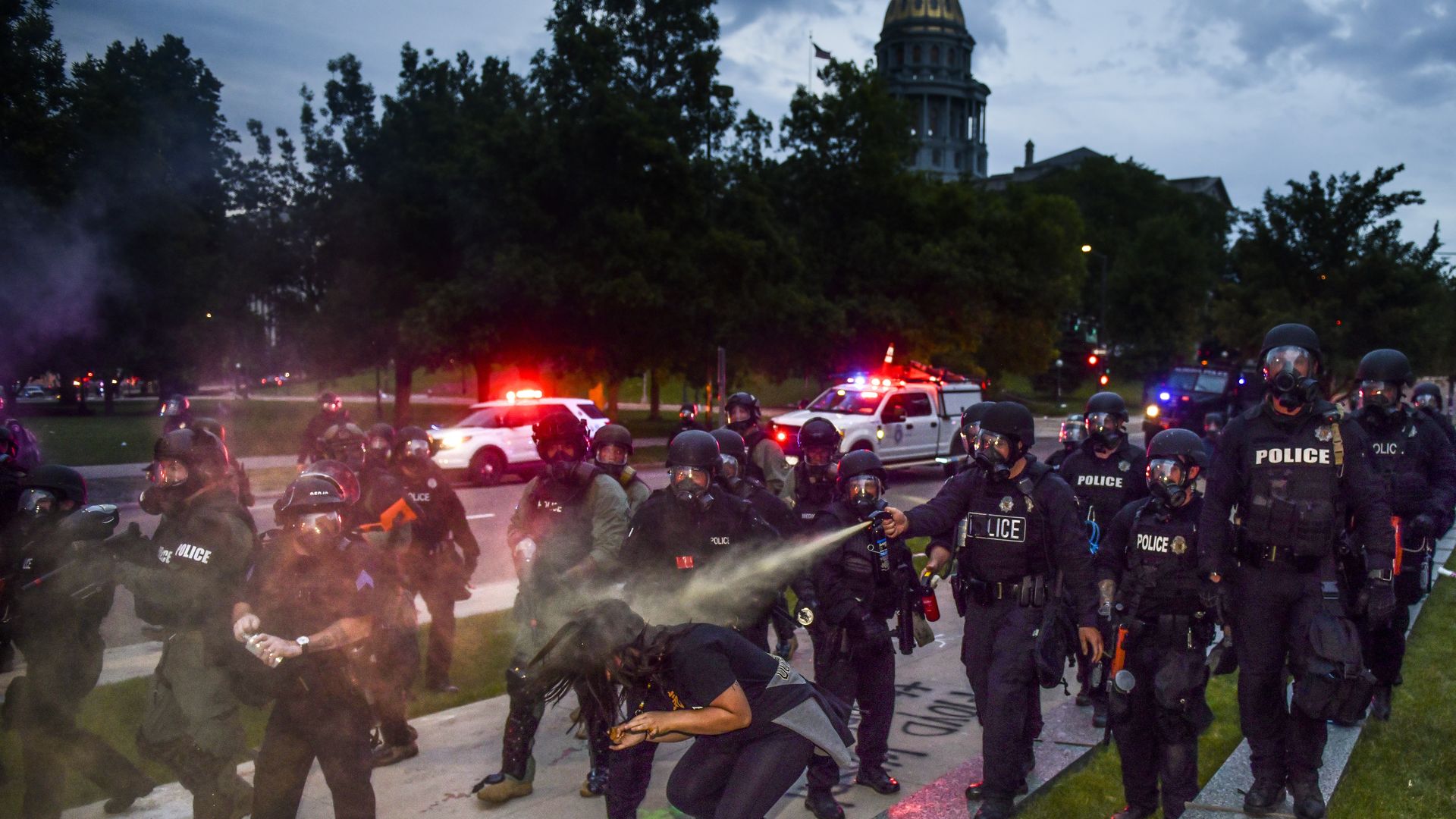
Police officers pepper-spray a person near the Colorado State Capitol during George Floyd protests last May in Denver. Photo: Michael Ciaglo/Getty Images
Police departments here in Colorado and across America have made moves toward better training since George Floyd’s murder — but experts say it could take years to have enough impact to prevent more needless deaths of people of color.
- "The problem has been, there are no national standards to show what the training should look like," Frank Straub, an expert on police training at the National Police Foundation, tells Axios’ David Nather.
- That leaves a patchwork of departments navigating new territory on their own.
Zoom in: Law enforcement agencies in Colorado have adopted new strategies designed to avoid the use of force and address implicit biases in various ways.
- In Denver, police are implementing crowd management training for any officer that could be put on the line amid civil unrest, including detectives, for the first time since 2008, division chief Joe Montoya tells Alayna.
- In Colorado Springs, the police academy is no longer teaching recruits neck restraints, spokesperson Natashia Kerr said.
- In Aurora, training has shifted from "paramilitary style" to a more academic focus that features community members who shed light on their culture and experiences with police. The Aurora Police Department has also doubled its scenario-based training, according to division chief Chris Juul.
The big picture: The state Department of Law’s Criminal Justice Division is exploring new ways to train all of Colorado’s 14,000 police officers to make better decisions amid high-pressure situations, Fox31 reports.
- The agency issued a request for proposals last month to kick-start a two-year, statewide Ethical Decision-making Under Stress training.
Between the lines: Even if every police department in the country adopted newer training techniques, experts say there's not a lot of evidence yet that they would change officers' behavior.
2. George Floyd's death drives more legislation
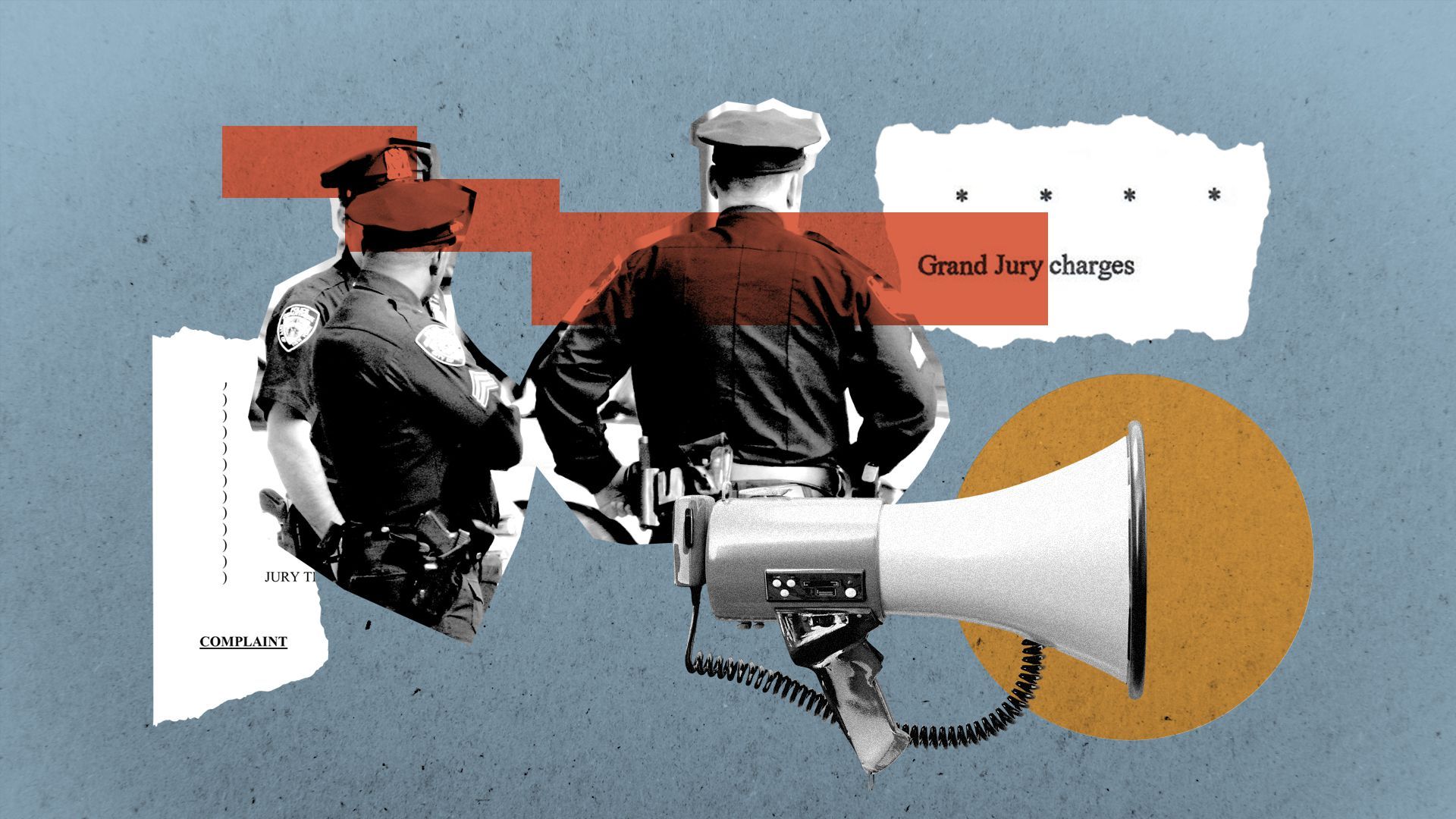
Illustration: Brendan Lynch/Axios
Floyd's murder continues to drive major changes to the state's criminal justice system, a year after the moment galvanized the nation.
Why it matters: Colorado became the first state to approve a police accountability bill in the aftermath, and lawmakers are taking their efforts to the next level.
- The Democratic-led state Legislature is advancing a handful of bills to close loopholes in current law and further limit use of force by police.
One of the most significant is described as a measure to limit the jail population, but the bill sponsor said it's a direct response to the circumstances surrounding Floyd's arrest.
- Under Senate Bill 273, law enforcement would issue a summons for low-level, nonviolent criminal offenses rather than make an arrest.
- The measure, expected to get another hearing as early as today, is designed to avoid situations that escalate into violent confrontations with police.
- It also would create a study group to look at situations in which mental health and social workers can respond to incidents instead of law enforcement.
What they're saying: Sen. Pete Lee (D-Colorado Springs) said the measure would transform the majority of interactions between police and residents.
- The low-level offenses "are what can escalate if the mindset [among police] is: subdue and incarcerate," he said.
The intrigue: A prior version of the measure faced vocal resistance, and the bill's sponsors were forced to change course and remove some felonies from those that would require a summons.
- Still, the effort is drawing opposition. Denver public safety director Murphy Robinson said he supports policing reforms but worries about the impact those affected by the crime.
- "I do think this bill has unintended consequences," he said.
3. 🤑 Win $1M in vaccine lottery

Illustration: Sarah Grillo/Axios
Gov. Jared Polis yesterday unveiled the Colorado Comeback Cash Vaccine Drive, a five-week sweepstakes program modeled after Ohio’s that will reward five mega-lucky Coloradans with $1 million each for getting a COVID-19 vaccine.
How it works: Winners, who must be 18 years or older, will be announced on Fridays, starting June 4.
- If you’ve received at least one vaccine, you’ve been automatically enrolled in the lottery through the state’s health department.
- The last drawing is July 7. Get your shot by June 30 to qualify.
By the numbers: The odds of winning are super-slim at 1 in 500,000, Polis estimates. But hey, that's still a chance!
4. Twice-fried fries to make your mouth water
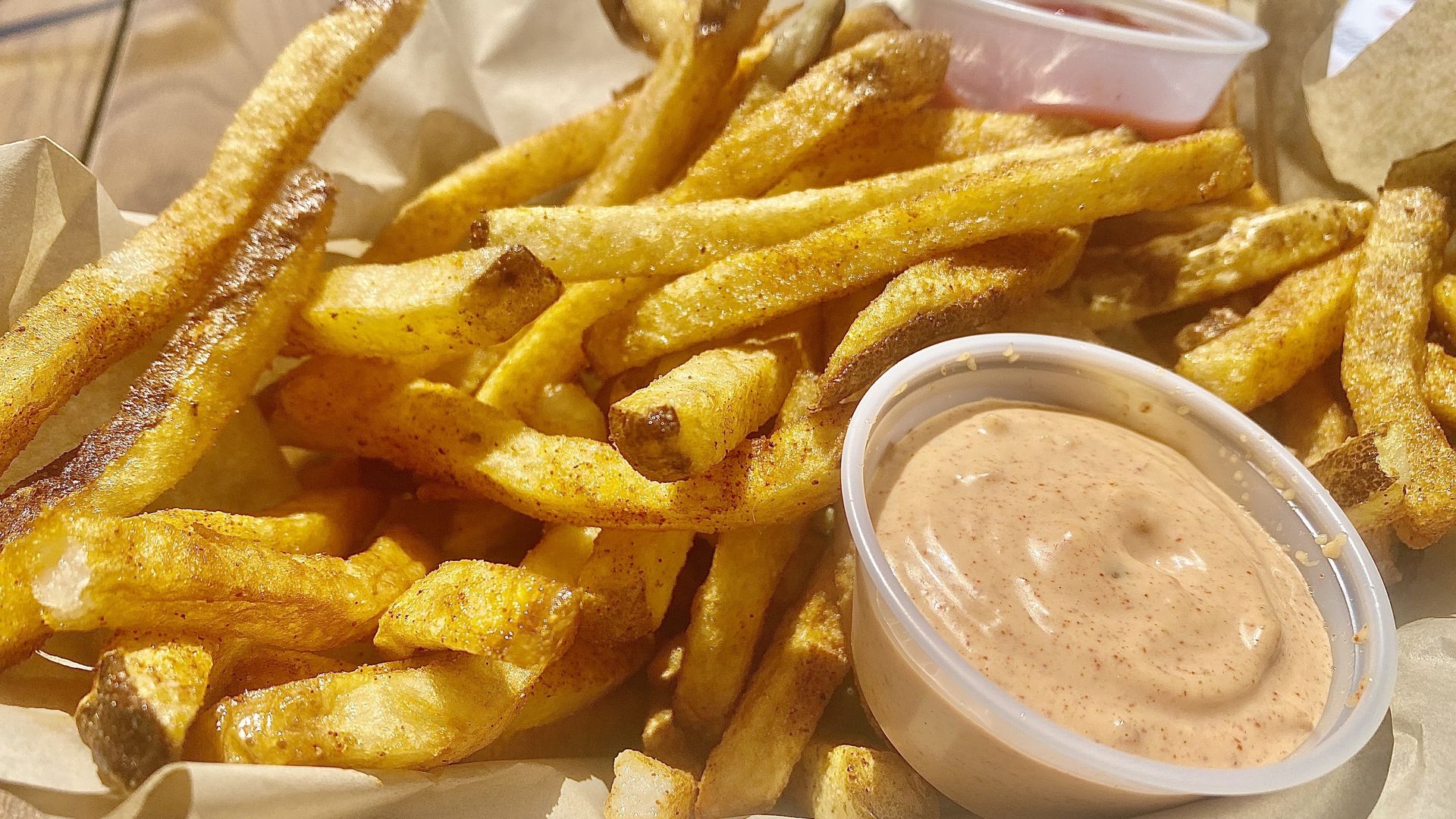
Fresh fries from Counter Culture Brewery + Grille. Photo: Alayna Alvarez/Axios
👋 Alayna here: I'd like to introduce you to my favorite fries. They hail from Counter Culture Brewery + Grille in Governor's Park.
- These golden gals come hot 'n' fresh in a brimming basket of doubly fried deliciousness, topped with "zesty fry spice" and served alongside sambal aioli and ketchup for $5.
📣 Pssst: Know another top spot to grab great fries in Denver? (Bonus points if they come paired with a good dip. I'm all about the dip.)
- Let us know by replying to this email, and we'll share some of your suggestions next week!
5. Democrats’ takedown of plastics perseveres
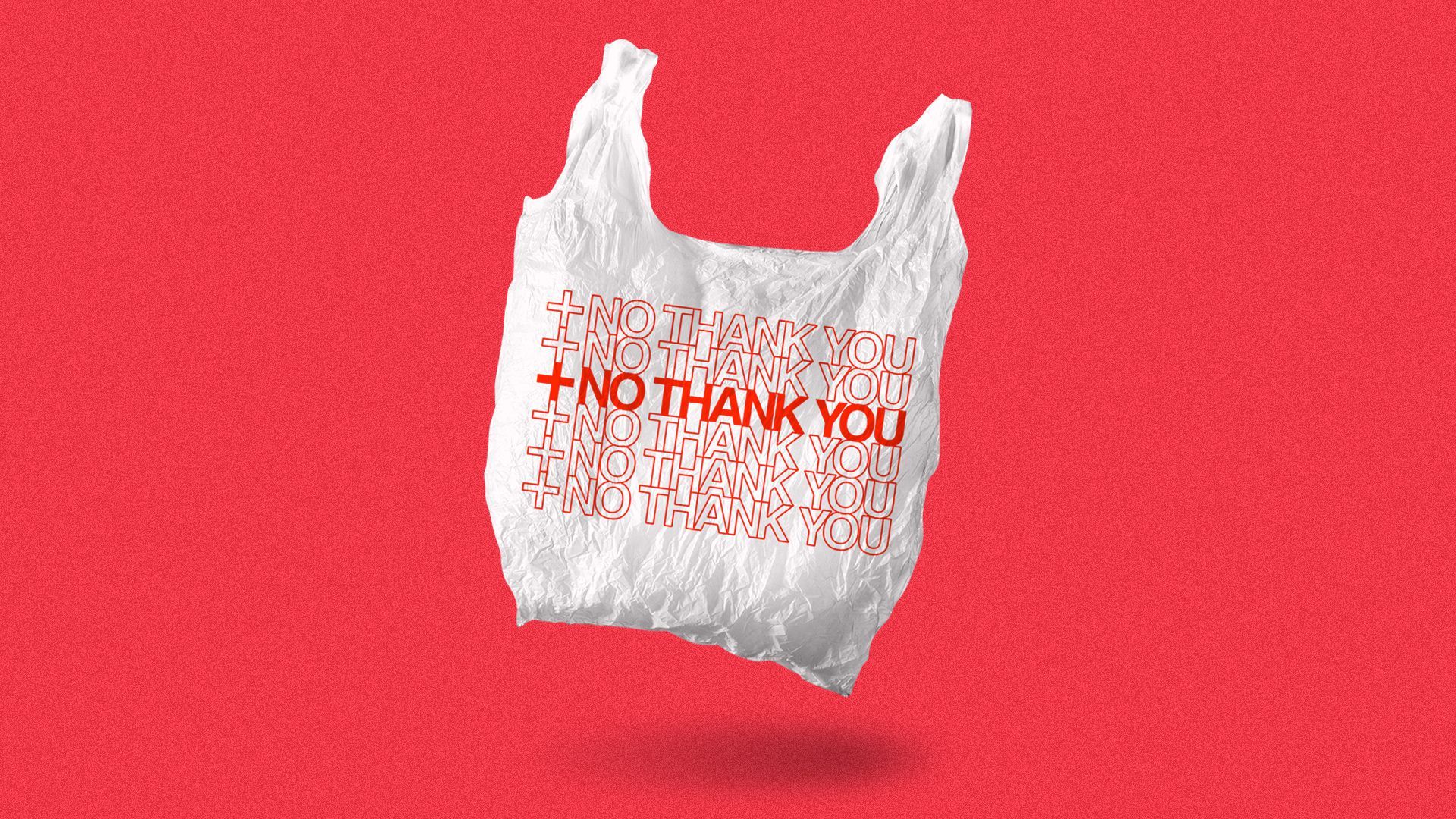
Illustration: Aïda Amer/Axios
Colorado’s crusade to overhaul single-use plastic in the name of bettering the environment continues, with Democratic policymakers advancing legislation at the state and local levels.
Driving the news: Colorado lawmakers at 1:30am Wednesday advanced a bill that would ban restaurants and retailers from using plastic foam containers by Jan. 1, 2022, and single-use plastic bags by Sept. 1 of that year.
- Recycled paper bags would then be offered at a 10-cent fee.
Of note: An amendment that would give cities the power to curb their own plastic rules further — a particular pain point for opponents, who argue the clause could create a confusing policy patchwork — is being reintroduced.
What else: Denver’s plastic and paper bag fee is slated to kick in July 1, city councilwoman and bill sponsor Kendra Black tells Alayna. The fee was initially delayed by the pandemic.
- Black also got a bill passed last week that will require restaurants to ask takeout and delivery customers to opt in for single-use items like plastic utensils, napkins, straws and condiment packets.
- The move was supported by third-party delivery companies and went unopposed by the Colorado Restaurant Association.
6. Denver's best place to sip and sunset

The view from the patio at the City Park Golf Course bar. Photo: John Frank/Axios
The hottest new bar in Denver is the City Park Golf Course.
The handful of taps and the usual wine and spirits aren’t the draw. It's all about the scenery.
- "I don't know if you can find a better view in Denver," Scott Rethlake, the city's director of golf, told John as they looked over the course toward the city and the white-capped mountains.
What to know: Whether you golf or not, grab a table or sloping chair on the patio.
- The most popular time: Sunset. The course just opened in April, but it's already the place to be.
John's thought bubble: Order a pint of Denver Beer Co.'s Venga, a flavorful but crisp Mexican lager, and watch how the light reflects off the downtown buildings and makes the mountains glow.
Our picks:
📙 John is visiting his 1-year-old niece, who got this book for her birthday.
🌮 Alayna is reading about the inspiring mission behind Denver’s first ghost kitchen taqueria.
Have a great day, y'all. See you mañana.
Sign up for Axios Denver

Get smarter, faster on what matters in Denver with Alayna Alvarez, John Frank, and Esteban L. Hernandez.