Axios Crypto

October 28, 2025

President Trump's pardon of Binance's founder last week was epic news, but the most surprising part for me was how silent my inbox got. Usually every law firm in New York is offering attorneys to comment on legal news. Not this one. 🦗
- There are currently two kinds of Bitcoiners: those who believe the four-year cycle is over and those who believe that the whole four-year cycle narrative is over.
Today's newsletter is 1,134 words, a 4.5-minute read.
1 big thing: Circle's stablecoin blockchain testnet
The battle to be king of the stablecoin world continues apace with Circle announcing today that a testnet for its Arc blockchain is going live.
Why it matters: Managing the network that major stablecoins run on might end up being a major moat for a top issuer looking to secure the key to the castle.
- All the big offerings are moving in this direction. For example, Stripe has hired a team to run its own blockchain: Tempo.
- Tether is hedging its bets. Rather than going all-in on one stablecoin blockchain, it's investing in a couple.
Between the lines: A blockchain devoted to stablecoins offers a simple advantage — users don't need to juggle another token just to make transactions.
- On Ethereum, for example, anyone sending a stablecoin still needs to hold a bit of ether to pay for those transactions. It's not that big of a deal, but it's just a little extra headache.
- There's a user experience logic here in simplifying.
Zoom in: Circle cites several major companies engaging with Arc as it begins testing the technology, a list that includes Amazon, Mastercard, Visa, BlackRock, Goldman Sachs and Worldpay.
- The diverse mix of industries means they'll be testing it out in various ways relevant to their different lines of business.
- "At Invesco, we're exploring how blockchain infrastructure can advance the tokenization of funds and assets in a secure and compliant way," Kathleen Wrynn, the investment management firm's global head of digital assets, said in a statement about its participation.
Circle also has a number of international partners who will test stablecoins based on other national currencies on Arc.
- Within the digital asset ecosystem, lots of crypto firms are stepping in to provide custody, interoperability, developer tooling and yield services, among others.
Zoom out: If Circle manages to build the widely used substrate for stablecoins, that puts its own stablecoin, USDC, in a pole position to be a market leader, which should drive up market share.
- It could also open new revenue lines for Circle as it constructs services atop Arc.
- Perhaps it could even earn funds from being one of the blockchain's validators, though it's likely to try to drive transaction prices down as low as possible rather than maximize returns there.
In the weeds: Arc's litepaper notes its goal of providing "institutional-grade performance and security." As part of that, it intends to prioritize settlement finality as a core feature — leaning on a permissioned group of validators rather than the permissionless validation favored throughout the industry.
What's next: Arc actually launching with real money. They are shooting for sometime in 2026.
2. Next Fed chair on digital assets
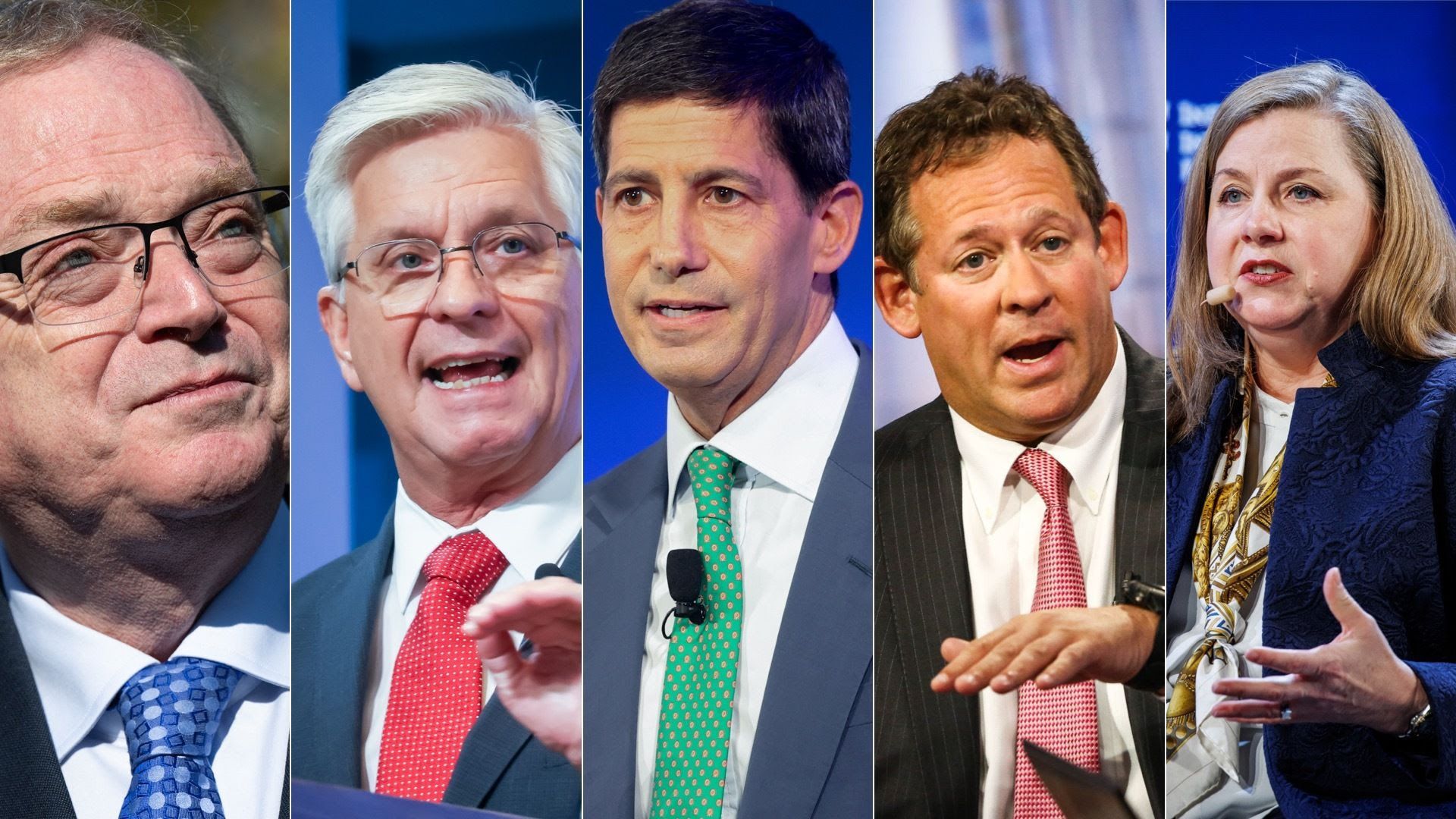
All of the top candidates to be the next Fed chair have expressed some kind of openness to the crypto world.
Why it matters: The Fed was the final boss as Operation Chokepoint 2.0 wound down, so a true pivot to encourage the industry would represent a sea change.
- Kevin Hassett, currently the director of the National Economic Council, is the favorite to get the nod. He was on the board of Coinbase's Global Advisory Council when it kicked off in 2023. He's disclosed at least $1 million in exposure to Coinbase, making him probably the most clearly tied candidate to the industry.
- Kevin Warsh, a former Fed governor, had kind words to say about the technology and application of Bitcoin all the way back in 2018. He's made investments in crypto startups, too. On the other hand, he's not been as hostile to central bank digital currencies (CBDCs) as some of the others on this list.
- Christopher Waller is already a Fed governor. He recently talked about giving crypto startups access to Fed banking. He is aligned with President Trump in opposition to CBDCs, and he's open to stablecoins.
- Rick Rieder, from BlackRock, has been on the record since 2020 saying he sees a future in digital assets. He acknowledged Bitcoin was here to stay five years ago.
- Michelle Bowman, also a current Fed governor. She's been skeptical about CBDCs. She also has said regulators so far have been over-cautious about crypto.
What we're watching: Polymarket is following along, and its bettors like Hassett and Waller best.
3. Mike Selig tapped
Mike Selig has officially been nominated to lead the Commodity Futures Trading Commission.
Why it matters: Selig has been counsel to the SEC's Crypto Task Force up to now in the Trump administration, suggesting that those two agencies really will be well-aligned.
"I pledge to work tirelessly to facilitate Well-Functioning Commodity Markets, promote Freedom, Competition and Innovation, and help the President make the United States the Crypto Capital of the World," Selig wrote on X, quoting a tweet from David Sacks, the White House's crypto and AI czar, about his nomination.
Background: Before the election in 2024, Selig published an op-ed on CoinDesk going through changes he suggested to crypto policy.
- If there's a theme of the piece, it's that digital assets are novel financial instruments that merit updated rulemaking.
What they're saying: "Selig's nomination is a very welcome choice for the derivatives and crypto industries, as both seek regulatory stability, certainty and a permanent chairman," says Cheryl Isaac, a partner in K&L Gates' asset management and investment funds practice.
What's next: The Senate Ag committee needs to take up the nomination. They have a hearing to deal with three nominations set for tomorrow, but Selig is not on the agenda.
4. Charted: USD1


USD1, the stablecoin from World Liberty Financial, made a notable jump in supply last week, moving it up the rankings to become the sixth largest stablecoin, moving ahead of PayPal's PYUSD.
Why it matters: USD1 's revenues largely flow back to the Trump family.
By the numbers: USD1 would need to add $1.7 billion in market cap to jump another spot, or expand by about 33%.
- If it did that, though, it would move ahead of USDS, a stablecoin issued by one of the oldest decentralized finance projects, MakerDAO (known lately as Sky Network).
5. Catch up quick

👨✈️ MicroStrategy was issued a B credit rating. (S&P Global)
🚚 American Bitcoin has bought a lot more bitcoin. (The Miner Mag)
🔮 Trump Media announced a prediction market service on Truth Social. (Axios)
🏦 Citi is working with Coinbase to bring stablecoin payments to corporate clients. (Bloomberg)
🐝 Buzz about a Metamask token picked up as the company registered new domains. (The Defiant)
This newsletter was edited by Pete Gannon and copy edited by Carolyn DiPaolo.
Sign up for Axios Crypto