Axios Crypto

October 02, 2025

I'm going to confess to you that I've encountered the term "tokenized deposits" a hundred times over the last year, usually in whitepapers about stablecoins' bright future, but I didn't really know what they were. So I asked someone.
🤔 Situational awareness: The crypto market perked up a ton this week, just as the federal government shutdown looked imminent.
- This is the fourth shutdown since bitcoin began, but if you look at the last three ones, there was no clear shutdown trade. The price movement this week is probably unrelated.
📬 Thoughts? Questions? Tips? [email protected]
Today's newsletter is 1,240 words, a 4-minute read.
1 big thing: Tokenized deposits

Tokenized deposits often come up in high-level conversations about stablecoins, but the truth is they're a wildly different product, at least according to Ronit Ghose, a director at Citi Research.
Why it matters: These blockchain-based versions of a bank deposit look more like a stepping stone for the stablecoin futures of global institutions, although banks might also never step off that stone.
The big picture: Tokenized deposits are a way for major financial players — like multinational companies, payment networks and asset managers — to transact with each other 24/7 and with programmability, without having to create any new infrastructure or learn any new tricks.
- Basically, their bank handles the new bits for them.
What they're saying: "It's just easier for the clients technologically and legally to use," Ghose explains to Axios. "Because they run on the permissioned blockchain, it means there's things like control and privacy baked in."
How it works: The asset being transacted is a token representing a deposit someone has made with a bank. If they send it to another customer, then the funds belong to that person.
- The bank can easily settle all this at the end of the day on their own. But to customers this looks nothing like smart wallets, managing keys or anything weird and web3. It's just new functionality within existing dashboards.
Zoom out: Tokenized deposits tend to only work within the customer base of one megabank. But the idea has been growing, so there should soon also be consortiums of banks sharing a closed network, yet that won't become the grand open ledger often touted with blockchains.
Stablecoins, by contrast, run on permissionless rails and they have a way of skirting lots of the capital controls of the traditional global economy, which helps explain their rise in the developing world.
- A small vendor in Uganda is never going to use a tokenized deposit to route around his country's version of the shilling. He'll still want tether for that.
What's next: Ghose expects financial giants to move to some sort of hybrid system eventually, one that allows them to interact with companies at other banks, while still steering clear of legal grey areas.
- That will mean regulatory whitelists, gating and privacy controls.
- The big digital-asset exchanges have built a permissioned system, Canton, to transact with each other. It's booming and could be a bellwether.
The intrigue: Ghose helped write a Citi report predicting tokenized deposits could grow larger than stablecoins, even after boosting their 2030 base-case stablecoin supply forecast to $1.9 trillion.
Yes, but: All those oceans of tokenized deposits are unlikely to be any more relevant to you and me than whatever folks are doing on the SWIFT network today.
- Stablecoins are still where the future of finance will hit Main Street.
2. The minimum Senate
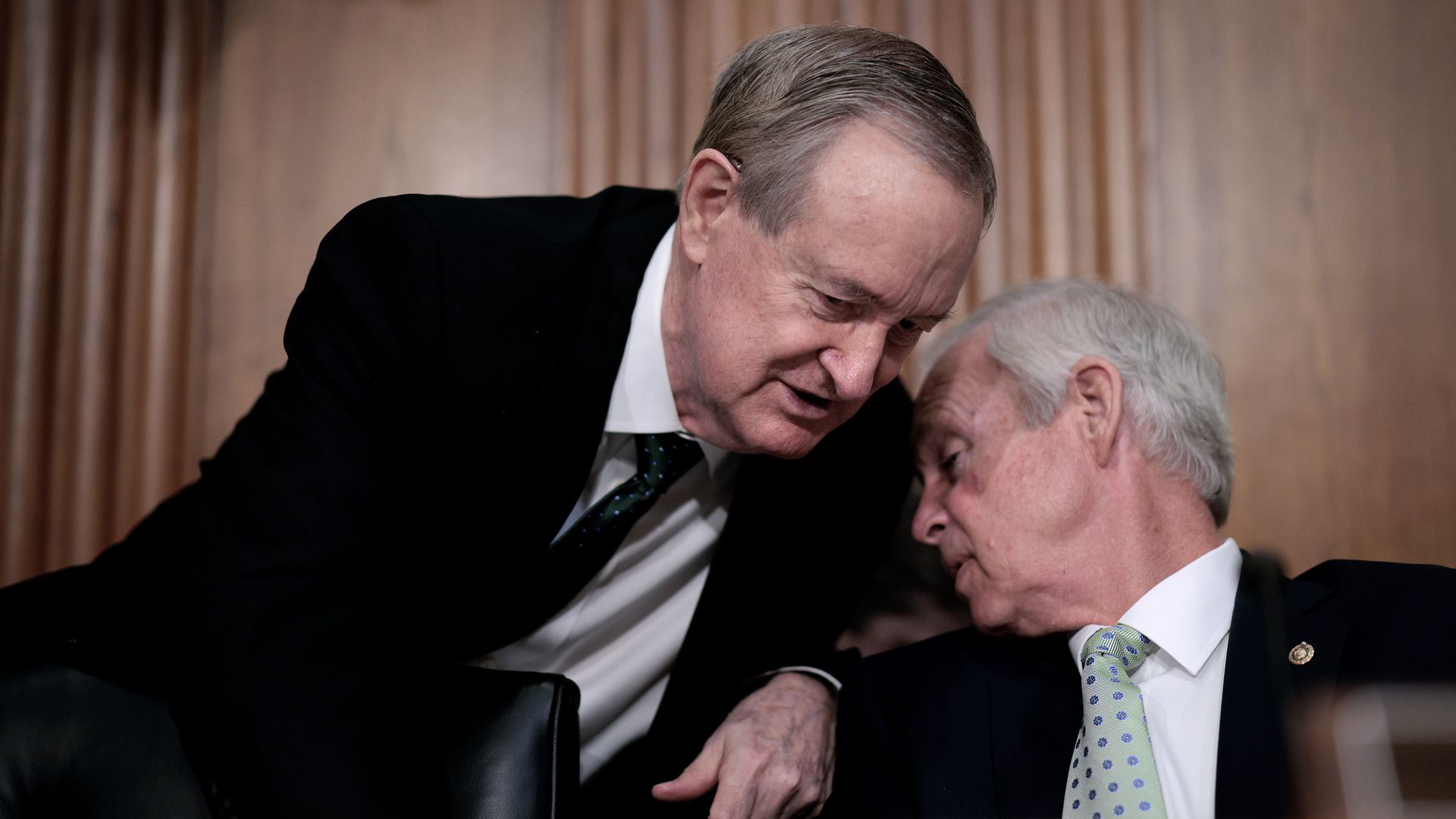
Crypto advocates have long argued that it makes no sense for tiny transactions to be taxable events, and that was a hot topic at the Senate Finance Committee hearing on taxation of digital assets yesterday.
The big picture: The hearing happened amidst the backdrop of a federal government shutdown, so comments about that were a frequent refrain.
- Yet lots of senators were there.
My thought bubble: While the classic pro-crypto/anti-crypto fault lines were detectable, this didn't seem to be quite as much of a "knives out" conversation as I'm used to listening to.
- It really seemed like everyone was trying to come up with a solution that could basically work for everyone, acknowledging that this technology is generating a lot of untaxed wealth, but that it also creates oceans of novel transactions that need to be considered.
Friction point: One topic in particular came up again and again, and it's been one of the longest standing bug bears for the crypto industry: de minimis tax exemptions for small transactions in cryptocurrency.
- Imagine someone buys a gaming asset, like a $20 NFT that allows them to fly around in a game world. Should that transaction be taxed? And what if they buy a $100 hardware wallet at a bitcoin conference? (Pet peeve: Please everyone quit talking about "buying a cup of coffee with bitcoin.")
This question only becomes more salient with stablecoins on the way. As Lawrence Zlatkin on Coinbase's tax team pointed out: Soon people will be making lots of real purchases in the U.S. with stablecoins.
- If those instruments are working right, every one of those transactions will have zero profit and zero loss, but under the existing rules they would still all have to be reported to the IRS.
In the weeds: Never mind the fact that every single time you do anything on a blockchain, you have to pay a small fee to run the transaction. These fees can be less than a penny! But they still count as taxable.
The other side: In a digitized world, this kind of tax exemption could be highly gameable. A trader could use software to break up big trades into lots of little trades, just under the exemption, for example.
- Tax legal expert Andrea Kramer, of ASKramer Law, came to say that there at least need to be some guardrails on an exemption to undermine that kind of gaming, though on balance she seemed largely against the idea.
State of play: No one in the Senate has any major legislation in the works on this topic right now. The hearing was a preliminary discussion, not anchored to any particular legislation under consideration.
Flashback: An exemption like this one might have been the first topic that ever got a lawmaker to put pen to paper and draft a bill back in 2017.
The bottom line: The devil is in the details.
3. Catch up quick

4. What to watch: ETF approvals
The bitcoin ETFs were huge. The ether ETFs were a delayed reaction, but they've kicked in. It looks like we're going to have to wait a bit longer to sort out what happens for ETFs in newer crypto assets.
State of play: ETF issuers were feeling very optimistic that some spot ETFs for top 10 blockchain Solana would get a green light early this month.
Yes, but: The government has shut down.
Between the lines: The SEC has put out a statement on the kinds of things it will and won't be able to help with amid a shutdown. It seems to be trying to keep expectations pretty low.
Zoom in: There are filings in the queue for Litecoin, Dogecoin, Solana, XRP and others, all with deadlines for action this month.
Reality check: The wait has probably been extended.
- But, hey, bitcoiners had to wait longer than Solana has even existed.
This newsletter was edited by Pete Gannon and copy edited by Anjelica Tan.
Sign up for Axios Crypto