Axios Communicators

May 01, 2025

Welcome back! It was great seeing so many of you last week at our D.C. Communicators event. More on that below.
- 📇 Reminder: Monthly Moves will hit inboxes tomorrow. Submit your job moves here.
Today's newsletter is 1,889 words, a 7-minute read.
1 big thing: Learnings from Amazon's pricing kerfuffle

The White House's reaction to reports that Amazon was planning to itemize tariff pricing — which Amazon later denied — shows how tricky the current political landscape is for American businesses.
Why it matters: This kerfuffle highlights the potential blame game between corporations and the administration, should prices rise.
Catch up quick: Punchbowl reported Tuesday that Amazon would list how much tariffs were adding to items' prices.
- Amazon quickly denied the reports in a statement, which it shared with media, across social and on its website.
- A call between President Trump and Amazon founder Jeff Bezos happened shortly after, per CNN.
What they're saying: An Amazon spokesperson, Tim Doyle, told Axios that "the team that runs our ultra-low-cost Amazon Haul store considered the idea of listing import charges on certain products."
- "This was never approved and is not going to happen."
By the numbers: 663 news stories were written about Amazon's tariff pricing and the White House's pushback, but the story has only garnered a readership of about 6.6 million since Tuesday, according to Memo data shared with Axios.
Yes, but: Even the perception of cowering to pressure from the Trump administration could impact corporate reputation and erode trust.
Between the lines: While Amazon's quick comms did slow down and contain the news cycle, it didn't stop the administration and MAGA media from attacking the company, as Axios' Tal Axelrod points out.
- White House press secretary Karoline Leavitt called the move a "hostile and political act."
- "Why should a multibillion-dollar company pass off costs to consumers?" one White House official told CNN.
- "Amazon is going to war with Trump," Steve Bannon said on his "War Room" podcast. "This is all about the oligarchs and taking down the oligarchs."
What to watch: This is the framing corporate America will have to navigate in the coming months.
- Some companies like Walmart, Target and Home Depot are attempting to get ahead of potential tariff-induced price increases and supply chain disruptions with clear and consistent messaging.
2. Leavitt defends White House press rules

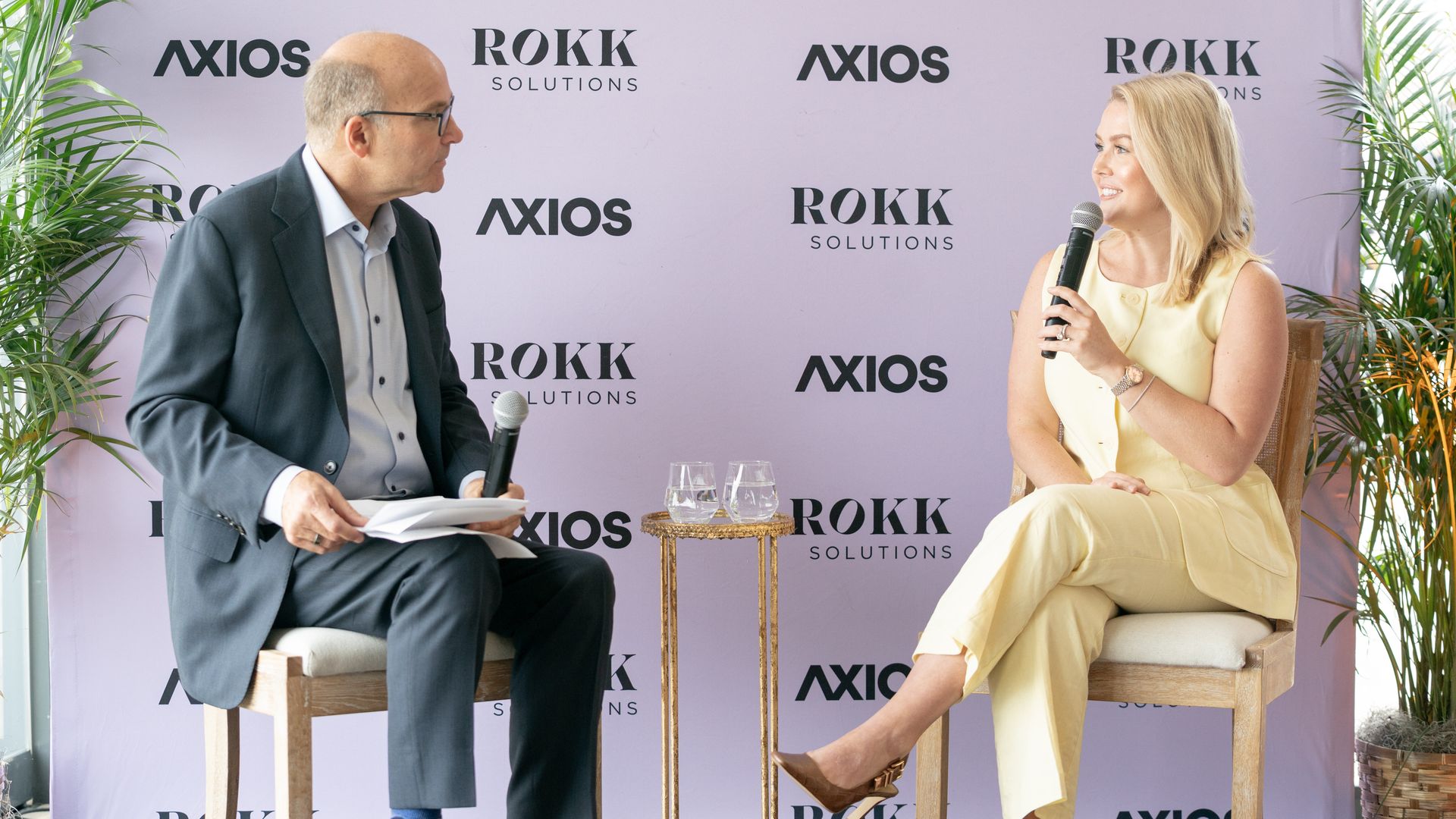
The Trump administration is tightening its control over press coverage to expand access, not limit it, press secretary Karoline Leavitt told Mike Allen at an Axios event in D.C. on Friday.
Why it matters: "It's not about ideology. It's about increasing the wide array of outlets that have access," Leavitt said.
- "I don't view them as restrictions. We view them as opening access to more outlets, more voices, more news, journalists and outlets," Leavitt said. "Why should a single outlet have the privilege of being in that 13-person press pool every single day?"
- She connected the media strategy, which includes allowing MAGA influencers and podcasters in the briefing room, to Trump's 2024 campaign.
- "The president ran a nontraditional media campaign, which propelled him back to the highest office in the land, and we felt it was our responsibility to continue that in our coverage at the White House," she said.
State of play: The White House severed the traditional relationship between the White House Correspondents' Association and the communications office, drawing criticism in the process.
- "I think that a small group of journalists who comprise the board of the White House Correspondents' Association should not dictate who gets to go into the Oval Office and who gets to ride on Air Force One," she said.
- "There should be equal access for all outlets, and that's exactly what we're doing."
Catch up quick: The sparring between the WHCA and the White House communications shop started when the Associated Press, which was in the pool rotation for wire services, refused to use "Gulf of America" for the Gulf of Mexico.
- The AP sued the White House for excluding its reporters and photographers from presidential events and Oval Office gaggles.
- During the legal dispute, the White House took control of the daily rotation of reporters in the pool and broke precedent in its relationship with the WHCA.
What to watch: As traditional media loses influence, the White House is increasing access to a growing cast of Trump-friendly reporters, podcasters and influencers who boost his narratives from inside the house.
- The White House is also remaking the seating chart in the Brady Briefing Room and launched a new Drudge Report-like website devoted to promoting pro-Trump news stories.
3. Jay Carney on the rise of new media
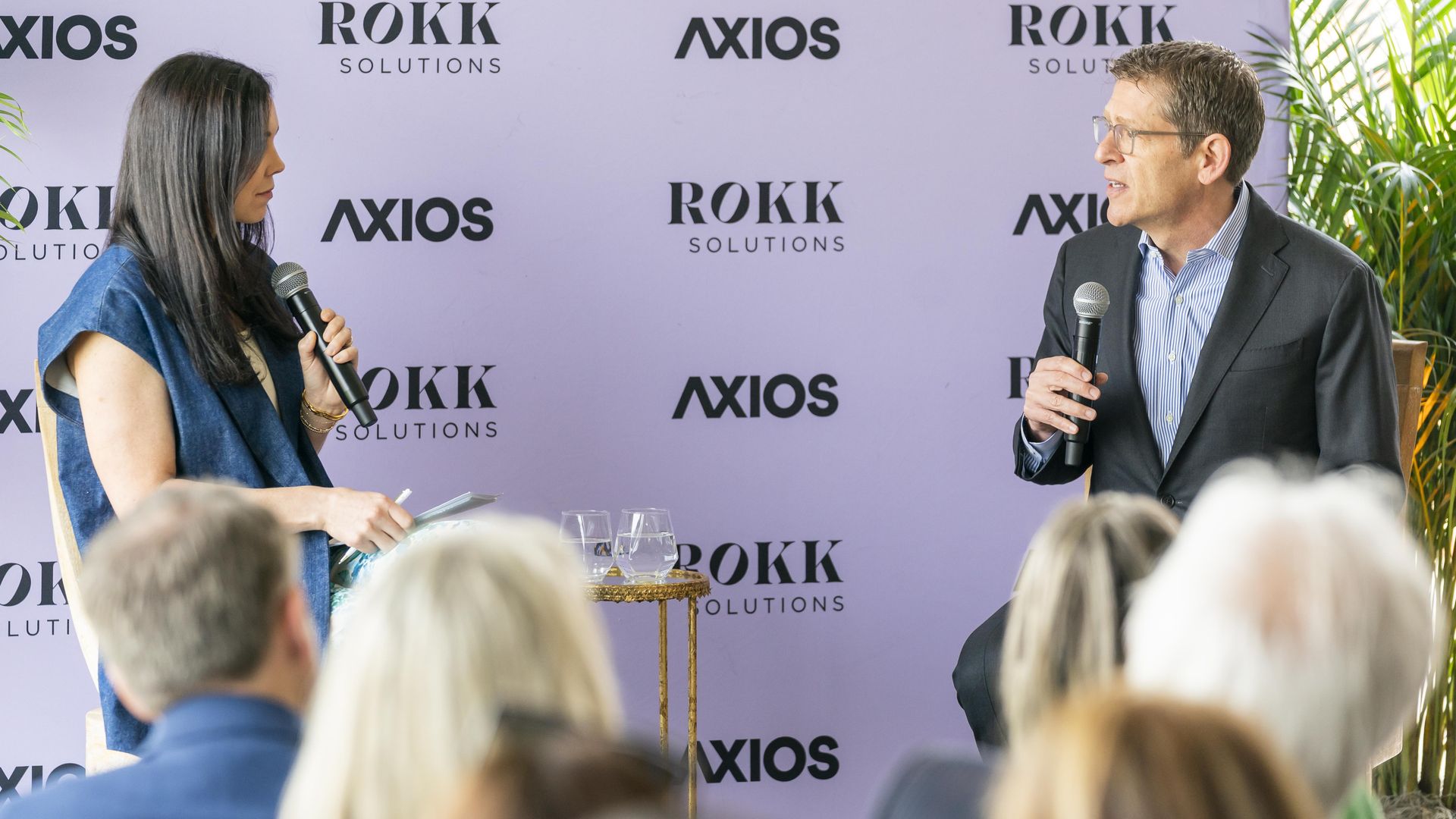
The White House's decision to expand its briefing room access to new media, including social media influencers, is "admirable," former Obama press secretary Jay Carney said at the same Axios event Friday.
- Yes, but: Carney went on to defend the Associated Press and warned the administration won't be able to control the narrative forever.
Why it matters: The communications strategies coming out of the White House are influencing how corporate leaders engage with the media.
What they're saying: "I think it's important to recognize the media landscape has changed, to bring in new voices, to shake things up. I think that's admirable, and I think, you know, everybody can learn from that," said Carney, who is global head of policy and communications at Airbnb.
- "There are people in the briefing room today —which was true back then, but I think there are more now — who are advocates. They're not necessarily truth seekers, they're message deliverers, and I think, you know, that's a choice they've made, and I guess it's working for them."
- Carney said when he was press secretary, there were reporters who "asked incredibly hard questions and would challenge me. ... They weren't advocates, they certainly weren't advocates for us. They were doing their jobs."
- "And I think the AP is an incredibly important source of news and provider of news for people around the country and the world and we need to recognize that," he added.
Zoom in: Concerns about press freedom remain amid Trump administration efforts to exert greater control over its coverage.
- 7 in 10 Americans are at least somewhat concerned about potential restrictions on press freedom, according to a new Pew Research study.
The big picture: The speed of the news cycle, audience fragmentation and shifting spheres of influence are changing how companies and brands tell their story.
- "In my jobs now, post-White House, with Amazon and now Airbnb, we care about traditional media ... but we spend a lot of time thinking about how we can flood the zone with our narrative, the stories we want to tell about our values as a company," Carney said.
- "We do that through our own vertical channels or we do it through influencers or other means. We're lucky our CEO, Brian Chesky, is a great communicator, so we leverage the hell out of him. He gives a lot of interviews and he does a lot of podcasts. ... We try to take advantage of every outlet available."
What to watch: With Trump's second term passing the 100-day mark, the public will likely start looking for tangible policy implications, not just messaging strategies, Carney said.
Go deeper ... Watch the interview here.
4. Bill Belichick addresses viral moment from CBS interview



Bill Belichick is increasingly making headlines in the national press, but not for how he is building the University of North Carolina football team into a championship contender.
Driving the news: Belichick, 73, made an appearance on "CBS Sunday Morning" last weekend to promote his book, "The Art of Winning: Lessons From My Life in Football," which traces his career as a coach.
- The appearance went viral, however, not for the book's contents, but for Belichick's girlfriend, Jordon Hudson, 24, shutting down a question from reporter Tony Dokoupil about how the two met.
- That was followed up by a report in The Athletic on Tuesday that Hudson's involvement was instrumental in HBO backing out of an agreement to feature UNC in its docuseries, "Hard Knocks." (UNC declined to comment on HBO's decision.)
Between the lines: The two incidents — along with the revelation of Belichick's request to have Hudson copied on emails sent to him by UNC staff — have raised speculation on Hudson's professional ties with the football coach.
What they're saying: Yesterday, Belichick released a statement through UNC regarding his appearance on CBS, saying it was his expectation any promotional interview would focus only on the contents of the book.
- "Unfortunately, that expectation was not honored during the interview. I was surprised when unrelated topics were introduced, and I repeatedly expressed to the reporter, Tony Dokoupil, and the producers that I preferred to keep the conversation centered on the book," Belichick said.
- "After this occurred several times, Jordon, with whom I share both a personal and professional relationship, stepped in to reiterate that point to help refocus the discussion. She was not deflecting any specific question or topic but simply doing her job to ensure the interview stayed on track."
- Belichick also said in the statement that he and Hudson were not trying to avoid the question of how they met, adding, "[W]e have been open about the fact that Jordon and I met on a flight to Palm Beach in 2021."
The other side: "When we agreed to speak with Mr. Belichick, it was for a wide-ranging interview," CBS News wrote in a statement.
- "There were no preconditions or limitations to this conversation. This was confirmed repeatedly with his publisher before the interview took place and after it was completed."
💭 Eleanor's thought bubble: Given that the interview in question was booked by his publisher and was about his personal memoir and relationships, it is odd Belichick did not issue the statement in his personal capacity but relied on the cover of the university.
- And by sending the statement via UNC's press office, the university further entangles itself in this increasingly complex saga.
- UNC did not respond when asked about this decision.
5. RFK Jr.'s influencer strategy


A cadre of moms on social media is using TikTok activism around wellness causes to amplify HHS Secretary Robert F. Kennedy Jr.'s calls to clean up America's food supply.
Why it matters: At a time when "bro-casters" like Joe Rogan are helping drive the political narrative, Kennedy has tapped into the following of these "mom-fluencers" to further his agenda, which has included narratives that aren't scientifically sound.
Driving the news: The alliance was on display last week when Kennedy announced an "understanding" with food makers to cut certain dyes from their products.
- At a press conference filled with a who's who of popular online influencers, Kennedy pointed to states like West Virginia that have recently passed laws banning certain food dyes from products sold.
- "The only reason that those states have banned these products is because of these ladies and millions more across the country, the warrior moms, who have powered the MAHA movement," Kennedy said.
Between the lines: Influencers such as Vani Hari, better known as the "Food Babe," can be found on platforms including Instagram, TikTok, Substack and on the podcast circuits.
- Their pet causes range from food additives and seed oils to the use of glyphosate in farming, fluoride in water and the vaccine schedule. But they've coalesced around Kennedy's suspicions of the pharmaceutical and food industries, and his contention that regulators have grown cozy with the businesses they're supposed to be policing.
Reality check: While the moms discuss the value of eating whole foods, getting exercise and quality sleep, they've often veered into misinformation as they advocate for natural health and parental choice, experts said.
6. 💭 1 post to go
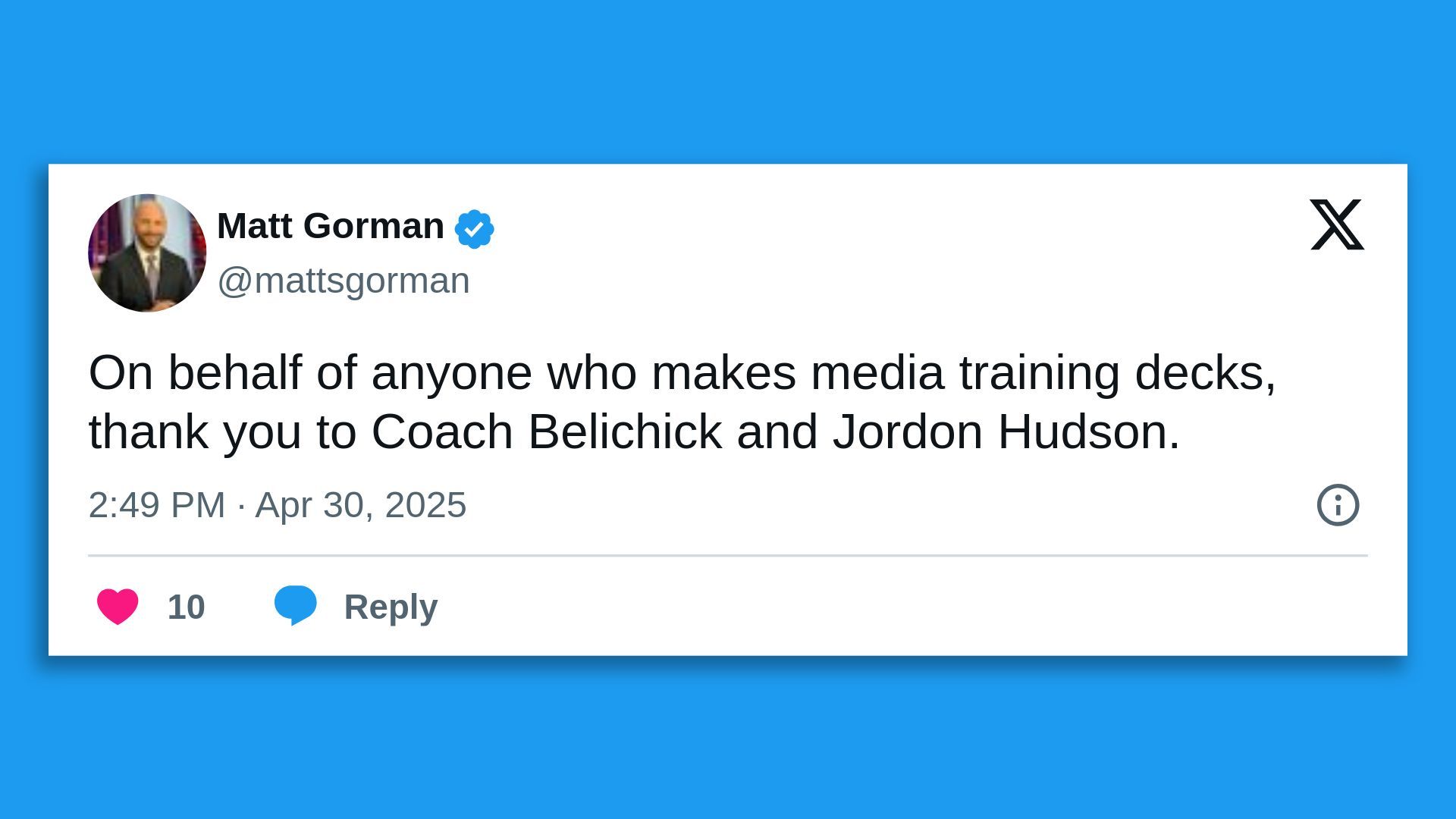
As Matt Gorman of Targeted Victory also pointed out, "However bad you thought the interview was, it would be far worse if I interjected."
🌷 Thanks for reading! And extra thanks to editors Christine Wang and Kathie Bozanich.
Tell your friends to subscribe and become an Axios Communicators Pro member.
Sign up for Axios Communicators