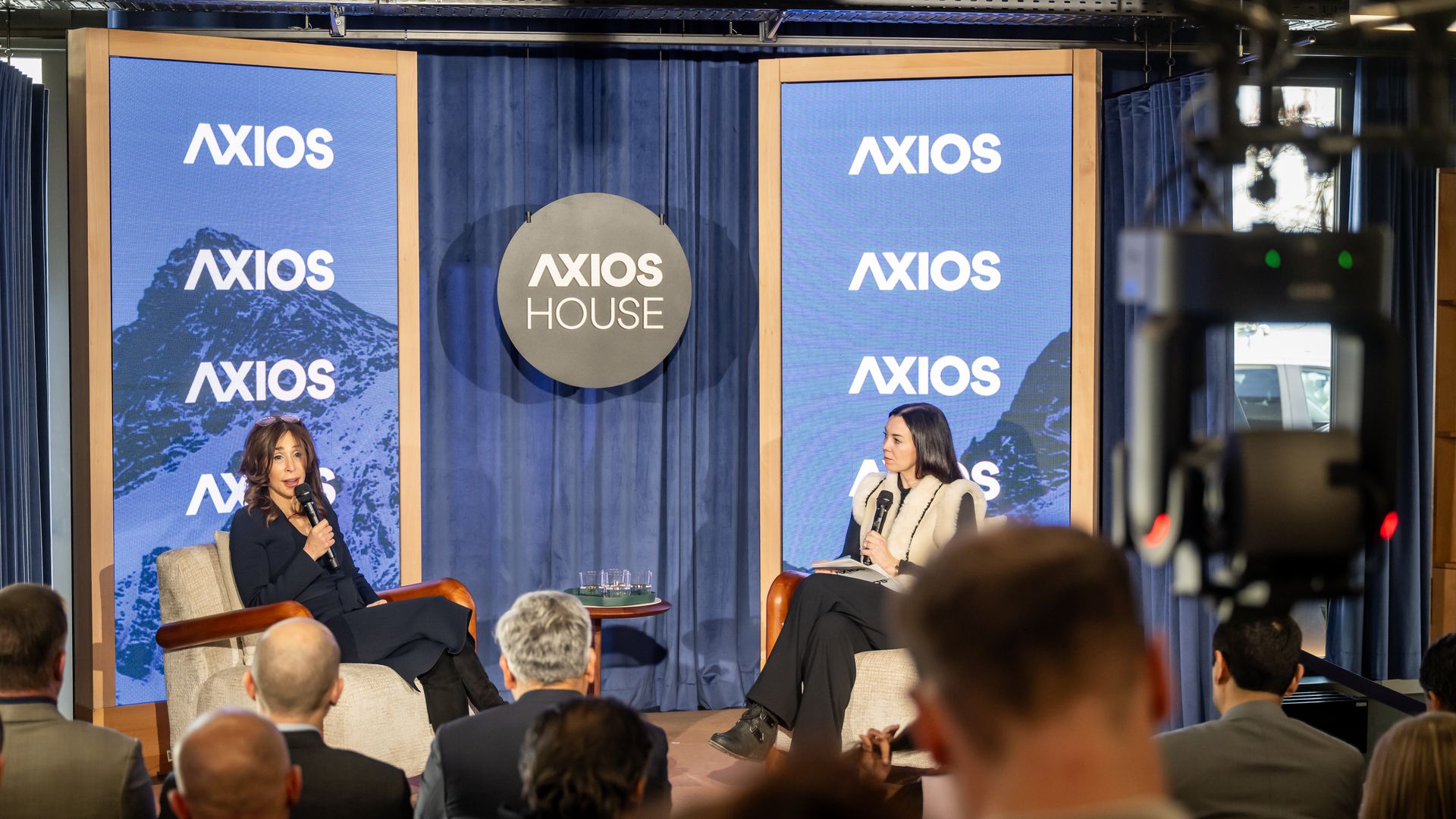
Axios Communicators

January 22, 2026

✈️ Hello from the air, where I'm heading home after covering the chatter in Davos, Switzerland. More on that below.
- 📧 Have a story idea, pitch or tip? Email me.
Today's newsletter, edited by Christine Wang and copy edited by Kathie Bozanich, is 1,642 words, 6 minutes.
1 big thing: Meddler in chief
Since taking office roughly a year ago, President Trump has increasingly inserted himself into the inner workings of American businesses.
Why it matters: Corporate America is well-versed in managing pressure from NGOs, activist investors and the media. What's new is the need to respond in real time to the whims of a single political figure with an enormous megaphone.
Catch up quick: Trump has called for the resignation of tech executives, inserted himself in media mergers, pressured companies over business strategies, demanded a cut of sales from certain companies and even moved to derail a corporate rebrand.
State of play: This time a year ago, many corporate affairs teams would've been caught flat-footed.
- Now, teams are moving faster, stomachs have gotten stronger and playbooks have been drafted for the possible moment a company or brand lands in Trump's crosshairs.
Between the lines: Trump's bombast appears to be a way to force companies to the dealmaking table.
- "The strategy is to engage corporations to more actively ensure that they are collaborating with the federal government to advance the interests of the U.S.," FGS Global CEO Alexander Geiser said.
- "We see that as an opportunity and have found that companies that engage directly and strategically with this administration can achieve tremendous outcomes."
Zoom in: These flashpoint moments can also be used to seize control of the narrative.
- For example, after Trump demanded that Intel CEO Lip-Bu Tan should resign due to his alleged Chinese business links, the company took advantage of the spotlight to swiftly — and publicly — correct the record.
- Then, Tan met directly with the administration to clear the air and educate it on shared interests.
- Days later, the U.S. government announced it would take a 10% equity stake in the chipmaker.
What to watch: As the midterms approach, the affordability debate is expected to be at the forefront.
- Trump can either continue to blame the "Biden economy" or he could increasingly turn his fire on corporate America, accusing companies of driving higher prices and stagnant wages.
2. CCOs get principal treatment in Davos
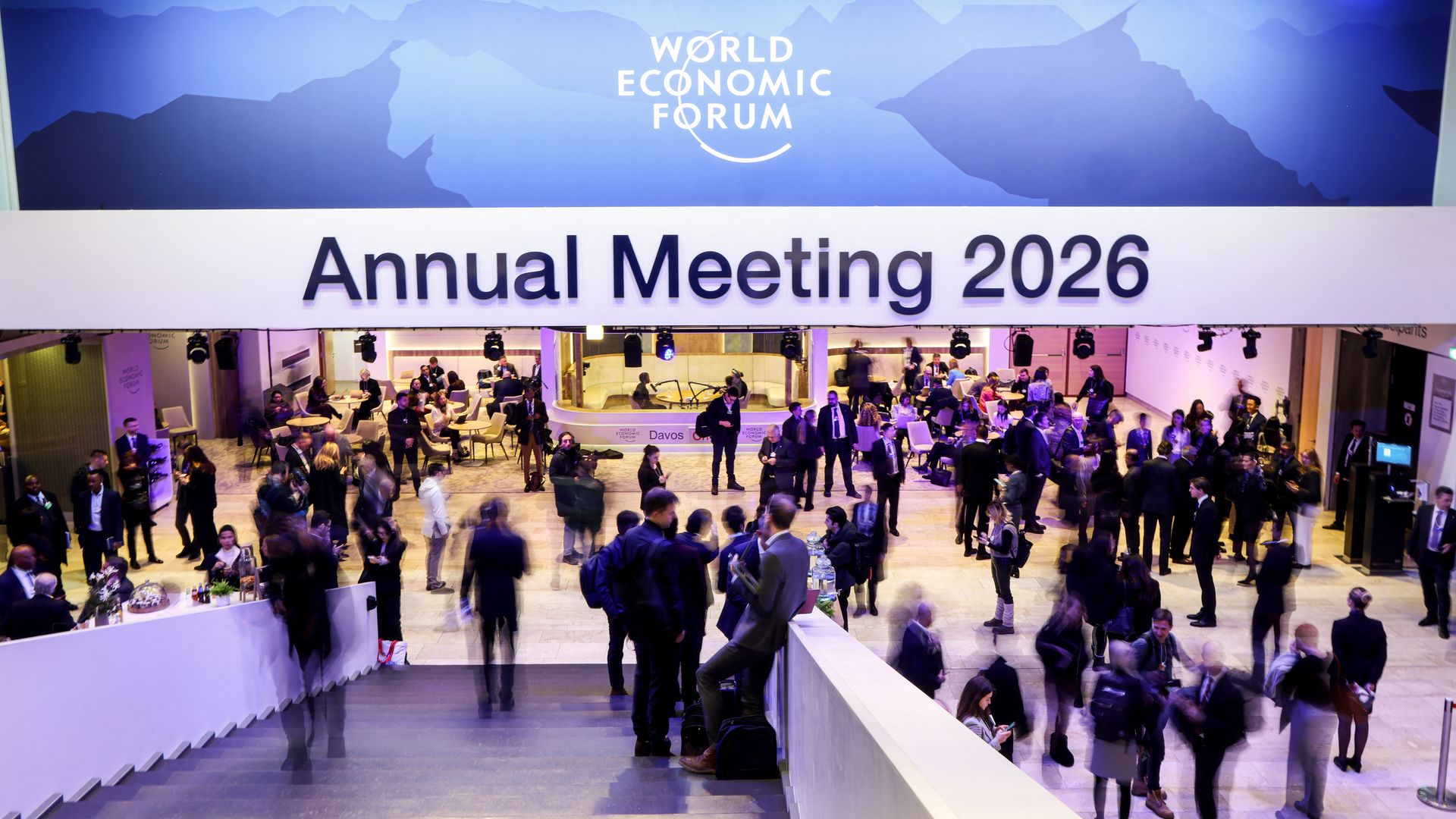
Corporate affairs and communications chiefs are being treated like principals — not support staff — in Davos this year.
Why it matters: The shift is indicative of the rising influence of the role.
State of play: Executives on the ground tell me this is the most extensive schedule of communications and corporate affairs-tailored programming they've seen in Davos.
Zoom in: Throughout the week, Axios collaborated with Burson, Brunswick, Teneo, Stagwell and Page Society to host several meals and receptions for comms chiefs.
- CNBC hosted a communicators breakfast, as did Lightspeed. Semafor partnered with FleishmanHillard and Edelman partnered with Bloomberg to host dinners, while Fortune and Philip Morris International and Weber Shandwick and the Financial Times held lunches and FGS and Prosek Partners hosted receptions.
- WEF also hosted a CCO council event for its members.
What they're saying: "Rather than another conversation about transatlantic relations, we wanted to provide corporate affairs leaders with practical advice about how to communicate and advocate in Washington today — lessons learned from the first year of Trump's second term, what's worked for companies, what hasn't," says Geoff Morrell, Teneo president of global strategy and communications.
- "Based on how lively the discussion was, the topic is certainly timely, and the insights shared truly appreciated."
Between the lines: For many of these hosts, convening comms chiefs could be viewed as opportunistic.
- Publishers want access and partnerships, while PR agencies want new business.
Yes, but: The fact that so many communicators are even on the ground in Davos speaks to the growing importance of the role.
- Corporate affairs and comms leaders are often tasked with making sense of geopolitical chaos, polarized culture and a fragmented information landscape, then weighing the opportunities and risks they present.
Zoom out: A recent Burson study found a direct link between reputation and financial performance, showing the companies with the strongest reputations earn nearly 5% more in unexpected shareholder returns.
What they're saying: "There's been a shift in the way the function is viewed, from support staff to business drivers," S&P Global chief communications officer Christina Twomey says.
- Comms execs are increasingly viewed as "advisers, influencers, decision-makers and relationship builders — and this is what Davos is all about," she added.
3. 👂🏻What I'm hearing
I spent the week talking to hundreds of communications and corporate affairs officers, and here's what I heard:
- AI adoption shot clock: If 2025 was about testing AI's potential, 2026 will be about how successfully — and responsibly — it's implemented.
- "I have someone who's deliberately orchestrating the whole AI journey for my comms team, including all of our upskilling," said one head of communications for a large health care company. "So, for example, we bundled our upskilling budgets just for AI, and we have our first AI colleague."
- The economy becomes a reputational fault line: Affordability will continue to be top of mind for customers, employees and politicians, and companies are thinking through their economic impact language.
- It's a topic that will dominate ahead of the 2026 midterms.
- Trust erosion accelerates in a fragmented information landscape: As audiences retreat into siloed feeds, companies are judged less on shared facts and more on which version of reality their stakeholders follow.
- Reputation increasingly hinges on consistency, credibility and an understanding of stakeholder's "realities," not just which channels they're active on.
4. 📚 Reading list
Here are some stories that caught my attention this week...
- 💭 President Trump told reporters that his affordability message has a "public relations" problem. (Axios)
- 🤖 OpenAI will debut its first device in 2026 and also announced plans to test ads.
- At Axios House on Wednesday, Google DeepMind CEO Demis Hassabis said he was "a little bit surprised" OpenAI moved so fast on ads. (Axios)
- 💼 There's a clear divide between CEOs and employees on AI's effectiveness in the workplace. (The Wall Street Journal)
- 🛫 Ryanair bookings have jumped 2%-3% since its CEO Michael O'Leary began feuding with Elon Musk. Both called each other "an idiot." (Bloomberg)
- 👀 CEO pushback: While speaking at WEF, JPMorgan chief Jamie Dimon blasted Trump's proposal to cap credit card interest rates, saying it would be an "economic disaster." (Axios)
- 📱 Bonus: PR experts cringe as Brooklyn Beckham publicly cut ties with his famous parents. (Bloomberg)
5. CCOs lack confidence in AI


Chief communications officers are reporting a lack of confidence in managing, implementing and messaging around the AI transformations taking place within their companies, according to a new survey by Weber Advisory and Gravity Research shared alongside WEF.
- 🧠 Why it matters: If comms chiefs hope to continue to move beyond execution and toward strategic advisory roles, they must get smart on AI.
By the numbers: Gravity Research surveyed more than 200 Fortune 1000 communications and public affairs executives between Dec. 16, 2025, and Jan. 9, 2026, and found that 52% say their CEO's confidence in the function has increased in the past year.
- CCOs are most confident in their ability to respond to stakeholder activism (53%), manage geopolitical risks (49%), and address regulatory pressures (49%).
- Meanwhile, confidence in AI is lacking. Only 35% of comms chiefs report high confidence advising on AI transformation and messaging.
Of note: 89% of CCOs say their boards have sustained or raised expectations for stronger visibility and better fluency around stakeholder communications.
What to watch: "There are two different Davoses this year — and they're mostly speaking past each other. One is the multilateral establishment that has always defined WEF. The other is something new: unilateral, skeptical of global institutions, and hostile to elite consensus," said Jim O'Leary, CEO, North America and global president of Weber Shandwick.
- "In this environment, CEOs have become geopolitical actors—and many chief corporate affairs officers are helping them navigate this new dynamic. Our research shows they've largely risen to the challenge," he added.
6. Exclusive: FHS Capital Partners expands

FHS Capital Partners — an investment firm launched by communication industry veterans Bob Feldman, Bill Heyman and Don Spetner — has added Dave Samson, Gulden Mesara and David Kyne as partners, Axios is first to report.
Why it matters: This expansion signals there will more investment in the communications industry, especially as boutique advisories and comms tech platforms flood the market.
Catch up quick: FHS Capital Partners was founded in 2021 to help small communications firms, insights companies and comms tech companies get off the ground.
- As part of the investment, the firm also provides strategic communications counsel to its portfolio companies, which include Applecart, Morning Consult, DrivePath Advisors, Alethea, Next Practices Group, Qwoted and Integral.
Details: The hiring of Samson, Mesara and Kyne points to the evolving demands for strategic guidance that marries industry expertise with global perspective, as many companies grapple with regulatory scrutiny, tech innovation and change management.
- Before joining FHS, Samson led global communications for Chevron and Levi Strauss and Co., and international communications at IBM and Oracle. He also served as Edelman's global vice chairman, corporate affairs and U.S. chief operating officer.
- Mesara has deep roots in the health care space, having held leadership roles at Pfizer, AbbVie and Walgreens, while Kyne brings social impact expertise, having founded the Resilience Action Network International and Kyne Foundation.
What to watch: The rise of generative AI is accelerating demand for communications leaders who understand the technology and its effects on reputation, regulation and trust — particularly in highly regulated industries or across multinational companies.
7. 💭 1 quote to go
"AI will make the most trustworthy brands in the world even more valuable in an era where it'll be hard to know what's real and what isn't and what's important and what isn't."— New York Times president and CEO Meredith Kopit Levien, at Axios House in Davos.
🙏🏻 Thanks for reading! For more Axios Communicators content, join Mixing Board, powered by Axios.
Sign up for Axios Communicators