Axios Communicators

May 02, 2024

Welcome back!
- 🚨Monthly moves hits inboxes tomorrow. Last call for job updates.
- 🇫🇷 Attending Cannes Lions in June? Shoot me a note.
Today's newsletter is 1,794 words, a 7-minute read.
1 big thing: Businesses face down activism

Corporate America is lowering its tolerance for activism that is considered too aggressive or disruptive for the workplace.
Why it matters: This sets a precedent that could prove tricky to enforce as the U.S. enters a tense election season full of divisive issues.
Driving the news: About 50 Google employees were fired last week for participating in pro-Palestinian protests that violated the workplace code of conduct.
- In a note to employees, CEO Sundar Pichai acknowledged Google's "culture of vibrant, open discussion" but said workplace policies and expectations "are clear: this is a business, and not a place to act in a way that disrupts coworkers or makes them feel unsafe, to attempt to use the company as a personal platform, or to fight over disruptive issues or debate politics."
- In response, some of the fired employees have filed a complaint with the National Labor Relations Board claiming unlawful retaliation, per the AP.
The big picture: There isn't a silver bullet for avoiding the current polarized environment — particularly when it comes to the Israel-Hamas war, said Dan Doherty, BCW executive vice president and corporate affairs practice lead.
- "CEOs and company leadership need to find a way to be more comfortable being uncomfortable, [because] you can't be everything to everybody," Doherty said. "And if you try, you're going to put the brand at risk. So you really do need to know where to show up, why to show up there and then communicate that clearly."
Zoom in: Increasingly, the way to show up is with internal communications.
- The corporate communicators Axios spoke to said their executives regularly engage in constructive conversations through employee resource groups, and some said peaceful protests would be tolerated.
- However, similar to the line being drawn by academic institutions, the communicators said action will be taken once the activism becomes disruptive to work or creates a hostile environment for employees.
Zoom out: Google's decision provides cover for other companies navigating similar challenges, and many are using the opportunity to remind employees of their internal codes of conduct.
- "Having policies and procedures in place and making sure that those are communicated so employees understand workplace expectations is where [leaders] should be focused," said Doherty.
- And even if the conflict in Gaza isn't causing tension in a workplace, other issues are likely percolating.
In anticipation, communicators are partnering closely with HR reps to monitor internal Slack channels or employee groups to ensure workplace policies are respected.
- They are also increasingly enforcing these policies — through warnings, suspensions or, in extreme cases, firings.
What they're saying: "What we're seeing is the end of a cycle, which started with the employee walkouts of the Trump era, peaked after the summer of 2020 and seems to have ground to a halt after Oct. 7," says Steve Hirsch, CEO of strategic communications firm Hirsch Leatherwood.
What to watch: By enacting more stringent workplace codes of conduct, leaders set a precedent ahead of a polarized election season, and it will be interesting to see how consistent employers are when enforcing these policies.
2. Businesses drag feet on election prep
Businesses are doing little to communicate about the 2024 elections, even as geopolitical matters continue to divide workplaces in the U.S.
Driving the news: A new survey conducted by Shallot Communications, found only half of in-house communication leaders have started rolling out workplace activism or civic engagement policies ahead of election season.
- Of those who are planning to communicate, the internal tiger team responsible for this strategy typically includes representatives from legal, comms, HR and the CEO's office, per the survey.
- A majority of companies — roughly 6 in 10 — give employees time off to vote, but 25% failed to communicate about it internally.
Zoom in: 80% of all Americans believe businesses play a role in encouraging a free and fair election, per a recent survey from Weber Shandwick.
- Yes, but: After the Jan. 6 Capitol attack, only one-third of companies communicated internally about what happened — and of those, only 13% made statements externally, according to Shallot's survey.
What they're saying: "If you're a company that wants to have a strong point of view on democracy or wants to take a stance on voting, make that decision now," said Teal Pennebaker, co-founder of Shallot Communications.
- "It's so much easier to plan for all of this well ahead of time, before you're pulled into the onslaught of headlines and potential employee activism," she added.
What to watch: How brands show up at the Democratic and Republican National Conventions this summer.
- "We're heading into the summer months, we've got convention season, we have [pending] trial results, and time is an advantage for us now," said Shallot co-founder Tim Granholm. "Let's get some ideas together and get the conversations going for the purpose of figuring out how the election matters to our business, our people or our brand."
3. CEOs tap communicators to sharpen employee engagement
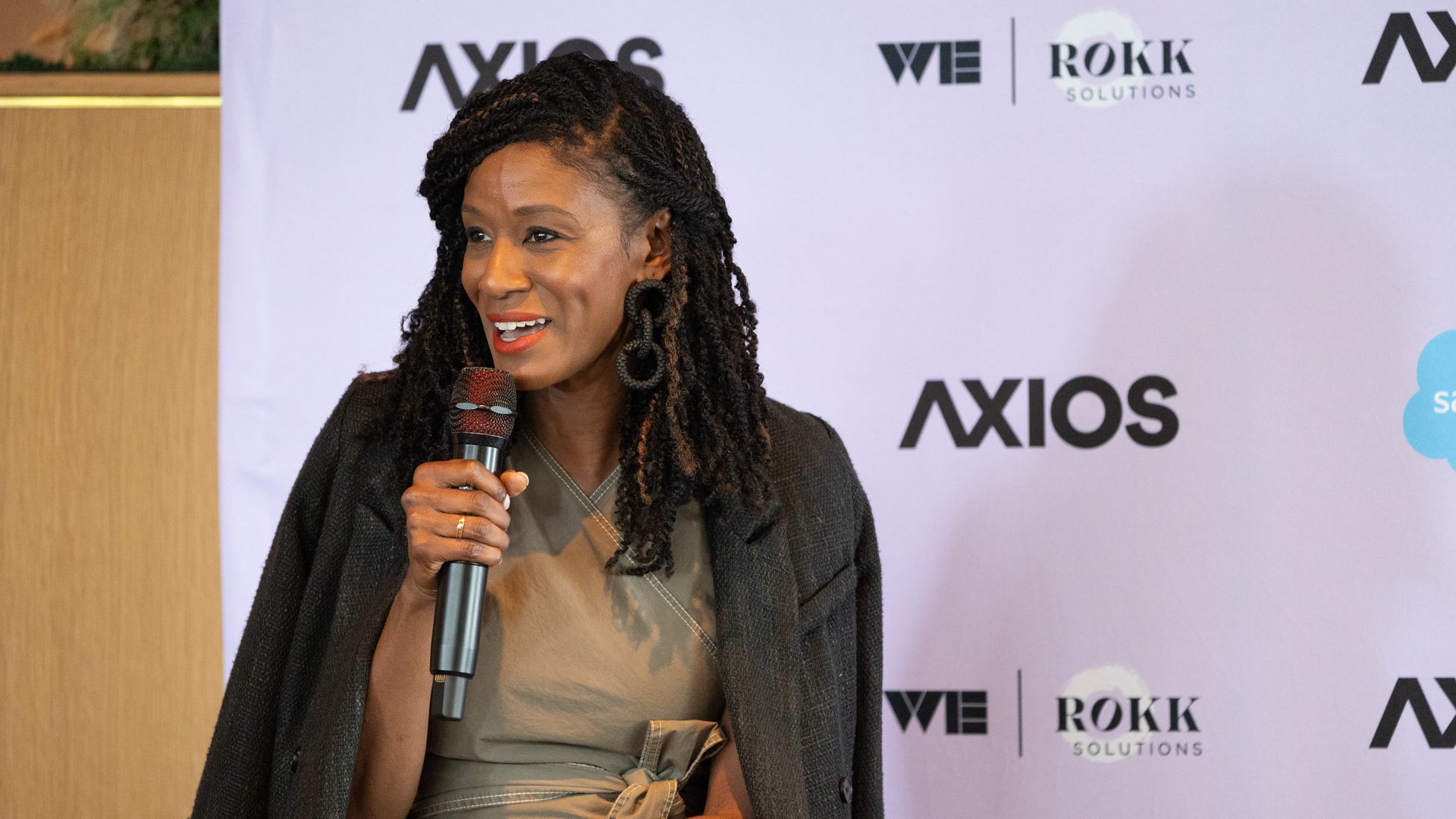
At an event in Washington, D.C., alongside the White House Correspondents' Dinner, more than 100 Axios Communicators readers gathered to discuss managing corporate reputation during an election year.
- 🧠 Why it matters: In times of uncertainty, polarization or transition, employees require more communication, not less.
What they're saying: UPS president of global communications Deisha Barnett said every communicator on her team must view employees as a key audience.
- "Reaching our employee base is a lever that we pull every single time, and generally speaking, it's everybody's responsibility," she said.
- Plus, sharing employees' stories is a major component of the strategy. "They are our best and largest group of brand ambassadors," Barnett added.
Between the lines: Prioritizing employees is especially important in the current political environment, said Instacart chief corporate affairs officer Dani Dudeck.
- "We prioritize internal communications above external, especially when it's really choppy out there — and even if the issues are unrelated to the potatoes and tomatoes that we're delivering."
- "Our view is the more communication internally, the better, period," added Dudeck. "We don't shy away from the hardest question, even if it's rude, even if it's assumptive, even if the thesis is wrong. Our leaders unpack it all and are mindful of tone. Because of that, our internal dialogue is much more constructive."
Zoom out: There are risks to publicly weighing in on issues that don't directly tie to business objectives or corporate values, ROKK Solutions co-founder Ron Bonjean told the audience.
- "Our research shows that companies increasingly need to stay aligned with who they are and their values. They should be thinking about what their customers use them for, and stick with that — so when a social issue hits, you really need to think about, 'Does this pertain to my business?' and if it doesn't, stay away from it."
The bottom line: Big, public declarations or performative pledges are things of the past. Instead, communicators are advising executives to focus on aligning with employees through sharp, transparent internal communications.
Go deeper ... Chart: Conveying a corporate stance
4. 💡What they're saying
After the main event, two dozen communication leaders from Hilton, Molson Coors, BP, Snap, AT&T and more stuck around to dive deeper into navigating 2024.
State of play: The thread throughout all conversations was hope for the best but prepare for the worst.
- Or, as Barnett said, "Stay ready so you don't have to get ready."
Zoom in: Table-top exercises have become a priority, with most saying they spend more time crisis planning than ever.
Two key factors are at play:
- The rise of AI and its ability to quickly spread mis- and disinformation — increasing the velocity of a corporate crisis.
- And the geopolitical tensions spreading across workplaces ahead of the elections.
The big picture: When they aren't planning for unforeseen, external crises, comms leaders are navigating how best to respond to issues like the Israel-Hamas war.
- Employee resource groups (ERGs) have been an important communication channel for Hilton during this time, says executive vice president of corporate affairs Katherine Lugar.
- ERGs "allow us to make sure that we're really sensitive to the issues that matter to our employees and that we're doing the right things internally to deliver value or offer solutions — and that has been an enormous trust and credibility driver."
Go deeper ... Join Axios Communicators Pro
5. Axios CEO on the politics of leadership

Axios CEO and co-founder Jim VandeHei is out with a new book, "Just the Good Stuff," which examines what it means to lead in the modern workplace.
Here's an excerpt:
"Like it or not, every leader is a politician in this era of social media pressure and workplace activism.
Why it matters. Most top leaders are white, male, and over 50, like me. Most hate the political expectations. Tough shit — it comes with the job now.
- Truth is, you don't need to take a stand on any of these topics. But you do need to be aware of the political dynamics, listen to competing viewpoints internally, and explain calmly but confidently why you are not taking a stand.
Even the most press-shy, introverted leaders need to be de facto politicians. Here are some tricks for organizing your campaign:
- Accept the nomination. Don't fight reality. Embrace it. People have lost trust in government, the media and other institutions. Employers have a huge opening to fill the vacuum.
- Write your platform. Decide what you and your company stand for, and will fight for. You do not need to weigh in on all — or even any — public topic. Establish in advance what matters specifically to your organization.
- Control your message. Don't wait for controversy to hit. Or your opponents to define you. Talk often and openly about the issues you care about and how you choose action or silence.
- Don't lash out. Many leaders get defensive and clam up when staff demands action on a social topic. Don't. If enough people under you are worked up, gather them for a candid, off-the-record discussion. Ask them to keep it in the family and respect the privacy of others. Then, listen. Often, people just want to be heard even if they don't get what they want.
- Stir your base. Younger workers and applicants now insist that employers articulate their values. Previous generations were more obsessed with salaries, perks, and career paths. Stir them with your higher purpose, so they understand their work has meaning. This will make them comfortable and agreeable when you refuse the activism they demand."
Go deeper ... All net proceeds from the book will provide scholarships for kids in need.
6. 💭 1 quote to-go
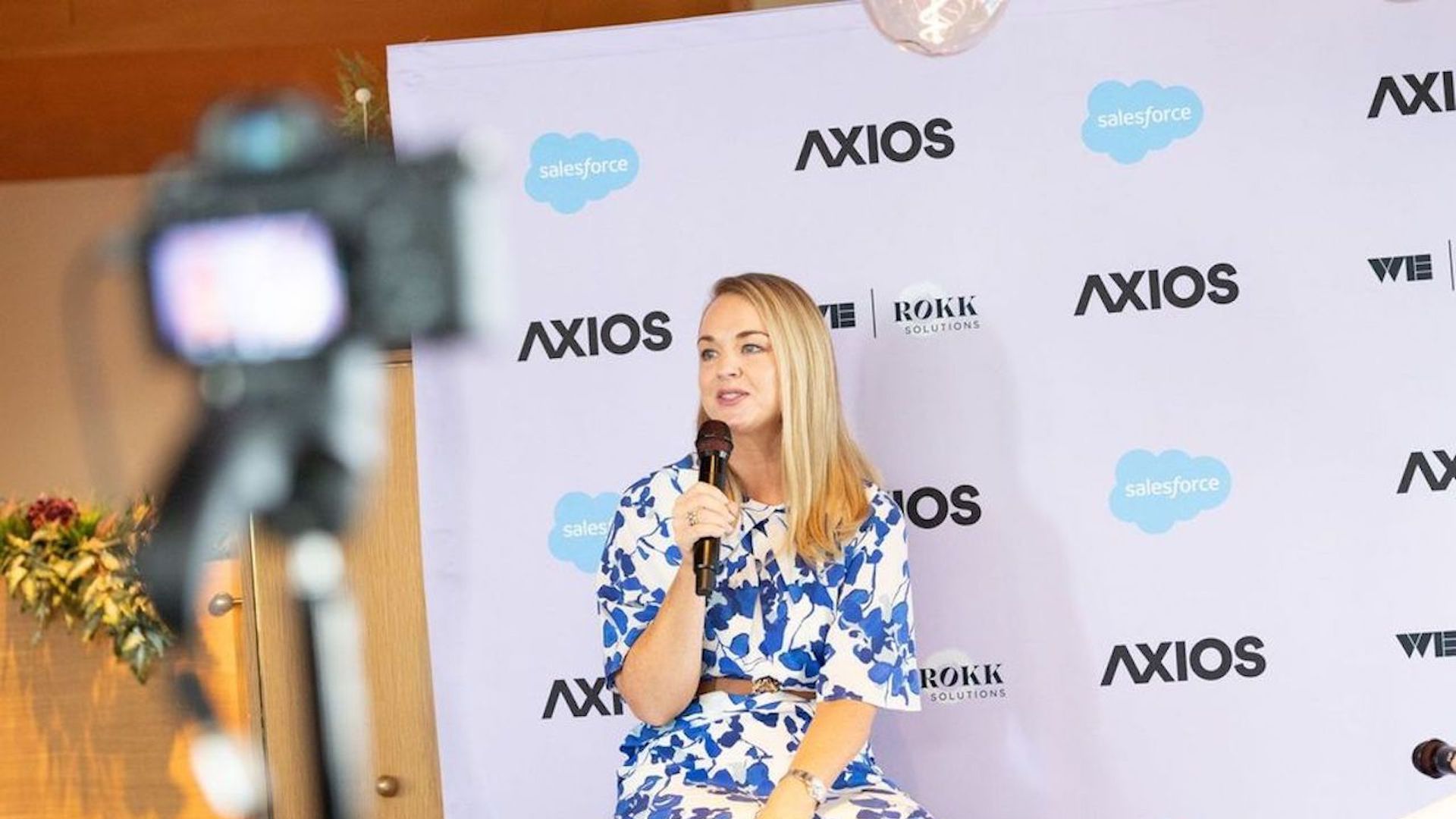
"We must be able to operate in absolute chaos. We have been card-carrying members of the tortured comms department for years — and we will keep doing what we do, which is serving as sturdy pilots for our founders, CEOs and our teams."— Instacart chief corporate affairs officer Dani Dudeck, at the Axios Communicators event in Washington, D.C.
📚 Thanks for reading! And thanks to editors Nicholas Johnston and Kathie Bozanich for making this newsletter happen each week.
- Want more Axios Communicators content? Become a Pro member today.
Sign up for Axios Communicators