Axios Communicators

August 11, 2022
Welcome back to Axios Communicators!
🚨 ICYMI: Axios will become part of Cox Enterprises after agreeing to be sold for $525 million. Our coverage will not change, and now Axios will have more resources to produce smart, trustworthy journalism across national and local markets.
- Speaking of ... Next week, Axios Local will launch in two new cities — Houston and Miami! Check out all the awesome local offerings here.
Today's newsletter is 1,291 words, a 5-minute read.
1 big thing: The art of effective trolling

Illustration: Sarah Grillo/Axios
Sometimes you can say more with humor than with a polished speech or marketing spot.
Why it matters: Consumer brands, public figures and even state governments and federal agencies have embraced the riskiest communication tool of them all ... trolling.
- But, like any form of communication, the message must be authentic, innovative, informative — and sometimes self-deprecating — to truly stick.
Be smart: Online trolling dates to the start of the internet— the term was first used to describe annoying posts that would flood discussion boards and hijack the conversation.
- In the 2000s, trolling became more intentional and mainstream through the use of memes and social media, and by 2012, “Brand Twitter” became a thing as Taco Bell and Old Spice prominently duked it out.
- Now, it’s common practice for social media accounts to troll their competitors, public figures and even the general public.
Yes, but: There’s a fine line between clever and cringey. To walk that line you must be authentic, says communication strategist Lis Smith.
- Smith, author of the new book, “Any Given Tuesday: A Political Love Story,” says consumers can smell phoniness. However, social media — if used in an original, engaging way — can be an effective tool for breaking through the fractured media landscape.
- “To be successful online, you don't need to understand every one of the latest memes or the lingo of Gen Z," Smith told Axios. "You just have to be smart, authentic and be willing to have a little bit of fun with it. That's what people respond to.”
- For example, unlike Elon Musk, “it would be extremely off-brand for Bill Gates to be s**t-posting on Twitter.”
The bottom line: Trolling is risky, but if done right, it can be an effective communication tool to humanize your brand and differentiate yourself from competitors.
2. The hits and misses
Illustration: Gabriella Turrisi/Axios
Some have struck the right balance between smarts and snark in their online content.
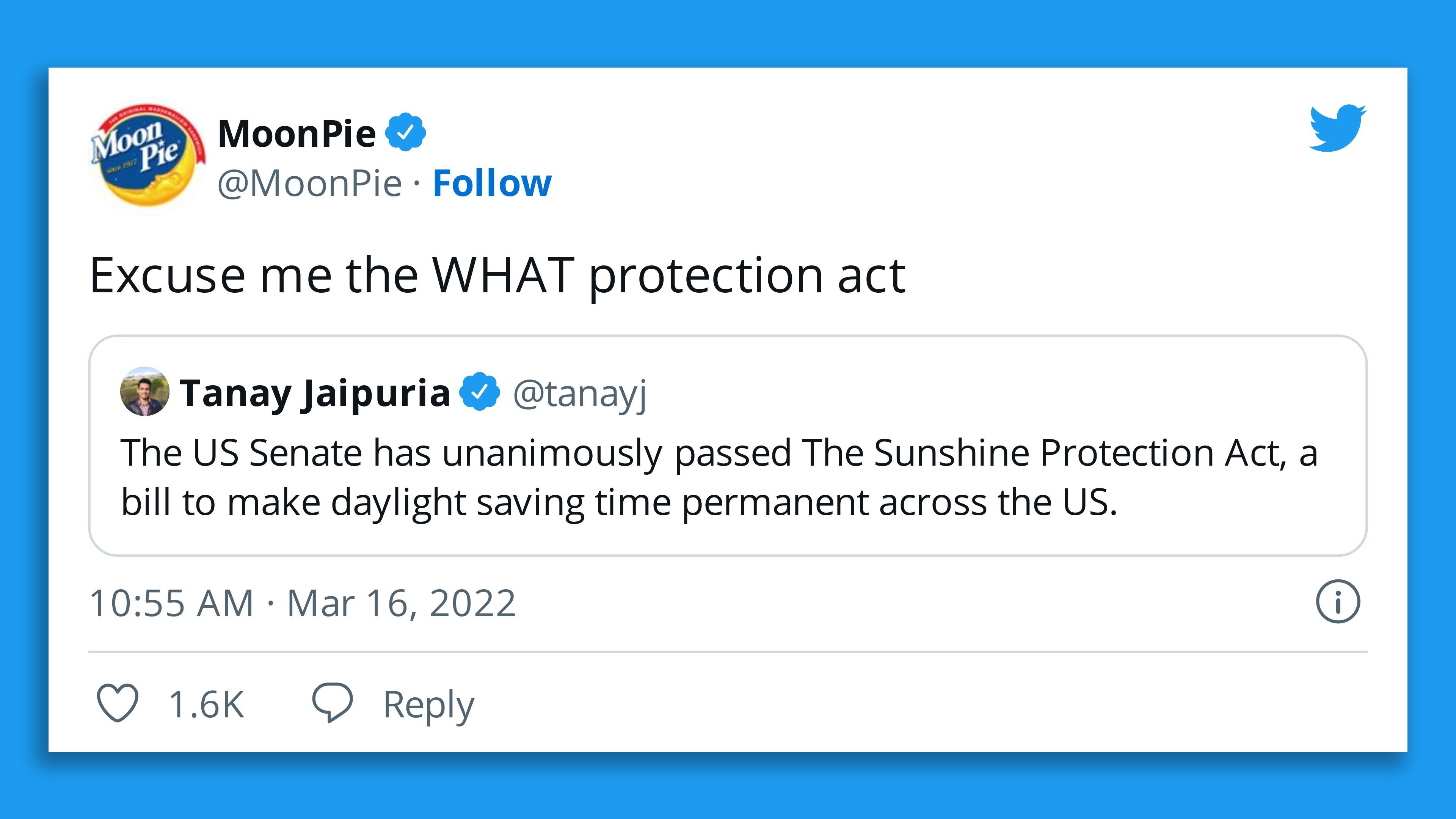
- Wendy’s is known to mock McDonalds for its broken ice cream machines and frozen patties, while MoonPie has a reputation for trolling competitors like Hostess Snacks — and even the sun.
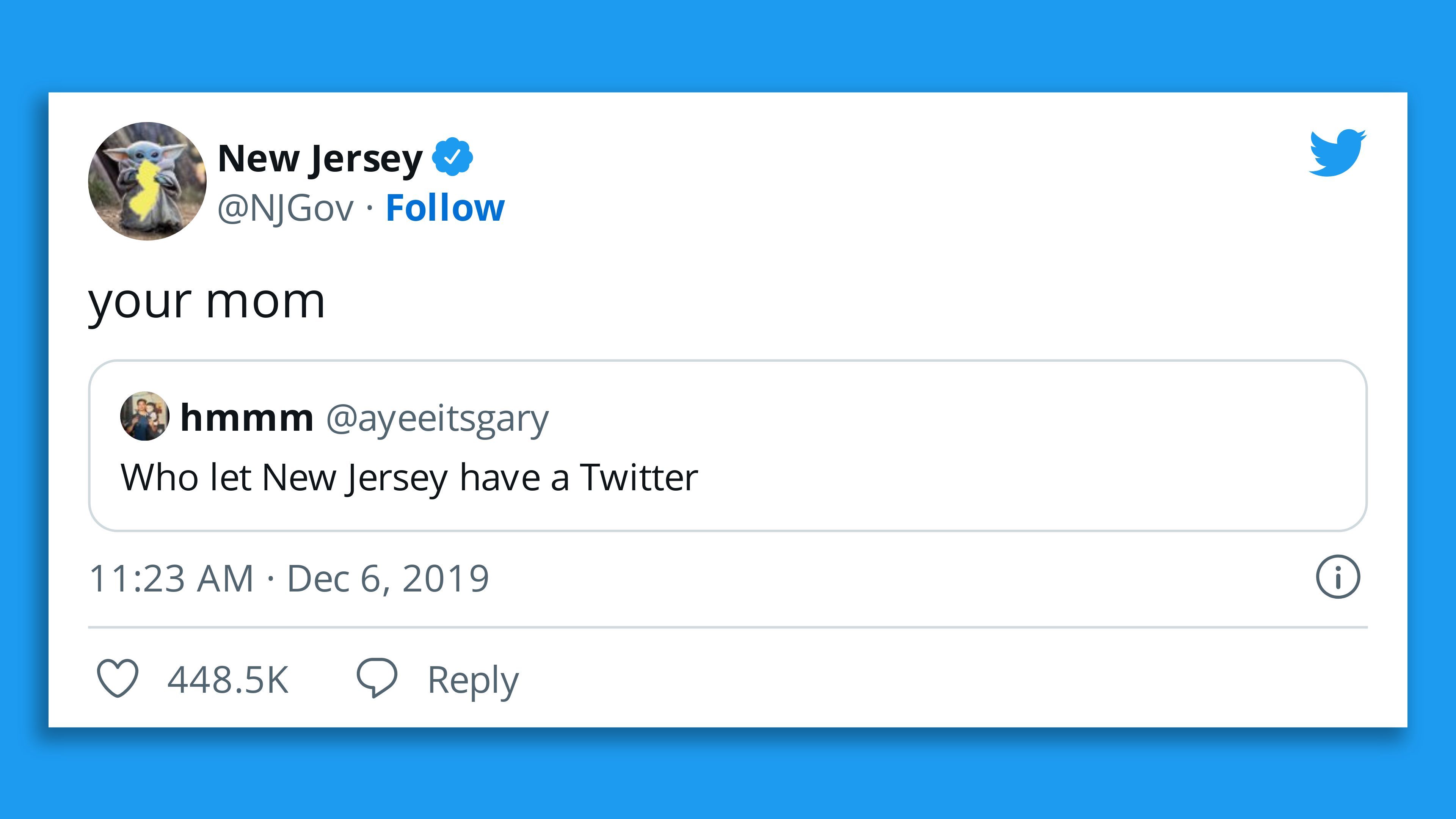
- New Jersey’s Twitter account went viral for capturing the quintessential voice of Jersey through feuds with neighboring states — like Delaware — and a simple "your mom" joke, which tripled the account's followers in 2019.
- KFC got creative by quietly unfollowing everyone except for five members of the Spice Girls and six dudes named Herb — including Axios' very own Herb Scribner — as an ode to its 11 herbs and spices.
- And the CIA trolled us all by declaring, "No, we don't know where Tupac is."
Zoom in: Politicians are also trolling hard, and it's paying off in the polls.
- Democratic candidate for U.S. Senate John Fetterman — who is currently polling 17 points higher in Pennsylvania than his opponent, Dr. Mehmet Oz — is the latest politician to gain attention for using social media memes and tricks.
- Fetterman enlisted several stars from the Garden State — like Snookie from “Jersey Shore” and Steven Van Zandt from Bruce Springsteen’s E Street Band — to point out Oz’s ties to New Jersey. Fetterman's campaign also created a petition to induct Oz into the New Jersey Hall of Fame.
- Meanwhile, conservatives have trolled President Biden in the last year with "Let's Go Brandon" chants and swag, but supporters of the president recently tried to co-opt the nickname by embracing the imagery of Biden as a superhero named "Dark Brandon."
Yes, but: Trolling doesn't always land. Brands like The Gap and IHOB (ahem, I mean IHOP) failed due to corniness or outright insensitivity.
The bottom line: The most successful campaigns offer a smart, clear point of view— and if it's authentic to the brand voice, it won't come across as phony or trying too hard.
3. Gen Z successfully trolls corporate culture

Illustration: Aïda Amer/Axios
Trolling can also lead to change, and younger generations are using it as a tool to call out corporate culture.
Why it matters: Viral TikToks add an element of authenticity and relatability to the data we are seeing in national workplace surveys — that is, employees want a better work-life balance.
State of play: Some companies — and countries — are taking note.
- The 4-day workweek has been embraced by companies like Bolt, Kickstarter and Microsoft Japan, while the United Kingdom, Belgium and Sweden have also experimented with shortened work hours.
- The results were "life-changing," and employees report feeling happier, healthier and more productive.
The bottom line: Humor-based trolling is an effective way to amplify overlooked or unheard points of view and when used correctly, it can affect real change.
4. Exclusive: Happiness at work is a right, not a privilege, Indeed survey finds
Illustration: Shoshana Gordon/Axios
The latest job numbers prove that opportunities are plentiful and companies are fighting to attract and retain talent.
- One way to do that is by prioritizing employee wellbeing.
Driving the news: Axios got a sneak peek at the new Indeed x Forrester workplace survey — out Aug. 17 — and found that 67% believe wellbeing at work is a right, not a privilege.
Between the lines: The driving force behind employee wellbeing is purpose, the study finds.
- Employees want to feel energized by work tasks and need to understand how their contributions are part of the larger strategy.
By the numbers: This can impact self-confidence, self-esteem, quality of life and personal relationships.
- 86% say that their happiness at work directly impacts their mood at home and 61% believe that in 10 years, workers will not work for companies that don't prioritize happiness and wellbeing.
💭 Our thought bubble: We can cultivate a sense of belonging by explaining how roles, projects and initiatives fit into the larger strategy as the common thread in all internal communications.
5. CEOs leverage LinkedIn for layoff announcements
Illustration: Shoshana Gordon/Axios
At the moment, HyperSocial appears to be a pretty sad workplace.
Driving the news: CEO Braden Wallake went viral on Tuesday for posting a crying selfie on LinkedIn after laying off two employees.
State of play: Some have praised him for being vulnerable, while others view the post as self-promotional and tone deaf.
- Following the backlash, Wallake doubled down by encouraging people looking for work to comment on his new post — which will only make it go more viral — with their resumes, desired job titles and qualifications.
- Wallake's marketing company specializes in services like "optimizing LinkedIn posts," which creates an added layer of ick that could hurt brand reputation and become a PR headache.
Yes, but: Wallake isn't the only CEO to announce layoffs on LinkedIn.
- Klarna CEO Sebastian Siemiatkowski caught flack for posting a list of terminated employees on his public social media pages, encouraging recruiters to scout talent from the “goldmine” document.
- Vimeo CEO Anjali Sud also tried to find placements for her laid-off employees and encouraged her LinkedIn network to reach out if they were hiring.
- “We’ve seen an increase in executives and other business leaders leaning more into LinkedIn as a platform to talk directly to the world," Andrei Santalo, LinkedIn's head of community management, told Axios. "And they’re being more transparent than ever on their take on business trends, sensitive company news, and their own advice on leading."
1 fun thing: Troll Hall of Fame
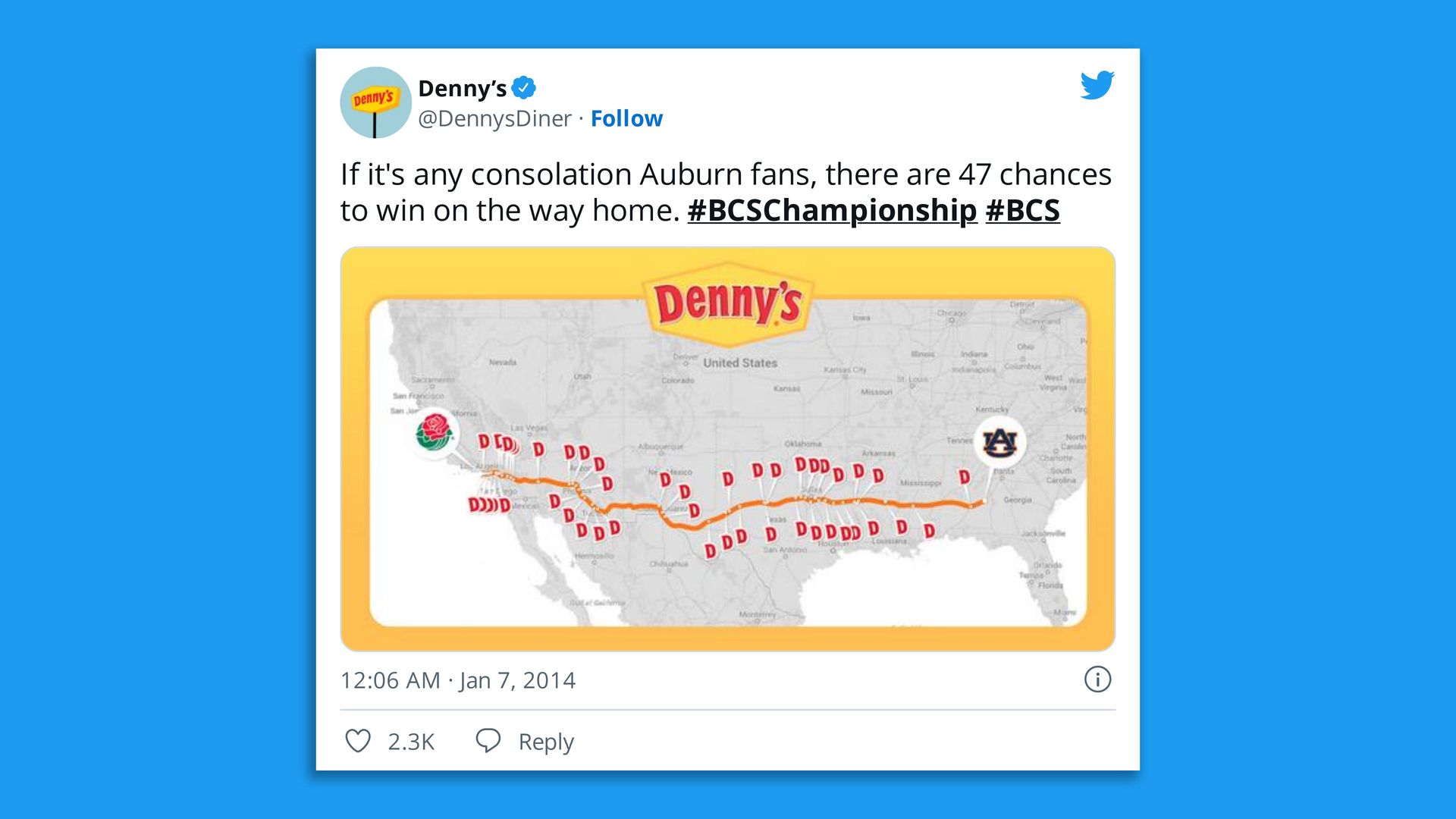
Screenshot: @DennysDiner/Twitter
Throwback to Denny's successfully trolling my beloved Auburn Tigers after our 2014 national football championship loss.
🐅 War Eagle, anyway.
📧 Thanks for reading! Continue to send feedback, pitches and insights: [email protected]
Sign up for Axios Communicators

Eleanor Hawkins unpacks the topics and trends driving Communications.