Axios Closer

October 21, 2026

Wednesday ✅.
Today's newsletter is 858 words, a 3-minute read.
📈 The dashboard: The S&P 500 closed up 0.6%.
🔥 Today's stock spotlight: IBM jumped over 7% in extended trading after the company beat expectations and pointed to AI-related revenue.
1 big thing: Robotaxis, humanoids and semis, oh my
Tesla's revenue flattened out in the third quarter, but the company launched robotaxi service and humanoid production while still spending far less than expected.
Why it matters: Investors are scrutinizing AI outlays, with some concerned about the sustainability of the heavy spending that's propping up the economy.
💸 Follow the money: Tesla reported $4.7 billion in capex in Q3.
- That was more than double the amount from the same period a year earlier but still far below S&P Capital IQ expectations of $7.8 billion.
🔭 The big picture: Wall Street's view of Tesla is increasingly focused on its AI ambitions, self-driving car plans and energy storage business — and less on the blocking and tackling of selling EVs to individuals.
- Tesla disclosed today that it has begun initial production of the Optimus humanoid robot, which CEO Elon Musk has described as a world-changing product.
- Tesla also recently began production of the Tesla Semi, launched robotaxi service in Austin, and unveiled a flying version of the new Roadster sports car.
What we're watching: Any movement from Tesla or SpaceX on a potential merger after Musk said yesterday on SpaceX's earnings call that the two companies have formed special committees to consider a deal.
- He told investors that he's not allowed to be involved in the talks, but he said he thinks it's "a good idea."
- Musk said today on Tesla's call, "I think I said everything that should be said yesterday."
2. Meta reports 26% revenue growth for Q3

Meta shares were advancing in extended trading after the company reported record revenue for the third quarter, Axios' Pete Gannon writes.
- The company brought in $64.6 billion in sales in the September quarter, a 26% increase over last year.
- It also gave a better-than-expected forecast, saying it expects Q4 revenue to come in between $73 billion and $76 billion.
🤖 The big picture: That's welcome news for investors, who are looking for evidence that the company's massive spending on AI is translating into sales.
- Meta's earnings report didn't provide much detail on exactly how AI is fueling revenue, or by how much, except that it is "delivering substantial incremental advertising revenue through stronger engagement, better recommendations, and more efficient monetization."
- 💸 And Meta intends to keep on spending. The company expects capex for the year to be in the range of $135 billion–$145 billion, narrowed from its prior outlook of $130 billion–$145 billion.
The intrigue: To help fund that spending, Meta said its board has authorized a new class of publicly listed, nonvoting Class C common stock, which is intended to allow the company to raise needed capital while preserving founder and CEO Mark Zuckerberg's control.
📈 The impact: Meta shares were trading up 4% after the bell.
3. Other happenings
🚙 General Motors wants to slash the time it takes to develop a new vehicle in half, betting that artificial intelligence can help it compete with China's much-faster automakers. (Axios)
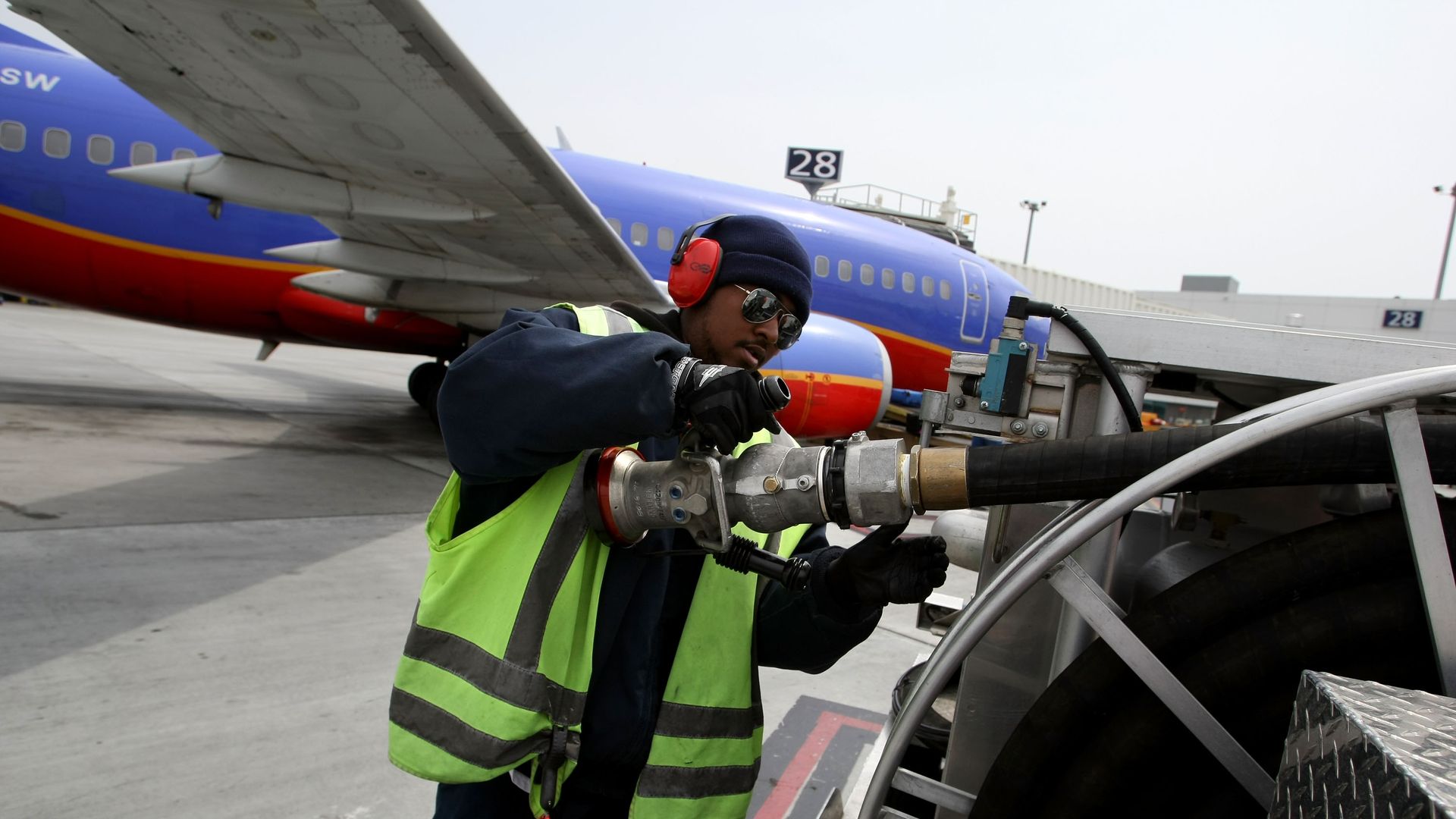
✈️ Southwest Airlines cut its guidance for the full year, the latest example of airlines grappling with the impact of the rising cost of jet fuel. (Bloomberg)
4. AI vs. AI

Artificial intelligence exhibited one of its much talked about use cases today: helping find cybersecurity vulnerabilities that other AI could help exploit, Pete writes.
Catch up quick: Security researchers are sounding the alarm over two critical vulnerabilities in an open-source programming language known as PHP used to run millions of websites around the world.
- Government officials from the U.S. to Japan are warning companies to apply a patch, or consider taking down their sites to avoid an attack.
State of play: OpenAI touted the role its model played in discovering the issue, which allowed PHP researchers to create a patch.
- Now there's a race for anyone using the software in their sites to deploy it, before hackers can use AI models themselves to exploit it.
💭 Our thought bubble, via Axios Future of Cybersecurity author Sam Sabin: "Security researchers have been skeptical of AI-generated vulnerability reports, many of which have turned out to be minor bugs or false alarms. But the PHP discovery could force the cybersecurity community to reckon with the reality of AI threats."
The bottom line: AI threats beget AI opportunities. "Cybersecurity will likely be the next major use case of AI," Nvidia CEO Jensen Huang told an industry conference in September.
- "What better way to create demand than to create a problem," he said.
🗓️ On this day in 1824, British bricklayer Joseph Aspdin patented a method for making Portland cement, widely considered the precursor to the modern-day material. Two decades after Aspdin's patent, the cement wars would get dicey, with conflicting claims over who — Aspdin's son William or rival cement maker Isaac Johnson — deserved credit for the true modern-day variety. Nearly two centuries later, Portland cement is still the base of most of the world's concrete.
Today's newsletter was edited by Pete Gannon and copy edited by Sheryl Miller.
- Did a friend forward this to you? Sign up here to get Axios Closer in your inbox.
Sign up for Axios Closer

Catch up on the day's biggest business stories and look ahead to important trends. Led by Nathan Bomey.