Axios Closer

February 23, 2026

Monday ✅.
Today's newsletter is 799 words, a 3-minute read.
📉 The dashboard: The S&P 500 closed down 1%.
🥶 Today's stock spotlight: IBM (-13.2%) got swept up in AI disruption fears after Anthropic said its Claude Code tool can automate much of the complex work behind COBOL — a pillar of IBM's legacy data-processing business
1 big thing: Another blow for Novo
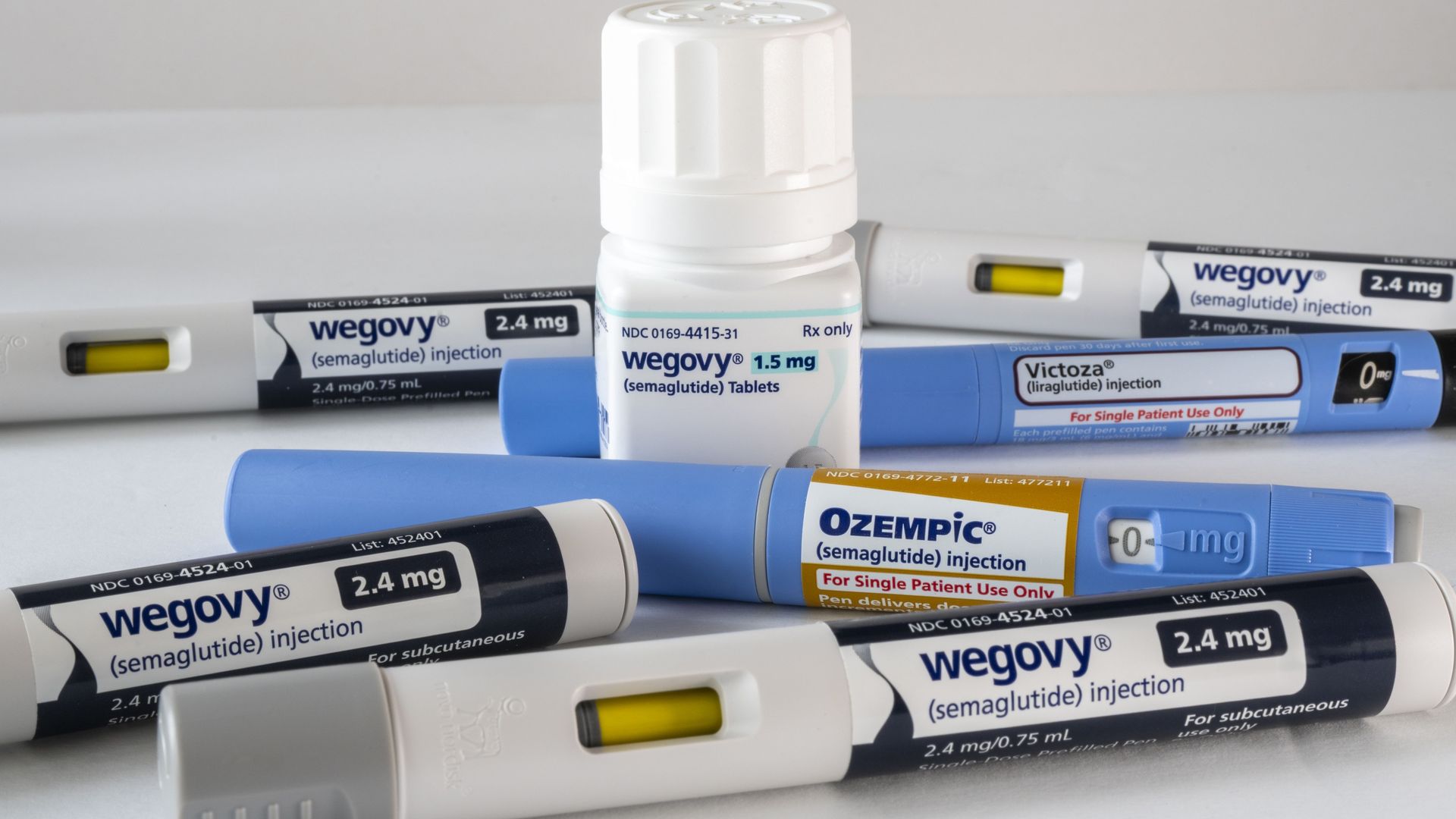
The punches keep coming for Wegovy-maker Novo Nordisk in its bout with Eli Lilly for weight-loss drug supremacy.
- Novo said today that its next-generation GLP-1 obesity drug, CagriSema, fell short in late-stage trials against Lilly's rapidly surging Zepbound.
- CagriSema delivered 23% weight loss after 84 weeks but "did not meet the primary endpoint" of proving non-inferiority to Zepbound's 25.5%, the company said.
💉 In a separate announcement, Lilly today said Zepbound is now available in a single injection pen containing four doses.
- "The pen could serve as a more convenient option for some patients, as it reduces the number of devices they have to use in a month to take the drug," CNBC notes.
📉 The impact: Novo shares in the U.S. plunged over 16% today. The Danish company's stock is now down 56% over the last 12 months.
- 📈 Lilly shares closed up 5%, and they've risen 20% over the last year.
The big picture: Novo was the early leader in GLP-1s — so dominant that its diabetes drug Ozempic became shorthand for the class — but Lilly has pulled ahead in what's quickly become one of pharma's richest battlegrounds.
- Yes, but: CagriSema still demonstrated significant weight-loss efficacy — and Novo chief scientific officer Martin Holst Lange said "we are pleased with" the result.
The bottom line: Lilly had already taken the market share lead in GLP-1s, and its advantage now looks poised to widen.
2. Check, please
Independent restaurants say higher prices and delivery expansion — key survival tactics in recent years — are losing their effectiveness, Axios' Kelly Tyko writes.
Why it matters: Local eateries say they've reached a pricing ceiling, limiting their ability to offset rising food and labor costs.
- 💸 Restaurants that raised prices more than 10% in 2025 were most likely to report lower profits — a tighter threshold than last year's 15%, according to a new James Beard Foundation report shared first with Axios.
- "There's just not a lot of elasticity left," Anne McBride, the foundation's VP of Impact, tells us.
Yes, but: Business conditions improved for many operators last year.
- 62% reported good or excellent performance in 2025, up from 54% in 2024.
- 73% are optimistic about 2026.
The bottom line: Margins remain thin for restaurants. Wage growth has cooled, and more than 40% of operators who added delivery say it reduced profits.
- Sales may be stabilizing — but pricing power is fading.
3. Other happenings
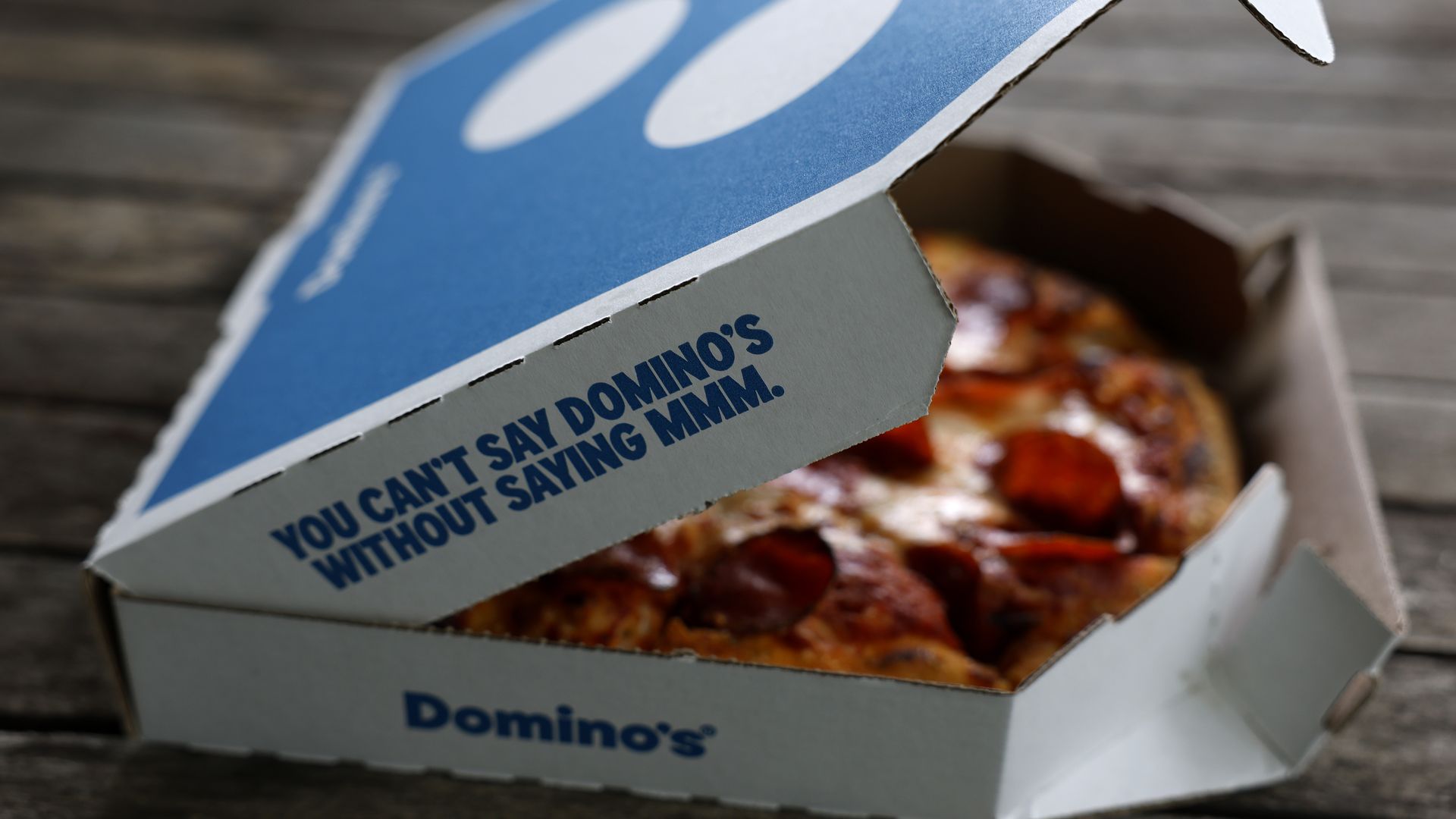
🍕 Domino's Pizza shares rose after the chain posted a 3.7% increase in U.S. same-store sales, better than the expected 3.2% increase. Increased carryout sales, more third-party delivery orders and new stuffed-crust pizza drove the beat. (Bloomberg)
💸 PayPal shares closed up nearly 6% following a report that the company was attracting interest from potential buyers. Shares in the digital payments company have fallen over 40% over the past year. (Bloomberg)
💼 OpenAI is partnering with consultancies Accenture, Boston Consulting, Capgemini and McKinsey to deploy Frontier. The enterprise platform is intended to accelerate the use of AI agents in workflow. (CNBC)
4. Refund push
Democrats want to give a windfall of cash to businesses — yes, you read that right.
State of play: Since the Supreme Court on Friday overturned President Trump's first attempt at global tariffs, several Democratic senators quickly pivoted to advocating for tariff refunds, CNBC reports.
- The bill's sponsors include Sens. Ron Wyden (D-Ore.), Jeanne Shaheen (D-N.H.) and Ed Markey (D-Mass.).
- Capital Economics estimates refunds could total about $120 billion.
- But the money wouldn't go to consumers — it would go to businesses that paid the extra import costs.
The intrigue: Companies could theoretically pass the refunds on to consumers through lower prices — but few analysts expect widespread price cuts even if refunds become a reality (which is far from certain).
- Much more likely: They would use the cash to bolster strained profit margins.
The bottom line: Though Wyden cited "small businesses" and manufacturers — and not corporate giants — we would still normally expect to see policies advocating business refunds from Republicans.
- But we do not live in normal times.
🗓️ On this day in 1958, five-time Formula One champ Juan Manuel Fangio was kidnapped from his Havana hotel by rebels aligned with Fidel Castro on the eve of the Cuba Grand Prix. The Argentine driver was released the next day after the race, in a plot designed to embarrass President Fulgencio Batista on the international stage. Castro overthrew Batista's government 11 months later.
Today's newsletter was edited by Pete Gannon and copy edited by Sheryl Miller.
- Did a friend forward this to you? Sign up here to get Axios Closer in your inbox.
Sign up for Axios Closer