Axios Closer

July 14, 2026

Tuesday ✅.
Today's newsletter is 743 words, a 3-minute read.
📈 The dashboard: The S&P 500 closed up 0.4%.
- 💸 Inflation fell in June, on the back of lower energy prices, the government said this morning.
🥶 Today's stock spotlight: Yum! Brands (-2.2%) fell after the Washington Post reported that health authorities were investigating whether Taco Bell restaurants played a role in the recent cyclosporiasis outbreak.
1 big thing: IBM's AI reckoning
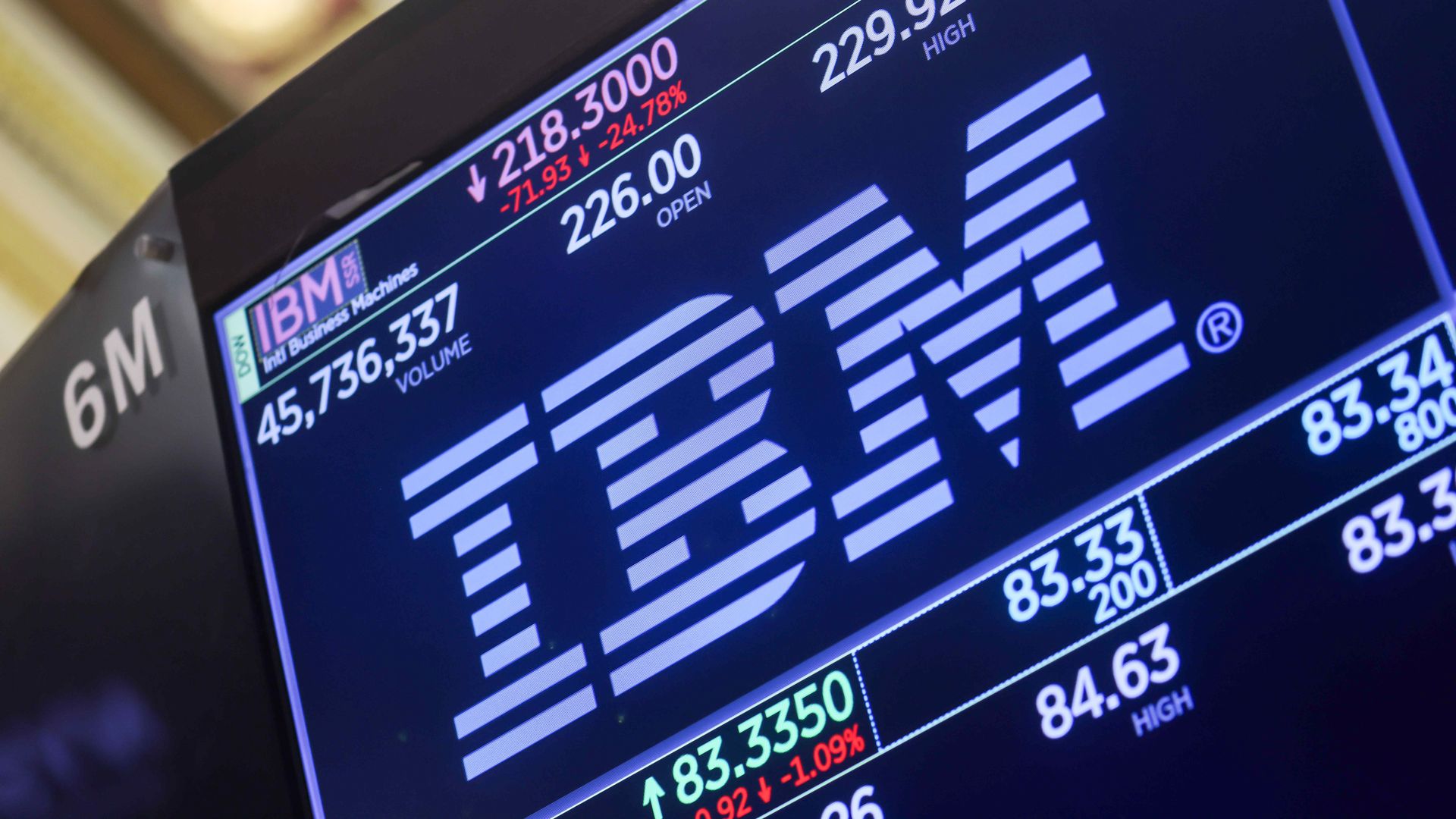
IBM startled investors this morning with an acknowledgment that shifting priorities in the AI economy are bludgeoning its core business.
- The company's stock plunged over 25%, its worst single-day loss since at least 1968, per Bloomberg.
Why it matters: The software industry is suffering as companies shift their tech spending from conventional software to AI tokens and data centers.
Driving the news: IBM CEO Arvind Krishna delivered a preliminary look at the company's second-quarter earnings, saying IBM had "faltered" in adapting to the AI spending shift.
- "We did not anticipate the magnitude of the capex reprioritization," Krishna said in a letter to shareholders, noting that clients were also "distracted" with cybersecurity needs driven by emergent AI threats.
- "This is a major miss that will rattle many," Baird managing director Ted Mortonson tells Axios in an email.
Threat level: Krishna said the rising costs of chips left less room for IBM's bread and butter: mainframes and software.
- "In the last few weeks of June, we saw clients shift their quarterly capex spend toward servers, storage, and memory purchases to secure supply-constrained infrastructure ahead of expected price increases," Krishna said.
By the numbers: IBM's software revenue is expected to rise 5%, compared with Wall Street's expectation of 10%, according to Evercore ISI analysts.
- Infrastructure revenue is expected to fall 7%, compared with expectations of a 3% decline.
The bottom line: The AI economy is starting to claim some victims.
2. Banks point to "resilient" consumers
"It's getting close to as good as it gets," JPMorgan CEO Jamie Dimon acknowledged about the banking environment on the company's earnings call today, Axios' Pete Gannon writes.
- Led by strong performances across trading, investment banking, lending and credit, five of America's biggest banks reported a combined $49 billion in profits in the second quarter, and described a healthy picture for the nation's business and consumers.
On the consumer side, JPMorgan CFO Jeremy Barnum said the bank's debit and credit card data shows robust spending — and not just from high-income households, but broadly across the bank's customer base.
- "From our perspective, through all the various dimensions, there's not like that much there in terms to support the K-shape narrative," he said.
Zoom in: Bank of America CEO Brian Moynihan said consumers remain "resilient," with average deposit balances and spending both increasing from the year's first quarter.
- Consumer credit quality remained "strong and in line with expectations" at BofA, Moynihan said, while Barnum said delinquencies were lower than JPMorgan had expected.
Yes, but: Barnum acknowledged there are risks on the horizon as rising prices continue to put pressure on consumers, especially those experiencing negative real wage growth — calling the risk from further pressures, like higher housing costs, "a watch area."
3. 🏦 What they're saying
"The market is clearly extremely risk on, and we're kind of takers of that. And we're trying to strike the right balance between supporting all our clients and being appropriately cautious in an environment that has some complicated dynamics in it."— JPMorgan Chase CFO Jeremy Barnum, on how the firm is judging risk in its trading business.
4. Other happenings

5. Predicting the future of prediction markets
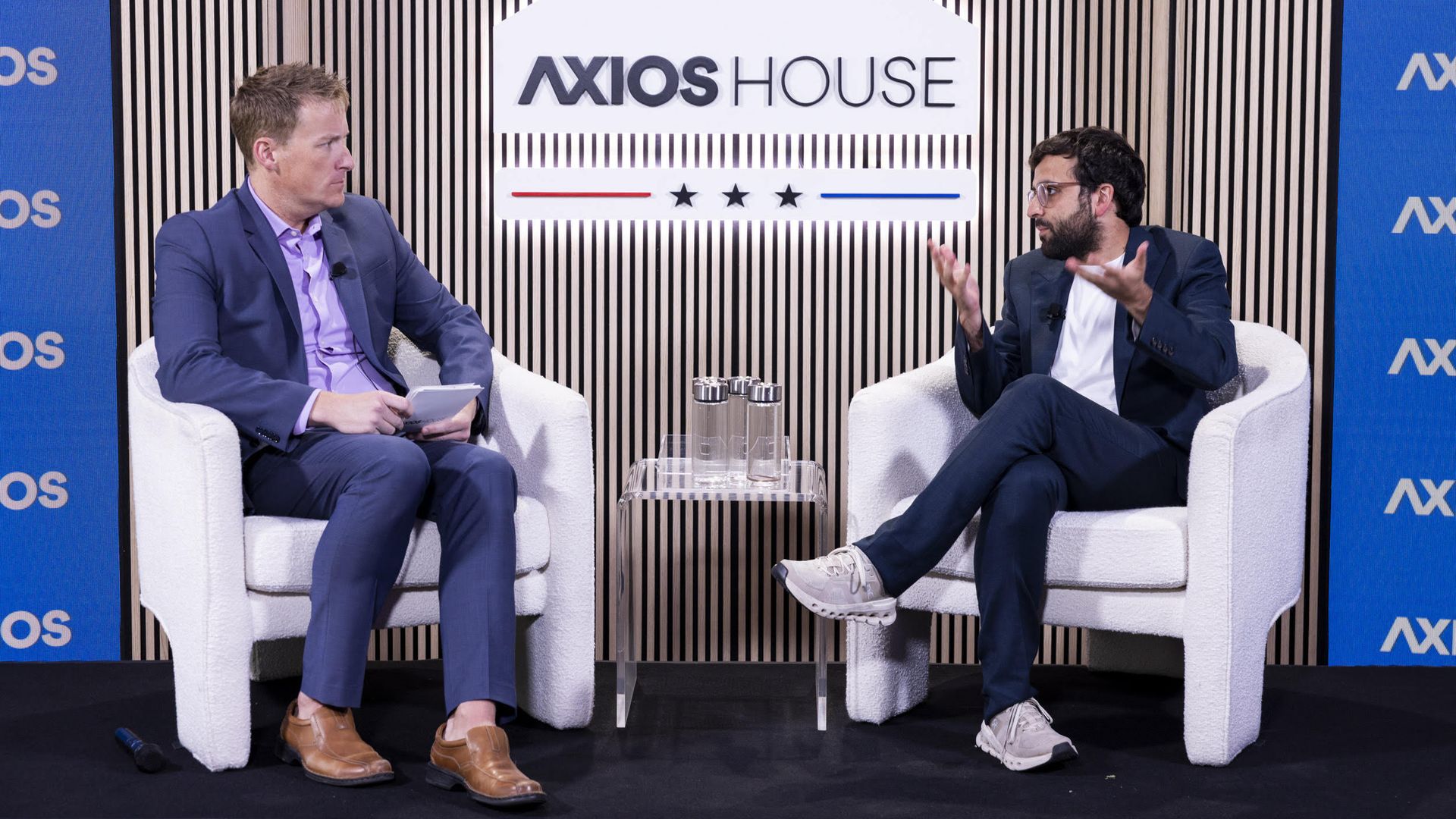
"Prediction markets are here to stay. There is no way around that."— Kalshi CEO Tarek Mansour, to Nathan at Axios House D.C. today, on whether there's a risk that the company's model lacks durability in the case of a new political regime in Washington.
🗓️ On this day in 2013, India's Central Telegraph Office sent the country's last official telegram. It was the only telegram service in the world still running at a national scale, effectively ending the form of communication as a mass-market service. Western Union — the dominant telegram provider in the U.S. — had stopped delivering them in 2006.
Today's newsletter was edited by Pete Gannon and copy edited by Sheryl Miller.
- Did a friend forward this to you? Sign up here to get Axios Closer in your inbox.
Sign up for Axios Closer