Axios Closer

July 10, 2026

Friday ✅.
Today's newsletter is 859 words, a 3-minute read.
📈 The dashboard: The S&P 500 closed up 0.4%.
- The index closed +1.2% for the week, and is +10.7% on the year.
🥶 Today's stock spotlight: SpaceX (-4.5%) closed at $145.30, back below its $150 market debut price.
1 big thing: SK Hynix soars


SK Hynix's U.S.-listed shares surged on their first day of trading, making any hint of a recent memory-chip maker slump feel like a distant memory.
Catch up quick: South Korea's SK Hynix raised $26.5 billion last night through its IPO of American depositary receipts, each one worth a tenth of a common share in Korea.
- SK Hynix is a giant in the memory space and, like its U.S. peers, has seen its shares explode in its home market over the last year amid a surge in AI-related demand.
- A Nasdaq listing makes its shares available to a whole new set of investors, however. And those investors couldn't wait to jump in.
📈 Zoom in: The ADRs jumped right out of the gate late in the morning and closed at $168.01, up nearly 13% from the offer price of $149.
What they're saying: "Demand for the US share sale has been stronger than some people might have expected," Dan Coatsworth, head of markets at AJ Bell, told Reuters.
- "That implies the memory chip rally might have just taken a breath rather than peaked," he said.
What we're watching: SK Hynix's coming U.S. IPO had been cited as a possible contributor to a recent slump in memory-chip makers.
- American competitors Micron Technology and Sandisk have both fallen around 15% since June 30. Micron closed down 1.2% today, while Sandisk gained 3.1%.
Between the lines: SK Hynix holds over 50% of the market in high-bandwidth memory, or HBM, chips — a critical piece of the AI stack and one of the highest-margin, most supply-constrained parts of the memory industry.
💭 Our thought bubble, from Axios deputy managing business editor Jeff Cane: The market's appetite for new tech shares is eye-watering. The massive stock offering comes just a month after the record-breaking stock offering of SpaceX, with Anthropic and OpenAI still to come.
2. Circle's bank green light

Circle shares popped today after the stablecoin giant said it had received final federal approval to operate a national trust bank, Axios' Pete Gannon writes.
Between the lines: Approval would allow Circle to manage reserves for its $73 billion stablecoin, USDC, as opposed to relying on third-party banks and custodians.
- It said it may eventually offer digital asset custody services directly to institutional customers, focusing on banks and other financial firms.
What they're saying: "OCC approval to establish Circle National Trust marks a defining step in bringing blockchain technology and digital assets into the core of the U.S. financial system," Circle CEO Jeremy Allaire said in a statement.
The impact: Circle shares jumped more than 15% today on the news, before settling to close up 5%. They're still down over 16% on the year.
Reality check: Circle is not becoming a bank in the traditional sense.
- A national trust charter does not provide approval to take customer deposits or make loans.
Yes, but: It's a significant milestone in crypto's migration from the industry's fringes to the regulated plumbing of the U.S. financial system.
3. Other happenings
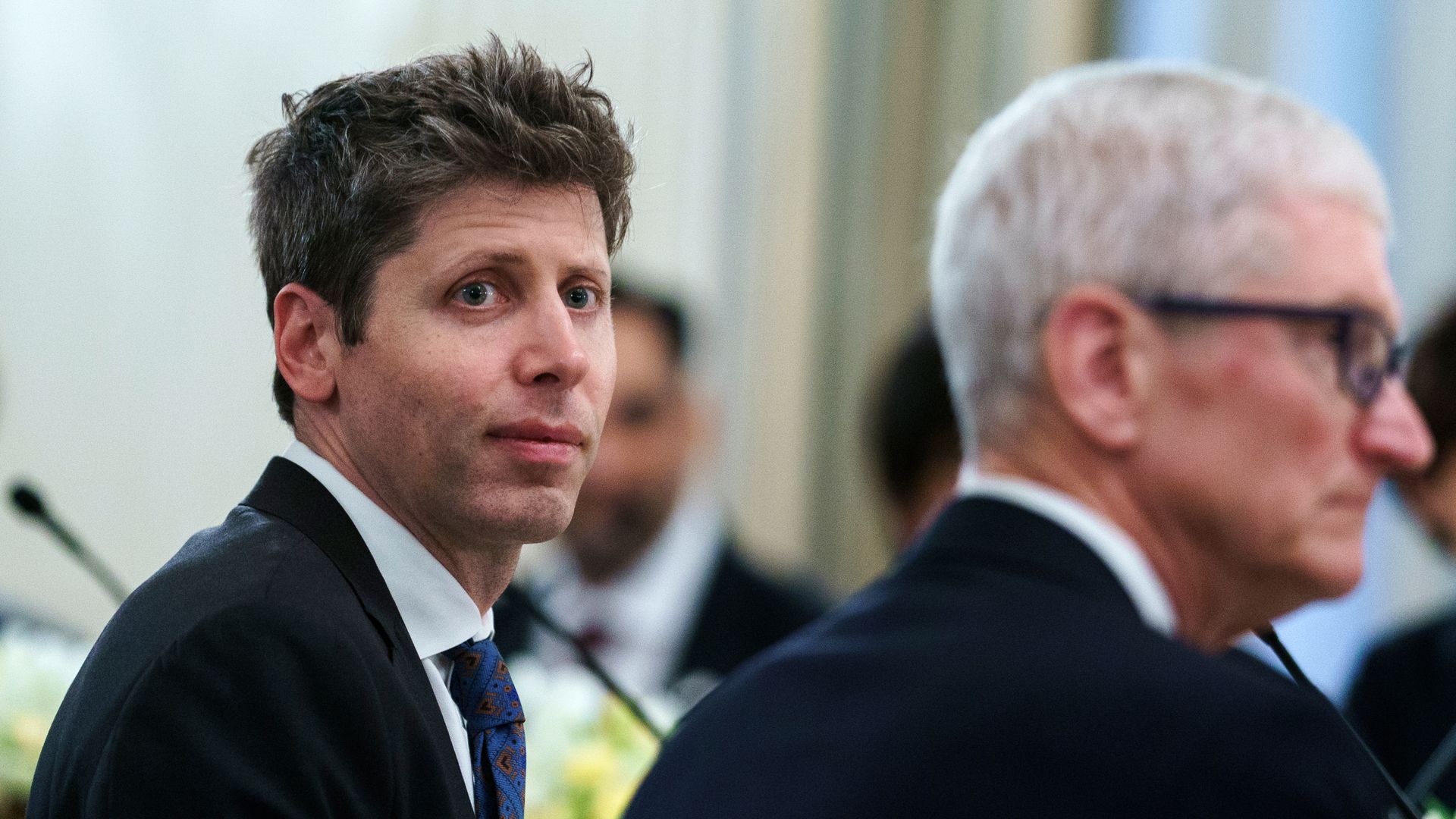
🤖 Apple is suing OpenAI for trade secret theft, alleging the AI giant deliberately and systematically solicited and stole confidential information from the iPhone maker's current and former employees. (Axios)
🚙 Volkswagen is looking to cut its model lineup by up to 50% and continue to shrink its manufacturing capacity as it deals with mounting competition in and from China. (WSJ)
4. The next record label
The music industry is striking a different chord on AI, Axios' Courtenay Brown writes.
- Its AI fight is expanding from protecting artists' rights to increasing transparency for music fans.
🏷️ What's new: A global coalition representing artists and record labels proposed an AI labeling system for songs on streaming services.
- The pitch: A standardized set of track labels that streaming services could use to consistently identify songs as either "AI generated" or "AI assisted."
🤖🎶 The big picture: French streaming service Deezer says 44% of new tracks uploaded to its platform are AI generated.
- The coalition's press release cites Apple Music as saying more than one-third of tracks uploaded to its platform are "100% AI."
- Spotify has begun adding AI disclosures, while Apple has rolled out AI metadata.
🙋 The intrigue: Under the proposal, record labels and distributors would voluntarily disclose whether AI was used to make a song, the Wall Street Journal reports.
The bottom line: An AI label may soon join the explicit content warning on your favorite playlist.
🗓️ On this day in 1962, Volvo chief safety engineer Nils Bohlin received a U.S. patent for the three-point seat belt. Seat belts weren't widely used prior to Volvo introducing Bohlin's design three years earlier, as the single-strap lap belts of the time were known to do more harm than good. Bohlin's design changed the game, and seat belts became a required feature in American vehicles in 1968.
Today's newsletter was edited by Pete Gannon and copy edited by Sheryl Miller.
- Did a friend forward this to you? Sign up here to get Axios Closer in your inbox.
Sign up for Axios Closer