Axios Closer

June 18, 2026

Thursday ✅. U.S. markets will be closed tomorrow for the Juneteenth holiday, so we'll be back in your inboxes on Monday.
Today's newsletter is 775 words, a 3-minute read.
📈 The dashboard: The S&P 500 closed up 1.1% today.
- Zoom out: The index finished up 0.9% for the shortened week, and is up 9.6% on the year.
🔥 Today's stock spotlight: Smith & Wesson Brands (+17.1%) beat expectations on earnings and revenue for the quarter, and said its handgun sales to sporting goods retailers rose 23% over last year.
1 big thing: Intel's Apple opportunity
Intel shares surged 11% today, continuing their meteoric rise after President Trump said that the company had secured a deal to supply chips to Apple.
- Why it matters: Intel has been scrambling to reinvent itself as a chip foundry, making components for external customers — and its moment might've finally arrived in the form of a global shortage that's jolting device prices.
📈 The big picture: Intel investors — and by extension, American taxpayers — have enjoyed a rollicking ride after the company last year gave the U.S. government a 10% stake at Trump's behest in exchange for CHIPS Act funding.
- The stock has soared about 6x over the last 12 months, making the company worth more than $670 billion.
Zoom in: Investors knew that Apple and Intel were discussing a collaboration, but this looks "as official as things are ever going to be these days," Bernstein analyst Stacy Rasgon wrote in a research note.
- Any initial deal would likely involve small runs of lower-priority chips — with market speculation most centered on low-end PC components, per Rasgon.
- "Intel will of course have to prove their mettle before being granted more substantial wins, but the first step is always the hardest, so at least they appear to be taking that step," he wrote.
💸 Zoom out: The opportunity is enormous as Apple ships about 25 million PCs annually — and global chip demand is outstripping supply by a long shot.
- Apple CEO Tim Cook told WSJ yesterday that the company will raise prices due to the soaring costs of memory and storage chips, which he called "unsustainable."
Intel declined to comment, and Apple reps did not immediately respond to a request for comment.
2. GOP Sen. rips AI "cheerleaders" in union speech
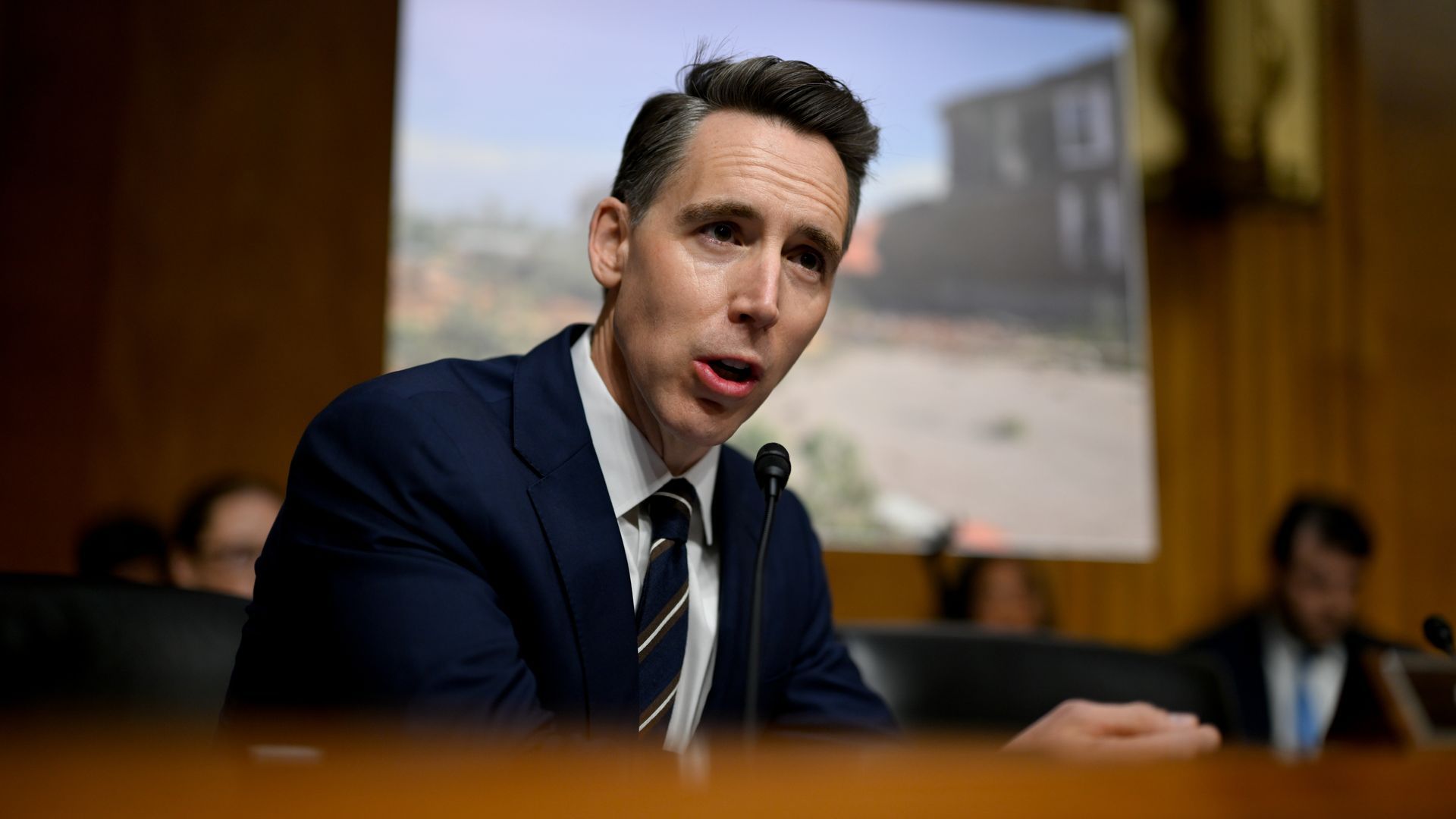
Sen. Josh Hawley (R-Mo.) blasted AI giants — including Amazon — and touted his support for key union priorities in a speech Tuesday at the closed-door Teamsters national convention in Las Vegas, Axios has learned.
Why it matters: For companies betting on AI and automation to cut labor costs, the political math is getting harder.
State of play: Hawley's speech comes amid growing bipartisan momentum for his Faster Labor Contracts Act, which passed the House last week and would bar employers from dragging out collective bargaining talks.
- He argued Tuesday that the legislation is needed to "speed up first contracts for new unions," and said his Christian faith backs up his belief in unions.
- He endorsed the Teamsters' position that Congress should pass legislation barring self-driving trucks from replacing commercial drivers.
- He slammed "AI cheerleaders" as corporate goons who "want to replace every job they can with an algorithm," and said "we need to give workers rights over AI in the workplace."
3. Other happenings
4. 🤖 Manager monitor
AI could soon make your boss a nicer, more tolerable manager.
Driving the news: Companies such as Morgan Stanley and Bank of New York Mellon are adopting AI platforms from the likes of Smarsh and Global Relay Communications to root out instances of managers fostering a toxic workplace, Bloomberg reports.
- 👿 The tools are billed as a way of recognizing "context, tone and recurring patterns" in internal communications "to help identify problematic" behavior such as bullying and harassment.
💭 Nathan's thought bubble: On its face, this seems like a positive development for individual contributors — but it also raises concerns about surveillance and potential false flags: Can the AI really understand nuanced human conversations?
🗓️ On this day in 1948, CBS's Columbia Records introduced the world to the LP. The "long-playing record" transformed the music industry, storing over 40 minutes of music on a single disc. While artists like the Beatles and Pink Floyd would eventually make LPs a cultural icon, the first record ever pressed was Nathan Milstein performing the Mendelssohn Violin Concerto with the New York Philharmonic.
Today's newsletter was edited by Pete Gannon and copy edited by Amy Stern.
- Did a friend forward this to you? Sign up here to get Axios Closer in your inbox.
Sign up for Axios Closer