
Axios Cities

February 04, 2021
Happy Thursday! I'm enjoying the rapidly melting snowdrifts here in Manhattan while they last.
- What's going on in your city that I should be covering? Write to [email protected].
Today's newsletter is 1,434 words, which will take you about 5 minutes to read.
1 big thing: Showdown over real estate agents' fees
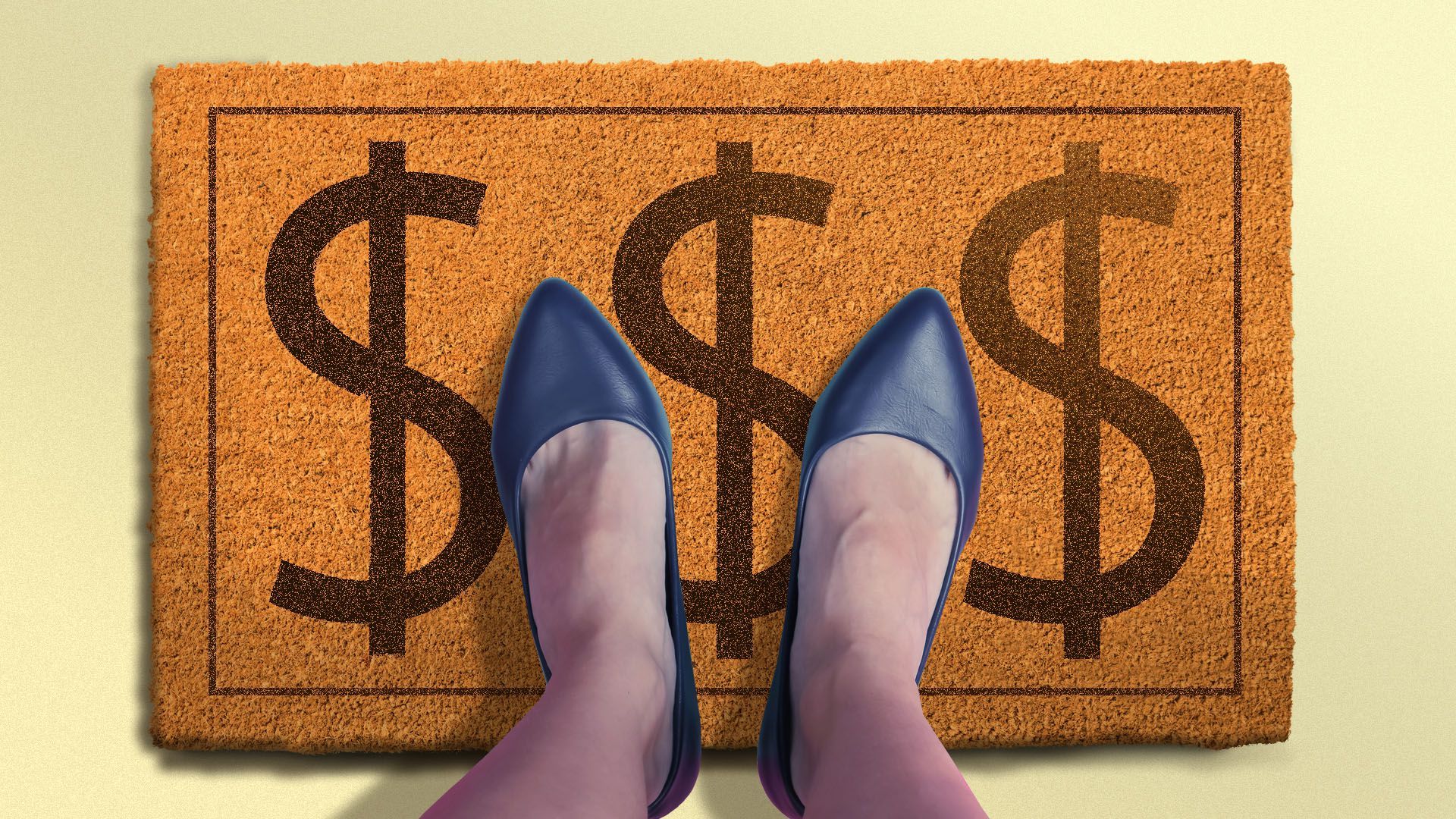
Illustration: Sarah Grillo/Axios
The commission that U.S. home sellers typically pay to real estate agents is under fire, with the real estate industry accused of antitrust violations and extracting exorbitant fees.
Why it matters: Some legal experts predict that an antitrust lawsuit over brokers' fees will reach the Supreme Court — and say the many challenges to the current system could upend the market and make it cheaper to sell a home.
The big picture: One thing the challengers are seeking is "the uncoupling of commissions, so that both buyers and sellers negotiate and pay their own broker compensation," per the Consumer Federation of America.
- Only that change “can foster the price competition that exists in most other consumer markets,” the group says.
How it works: The seller's real estate agent typically charges a 5%–6% commission and shares it with the buyer's agent.
- A Justice Department settlement with the National Association of Realtors (NAR) — which will be finalized as early as mid-February — will make it illegal for a buyer's agent to characterize their services as free, as often happens.
- Real estate websites will have to disclose publicly what percentage of a sale the buyer's agent will reap.
- "The settlement will discourage blatant discrimination against discount brokers and the steering of buyers to high-commission properties," but doesn't go far enough, Stephen Brobeck, a senior fellow at the Consumer Federation of America, said in a statement.
Driving the news: Several powerful forces are going up against the National Association of Realtors and the rules governing home sales in various states:
- The Justice Department settlement was filed simultaneously with an antitrust lawsuit against the association in November, demanding changes to rules it called anti-competitive.
- Two lawsuits seeking class-action status, in Illinois and Missouri, were filed by plaintiffs who say they were overcharged as a result of NAR's system.
- REX Real Estate, a discount brokerage, is suing Oregon and other states that bar real estate agents from giving rebates to consumers.
Jack Ryan, founder and CEO of REX, is among those who argue that NAR's commission system suppresses U.S. homeownership rates and reduces overall household wealth. "This is a great David vs. Goliath story, both in terms of the odds but also in terms of the moral implications," he said.
The bottom line: This is an issue we're likely to hear a lot more about —especially under a Biden DOJ.
What do you think? I'm interested in your reactions: [email protected]
2. A new pandemic trend: Vegan food pantries

Illustration: Aïda Amer/Axios
Heightened demand for food banks has prompted vegans to organize, soliciting donations of non-animal products and setting up distribution channels for them.
Why it matters: As the pandemic persists, the number of people who are food insecure remains alarmingly high — and any number of them may eschew animal products.
Driving the news: The LasVegan Food Bank — which started distributing boxes of fruits, vegetables, pasta and beans in December from an animal shelter in Las Vegas — has seen such overwhelming response that it's expanding operations and hours.
- Organized by a vegan chef, it distributes up to 40 boxes every Saturday, each with enough for 1o meals.
- People can sign up through the group's Facebook page, which has generated interest among food donors and volunteers.
- “I’m an ethical vegan, so I don’t like the killing of the animals and the cruelty aspect of it,” Mindy Poortinga, the pantry's founder, told the Las Vegas Review-Journal.
- She went vegan six years ago and wanted to pitch in at a food bank during the pandemic.
- But “I didn’t want to volunteer at places where I’m handing out animal products that I’m not feeling good about.”
There are similar initiatives in other cities. In New York City, Chilis on Wheels delivers plant-based food to needy people in Brooklyn and the Bronx. In London, Ontario, the London Vegan Food Bank has been in operation since 2018.
The big picture: Many experts suspect the coronavirus first spread to people through a live animal market, and PETA makes the argument that going vegan "can help cut off the next pandemic at its source."
- Its "Vegans for the vulnerable" initiative asks people to pick up extra plant-based food items while grocery shopping and donate them to a pantry.
- Together with Chipotle and Baskin-Robbins, PETA Latino has organized donations of vegan burritos and ice cream to front-line hospital workers in Chula Vista, California.
3. Chinese cities on the ascent


Kearney's annual Global Cities Report measures the comparative muscle of the biggest metropolises, and the 2020 edition shows China advancing, with both Beijing and Shanghai jumping in the rankings.
Why it matters: The consulting firm's assessment of the global pecking order both reflects and anticipates shifts in geopolitical dynamics.
Where it stands: Since 2008, Kearney has been ranking major cities by various metrics — like the number of headquarters of Fortune 500 companies they have and the flow of goods through their airports and ports — to establish their relative clout.
- While the top four cities have remained the same over the years, there's been interesting turbulence in the lower ranks.
- "Chinese cities are rising, and the pace of improvement in the Chinese cities is greater than improvement in U.S. cities," Andres Mendoza Pena, a co-author of the report, tells me.
- "Chinese cities are improving in two dimensions: business activity and human capital."
What's new: This year, Kearney added two new metrics to the assessment: the number of unicorn companies in a city and the number of medical universities (which is particularly critical in the era of COVID-19).
- The inclusion of unicorns vaulted San Francisco into 13th place from 22nd.
The intrigue: A related ranking, the Global Cities Outlook, looks at "the future potential of cities to challenge the current leaders," Pena says — and there are no U.S. cities in the top 1o.
- It's led by London, Toronto, Singapore, Tokyo and Paris.
- Chicago made the biggest leap up in this ranking — to No. 23 from No. 38 — based on "improvement in private investments and innovation and incubators," Pena said.
4. Worthy of your time
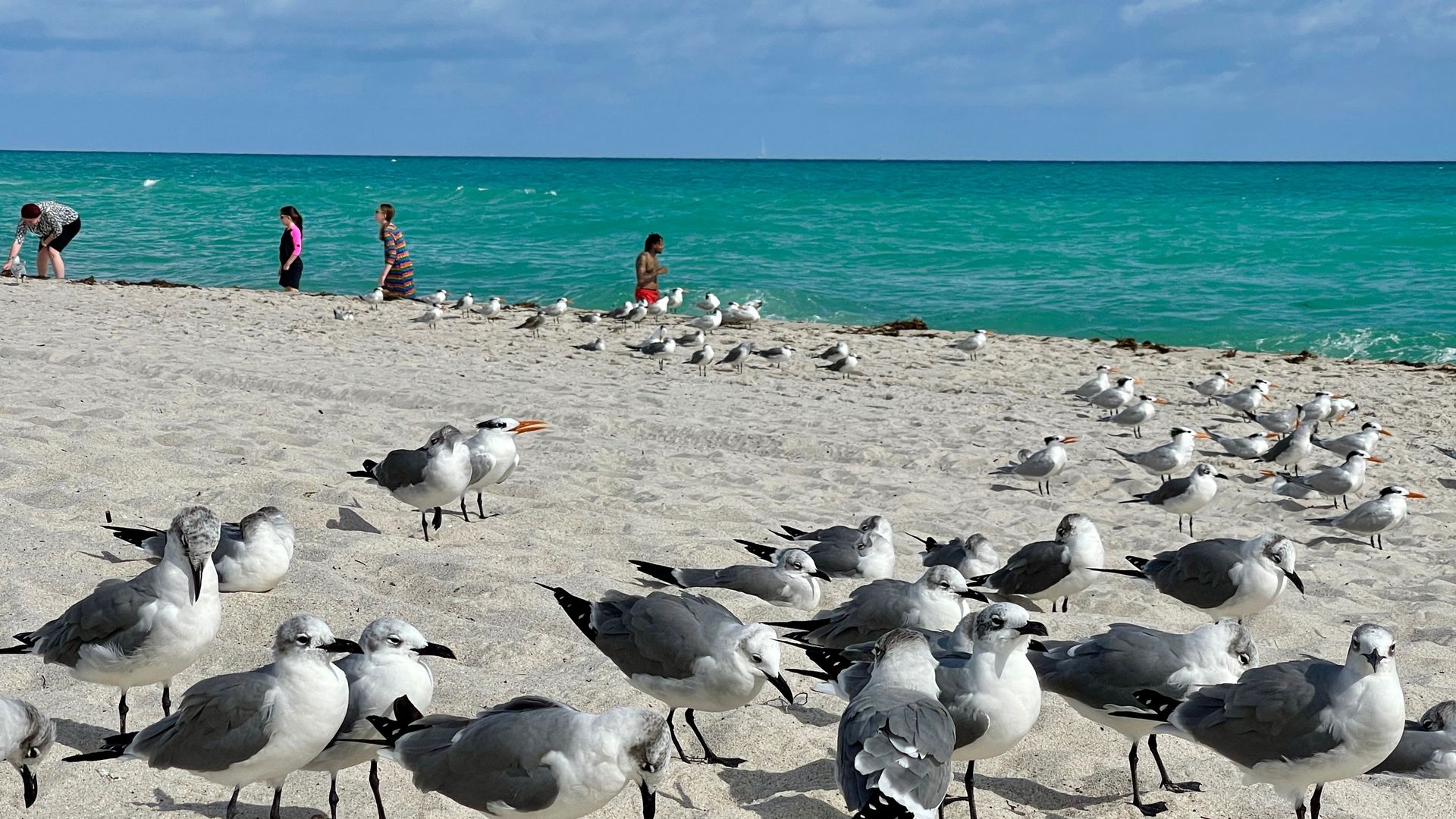
Come for the low taxes, stay for the seagulls: Here's a shot from the beach in Miami in December. Photo: Daniel Slim/AFP via Getty Images
Join Us in Miami! Love, Masters of the Universe (New York Times)
Technology wizards and Wall Street bigwigs are apparently pulling up stakes from San Francisco and New York and heading to Miami. (Because not everybody can live in Austin. Speaking of which...)
"Startup City": Accelerated Growth Strains Austin (Wall Street Journal)
The arrival of Oracle, Apple and Tesla are challenging the city’s "struggle to stay affordable — and 'weird'" as its population surges toward 1 million (vs. 675,000 in 2000.)
U.S. police and fire departments partnering with Amazon’s Ring passes 2,000 (Financial Times)
The size of the surveillance network has doubled in the last year, and all but two states — Montana and Wyoming — have departments that work with it. Ring "allows officials to contact users in a particular area and ask them to provide captured footage via Ring's app to assist investigations."
A West Virginia city's rising fortunes widen the political divide (Wall Street Journal)
Morgantown, a city of 30,000 on the Monongahela River that's home to West Virginia University, "has grown more prosperous and shed some of its blue-collar roots" but it has also "become more politically polarized, at least compared to surrounding rural counties that have tilted toward Republicans."
5. Payment wearables are getting a boost from the pandemic
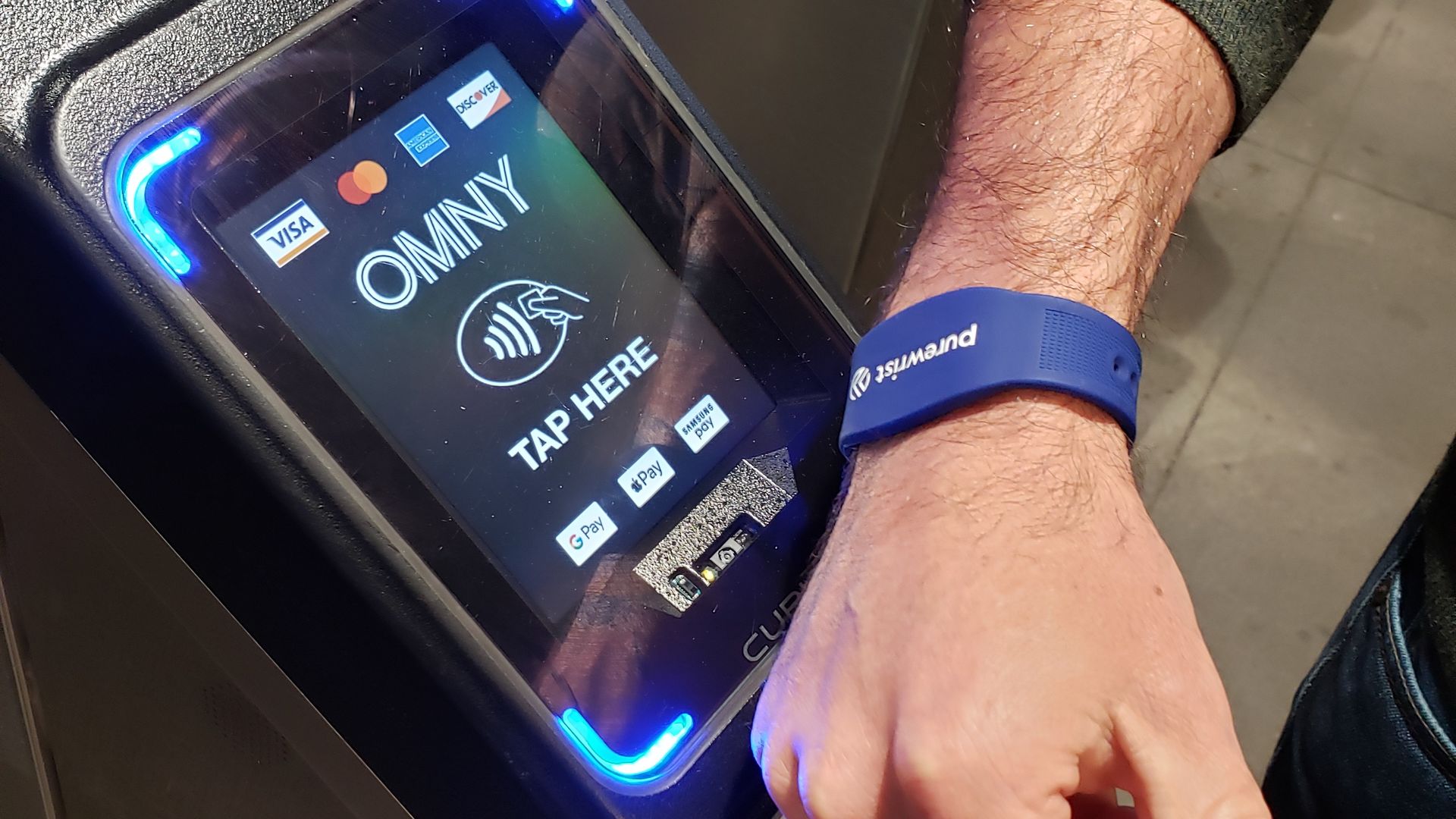
Swiping in to the New York City transit system using a payment bracelet. Photo: Purewrist
Bracelets, rings, key fobs and watches that double as credit or debit cards are enjoying a burst of popularity as COVID-wary consumers gravitate toward contactless payments.
Where it stands: While people have gotten accustomed to waving their phones — or smartwatches or Fitbits — in front of payment terminals, the next generation of wearables will likely be cheaper and/or more fashionable.
Driving the news: Several recent product launches point toward a future where payment features are built into clothing and jewelry — and may include a biometric feature.
- A company called Purewrist introduced a payment bracelet that comes in six colors, costs $25 and can be used to spend up to $1,000 at a time.
- It's linked to a reloadable Mastercard account that the wearer can manage online.
- At CES this year, a startup called Flywallet showed off Keyble, a "small smart module that fits into bracelets, watch straps and key rings" and uses the wearer's finger image to authenticate payments.
- On the high end, a European company called Armillon introduced limited-edition diamond-encrusted payment bracelets for men, which GQ U.K. says start at £38,130 ($52,000)
- ABN Amro, the Dutch bank, lets customers shop for payment rings, watches and bracelets through its website.
Of note: Europe is way ahead of the U.S. in its adoption of payment wearables.
Thanks for reading! I've already signed up my friends for my newsletter — now it's your turn to bestow a dose of weekly delight on your besties.
Sign up for Axios Cities

Explore the technology and market forces shaping our cities