Axios Charlotte

February 13, 2023
Hello, Monday. It's Danielle.
🔎 Today's newsletter delves into how Charlotte's crescent and wedge patterns are changing.
🌤 Weather: Mostly sunny, high of 62°.
🎂 Happy birthday to Axios Charlotte members Jef Fullagar, Sarah Jenest, Harmony Johnson, Mary Lane Lennon and Carolyn Vanderberg.
🍕 Situational awareness: Axios Local put together the ultimate pizza bracket, and we’re asking our readers to rally around Charlotte to beat Raleigh in the first round of voting. Do it for Bird, Salud, Geno D's, Sal's and all the other great pizza spots in our city.
- Vote here before the survey closes at 3pm today. Axios readers in the winning city will be invited to a pizza party.
Today's Smart Brevity™ count is 929 words — a 3.5-minute read.
1 big thing: A crumbling narrative

Two shapes have guided our understanding of racial and economic disparities in Charlotte for decades:
- The "crescent," which wraps west, north and east around the city, and where communities of color and low-income people were historically concentrated.
- And the wealthy and mostly white "wedge," a sliver of southeast Charlotte that has long held the city's political and economic power.
Yes, but: Those patterns are beginning to fade.
Why it matters: The crescent and the wedge emerged in the 20th century, when our city was nearly all Black and white. But Charlotte is no longer a tale of two cities; it's a tale of many.
- Yet, leaders use these outdated narratives to shape our city's response to nearly every social challenge.
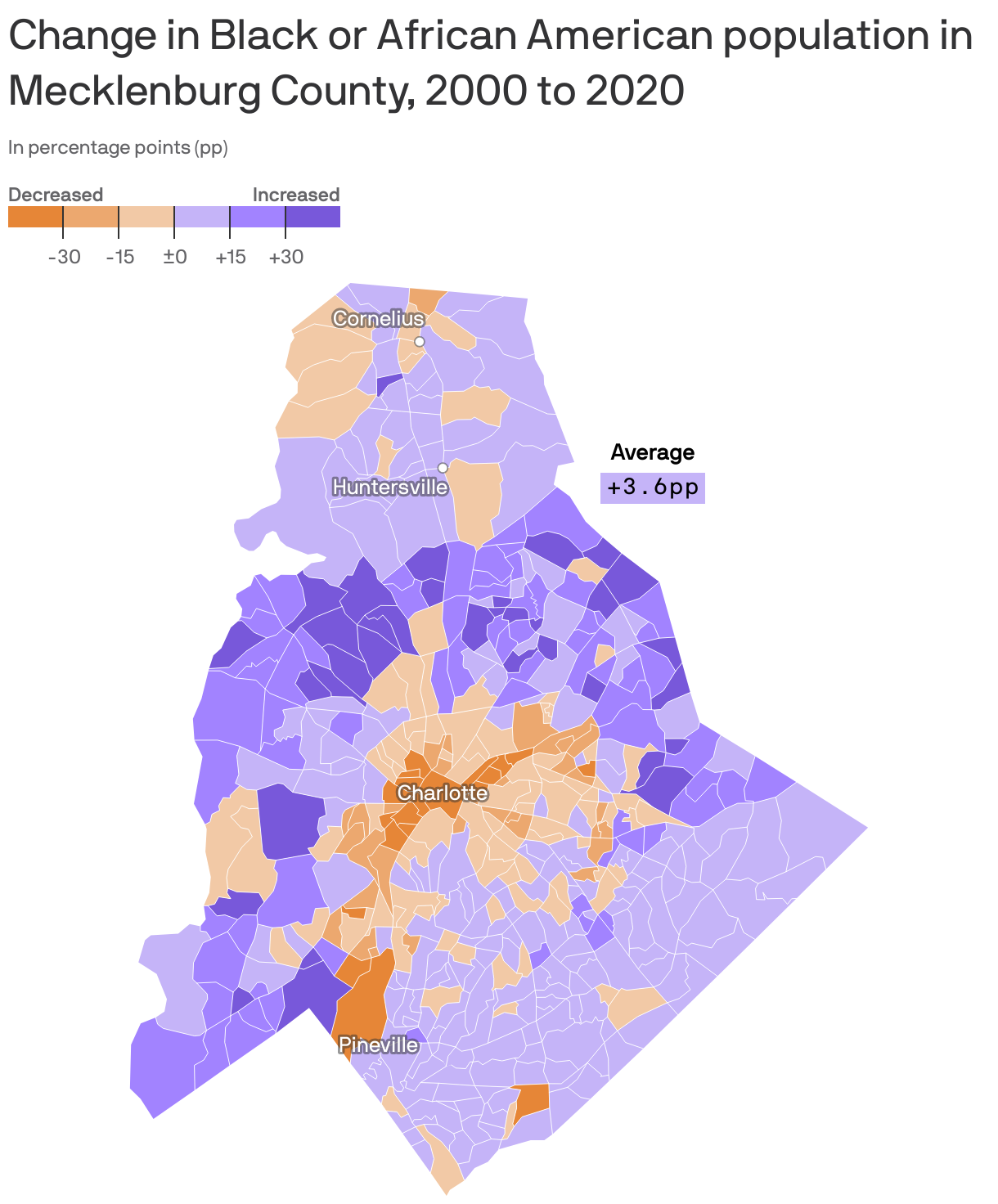
Driving the news: Once majority-minority neighborhoods within a few miles of Uptown like Wesley Heights, Wilmore and NoDa have lost more than two-thirds of their Black populations over the past 20 years, an Axios analysis of census data found.
- Meanwhile, communities of color are growing at the city’s fringes in places like Steele Creek in the southwest and Mallard Creek in the north.
Read the full story: Analysis: Charlotte’s longstanding crescent and wedge narrative is crumbling
2. When segregation became entrenched
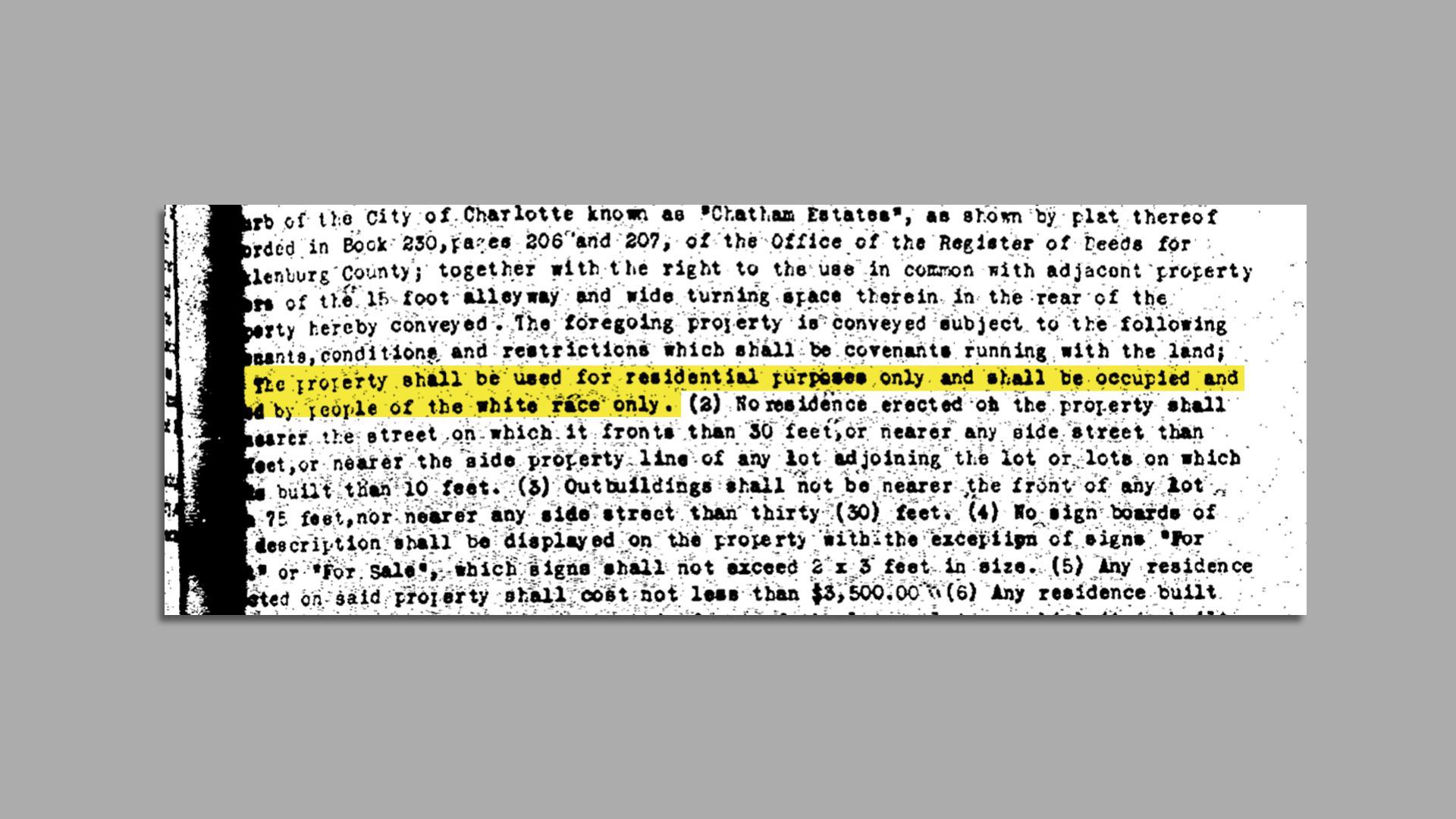
An old deed restriction from the early 20th century, courtesy of Mecklenburg County Register of Deeds
Before around 1900, Charlotte wasn’t separated by race and income.
- There was no "exclusive" residential neighborhood, historian Tom Hanchett writes in his book, "Sorting Out the New South City."
Flashback: But the white supremacy campaign at the turn of the century, zoning regulations, deed restrictions and redlining solidified the crescent and wedge.
Like in other cities, white families fled neighborhoods close to the center city for the suburbs in the mid-20th century.
- Hanchett notes that by the 1970s, those with "money and choice" clustered in the wealthy, southeastern wedge. And almost all Black residents lived west of Tryon Street.
Fresh job openings around town
💼 Take your career to the next level and see who’s hiring.
- Clinical Assistant at Charlotte Eye Ear Nose and Throat.
- Accounting Assistant at Fisher, PA.
- Picture Framer at Frame Warehouse.
- Accounts Payable & Accounting Specialist at Hopper Communities.
Want more opportunities? Check out our Job Board.
Hiring? Post a job.
3. Black population declines
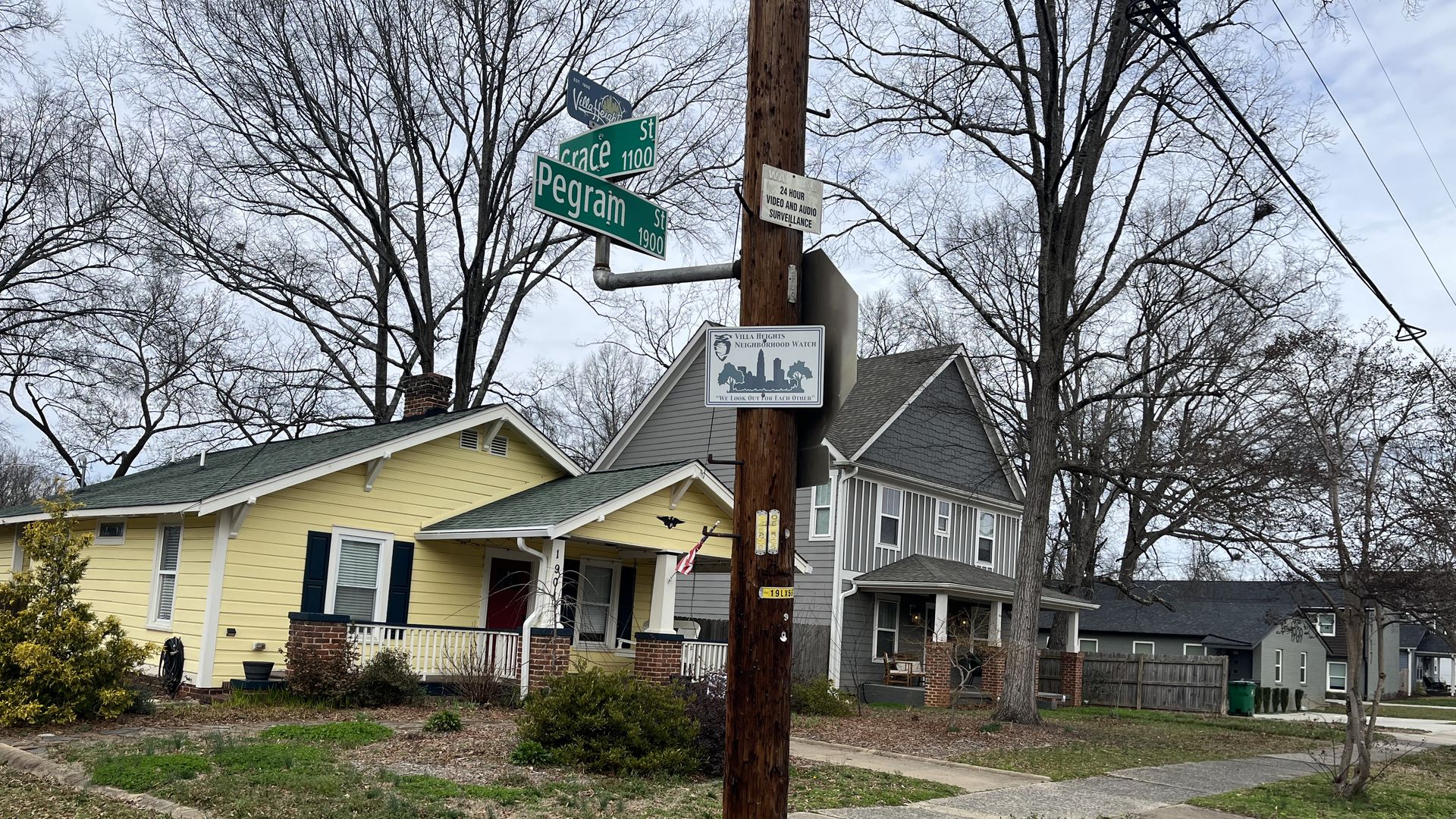
Pegram Street in Villa Heights. Photo: Danielle Chemtob/Axios
Communities of color in the crescent have seen an influx of investment drive out lifelong residents over the past two decades.
Zoom in: Villa Heights, sandwiched between the new development spreading from Plaza Midwood and NoDa, is no longer a Black neighborhood.
- In 10 years, it has gone from being over three-quarters Black to less than one-third.
By the numbers: It's a trend mirrored across north and west Charlotte.
- In Wilmore, southwest of Uptown, the Black population share declined from 92.2% to 21.2% between 2000 and 2020.
What they're saying: Community advocate and realtor Angela Ambroise has helped around 30 longtime Villa Heights residents sell their homes.
- She believes the local government failed to assist small business owners and residents in north Charlotte neighborhoods, leaving them vulnerable to gentrification.
- "It was almost like it was intentional, like they were trying to clear out a certain population," she says.
4. Where diversity is growing
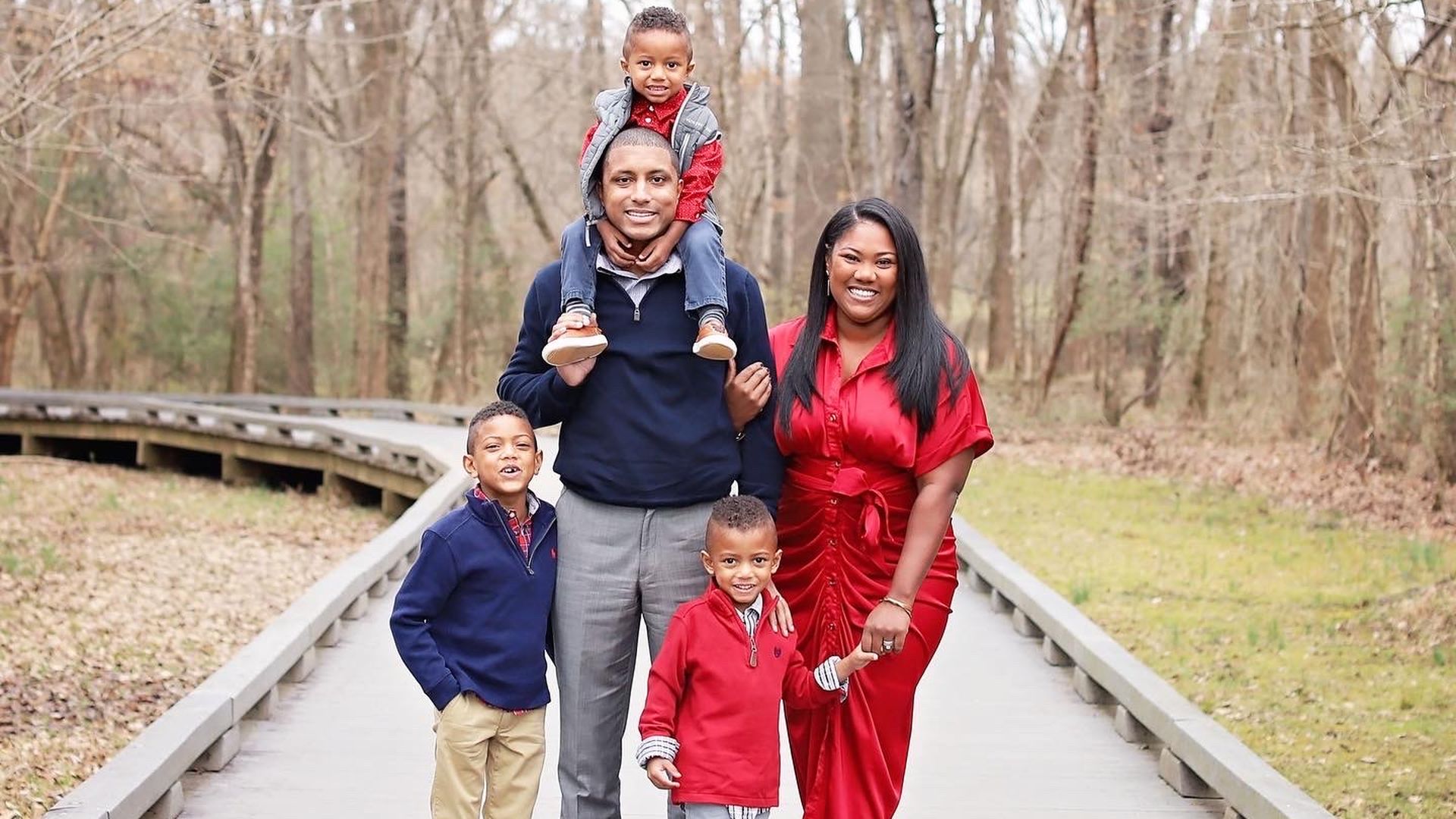
Justin Harlow and his family. Photo courtesy CharMarie Photography
Data shows that people of color are fueling Charlotte's growth, especially in the outskirts of the city.
Zoom in: Former Charlotte City Council member Justin Harlow moved last year from Biddleville, Charlotte’s oldest surviving Black neighborhood, to Steele Creek, where he had previously opened a location of his dental practice.
- He and his wife, Kiara, wanted their three children to have the things they didn’t have growing up, like a big house with a backyard and a pool.
By the numbers: In Southwest Charlotte, the census tract surrounding the Charlotte Premium Outlets in Steele Creek went from 0% Black to one-third between 2000 and 2020.
- West of the airport, the Hispanic population in one census tract in Dixie-Berryhill increased from 2.8% to 58.7% between 2000 and 2020.
5. Immigrants flock to the suburbs

A movie theater playing Bollywood films. A grocery store with an aisle for each part of the world. A growing number of Hindu temples and mosques.
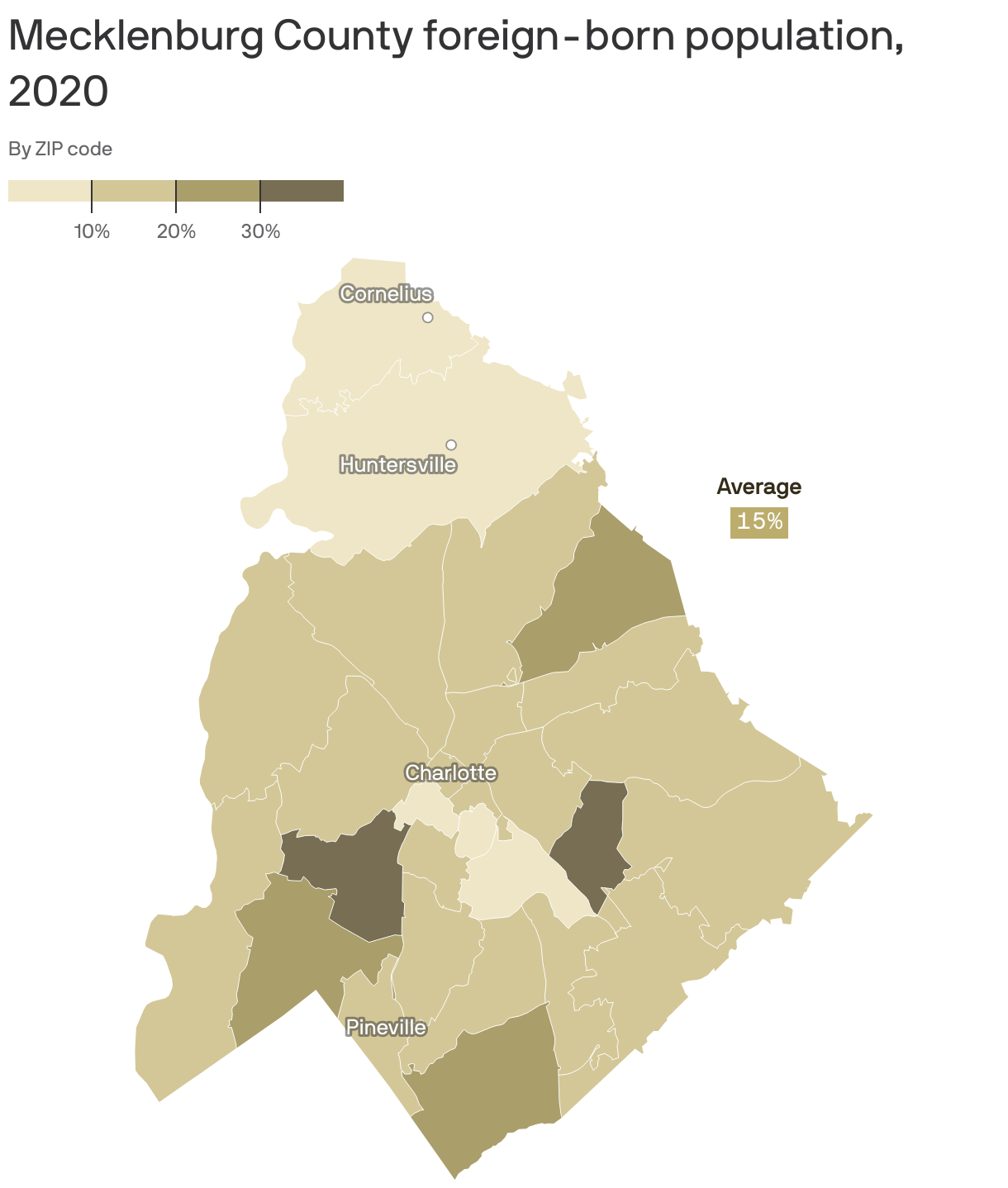
- These descriptions match places like Pineville and Highland Creek in 2023, neighborhoods that are breaking from the stereotype of a homogenous suburb.
Context: In 1990, Charlotte was less than 1% foreign-born, Hanchett writes. Today, more than one in six people in Charlotte were born outside of the U.S.
Rising prices and job opportunities are driving Charlotte's immigrant communities to the periphery.
- For example, one of the census tracts where a majority of residents are foreign-born is in Ballantyne, surrounding Ballantyne Corporate Place, which houses major employers.
Why it matters: The more expensive Charlotte becomes closer to its core, the more the city prices out the culture that makes it vibrant.
- Immigrant communities aren't as concentrated in east Charlotte, part of the crescent, anymore.
- Their shift to the suburbs is changing the face of places like Ballantyne and Matthews that were once almost entirely white.
Read the full story: Map: Charlotte immigrants are flocking to the suburbs
6. Navigating a more diverse future
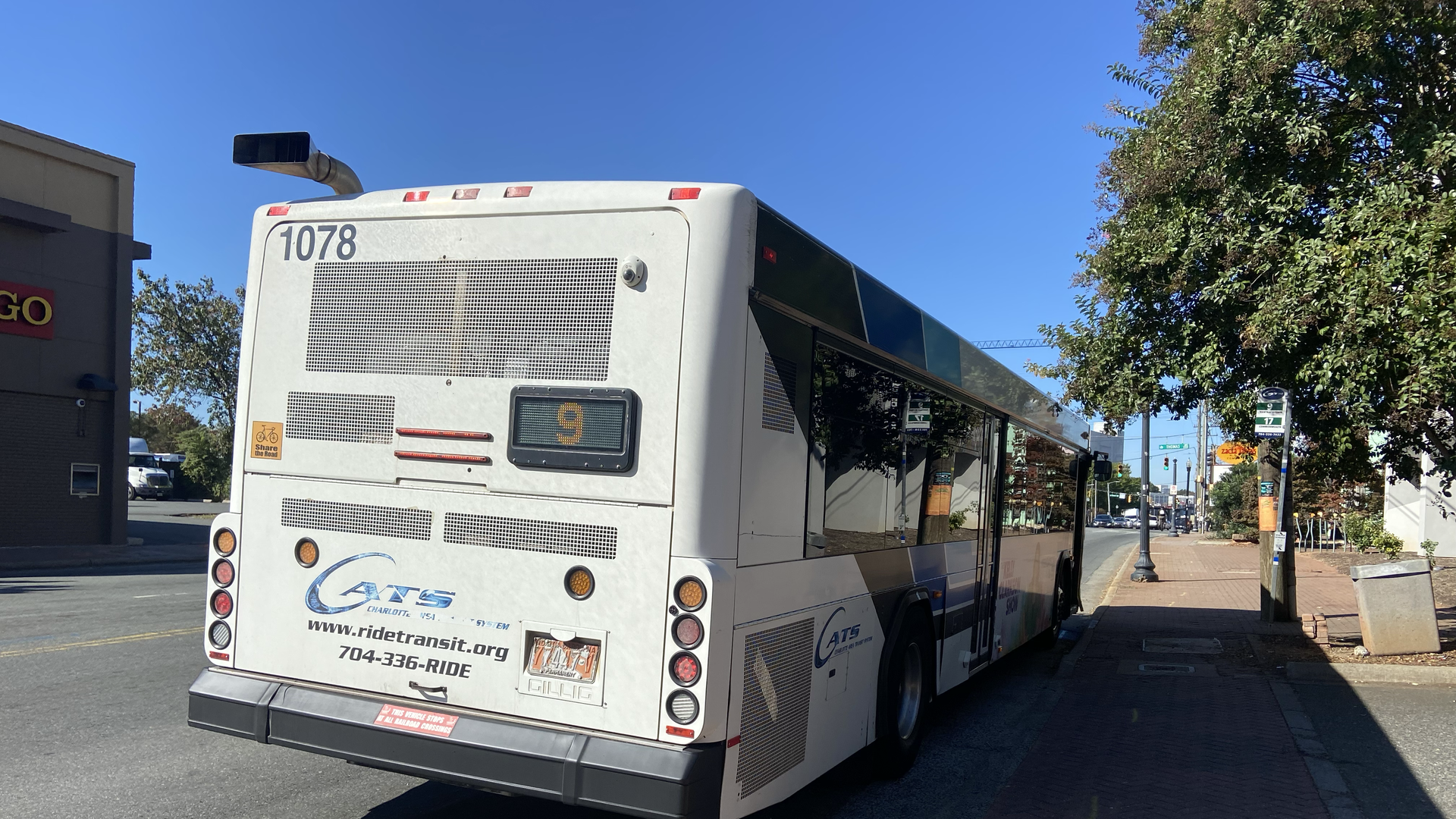
Photo: Alex Sands/Axios
Neighborhood advocates say Charlotte needs to more widely distribute its resources, from transportation to health care, to keep up with the trends.
Why it matters: Charlotte strives to balance addressing historic disparities in the crescent while also ensuring that the outer-ring places people are moving to have resources and infrastructure, all with limited funds.
Driving the news: These population trends are a key reason Charlotte, despite the seemingly-infinite hurdles, is proposing expanding mass transit regionally.
- After all, more people living in the fringes of the city and surrounding counties means public transportation must be farther reaching.
The bottom line:Â Without some sort of massive infusion of cash, Charlotte is essentially playing whack-a-mole to address the needs that emerge from the city growing outward.
It’s more difficult for people in need to access services when they are spread out in suburbs.
- "The threat to poverty now is that it can be hidden in plain sight," says Monty Witherspoon, a pastor at Steele Creek A.M.E. Zion Church.
Read the full story: How Charlotte can navigate its more diverse future
I'd love to hear your thoughts on this topic or suggestions for future stories. Drop me a note: [email protected]
Of note: We still have your guide of things to do this week from Axios' McKenzie Rankin.
Have a great week!
Sign up for Axios Charlotte

Get smarter, faster on what matters in Charlotte with Laura Barrero, Ashley Mahoney, and Alexandria Sands.