Axios Boston

February 18, 2026


Yes, it's Wednesday.
- Read on for more on World Cup funding questions and immigration enforcement restrictions at churches.
🌨️ Today's weather: Light snow, with a high of 38 and a low of 27.
🎂 Happy birthday to Axios Boston members Sasha Uchenik and Richard Ernesti!
Today's newsletter is 1,002 words — a 4-minute read.
1 big thing: World Cup funding stalemate

Foxborough town officials last night held off on issuing the license for this summer's World Cup games as organizers again failed to clarify who's responsible for security costs.
Why it matters: The funding stalemate complicates Gillette Stadium's plans to host seven FIFA World Cup games this summer.
Catch up quick: Foxborough, which owns the land on which Gillette Stadium sits, is waiting to hear back on a federal grant that would cover some $8 million in security costs.
- State lawmakers approved $10 million for the World Cup, but at least half of that will go to Boston for its fan festival.
Friction point: Select board members said they haven't gotten clarity from the Kraft Group, which owns the stadium, FIFA or the Boston host committee on who is financially responsible if the grant falls through.
- Without any funding commitment, select board members say they can't green light the event license.
The latest: Officials at Tuesday's meeting couldn't get a straight answer from host committee head Mike Loynd or FIFA26 operations director Kevin Clark over who is responsible for security costs.
- Clark ultimately said FIFA wasn't in a position to comment on the financial requirements, saying it was between the stadium and host city.
What they're saying: "Nobody wanted to answer the question, and I think that speaks volumes to the frustration that this board is feeling and concern," said Amy LaBranche, a select board member.
- "I feel very strongly that without those answers, this won't move forward."
Context: The stalemate comes as Foxborough and other Massachusetts communities face rising education, health insurance and other costs.
- In the short term, Select Board members said, Foxborough doesn't have the money to front security bills.
- "We cannot do that to our taxpayers," Select Board member Stephanie McGowan said.
What's next: Town officials and organizers are supposed to meet again today.
- Select board members say they have to make a final decision on the license by March 17.
2. ⚖️ ICE arrests barred at some churches, for now

Immigration agents are temporarily barred from arresting immigrants at some Boston-area churches following a federal ruling.
Why it matters: The Trump administration's decision to remove guidance discouraging immigration enforcement at "sensitive locations" such as churches has evolved into a legal fight.
- Faith leaders say religious protections are at stake.
Driving the news: A Boston federal judge last week barred the Department of Homeland Security from conducting immigration enforcement within 100 feet of churches affiliated with the New England Synod of the Evangelical Lutheran Church in America and the American Baptist Churches USA.
- Judge F. Dennis Saylor also prohibited federal agents from setting up checkpoints to interrogate people on the way to or from one of these churches.
Boston is home to roughly two dozen churches affiliated with these two groups and several dozen more across Massachusetts.
The ruling bars agents from conducting arrests at a church without a judicial warrant "absent exigent circumstances."
- The restrictions also apply to Sunday schools, religious day-care centers and church parking lots.
What they're saying: Saylor sided with religious leaders who said enforcement activity around places of worship violates congregants' First Amendment rights and federal laws.
- "If government interference with those freedoms is ever justifiable, it is only in relatively extreme circumstances, such as an immediate threat to public safety," Saylor wrote.
- "The routine enforcement of the immigration laws does not involve such a threat, and cannot justify the harm to religious freedom posed by the new policy."
The other side: DHS assistant secretary Tricia McLaughlin said in a statement to Axios that U.S. Immigration and Customs Enforcement agents do not raid churches and that "anti-ICE agitators" are targeting agents at churches and hotels.
- "The facts are dangerous criminals are no longer able to hide in places of worship to avoid arrest," McLaughlin said.
3. 🔙 BTMU: Back-to-back storms ahead
❄️ Boston-area residents should brace for messy commutes tonight and tomorrow morning as the first of three storms passes through Massachusetts. (Axios)
- Another storm is on the way Friday, and a third storm is possible Sunday into Monday.
🍽️ Tiffani Faison has resurrected her Asian-inspired Tiger Mama eatery that closed in Fenway in 2021, opening it at High Street Place Food Hall. (BBJ)
🇨🇻 Lilla Frederick School in Dorchester plans to begin offering a Cape Verdean Kriolu-English dual-language program when the school reopens in September. (Reporter)
4. 🧩 Speed puzzling is the new bar trivia


Jigsaw puzzling isn't just a solitary bad-weather activity anymore — it's snapping into place as a social sport.
Why it matters: Puzzling's shift from solo to social mirrors a bigger trend: People are turning analog or "grandma" hobbies into in-person communities.
- There were 151% more puzzle competitions from Aug. 2024-July 2025, compared to the year prior, according to a report from live event marketplace Eventbrite.
How it works: Typically teams of two or four gather around tables, each with a mystery puzzle sealed in a bag. After a countdown, they open it — sometimes groaning at the image — and race to finish.
- First ones to finish shout "Done!" and collect prizes.
The bottom line: Speed puzzle contests may be the missing piece for people looking for low-pressure conversation and competition.
5. ✨ 1 galactic discovery to go
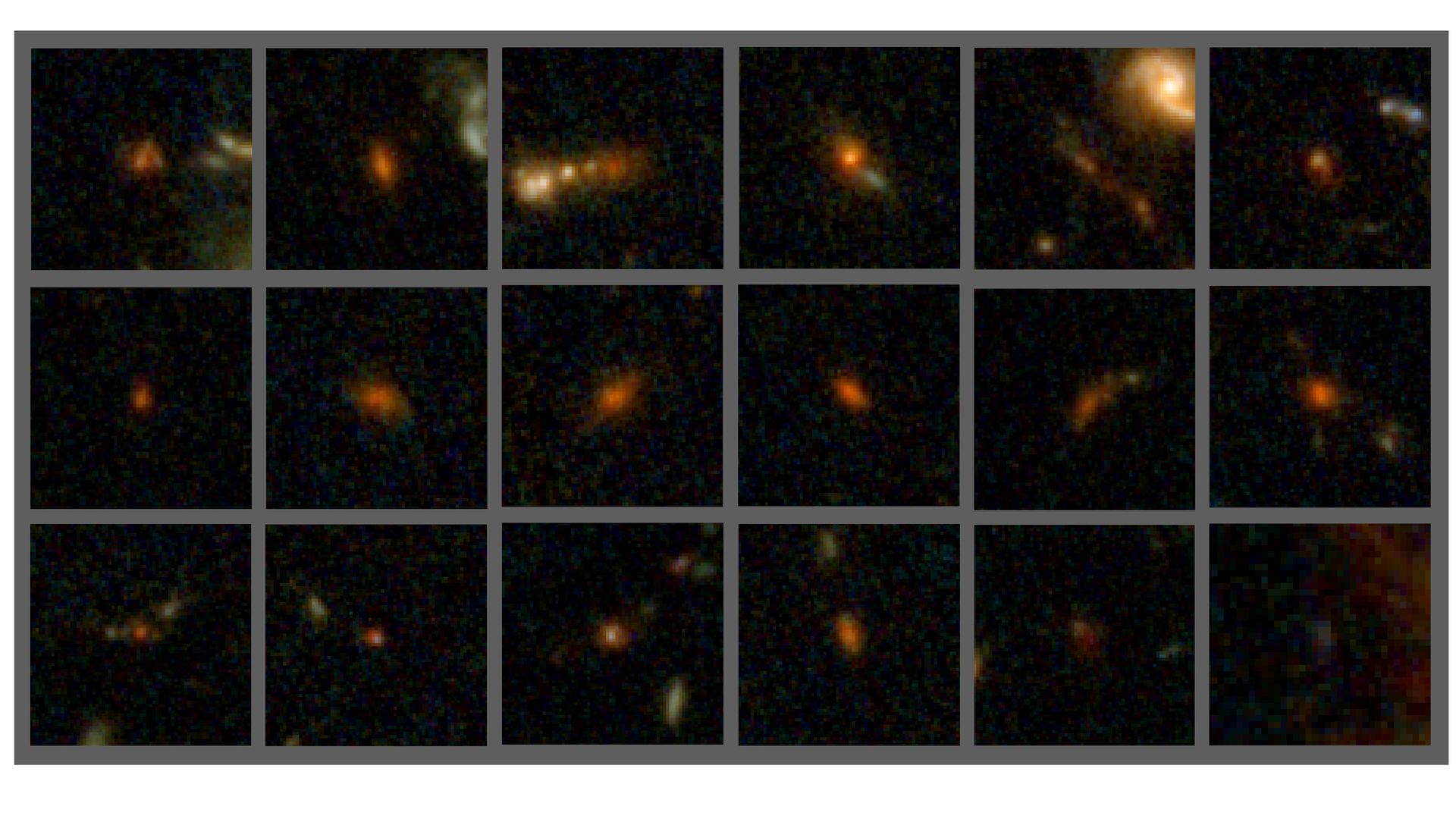
Nothing puts life into perspective like snapshots of distant, 13.3 billion-year-old "dust galaxies."
The intrigue: A team of astronomers led by UMass Amherst captured snapshots of these galaxies, which they believe stopped forming stars some 2 billion years ago.
Zoom in: The researchers discovered the dust galaxies with help from a telescope that can bypass space dust.
- The discovery suggests they formed within the first 100 to 200 million years of cosmic time — far earlier than their previous models predicted, says researcher Jorge Zavala, an assistant professor of astronomy.
Deehan is out.
Steph isn't looking forward to walking through slushy sidewalks this week.
This newsletter was edited by Jeff Weiner.
Sign up for Axios Boston
